Nothing kills a Saturday yard session faster than a riding mower that turns over slowly, or worse, won’t start at all. A tired or undersized battery turns a routine mowing day into a frustrating afternoon of clicks and troubleshooting. Choosing the right 12v lawn mower battery means the difference between effortless starts on a cold morning and being stranded mid-lawn. This roundup walks through eight solid picks across lead-acid AGM and lithium chemistries, so you can match the right battery to your tractor, your climate, and how often you actually mow.
A Snapshot Of The Selections

WEIZE Lawn Garden AGM Battery 12V 300CCA BCI Group U1

WEIZE Lawn Garden AGM Battery 12V 200CCA BCI Group U1
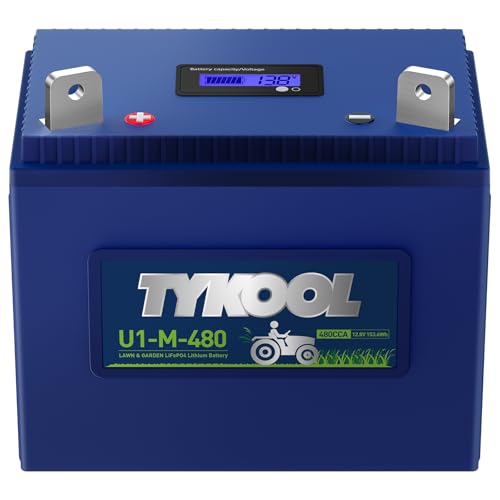
TYKOOL 480CCA Group U1 Lithium LiFePO4 Lawn Mower Battery

MARXON U1 Riding Lawn Mower Battery 12V 330CCA

WEIZE Lawn Garden AGM Battery 12V 350CCA BCI Group U1
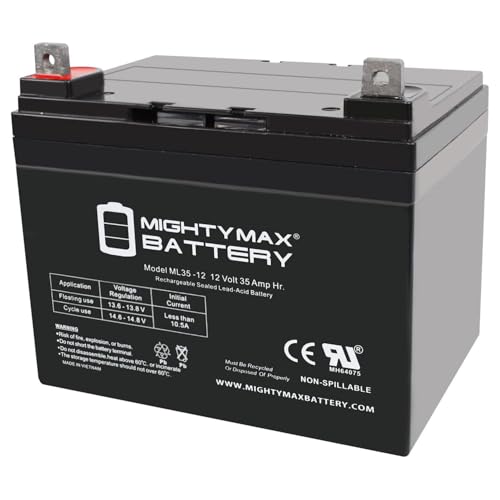
Mighty Max Battery 12V 35Ah Replaces John Deere Lawn Tractor

UPLUS U1 Riding Lawn Mower Battery 12V 330CCA

BRS U1 AGM Battery 12V 300 CCA Group U1
The Strengths Of Each Pick
The 300CCA WEIZE sits right in the comfortable middle of the U1 lawn battery category. It’s an AGM (Absorbed Glass Mat) sealed lead-acid battery, meaning the electrolyte is held in fiberglass mats instead of pooling as liquid. That design makes it spill-resistant and largely maintenance-free, so you can mount it at a slight angle without worrying about acid leaks.
For suburban lawns with a typical John Deere, Toro, Cub Cadet, or Craftsman riding mower, this rating delivers enough cranking punch for spring starts and mild winters. CCA (Cold Cranking Amps) measures how much current a battery can deliver at 0°F for 30 seconds while staying above a usable voltage, and 300 is a sensible baseline for most mid-sized engines.
Practical Advantages
- Sealed AGM construction resists vibration, which matters on uneven terrain
- 300CCA handles most factory-installed riding mower engines without strain
- Square-hole nut and bolt terminals fit the cables found on common U1 platforms
- Compatible footprint with major U.S. tractor brands simplifies replacement
- At roughly 18.68 lbs, it’s lighter than some 350CCA competitors
Worth Noting
- CCA rating may feel marginal in regions with prolonged sub-freezing temperatures
- Non-returnable due to hazardous-materials shipping rules, so verify fitment first
- Lacks the higher cranking surge offered by lithium alternatives
Right Fit For
Suburban homeowners with a standard riding mower who want a maintenance-free AGM that drops in without fuss.
Consider Something Else When
Owners facing brutally cold winters should consider the TYKOOL 480CCA LiFePO4 battery for stronger cold-start cranking.
The 200CCA WEIZE is the lower-output sibling of the first pick, sharing the same Group U1 case dimensions but trimming back on cranking power. For older, smaller-displacement lawn tractors with modest starter demands, 200CCA is often plenty, especially in temperate climates where winter starts aren’t punishing.
This is a sensible pick for someone replacing a battery that’s simply aged out rather than one that struggled in the cold. The same sealed AGM construction means you skip the water-topping routine that older flooded batteries demanded.
Features That Help
- Identical footprint to other WEIZE U1 units for easy swap-in
- Sealed AGM design eliminates electrolyte checks
- Lower price point makes it approachable for budget-conscious shoppers
- 30-day return window offers a safety net after purchase
Points To Keep In Mind
- 200CCA may underperform in regions with extended freezing weather
- Heavier than the 300CCA sibling at about 21.5 lbs despite lower output
- Not ideal for larger V-twin mower engines that draw more current
Best Suited To
Owners of smaller single-cylinder garden tractors in mild climates who want a basic sealed replacement.
Skip It When
Anyone running a larger V-twin engine should reach for the WEIZE 350CCA instead for a more comfortable cranking margin.
The TYKOOL breaks the AGM pattern entirely by using LiFePO4 (lithium iron phosphate) chemistry, a different battery family than the lead-acid units dominating this list. Lithium cells hold voltage more consistently as they discharge, so the starter sees full strength until the battery is nearly empty rather than the gradual voltage sag lead-acid delivers.
With 480CCA, it posts the highest cold-cranking number on the list, which is meaningful for northern lawns where engines struggle on frosty mornings. Compared to the lead-acid WEIZE units above, you trade heavier construction for lighter weight and longer cycle life, assuming typical use patterns.
Strengths Worth Knowing
- 480CCA leads this roundup for cold-weather starting confidence
- LiFePO4 chemistry is rated for thousands of charge cycles, outlasting lead-acid
- Higher usable capacity than basic 200CCA lead-acid options
- Lighter than AGM equivalents, helpful when lifting into tight battery trays
Trade-Offs To Consider
- LiFePO4 carries a higher upfront cost than AGM alternatives
- Some older charging systems may not be optimized for lithium profiles
- Requires confirmation that your mower’s charging circuit accepts lithium chemistry
Who Should Grab It
Rural homeowners in cold climates who crank their tractors on frosty mornings and want a longer-lasting chemistry.
A Better Fit Elsewhere
Anyone running a basic mower in mild weather may find the WEIZE 300CCA meets their needs without the lithium price jump.
MARXON takes the sealed lead-acid formula and pairs it with a notably broad compatibility list that goes beyond the usual riding mower brands. Names like Gravely, Hustler, Bob-Cat, Exmark, and Grasshopper appear in the cross-reference, which makes this battery useful for commercial-grade zero-turn owners, not just residential machines.
At 330CCA, it sits comfortably above the WEIZE 300CCA option without leaping into premium territory. The slightly narrower case (4.92 inches wide versus 5.12 on the WEIZE) can matter in tight battery trays where every fraction of an inch counts.
Points In Its Favor
- 330CCA gives extra starting headroom over a baseline 300CCA battery
- Compatibility list spans residential and commercial mower brands
- Sealed SLA (sealed lead-acid) construction needs no water service
- Polarity matches standard U1 layouts for clean drop-in replacement
Honest Caveats
- Slightly narrower case than some U1 batteries, so check tray dimensions before ordering
- Heavier than lithium alternatives like the TYKOOL unit
- Lead-acid lifespan still shorter than LiFePO4 cycle ratings
Built With In Mind
Owners of commercial or semi-commercial zero-turn mowers who need broad brand coverage in one replacement.
Reach For A Different Pick When
Cold-climate users seeking lithium longevity should consider the TYKOOL 480CCA LiFePO4 unit instead.
The 350CCA WEIZE tops the brand’s AGM range and sits right at the boundary where lead-acid U1 batteries feel confident in tougher conditions. The extra 50 amps over the 300CCA version show up clearest during cold-soak starts, when engine oil thickens and the starter pulls harder.
Like the rest of the WEIZE U1 family, it uses square-hole nut-and-bolt terminals with positive on the left. That consistent layout across the line means swapping between CCA tiers is straightforward if your needs grow over time.
Positive Takeaways
- 350CCA delivers strong cranking for V-twin engines and cold mornings
- AGM construction handles vibration better than flooded batteries
- Familiar U1 dimensions fit the same battery trays as lower-CCA siblings
- Sealed design skips periodic electrolyte service
Small Caveats
- Weighs about 21.45 lbs, making it one of the heavier AGM options
- Still lead-acid, so cycle life trails lithium alternatives like the TYKOOL
- Non-returnable hazardous-materials shipping rules apply
Made For
Homeowners with V-twin mowers or those in transitional climates who want extra cranking headroom without jumping to lithium.
Look Elsewhere When
Anyone prioritizing weight savings and maximum cycle life should consider the TYKOOL 480CCA lithium battery instead.
The Mighty Max ML35-12 leaves the standard U1 footprint behind, stepping up to a taller, slightly larger case that holds 35Ah of capacity. Ah (amp-hours) measures how much energy a battery can deliver over time, so higher Ah means more total stored energy, useful for accessories like headlights or powered implements that draw current while the engine is off.
It targets John Deere lawn tractor replacements specifically, including the riding mower 108 series. For owners of those models, the fit is essentially guaranteed, and the SLA/AGM construction keeps the maintenance story consistent with the rest of the field.
Useful Highlights
- 35Ah capacity exceeds standard U1 batteries for longer accessory runtime
- Sealed AGM chemistry resists spills and tolerates varied mounting angles
- Direct John Deere riding mower 108 compatibility simplifies sourcing
- Wide operating temperature range suits seasonal climates
- Deep discharge recovery helps if the battery is occasionally left drained
Where It Is Less Suited
- Larger case dimensions won’t fit trays sized for standard U1 batteries
- Heavier than 300 to 350CCA U1 units due to higher capacity
- No wire harness or mounting accessories included with the listing
Key Specs
Whose Shelf It Belongs On
Owners of John Deere riding mower 108 units and similar models who want a direct-fit replacement with extra capacity.
Swap It Out When
Anyone with a standard U1 tray should choose the WEIZE 300CCA or MARXON 330CCA instead for proper fitment.
The UPLUS U1 takes a similar 330CCA baseline as the MARXON but leans hard into the “install it and forget it” crowd. The brand markets the use of high-purity primary lead in the plates, a manufacturing detail that often correlates with lower self-discharge during long storage winters.
Compatibility spans the familiar riding mower names plus Ariens and Poulan Pro, rounding out the cross-reference nicely. The taller-than-standard height (6.93 inches) is worth measuring against your tray before clicking buy.
Benefits That Matter
- 330CCA balances output and affordability for most residential mowers
- Sealed AGM construction requires zero water service
- Primary lead plates aim to reduce self-discharge over off-season storage
- Broad brand compatibility covers John Deere through Poulan Pro
Practical Considerations
- Slightly taller than some U1 batteries, so tray height matters
- Lead-acid cycle life still trails LiFePO4 lithium options
- Some users in very cold regions may want higher CCA headroom
Quick Facts
Perfect Match For
Owners who park their mower for winter and want a battery that holds charge through long storage periods.
Another Choice May Suit
Anyone needing maximum cranking for frigid climates should consider the TYKOOL 480CCA LiFePO4 battery.
The BRS U1 rounds out the list by widening the use case beyond lawn mowers. Its compatibility list stretches into generators, UTVs, and ATVs, so it earns a place in shops or properties where one battery might serve multiple machines over its lifespan.
It arrives fully charged and uses sealed AGM construction with vibration-resistant plates, both useful traits for equipment that spends time on rough ground. The 300CCA rating is conservative compared to the WEIZE 350CCA option but adequate for the typical riding mower engine.
What Makes Sense
- Cross-compatible with generators, UTVs, and ATVs, not just mowers
- Sealed AGM build resists leaks on uneven terrain
- Vibration-resistant plate design handles rough use
- Arrives fully charged for immediate installation
Points To Note
- 300CCA trails the WEIZE 350CCA option for heavy-duty starting
- Lead-acid lifespan shorter than lithium alternatives
- Optional protection plans exist but add to the overall cost
At A Glance
Who Will Love This
Property owners with multiple engine-powered machines who want one battery type to stock and swap as needed.
Where A Sibling Pick Shines
Users with a single mower who want stronger cold-start performance should consider the TYKOOL 480CCA LiFePO4 unit.
What To Weigh Before Picking Your 12v Lawn Mower Battery
Start with physical fit. The BCI (Battery Council International) Group U1 standard defines roughly 7.68 inches long by 5.12 inches wide, but height and width vary across the picks here. Measure the tray, especially the height clearance under the seat or hood, before matching a candidate to your mower. The Mighty Max ML35-12, for instance, sits taller than a typical U1.
CCA matters most where you live. Gardeners in southern states can run 200 to 300CCA comfortably. Northern lawns with sub-freezing winters see real benefits stepping up to 330 or 350CCA. The TYKOOL 480CCA lithium option pushes that ceiling further for the coldest regions.
Chemistry shapes ownership. AGM sealed lead-acid batteries are affordable and broadly compatible, but they typically last a few hundred charge cycles. LiFePO4 lithium costs more up front but tolerates thousands of cycles and weighs noticeably less. For someone who mows weekly year-round, lithium cycle life can offset the price gap over time.
Charging-system compatibility matters when jumping to lithium. Some older mowers charge at voltages optimized for lead-acid, which can undercharge a LiFePO4 battery. Confirm your mower’s stator or alternator spec before swapping chemistries.
Key Considerations Across These Picks
Where Shoppers Go Wrong
The most common slip is buying on CCA alone. A 350CCA battery is useless if it doesn’t physically fit your tray or sits at the wrong terminal polarity. Always cross-check dimensions and terminal layout (positive on left versus right) before clicking buy, especially since lead-acid U1 batteries may be non-returnable under hazardous-materials rules.
Another trap is ignoring the existing charging system. Lithium batteries need compatible voltage profiles, and dropping a LiFePO4 unit into a mower designed for lead-acid can shorten its life or undercharge it. Verify your mower’s charging output first.
The Case For Spending Up
Higher-tier picks like the TYKOOL 480CCA LiFePO4 battery cost more initially but offer longer cycle life, lighter weight, and stronger cold-weather cranking. For daily riders or properties with multiple engine-powered machines, the longevity can justify the upfront cost over replacing a cheaper AGM every few seasons.
Frequently Asked Questions
How long does a 12v lawn mower battery typically last?
Most AGM sealed lead-acid lawn mower batteries last around three to five years with regular use and proper winter storage. LiFePO4 lithium options like the TYKOOL can extend further due to higher cycle ratings.
Can I use a higher-CCA battery than my original?
Yes, as long as the physical dimensions and terminal layout match the tray. Higher CCA gives more cranking headroom without harming the starter or charging system.
Do lithium lawn mower batteries need a special charger?
LiFePO4 batteries are happiest with charging profiles designed for lithium chemistry. Many modern mowers handle this, but older charging systems may need verification before swapping from AGM.
What’s the difference between CCA and Ah?
CCA (Cold Cranking Amps) measures starting power delivered in a short burst at 0°F. Ah (amp-hours) measures total energy stored for longer, slower draws like running accessories. Both matter, but they describe different jobs.
Should I disconnect the battery for winter storage?
For seasonal mowers, a maintenance charger or periodic top-up helps extend battery life. Disconnecting the negative cable prevents parasitic drain from the mower’s electrical system during long storage.
Final Take
Match the battery to your climate, your engine size, and how often you actually mow. Cold regions and frequent riders will feel the difference a 330CCA or higher AGM, or a lithium upgrade, delivers on frosty mornings. Occasional users in mild weather get away with a budget-friendly 200 to 300CCA AGM that just fits the tray. Measure before you buy, check polarity, and your next replacement will be the last thing you think about all season.