Choosing a new house battery for a camper, van, or travel trailer used to mean hauling around a 60-pound lead-acid brick that sulked every winter. Lithium iron phosphate (LiFePO4) cells, where the chemistry stays stable under heavy discharge and shrugs off thousands of recharge cycles, have quietly taken over the category. The ten picks below cover weekend warriors, full-timers, and everyone in between, with options tuned for cold snaps, cramped battery boxes, and budget builds alike.
A Side-By-Side Look

SOK Battery 2-P 12V 206Ah Self-Heating LiFePO4 (Metal Case)

Redodo 12V 100Ah Bluetooth LiFePO4 Battery (Group 31)
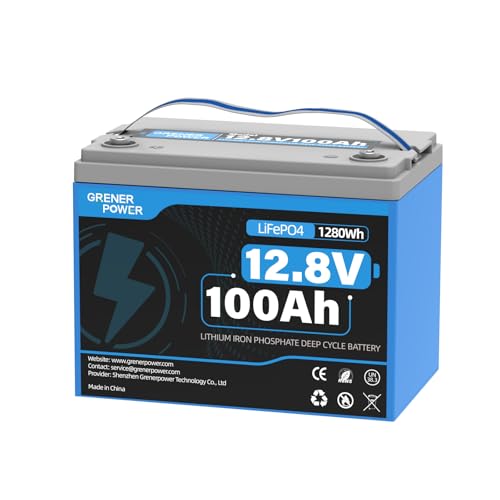
GrenerPower 12V 100Ah Group 24 LiFePO4 Battery (1-Pack)

LiTime 12V 320Ah Mini LiFePO4 Battery (RV, Solar)

LiTime 12V 100Ah Xtra Mini LiFePO4 Battery (RV, Camper)

LiTime 12V 165Ah LiFePO4 Battery (Group 31, Heated)
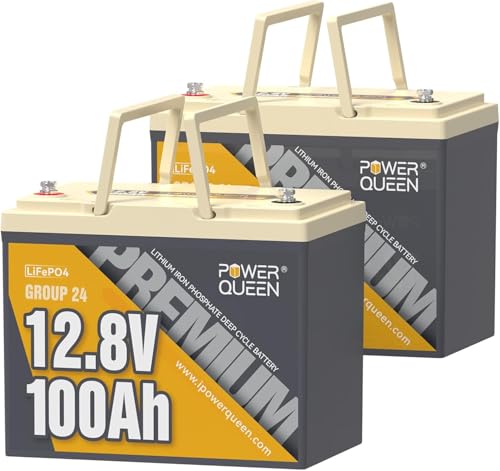
Power Queen 2PACK 12V 100Ah LiFePO4 Group 24 (RV Trailer)

Redodo 12V 100Ah LiFePO4 Battery (Group 31)

Redodo 12V 100Ah RV LiFePO4 Battery (Group 31, Bluetooth)

Redodo 12V 165Ah Bluetooth LiFePO4 Battery (Group 31)
More On The Choices That Made The List
Winter campers who refuse to hang up the rig when the temperature drops have a real reason to look at the SOK 2-P. Its metal case houses 206Ah of usable capacity, enough to run a fridge, lights, and a furnace blower for several days of boondocking without recharging.
The self-heating function is the headline feature. Charging lithium cells in sub-freezing weather can permanently damage them, so the battery warms itself above the safe threshold before accepting a charge. That single trait makes it far more versatile than any of the other picks in cold climates.
A Favorable Mix
- Self-heating chemistry protects cells in winter conditions
- 206Ah capacity covers multi-day off-grid stays without recharge
- LiFePO4 chemistry rated for thousands of deep discharge cycles
- Metal case adds impact resistance over plastic alternatives
- Drop-in form factor for standard battery boxes
Honest Caveats
- Heating function pulls extra current during cold-weather charging
- Heavier than smaller-capacity lithium options
- Higher upfront cost than basic 100Ah lead-acid replacements
Feature Card
Whose Shelf It Belongs On
Full-time RVers and winter campers who camp in freezing temperatures and need reliable charging from solar panels in cold conditions.
Reach For A Different Pick When
Shoppers running a tight bay should consider the LiTime 12V 100Ah Xtra Mini LiFePO4 Battery instead, since its smaller footprint is easier to fit in cramped compartments.
Smartphone-savvy travelers who like checking their battery state from the cab will appreciate Redodo’s Bluetooth-enabled Group 31 option. The mobile app streams real-time voltage, current, and remaining capacity, turning guesswork into a quick glance.
Beyond the app, it delivers standard 100Ah of usable lithium capacity in a common Group 31 footprint. Most RV battery bays accept this size without modification, which simplifies the upgrade path for anyone replacing an aging lead-acid house battery.
Useful Touches
- Bluetooth 5.0 monitoring through a dedicated mobile app
- Group 31 case fits most standard RV compartments
- Low-temperature charging cutoff protects cells below 32°F
- LiFePO4 chemistry rated for thousands of deep discharge cycles
Worth Bearing In Mind
- 100Ah may feel limited for multi-day inverter loads
- App functionality adds complexity for users who prefer analog monitoring
The Right Fit
Weekend RVers who want modern app monitoring without the bulk of a 200Ah-plus battery bank.
Consider Something Else When
Shoppers needing more capacity for solar-heavy setups should look at the LiTime 12V 320Ah Mini LiFePO4 Battery, which packs much larger reserve into a similar footprint.
The GrenerPower Group 24 targets a different crowd: people who cycle their battery hard, day after day. Cylindrical grade A+ cells (small, individually cased cells packed densely together) generally tolerate repeated deep discharges better than the prismatic cells (flat, layered cells in a single rigid block) used in many competitors.
The Group 24 footprint is the second most common RV battery size after Group 31, so this drops into many compact battery boxes without adapter plates. The built-in 100A BMS (battery management system, an internal circuit board that prevents overcharge, overdischarge, and short circuits) keeps the cells within safe operating limits during heavy trolling motor draws or inverter surges.
Everyday Wins
- Cylindrical cells rated for very high cycle counts under deep use
- 100A BMS handles trolling motor and inverter surges
- Group 24 case fits smaller RV and marine battery compartments
- LiFePO4 chemistry holds steady voltage through discharge
Things To Consider
- Single-pack configuration means doubling capacity requires a second unit
- Group 24 is slightly smaller than Group 31, limiting capacity ceiling
Who It Suits Best
Boaters and anglers running trolling motors, plus RV owners who discharge deeply every day and need cells built for the long haul.
Skip It When
If cold-weather camping is on the agenda, the LiTime 12V 165Ah LiFePO4 Battery (Group 31, Heated) handles sub-freezing charging where this GrenerPower unit cannot.
Big power in a small box defines the LiTime 320Ah Mini. The manufacturer trimmed roughly a third of the volume off a standard 300Ah lithium battery while keeping the capacity, which matters enormously in campers where every cubic inch of storage bay counts.
At 320Ah, this battery can power a residential-style refrigerator, lighting, water pumps, and electronics for days without shore power or generator assistance. For solar-heavy off-grid setups, the larger reserve also means more flexibility on cloudy stretches.
A Few Strong Suits
- 320Ah capacity rivals whole-house lithium banks in a compact case
- Smaller footprint than traditional 300Ah lithium batteries
- LiFePO4 chemistry keeps voltage steady through deep discharge
- Suited for high-demand inverter loads
Points To Keep In Mind
- Larger battery means heavier weight than 100Ah options
- Higher upfront investment than smaller lithium packs
- No cold-weather heating feature for sub-freezing charging
Feature Snapshot
Best Suited To
Off-grid solar enthusiasts and full-time RVers who need the largest possible lithium reserve without sacrificing valuable storage space.
Look Elsewhere When
Shoppers needing a smaller, lighter pack for weekend camping should consider the LiTime 12V 100Ah Xtra Mini LiFePO4 Battery, which trades capacity for portability.
At roughly 19 pounds, the Xtra Mini lives up to its name. Built-in handles make carrying it to a battery bay less of a workout, which is genuinely appreciated during install days. Teardrop trailers, truck campers, and small vans all benefit from a battery this light.
The compact form factor pairs with Bluetooth 5.0 monitoring through the LiTime app, so you can glance at your state of charge from the cab. For typical weekend loads (lights, a fridge, phone charging), 100Ah of usable lithium is plenty.
Positive Points
- Weighs around 19 pounds for easy solo installation
- Compact size fits tight battery bays and small trailers
- Bluetooth monitoring through the LiTime mobile app
- LiFePO4 cells hold steady voltage throughout discharge
Trade-Offs
- 100Ah limits runtime for high-draw inverter appliances
- Lacks a built-in heater for cold-weather charging
Made For
Truck camper owners, teardrop trailer travelers, and anyone with a tight battery compartment who values portability over maximum capacity.
Where Another Pick Suits Better
Full-time RVers running a microwave or coffee maker through an inverter will find the Redodo 12V 165Ah Bluetooth LiFePO4 Battery a better capacity match.
Two heating modes (Regular and Energy-Efficient) put this 165Ah LiTime battery in a useful middle ground. Regular mode warms the cells before charging whenever the temperature drops below about 41°F, which protects the battery from the permanent damage that charging frozen lithium can cause.
Capacity lands between typical 100Ah starter packs and the largest 320Ah units, hitting a sweet spot for most RV and marine users. The Group 31 case fits standard battery boxes without modification.
What It Does Well
- Self-heating function enables safe sub-freezing charging
- 165Ah capacity suits multi-day off-grid stays
- Group 31 form factor fits common RV compartments
- Energy-Efficient heating mode reduces winter power draw
Less-Strong Areas
- Heating function uses battery energy during cold starts
- Mid-tier capacity costs more than basic 100Ah lithium
Who Should Grab It
Four-season campers who travel into freezing temperatures and want reliable winter charging without sacrificing mid-range capacity.
A Better Fit Elsewhere
Shoppers without cold-weather concerns can save cost with the Redodo 12V 100Ah LiFePO4 Battery (Group 31), which omits the heating hardware entirely.
Drop-in convenience defines the Power Queen dual pack. Each battery fits a standard Group 24 box, so swapping out two old flooded lead-acid units takes minutes rather than hours. No wiring changes, no adapter plates, no fuss.
Two batteries in parallel double the available capacity to 200Ah, which handles longer boondocking stretches with a residential fridge and moderate inverter loads. The lithium cells also weigh roughly a third of equivalent AGM (absorbed glass mat, a sealed lead-acid battery technology) units, leaving more cargo capacity for gear.
Bright Spots
- Two batteries ship together for parallel installation
- Direct fit in Group 24 boxes with no modifications
- 200Ah combined capacity extends off-grid runtime
- Significantly lighter than equivalent AGM batteries
Practical Considerations
- Two-pack configuration requires adequate battery bay space
- Higher total cost than single-battery lithium options
Perfect Match For
Travel trailer owners replacing dual lead-acid house batteries who want a clean lithium upgrade without rewiring.
Swap It Out When
Single-battery setups with limited bay space point to the LiTime 12V 100Ah Xtra Mini LiFePO4 Battery, which consolidates power into one compact unit.
Sometimes the best battery is the simplest one. The original Redodo 100Ah Group 31 skips Bluetooth, skips heating, and skips the premium price tag, focusing entirely on reliable lithium performance. Automotive-grade LiFePO4 cells deliver steady voltage through deep discharge.
For users who already have a battery monitor or prefer analog readings, the absence of app connectivity is a feature, not a flaw. The straightforward design also tends to be the easiest to troubleshoot.
Why It Works Well
- Automotive-grade LiFePO4 cells for steady discharge voltage
- Group 31 size fits most standard RV and marine bays
- Lower complexity than app-connected alternatives
- Long cycle life under typical deep discharge patterns
Small Caveats
- No Bluetooth monitoring requires a separate battery monitor
- Lacks low-temperature charging protection for winter use
Built With In Mind
Experienced RVers and marine users who already own a shunt-based battery monitor and want dependable lithium performance without extras.
Not Your Match When
Beginners wanting smartphone monitoring should consider the Redodo 12V 100Ah RV LiFePO4 Battery (Group 31, Bluetooth) instead.
Remote power-off through the Redodo app is the standout feature here. Walk away from the rig for the day, forget whether you switched something off? Tap the app and the battery disconnects on command. That single function prevents many dead-battery surprises.
Real-time monitoring of voltage, current, and capacity runs through Bluetooth 5.0, and the low-temperature cutoff halts charging below freezing. It is essentially the smarter sibling of the simpler Redodo Group 31 model reviewed above.
What Stands Out
- Bluetooth 5.0 with remote power-off through the mobile app
- Low-temperature charging cutoff for cold-weather protection
- Group 31 case fits standard RV and marine battery boxes
- Real-time capacity readings help plan trip energy use
Points To Note
- App dependence may frustrate users who prefer analog gauges
- Remote disconnect works only within Bluetooth range
Quick Facts
Right Fit For
Long-distance road trippers and snowbird RVers who appreciate remote diagnostics and the peace of mind that comes from a quick app check.
Wrong Turns To Avoid
Shoppers on a tighter budget can skip the Bluetooth and remote features with the basic Redodo 12V 100Ah LiFePO4 Battery (Group 31).
Inverter-heavy rigs demand high continuous discharge, and this 165Ah Redodo delivers. The internal BMS supports sustained high current draw, making it suitable for air conditioners, coffee makers, and other demanding appliances through a power inverter.
At 165Ah, capacity sits comfortably between standard 100Ah starter lithiums and the largest 320Ah monsters. Bluetooth monitoring rounds out the package, giving you real-time data on voltage and remaining capacity without requiring a separate shunt monitor.
The Practical Payoff
- 165Ah capacity suits demanding inverter-driven appliances
- Bluetooth monitoring built into the BMS
- Group 31 case fits standard RV battery bays
- Strong continuous discharge rating for short, intense draws
- LiFePO4 chemistry for long cycle life
Where It May Fall Short
- Higher output rating commands a premium over basic 100Ah units
- No built-in heater for sub-freezing charging
Who Will Love This
RVers running induction cooktops, coffee makers, or small air conditioners through an inverter who need both capacity and high discharge capability.
Another Choice May Suit
Campers chasing maximum reserve for solar storage should consider the LiTime 12V 320Ah Mini LiFePO4 Battery, which nearly doubles the capacity at a similar voltage class.
## What To Weigh Before Choosing Your Next House BatteryCapacity usually leads the conversation, but it is not the only attribute that matters. Amp-hour ratings tell you how much energy the battery stores, while the BMS dictates how much current the battery can safely deliver at any moment. A 100Ah pack running a 2000W inverter needs a BMS rated for roughly 165A continuous draw, which is why high-output models like the Redodo 165Ah exist alongside garden-variety 100Ah options.Form factor is the next practical filter. Group 24, Group 27, and Group 31 are the three common battery case sizes in RV and marine use. Measure the bay before shopping, because retrofitting a larger case often means fabrication work. The LiTime 320Ah Mini exists specifically because builders wanted Group 31 capacity in a Group 31 footprint.Cold-weather behavior deserves attention from anyone camping outside the summer months. Lithium cells develop permanent internal damage if charged below freezing, so either a self-heating function (like the SOK 206Ah or LiTime 165Ah Heated) or a low-temperature charging cutoff (like the Redodo Bluetooth models) is essential for four-season travel. Storage temperature matters too: most LiFePO4 batteries handle storage down to about minus 4°F, but charging in those conditions requires protection.Finally, consider how you monitor the battery. Bluetooth-equipped models put state-of-charge data directly on a phone, while simpler units require an external shunt monitor. Both approaches work, and the choice often comes down to whether you prefer analog gauges or smartphone dashboards.## Key Considerations Across These Picks### Traps First Timers Fall IntoMany first-time lithium shoppers focus on the largest amp-hour rating within budget and call it good. Capacity matters, but matching the BMS output to your largest inverter load prevents frustrating shutdowns mid-coffee brew. Another common slip is ignoring the existing battery bay dimensions until the new unit arrives at the door. Measure twice, order once.### Where The Extra Money GoesHigher-tier lithium batteries typically buy stronger BMS components, more robust cell balancing (the process of equalizing voltage across all cells to prevent weak cells from limiting overall capacity), and extras like Bluetooth or heating films. For weekend warriors, the basic 100Ah tier delivers all the usable power most rigs need. Full-timers and cold-weather travelers tend to recoup the premium quickly through longer cycle life and reliable winter charging.## Frequently Asked Questions### How long will a 100Ah LiFePO4 battery run a typical RV fridge?A residential-style 12V fridge drawing around 50W continuously will run for roughly 24 hours on a fully charged 100Ah lithium battery before reaching a safe low-voltage cutoff.### Can LiFePO4 batteries be mounted on their side?Most LiFePO4 batteries can be mounted in any orientation since the cells are sealed, though upright installation remains the most common and easiest to vent in warm conditions.### Do lithium batteries need a special charger?A lithium-compatible charger with appropriate voltage settings (typically 14.4–14.6V absorption) is recommended to reach full capacity and avoid BMS disconnects.### What is the real lifespan of a LiFePO4 battery?Most LiFePO4 batteries in this roundup are rated for thousands of deep cycles, often translating to 8–12 years of regular camping use before capacity drops noticeably.### Will cold weather ruin a lithium battery?Discharging in cold weather is fine, but charging below freezing without a heater or low-temperature cutoff can permanently damage the cells.## Wrap UpRun through your typical day, not the marketing photos, when choosing a 12v camper battery. Match capacity to your real loads, confirm the case fits the bay, and decide whether cold-weather protection and Bluetooth monitoring earn their keep. The right battery is the one that disappears into your routine and just keeps delivering power trip after trip.