Dead batteries never arrive at a convenient time. Whether you’re topping off a stored motorcycle, jump-starting a truck in a parking lot, or wiring a portable power station to a solar setup, the right lead makes the difference between a quick fix and a frustrating afternoon. This lineup covers chargers, jumper cables, adapters, and testers, all designed around the standard 12V electrical system that powers most cars, boats, ATVs, and off-grid gear.
The Shortlist At A Glance
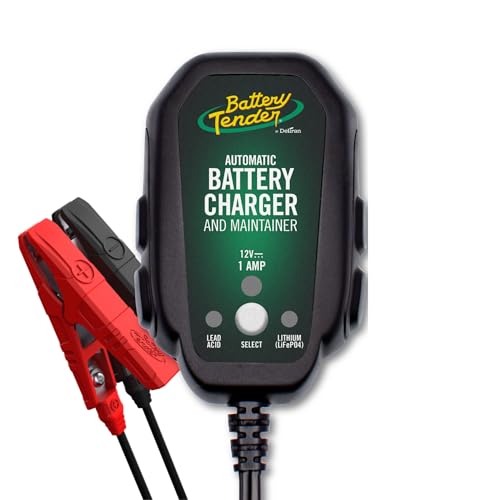
Battery Tender Junior 12V, 800mA Battery Charger and Maintainer
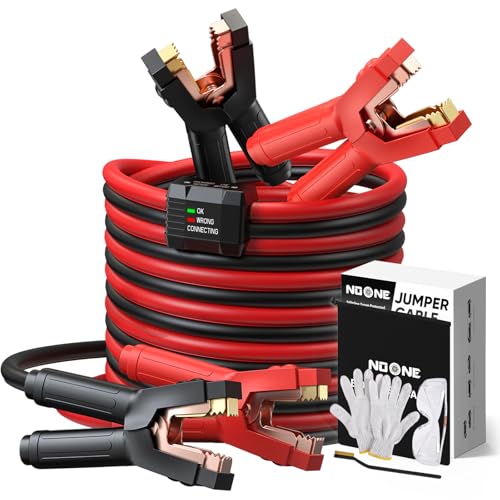
Noone 0 Gauge 25 FT Heavy Duty Jumper Cables

Energizer Jumper Cables 30 FT 1 Gauge 800A

CUZEC 14FT 14AWG 20A SAE Alligator Clip Cable

Tonton 12V/24V 2M Car Charger 14AWG

Tonton XT60 Car Charger Extension Cable 14AWG

NOCO GENPRO10X1 12V 10A 1-Bank Marine Charger
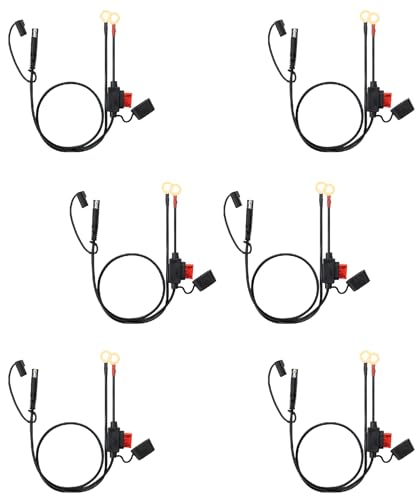
Bates SAE to O Ring Terminal Harness 6 Pack
Tonton 12V Car Battery Charging Cable 6.6FT

TOPDON BC100 12V Battery Tester 100-2000 CCA
A Deeper Look At The Lineup
Few chargers handle seasonal storage as gracefully as the Battery Tender Junior. The unit delivers 800mA of steady current to a 12V battery, running quietly in a garage corner while your motorcycle, lawn tractor, or classic car sits idle for months. What separates it from bulkier power supplies is the chemistry switch: a single button toggles between lead-acid (flooded, AGM, or gel) and lithium (LiFePO4) profiles, which matters when your garage holds a mix of old and new battery types.
The compact housing stores easily in a shelf or toolbox, and the included ring-terminal harness makes permanent mounting on a frequently-ridden bike painless. For most homeowners juggling two or three stored vehicles, this strikes a sensible balance between capability and footprint.
A Few Strong Suits
- Switchable chemistry profiles protect both legacy lead-acid batteries and modern LiFePO4 packs from incorrect charging curves.
- Float-maintain mode keeps a stored battery topped off indefinitely without overcooking the cells.
- The 800mA output sits in the sweet spot for powersports batteries, charging faster than a trickle but gentler than a high-amp unit.
- Small enough to leave connected in tight garage spaces without blocking other equipment.
Points To Note
- At 800mA, expect a slow recovery on a deeply discharged full-size car battery, so plan ahead rather than rushing.
- The included quick-disconnect harness is short, which works for bikes but may require an extension on larger engine bays.
Key Specs
Made For
Owners of multiple powersports vehicles who want a single maintainer that won’t cook a lithium battery or underfeed a flooded cell.
Skip It When
You need to recover a deeply discharged full-size automotive battery fast; the NOCO GENPRO10X1 handles heavy-duty recovery with more headroom.
Crossed jumper cables rank among the most expensive beginner mistakes in automotive care. The Noone set addresses that head-on with a built-in polarity module: a red warning light and buzzer fire the moment the clamps land on the wrong terminals, and current stays cut until you correct the mistake. For someone who has never boosted a car before, that single feature pays for itself the first time you fumble a connection.
The 0-gauge copper core and 25-foot span handle full-size trucks and SUVs, and the longer reach comes in handy when the donor vehicle can only park nose-to-tail in a tight lot. Compared to the standard 4-gauge emergency set most cars carry, the heavier gauge here delivers a stronger surge with less voltage drop.
What Stands Out
- Reverse polarity protection with audible and visual alerts prevents the most common jump-start error.
- 0-gauge conductor moves enough current for large-displacement gas and diesel powertrains.
- 25-foot length handles awkward parking configurations that shorter cables cannot.
- Heavy insulation jacket holds up to repeated trunk storage without cracking in cold weather.
Trade Offs
- The polarity module adds a small inline box that takes up extra trunk space and may snag on cargo.
- Heavier gauge copper makes the bundle noticeably heavier than a budget 8-gauge set.
Best Suited To
First-time drivers and households with a single set of jumper cables that needs to work on whatever vehicle is dead next.
Consider Something Else When
You run a roadside assistance operation and need a permanent-mount solution; the Energizer 30 FT kit offers quick-connect hardwiring for fleet vehicles.
Roadside service trucks and tow operators jump more batteries in a month than most drivers do in a decade. The Energizer kit is built for that reality, pairing a 30-foot, 1-gauge cable set with a permanent-install quick-connect plug that mounts to the service truck’s chassis. Once wired, the operator pulls up behind a stranded vehicle, plugs in, and starts the engine from the cab rather than crawling under the hood.
Rated for 800A and engines up to 8-liter gasoline or 6-liter diesel, the cables cover the vast majority of passenger and light commercial vehicles a service truck encounters. The thick vinyl coating survives repeated outdoor storage and resists the kind of abrasion that cheaper jackets pick up in a crowded truck bed.
Real-World Strengths
- 30-foot reach allows rear-to-front or rear-to-side jump starts in crowded parking scenarios.
- Permanent quick-connect kit reduces setup time on every service call.
- 800A capacity covers heavy-duty gasoline and mid-size diesel engines without strain.
- Spring-loaded clamps and ergonomic handles improve grip on stubborn battery terminals.
Worth Noting
- The permanent-install format requires basic wiring knowledge and a suitable mounting location on the service vehicle.
- At 30 feet, the cable bundle is bulky and heavier than casual-use sets, so it’s overkill for a personal commuter car.
Feature Snapshot
Who Will Love This
Fleet operators, tow truck drivers, and roadside assistance providers who jump batteries daily and value speed over portability.
A Better Fit Elsewhere
Casual commuters who just want a trunk emergency set; the Noone 0-gauge cables deliver protection and reach without the permanent-install complexity.
The SAE quick-disconnect standard shows up everywhere in 12V accessories: trickle chargers, solar maintainers, air compressors, and tire inflators all use the same two-pin plug. The CUZEC cable bridges that plug to a set of alligator clips, letting you clip onto a battery directly when a permanent SAE pigtail isn’t already wired in. The 14-foot length runs from a parked bike or tractor to a workbench charger without stretching.
A built-in 20A fuse sits between the clips and the SAE end, which matters more than it sounds. A dead short across battery clips generates heat fast, and the fuse sacrifices itself before the wire insulation melts. Backup fuses ship in the package, and the weatherproof cover keeps moisture out of the connector when the cable sits outdoors.
The Practical Payoff
- 20A inline fuse protects against the short circuits that bare clip leads can cause.
- 14-foot reach works for garage setups where the battery sits away from the wall outlet.
- Weatherproof SAE cover prevents corrosion when the cable lives outside or in a damp shed.
- Backup fuses included in the package extend the cable’s service life without a separate trip to the store.
Small Caveats
- 14 AWG copper suits low-to-moderate accessory loads but isn’t heavy enough for jump-starting.
- The 20A fuse limits use to accessories drawing under that threshold, so high-power inverters need a heavier harness.
Right Fit For
Motorcycle and tractor owners who already use SAE-style maintainers and need a clip-on adapter for occasional battery swaps.
Look Elsewhere When
You need a hardwired lead with ring terminals; the Bates SAE to O Ring harness ships a six-pack designed for permanent mounting.
Portable power stations rarely include a car-charging cable in the box, and the ones that do often use proprietary plugs. The Tonton car charger fills that gap with a 14AWG cable that ends in DC7909 and 8020 connectors, two of the most common input standards on mid-size stations from Jackery, BLUETTI, Anker, GRECELL, Goal Zero, and Westinghouse. The 2-meter length threads from a car’s 12V socket through a trunk or hatch without pulling tight.
Driving an hour on the highway transfers enough charge to top off a typical 300-500Wh station enough for a phone and a few lights. Campers who run their station off a car during multi-day trips will appreciate not having to idle the engine just to keep the cooler running.
Notable Gains
- Wide compatibility across major power station brands eliminates the trial-and-error of finding the right adapter.
- 14AWG copper handles 12V and 24V vehicle systems without overheating on long drives.
- Dual connector tips cover stations that switched input standards between generations.
- 2-meter length reaches from any cigarette lighter to a rear cargo area.
Honest Caveats
- Charging speed depends entirely on the vehicle’s alternator output, so older cars with weak alternators charge slowly.
- Car charging generates heat at the cigarette plug, so unplugging immediately after a long drive is not advisable.
Perfect Match For
Overlanders and campers who recharge mid-size portable stations from a running vehicle between campsites.
Reach For A Different Pick When
You run a larger solar generator with XT60 input; the Tonton XT60 cable matches that connector standard natively.
XT60 connectors have quietly become the de facto input on larger portable power stations. The yellow plastic housing locks firmly into matching ports, handles higher currents than barrel plugs, and resists the arcing that cheaper connectors suffer under load. The Tonton cable mates a car’s 12V socket to that standard, routing through a 6.6-foot span with a double-layer PVC jacket built for outdoor conditions.
The cable pairs well with Anker SOLIX, Bluetti Elite, and EcoFlow units that have moved away from the older DC7909 round plug. For anyone running a modern solar generator from a vehicle, the cable extends the charging setup without buying a brand-specific adapter.
Strengths Worth Knowing
- XT60 termination matches newer-generation stations that abandoned legacy barrel connectors.
- Double PVC jacket resists UV, abrasion, and the kind of moisture that kills single-layer cables.
- 6.6-foot span reaches from a front cigarette socket to a hatch-mounted station.
- 14AWG pure copper sustains charging current without measurable voltage sag over the cable length.
A Few Limitations
- XT60 isn’t universal, so older Jackery or Goal Zero stations with different ports still need a different cable.
- Charging rate caps at the vehicle’s 12V socket output, typically 10-15A, regardless of cable gauge.
Whose Shelf It Belongs On
Off-grid enthusiasts running modern solar generators who charge from a vehicle between sunny days.
Swap It Out When
You own an older power station with a DC7909 input; the Tonton 12V/24V cable covers that plug standard.
Marine environments punish electronics with salt spray, vibration, and constant humidity. The NOCO GENPRO10X1 is engineered for exactly that abuse, with a fully sealed, waterproof housing rated for permanent onboard installation on a boat. Once wired to a single 12V battery bank, it charges and maintains flooded, AGM, gel, and LiFePO4 chemistries without manual switching, which matters when the battery sits in a hard-to-reach bilge compartment.
At 10A, the unit delivers roughly three times the output of the Battery Tender Junior, recovering a deeply discharged group 24 or group 31 marine battery overnight rather than over a long weekend. The compact footprint also helps when space behind the helm panel is at a premium.
Noteworthy Benefits
- Fully waterproof housing tolerates bilge splash and salt-air exposure that destroys non-marine chargers.
- 10A output recovers a deeply discharged house battery in a single overnight session.
- Automatic chemistry detection removes the lead-acid-versus-lithium switch decision from routine maintenance.
- Compact size fits cramped engine compartments where bulkier chargers won’t mount cleanly.
Where It Is Less Suited
- Single-bank design only charges one battery, so multi-battery setups need a higher-bank model or a second unit.
- Permanent install requires routing AC shore power to the unit, which a casual weekend boater may not have set up.
Technical Highlights
Built With In Mind
Boat owners who store vessels at a slip with shore power and want a permanent charger that survives the marine environment.
A Better Fit Elsewhere
Garage mechanics maintaining multiple vehicles on a bench; the Battery Tender Junior handles that scenario at lower cost.
Wiring projects tend to multiply. One battery maintainer leads to a tender for the truck, then the boat, then the generator in the shed, and suddenly you’re buying harnesses one at a time. The Bates 6-pack ships six SAE-to-O-ring leads in a single bundle, each 2 feet long with 18AWG SPT-2 wire. The O-ring terminals bolt directly to battery posts, while the SAE end mates with any standard maintainer or solar controller.
The shorter 2-foot length suits vehicles where the battery sits close to a frame rail or fender well, which is most motorcycles and many compact tractors. Six leads in a pack also makes sense for shops that hardwire a fleet at once.
Key Advantages
- Six-pack format costs less per lead than buying individual harnesses.
- 2-foot length fits tight battery compartments on motorcycles and compact equipment.
- 18AWG SPT-2 wire balances flexibility with current capacity for low-power accessories.
- O-ring terminals create a vibration-resistant connection that survives rough terrain.
Points To Keep In Mind
- 18AWG gauge is undersized for jump-starting or high-amperage loads, so this stays in the maintainer-and-accessory lane.
- 2-foot leads can fall short on equipment with batteries mounted far from accessible frame points.
Who Should Grab It
Garage tinkerers maintaining multiple stored vehicles who want to hardwire SAE pigtails on each one in a single afternoon.
Another Choice May Suit
You only need one or two leads and prefer an inline fuse; the CUZEC alligator-to-SAE cable adds fuse protection.
The cigarette lighter socket on most vehicles stays live even when the ignition is off, which makes it a sneaky-good charging port for a portable power station or a maintenance top-off. The Tonton cable flips that around: one end plugs into any 12V cigarette socket, the other clips directly onto a lead-acid battery, letting you charge a vehicle battery from a running car or, more commonly, draw auxiliary power from a running vehicle to top off a portable station with a 12V input.
The 15A inline fuse protects against the short-circuit risk that bare alligator clips carry, and 14AWG copper sustains typical accessory loads without overheating. For a quick emergency top-off on a neglected battery, this cable does the job without dragging out a heavy charger.
A Strong Showing
- Cigarette lighter adapter reaches sealed batteries without removing terminals or panels.
- 15A fuse adds a layer of safety missing from most generic clip cables.
- 14AWG copper sustains mid-range charging currents without voltage drop.
- 6.6-foot length bridges the gap between a parked donor vehicle and a battery in a tight bay.
Some Limits To Know
- Works only with 12V systems; 24V trucks will trip the fuse or stress the lighter socket.
- Charging speed caps at what the cigarette socket supplies, which limits usefulness on larger batteries.
The Right Fit
Drivers who want a simple, no-install way to charge a lead-acid battery from a running vehicle using existing 12V sockets.
Where A Sibling Pick Shines
You need to charge from a wall outlet at home; the Battery Tender Junior is purpose-built for that overnight maintenance cycle.
A healthy-looking battery can still hide a dying cell, and the only way to know for sure is to test under load. The TOPDON BC100 clamps onto a 12V battery and reports cold cranking amps (CCA) within a 100 to 2000 range, covering everything from a small motorcycle battery to a heavy-duty truck pack. The unit reads flooded, AGM flat plate, AGM spiral, gel, and EFB chemistries, which covers virtually every automotive battery on the road.
For a DIY mechanic, the value is catching a weak battery before it strands you. A 30-second test before a road trip costs nothing and reveals whether the battery is worth keeping or needs replacement. Independent shops also rely on testers like this to back up warranty claims with hard data.
Practical Pluses
- 100-2000 CCA range covers motorcycles, compact cars, SUVs, and light commercial trucks in one tool.
- Multi-chemistry support reads the five most common battery types without adapters or menu gymnastics.
- Handheld form factor fits in a glove box for on-the-road diagnostics.
- Numeric readout removes the guesswork that comes from trying to interpret a slow crank by ear.
Potential Sticking Points
- Requires the vehicle to be off and the surface charge to settle for the most accurate readings.
- Does not test the alternator or starter, so a complete charging-system diagnosis still needs more equipment.
Quick Facts
Best Suited To
DIY mechanics and small-shop technicians who want a quick go/no-go reading before replacing or charging a battery.
Where Another Pick Suits Better
You simply need to maintain or charge, not test; the NOCO GENPRO10X1 charger is the right tool for routine marine battery care.
What Matters Most Before Choosing 12v Battery Leads
Match The Lead To The Battery Type
Lead-acid and lithium batteries charge along different voltage curves, and a charger designed for one can damage the other. Flooded, AGM, and gel cells tolerate gentle absorption phases, while LiFePO4 packs need precise cutoff voltages to avoid permanent capacity loss. Chargers like the Battery Tender Junior and NOCO GENPRO10X1 offer selectable or automatic chemistry detection, which removes the risk of crossing wires when the garage holds a mix. If your household runs both types, look for a charger that handles them on the same unit rather than buying two dedicated models.
Gauge And Length Work Together
Cable gauge (the thickness of the copper conductor) and total run length both influence how much voltage reaches the load. A longer cable needs a heavier gauge to compensate for the resistance that builds up over distance. Jumper cables for a full-size truck need 0 or 1 gauge to deliver cranking amps without dropping the donor voltage below usable levels. Shorter accessory leads on a motorcycle can get away with 14 or 18 AWG because the loads are smaller and the runs are short. The right combination depends on the current you expect to push and how far it has to travel.
Connector Standards Drive Compatibility
SAE quick-disconnects, XT60 plugs, DC7909 and 8020 barrel connectors, O-ring terminals, and alligator clips all coexist in the 12V accessory world. A charger or cable only works if both ends speak the same language. Before buying a replacement lead, check what connector your battery, maintainer, or portable station actually uses. For mixed fleets, a small collection of adapters prevents the frustration of having the right voltage but the wrong plug.
Build Quality Matches The Environment
A garage-stored maintainer faces different abuse than a marine charger bolted to a hull. Moisture, salt spray, vibration, and temperature swings all shorten cable life when the jacket and connectors aren’t built for them. Look for sealed housings, weatherproof covers, and double-layer jackets wherever the lead spends time outdoors or near a vehicle that sees rough terrain.
Where Shoppers Go Wrong And When Spending More Pays Off
Pitfalls Shoppers Hit
The most common mistake is buying a heavy-duty cable for a low-power task, then wondering why the trunk feels overloaded every time the cable moves. Match the tool to the actual current and distance, not to an imagined worst case. A second mistake is ignoring connector type until the package arrives, which leads to returns and adapter stacking. Measure twice on plug standard before committing, especially with portable power stations where brands quietly change input ports between generations.
The Upgrade Payoff
Higher-tier models earn their cost through better sealing, automatic chemistry handling, and warranty-backed durability. A marine-rated onboard charger costs more than a garage maintainer, but the housing survives conditions that destroy the cheaper unit in a single season. For anyone who depends on the equipment daily, the upgrade usually pays for itself in avoided downtime and replacement parts.
Frequently Asked Questions
What gauge jumper cable do I need for a standard car?
For most sedans and compact SUVs, a 4-gauge or 2-gauge set handles routine jump starts without excessive voltage drop. Full-size trucks and diesel engines benefit from heavier 0 or 1 gauge cables that move higher cranking amps over longer distances.
Can I use a 12V maintainer on a lithium battery?
Only if the maintainer explicitly lists LiFePO4 in its supported chemistries. Lead-acid float voltages sit above the lithium ceiling, so an incompatible charger slowly damages a LiFePO4 cell. Switchable units like the Battery Tender Junior include a lithium mode for exactly this reason.
What’s the difference between SAE and alligator clip connectors?
SAE is a two-pin quick-disconnect plug that mates permanently with a maintainer or solar controller. Alligator clips are temporary spring-loaded jaws for direct battery contact. Adapters bridge the two for occasional use.
How long can a battery tender stay connected?
Float-maintain chargers can hold a battery at full charge indefinitely without overcharging, making them safe for seasonal storage on motorcycles, classic cars, and lawn tractors. The charger drops to a low-voltage pulse once the battery tops off.
Do I need a battery tester if I already have a charger?
A charger maintains and recovers, but it doesn’t tell you whether the battery is healthy to begin with. A tester like the TOPDON BC100 catches weak cells before they leave you stranded, which is useful before long trips or after months of storage.
Closing Remarks
The right 12V lead depends entirely on what you’re connecting, how often, and where. A garage maintainer earns its shelf space over years of quiet duty. A heavy jumper cable earns its trunk space the one morning your car refuses to start. Match the tool to the task, and the rest of the lineup fills in around it.