A loose or corroded lug can turn a routine battery swap into a frustrating afternoon. Whether you are rewiring a boat, grounding a car stereo, or rebuilding a solar bank, the right battery cable connectors make every connection faster, safer, and longer-lasting. Most DIYers and weekend mechanics end up at the same crossroad: bare copper for maximum conductivity, or tinned copper for corrosion resistance in damp environments. This roundup sorts through ten solid kits built around 4 AWG and 1/0 AWG wire, with ring terminals sized for common 3/8″ and 5/16″ studs. You will see who each kit really serves, where the trade-offs show up, and which one belongs in your toolbox.
The Choices Worth Comparing

JOYPXF 12Pcs 4 AWG 3/8″ Heavy Duty Copper Wire Lugs

JOYPXF 16Pcs 4 AWG 3/8″ Tinned Copper Wire Lugs

RED WOLF 1/0 Gauge Copper Ring Terminals 12 PCS
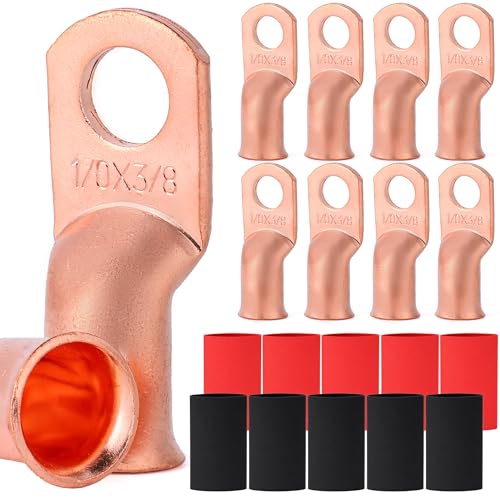
TKDMR 10 PCS 1/0 AWG – 3/8″ Battery Cable Lugs

RED WOLF 20PCS 4 AWG-5/16 Marine Grade Wire Lugs

RED WOLF 20PCS 4 AWG-3/8 Marine Grade Wire Lugs

Sanuke 10pcs 4 Gauge-3/8 (M10) Ring Terminals Lugs

JOYPXF 25Pcs 4 AWG 3/8 Copper Wire Lugs

RED WOLF 4 AWG 3/8″ Stud Copper Ring Terminals 10PCS

SELTERM 25pcs 2 AWG 3/8″ Bare Copper Lugs
A Breakdown Of The Leading Choices
For the home garage running standard 4 AWG cable, the JOYPXF 12-piece kit covers the basics without overspending. Each lug is built from bare annealed copper (copper that has been heat-softened for better flexibility and conductivity) with a 3/8″ stud hole, and the bundle ships with 12 pieces of heat shrink tubing so you can finish the crimp cleanly. The included 4 gauge size matches most car, motorcycle, and small boat battery leads.
Bare copper conducts electricity more efficiently than tinned copper, which matters when you are pushing serious amperage through short cable runs. For an installer who works indoors or in dry climates, that translates into cooler terminals under load. Compared with the JOYPXF tinned kit reviewed next, this one trades corrosion resistance for higher conductivity at a slightly lower count.
Practical Advantages
- Bare annealed copper maximizes current flow on standard 4 AWG runs
- Twelve matching pieces cover a full vehicle rewire without leftovers
- Compatible with both crimping and soldering for a flexible install approach
- Heat shrink tubing included, so no extra trip to the hardware store
- 3/8″ stud fits most common battery posts and chassis grounds
Honest Caveats
- Bare copper can oxidize (develop a dull surface film) faster than tinned copper in damp environments
- Twelve pieces may run short for larger projects with multiple accessory circuits
Feature Snapshot
Right Fit For
Home mechanics wiring a daily driver or small trailer in a dry garage will find this kit hits the sweet spot of capability and value.
Reach For A Different Pick When
Boaters and anyone working near saltwater should choose the RED WOLF 4 AWG-3/8 Marine Grade Wire Lugs instead, since tinned copper resists corrosion far better.
Step up to sixteen pieces and you get more room for error, plus the corrosion-fighting benefit of tinned copper (copper coated with a thin layer of tin). This JOYPXF kit targets installers who want one bag to cover a full truck or trailer, with extras left over for the next job. The 3/8″ stud hole, 4 AWG barrel, and included heat shrink keep the install process simple.
Tin plating slows oxidation, which is a real plus under the hood where heat, road grime, and battery acid fumes do their worst. You will notice slightly higher resistance compared with bare copper, but for most 12V automotive work that difference is invisible in practice. Versus the 12-piece JOYPXF kit earlier, this one trades a few millimeters of conductivity for longer-lasting terminals and a higher piece count.
Features That Help
- Tinned copper surface slows corrosion in humid or road-salted environments
- Sixteen pieces handle a full rewire plus a few accessory circuits
- Matching heat shrink tubing keeps the polarity clear at the terminal
- Crimps or solders equally well, depending on your tool kit
Points To Note
- Tin plating adds slight resistance versus bare copper on long high-amperage runs
- Surface may show light scratches from handling, which is purely cosmetic
- More pieces than some single-project shoppers actually need
Who It Suits Best
Truck owners, off-roaders, and anyone working in wet or road-salted climates who values corrosion resistance over peak conductivity.
Consider Something Else When
You only need a handful of lugs for a quick repair, in which case the SELTERM 25pcs 2 AWG kit below offers more pieces in a thicker gauge.
When the cable gauge jumps from 4 AWG to 1/0 AWG (a much thicker conductor designed for heavy current), you need lugs with a beefier barrel and a longer crimp zone. RED WOLF’s 12-piece kit arrives ready for that exact upgrade, mixing 3/8″ and 5/16″ stud sizes so you can mate to alternators, inverters, and winches without buying two kits. The 3:1 ratio dual wall adhesive heat shrink (tubing with an inner adhesive layer that melts and seals when heated) seals the joint against moisture and vibration.
This is the kit you reach for on a dual-battery van build or a 2000W inverter installation. The dual stud sizes mirror the JOYPXF 16-piece kit’s flexibility, but with a conductor gauge that handles triple the current. Compared with the thinner 4 AWG options earlier in this list, you trade flexibility for raw current capacity.
Key Advantages
- 1/0 AWG barrel handles high-amperage alternators and inverters
- Both 3/8″ and 5/16″ stud sizes included for mixed hardware
- 3:1 adhesive-lined heat shrink creates a sealed, vibration-resistant joint
- Bare annealed copper construction for maximum current transfer
Trade-Offs
- Requires a heavy-duty crimper rated for 1/0 cable, not a basic hobby tool
- Twelve pieces run out fast on multi-circuit installs
- No tinned option, so marine use calls for extra sealing effort
Made For
Van builders, off-grid solar installers, and anyone running a 2000W or larger inverter who needs lugs that will not bottleneck the system.
A Better Fit Elsewhere
Smaller automotive repairs around a single battery can save money with the RED WOLF 4 AWG 3/8″ Ring Terminals reviewed later in this list.
TKDMR keeps the count modest at ten pieces, which suits the weekend project where you only need a handful of solid 1/0 lugs. The 3/8″ stud fits standard battery posts, and the included 4:1 adhesive-lined heat shrink (tubing that shrinks to a quarter of its original diameter for a tight seal) gives every crimp a professional finish. Bare annealed copper keeps resistance at the lowest possible level.
This kit sits between the RED WOLF 1/0 set above and the smaller 4 AWG kits, balancing current capacity with a manageable piece count. If you are upgrading one battery lead rather than rebuilding a whole bank, ten pieces hits the mark. Owners commonly report the lugs take solder cleanly, which is helpful when a proper hex crimper is not on the bench.
Reasons It Performs
- Ten-piece count is realistic for a single-project upgrade
- 4:1 ratio heat shrink seals tighter than standard 3:1 tubing
- Bare copper construction suits dry, climate-controlled installs
- Accepts both crimp and solder terminations
Worth Bearing In Mind
- Single 3/8″ stud size limits flexibility on mixed hardware
- Bare copper demands sealing spray or grease in any humid environment
Quick Facts
Best Suited To
DIYers upgrading a single battery lead on a truck, audio build, or solar bank who want a manageable piece count without sacrificing current capacity.
Skip It When
Boat owners should consider the RED WOLF 1/0 Gauge kit reviewed earlier, which pairs 1/0 capacity with a marine-friendly 5/16″ stud option.
Marine environments punish copper connections with salt spray, condensation, and constant humidity. RED WOLF tackles that with twenty tinned copper lugs in the 5/16″ stud size, plus matching 3:1 dual wall adhesive heat shrink in red and black for clean polarity marking. The tin layer acts as a sacrificial barrier, meaning it corrodes first so the copper underneath stays intact.
Twenty pieces cover a small boat’s worth of accessory circuits, and the 5/16″ stud size matches many marine bus bars and battery switches. Compared with the JOYPXF bare copper kit earlier, you trade a touch of conductivity for years of reliable service in damp conditions. Most owners report the lugs feel noticeably heavier in hand than economy alternatives.
The Helpful Details
- Tinned copper resists saltwater corrosion far better than bare copper
- Twenty-piece count handles a small boat’s full accessory wiring
- Red and black heat shrink tubing keeps polarity visible at a glance
- 5/16″ stud fits many marine bus bars and battery switches
Minor Gripes
- Tin plating can show cosmetic scratches from shipping and handling
- 5/16″ stud may not match vehicles needing 3/8″ hardware
Who Should Grab It
Boat owners and marina-based installers running 4 AWG cable in fresh or saltwater conditions who need long-term corrosion protection.
Look Elsewhere When
Your hardware calls for 3/8″ studs, in which case the RED WOLF 4 AWG-3/8 Marine Grade kit reviewed next offers the same marine build in the larger stud size.
Same proven marine build as the previous RED WOLF kit, but with the 3/8″ stud size that fits the most common battery posts and many marine disconnect switches. Twenty tinned copper lugs and twenty pieces of 3:1 dual wall adhesive heat shrink (ten red, ten black) give you a full-service kit for a small boat’s battery bank plus accessory runs.
Pick this when your hardware standardizes around 3/8″ bolts rather than 5/16″. It mirrors the bare copper JOYPXF 12-piece kit earlier in stud size, but with the tin plating and sealed heat shrink that marine use demands. For a pontoon or small sailboat wiring day, twenty pieces leave enough spares for the inevitable miscount.
The Case For It
- Tinned copper handles constant moisture and salt exposure
- 3/8″ stud matches the most common battery and bus bar hardware
- Twenty-piece count covers a full marine wiring day with spares
- Color-coded heat shrink aids quick polarity checks during install
Room For Improvement
- Surface scratches during shipping are cosmetic and do not affect function
- Heavier build may overwhelm a basic ratcheting crimper
Product At A Glance
Perfect Match For
Saltwater boaters and pontoon owners running 4 AWG cable with standard 3/8″ battery and bus bar hardware.
Not Your Match When
Your boat uses 5/16″ hardware throughout, in which case the RED WOLF 4 AWG-5/16 Marine Grade kit reviewed earlier is the better fit.
The Sanuke kit focuses on the first-time installer who wants a small, clean bundle rather than a bulk pack. Ten annealed copper lugs in the standard 4 AWG, 3/8″ configuration come with ten pieces of color-coded 3:1 dual wall adhesive heat shrink (five red, five black). The polarity coding is a real help when you are tracing wires behind a dashboard for the first time.
Build quality is consistent with the JOYPXF 4 AWG kit earlier, though the smaller pack size lowers the entry cost for a one-off car audio install. The tin-free copper design favors dry environments, and the ten-piece count is realistic for a single amp or accessory line. If you are adding a subwoofer amp or a second battery lead, this kit lands in the right zone.
A Favorable Mix
- Compact ten-piece count fits a single project without waste
- Color-coded heat shrink helps beginners track polarity
- Standard 3/8″ stud fits the most common battery hardware
Small Caveats
- Bare copper will oxidize in humid installs without extra sealing
- Ten pieces run short for multi-circuit accessory projects
Built With In Mind
First-time car audio installers and hobbyists tackling a single battery lead who appreciate color-coded shrink tubing.
Swap It Out When
You need to wire an entire boat or fleet, in which case the RED WOLF 20-piece Marine Grade kits earlier offer more pieces and corrosion protection.
Twenty-five pieces sounds like overkill until you start counting every accessory, ground, and jumper lead on a multi-battery setup. JOYPXF’s bulk kit uses the same bare annealed copper and 3/8″ stud pattern as their smaller packs, with enough headroom to handle mistakes and future additions. Heat shrink tubing ships with the lugs so nothing is left half-done.
The bigger count reduces the per-piece cost noticeably, which makes this the practical pick for shops and fleet mechanics. You will spend a little more up front than the 12-piece JOYPXF kit reviewed first, but the savings per lug show up fast. For a weekend project with three vehicles on the docket, twenty-five pieces covers everything.
The Good Stuff
- Bulk 25-piece count drops the per-lug cost meaningfully
- Bare copper delivers strong conductivity for general automotive use
- Compatible with both crimp and solder terminations
- Heat shrink tubing included for a clean finished joint
Points To Keep In Mind
- Single stud size (3/8″) means no built-in 5/16″ flexibility
- Bare copper needs a sealing routine for any outdoor use
Whose Shelf It Belongs On
Shops, fleet mechanics, and serious hobbyists who go through lugs faster than single packs allow.
Where A Sibling Pick Shines
For higher-amperage work, step up to the SELTERM 2 AWG 25-piece kit reviewed next, which uses a thicker conductor for big-output alternators.
RED WOLF returns with a 4 AWG, 3/8″ copper kit that aims straight at everyday automotive repairs. Ten pieces of bare annealed copper come paired with ten pieces of 3:1 dual wall adhesive heat shrink (five red, five black), giving a tidy small-project bundle. The lugs share dimensions with the JOYPXF kits reviewed earlier, so crimping dies and torque specs stay consistent.
This is the bag to keep on the garage shelf for the next time a battery lead cracks or a ground strap corrodes through. You get enough lugs for a single battery replacement plus a couple of spares, without committing to a 20- or 25-piece bulk pack. Owners commonly report the lugs crimp cleanly with a standard hex die.
A Few Highlights
- Balanced ten-piece count suits single repairs and small upgrades
- Bare copper keeps resistance low for standard 4 AWG runs
- 3:1 adhesive heat shrink seals out moisture and acid fumes
- Polarity-coded shrink tubing helps during quick troubleshooting
Details To Watch
- Only 3/8″ stud included, no 5/16″ option in the same kit
- Bare copper surface will patina over time without protective spray
Feature Card
Who Will Love This
Daily drivers and home mechanics who want a dependable ten-pack on the shelf for the next battery lead or ground repair.
Where Another Pick Suits Better
For marine or humid installs, the RED WOLF 4 AWG-3/8 Marine Grade kit reviewed earlier offers tinned copper and better corrosion resistance.
When you need real conductor mass for a high-output alternator, a 3000W inverter, or a winch, 2 AWG cable is the everyday workhorse. SELTERM’s 25-piece bare copper kit drops straight onto the standard 3/8″ stud and handles the heavier gauge with a longer barrel that grips the thicker cable jacket. Heat shrink tubing ships with the lugs for sealed terminations.
This kit skips the 4 AWG middle ground and steps up to thicker cable, so it is not a one-to-one swap with the smaller JOYPXF or RED WOLF kits earlier. Twenty-five pieces give shops and serious builders room to work, and the bare copper design favors dry, controlled installs where conductivity matters most. Owners commonly report the lugs feel heavier and more solid than economy packs.
Noteworthy Benefits
- 2 AWG barrel handles high-output alternators and large inverters
- Twenty-five pieces suit multi-circuit or fleet-level projects
- Bare copper construction maximizes current transfer
- Heat shrink tubing included for finished, sealed joints
Possible Compromises
- Requires a heavy hex crimper rated for 2 AWG, not a basic tool
- Single 3/8″ stud size limits mixed hardware flexibility
- Not tinned, so humid environments need extra sealing effort
Built With In Mind
Shops and serious hobbyists upgrading to a high-output alternator, large inverter, or heavy winch who need 2 AWG capacity in a generous pack.
A Better Fit Elsewhere
Standard 4 AWG automotive repairs are easier with the RED WOLF 4 AWG 3/8″ Copper Ring Terminals reviewed earlier, which target everyday battery lead work.
What Matters Most Before Choosing Battery Cable Connectors
Wire gauge is the first decision, and it should match the cable you are terminating. 4 AWG covers most cars, light trucks, and small boat runs, while 1/0 AWG and 2 AWG handle large inverters, winches, and high-output alternators. Picking the wrong gauge means either wasted copper on a small job or a dangerous bottleneck on a heavy one.
Stud size matters just as much, since a lug that does not fit the battery post or bus bar is useless. 3/8″ (M10) is the most common across automotive and marine hardware, while 5/16″ (M8) shows up on smaller accessories and some marine bus bars. Measure the stud before you order, and grab a kit that matches your actual hardware.
Material choice comes down to environment. Bare copper conducts best and is the right pick for dry garages and climate-controlled installs. Tinned copper adds a thin tin layer that sacrifices a fraction of conductivity for far better corrosion resistance in marine, humid, or road-salted conditions. For a boat or a winter-driven truck, tinned is almost always worth the trade.
Piece count and heat shrink quality round out the decision. A ten-piece kit suits a single project, while a 20- or 25-piece pack makes sense for shops and multi-vehicle work. Adhesive-lined heat shrink (with a glue-like inner lining) seals the joint against moisture and vibration, which is worth the small extra cost over plain tubing.
Key Considerations Across These Picks
Pitfalls Shoppers Hit
The most common misstep is choosing bare copper for a marine install and watching it develop a green oxide film within a season. Saltwater accelerates that process dramatically. Another trap is buying 4 AWG lugs when the project actually calls for 1/0 or 2 AWG, which creates a heat-prone bottleneck on high-amperage gear. Always confirm the cable gauge printed on the jacket before ordering.
A third mistake is skipping the heat shrink or using plain non-adhesive tubing, which leaves the crimp exposed to moisture and road grime. Adhesive-lined shrink costs only a little more and dramatically extends the life of the connection. Many owners report that the difference between a five-year terminal and a fifteen-year terminal comes down to that inner adhesive layer.
Where The Extra Money Goes
Premium kits in this category spend the extra cost on heavier copper barrels, tighter machining tolerances, and adhesive-lined heat shrink tubing. The copper weight matters because a thicker wall resists deformation under the crimper and holds its shape through thermal cycling. Marine-grade kits add a tin plating step that genuinely extends service life in harsh environments.
The upgrade is worth it when the connection lives in a hard-to-reach spot, carries serious current, or sits in a corrosive environment. For a one-off repair in a dry garage, a budget kit is perfectly reasonable. For a boat, a daily-driven work truck, or a buried solar bank, the small upcharge for marine-grade or thicker-gauge lugs pays back many times over.
Frequently Asked Questions
What size battery cable connector do I need for my car?
Most cars and light trucks use 4 AWG cable with a 3/8″ (M10) stud, which matches the JOYPXF, RED WOLF, and Sanuke kits reviewed above. Confirm the gauge printed on the cable jacket and the stud size on the battery post before ordering.
Are tinned copper lugs worth the extra cost?
Tinned copper lugs add a thin tin coating that resists corrosion in humid, marine, or road-salted environments, at the cost of slightly higher resistance. For boat wiring or winter-driven trucks the trade is well worth it.
Can I crimp battery cable lugs with regular pliers?
Regular pliers cannot generate the uniform pressure needed for a reliable crimp on copper lugs, especially at 1/0 or 2 AWG. A ratcheting hex crimper rated for the cable gauge gives a far more secure and consistent joint.
How many lugs should I buy for a typical project?
A single battery replacement usually needs two to four lugs, while a full automotive rewire or a small boat battery bank can use ten to twenty. Buying a ten- or twenty-piece kit leaves spares for the inevitable miscount.
What is adhesive-lined heat shrink tubing?
Adhesive-lined heat shrink tubing has an inner glue layer that melts and seals the joint when heated, blocking moisture and acid fumes. It lasts far longer in harsh environments than plain non-adhesive shrink.
Bottom Line
The right battery cable connectors depend on your cable gauge, stud size, and environment. Pick the JOYPXF or RED WOLF 4 AWG kits for everyday automotive work, step up to the tinned marine kits for boat and humid installs, and reach for the 1/0 or 2 AWG options when your project pushes serious current. Any of these ten kits will reward careful crimping and sealed shrink tubing with years of reliable service.