Setting up a reliable 12V system in a camper or travel trailer comes down to more than just the battery itself. The boxes that house those batteries, the cables that carry current to your inverter, and the shore power inlets that feed your rig from campground pedestals all shape how smoothly your off-grid setup runs. This lineup walks through ten pieces of RV electrical hardware worth knowing about, from enclosed battery boxes and copper wiring to LED ceiling fixtures and weatherproof power inlets. Anyone building out a van conversion, upgrading a towable camper, or replacing worn shore power hardware should find something useful here.
A Closer Look At The Lineup

PAULINN 20A 125V RV Shore Power Inlet Plug with 5-IN-1 Adapter

NOCO GCP1 15A AC Port Plug with 16-Inch Outdoor Extension Cord

NOCO GCP2 15A AC Port Plug with Dual 18-Inch Outdoor Extension Cords

Camco PowerGrip 50-Ft 30-Amp Camper/RV Extension Cord
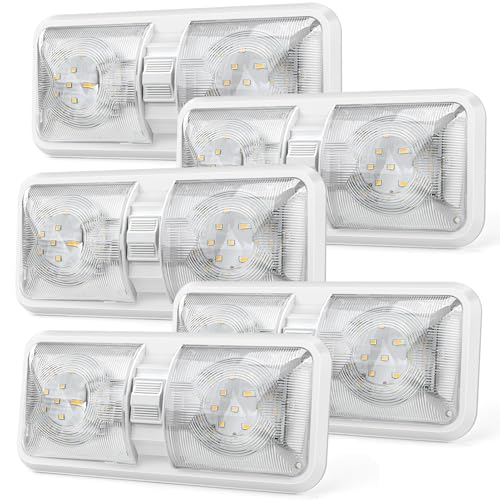
Kohree 5-Pack RV LED Ceiling Double Dome Lights with ON/OFF Switch
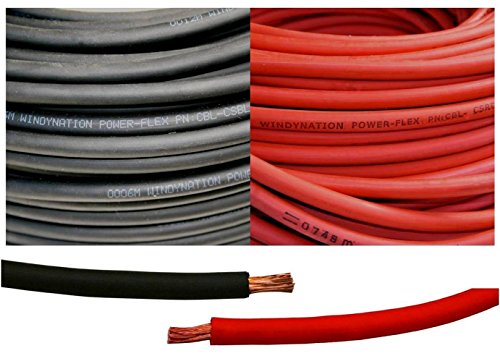
WindyNation 6 AWG 20ft Black + 20ft Red Pure Copper Battery Cable

Leisure LED 10-Pack RV LED Double Dome Light Fixture with ON/OFF Switch

Fastronix 3/8″ Stainless Steel Single Stud Junction Block Red and Black

stio 20A 125V Heavy-Duty RV Shore Power Inlet with 5-in-1 Adapter

WELLUCK 15A RV Shore Power Inlet Plug with Dual 18″ Extension Cord
A Closer Look At Each Pick
Campground pedestals are unpredictable. One weekend the outlet is a basic 15-amp household socket, the next it’s a 20-amp twist-lock style. The PAULINN shore power inlet handles that variance by combining a 20-amp inlet with a 5-in-1 T-blade adapter pack, so the same inlet accepts NEMA 1-15P, 5-15P, 5-20P, 6-15P, and 6-20P plug styles without swapping hardware. For full-time RVers and weekend travelers alike, that flexibility removes a layer of anxiety at unfamiliar sites.
Two pre-installed 12 AWG extension cords (each 18 inches) let the inlet feed two separate circuits simultaneously, useful when a coach runs a fridge and an air conditioner on independent breakers. The five-minute installation claim holds up for anyone comfortable drilling a clean two-inch hole, and no internal rewiring is required. Compared with the simpler NOCO GCP1 covered below, this PAULINN trades a slimmer profile for broader plug compatibility and dual outputs.
The Case For It
- Five-volt adapter set covers virtually every common campground outlet you encounter on US routes.
- Built-in 12 AWG wiring accepts sustained 20-amp loads for rooftop AC or microwaves without overheating.
- Dual 18-inch pigtails split power to two circuits, simplifying coach layouts that need separate feeds.
- Weatherproof housing with sealed gaskets resists rain spray when the protective cap is closed.
- No hand-wiring step, which matters for self-installers who haven’t worked with AC mains before.
Things To Consider
- Owners commonly report needing a slightly larger hole saw than two inches for a clean fit on thick fiberglass walls.
- The 6-15P and 6-20P configurations require your devices to accept a wide 110V to 250V input range, otherwise they won’t run safely.
Whose Shelf It Belongs On
RVers who plug into varied campground pedestals and want one inlet to handle every common outlet format without carrying adapter bags.
Swap It Out When
Compact teardrop owners with limited exterior wall space may prefer the slimmer profile of the NOCO GCP1 covered next.
Small trailers benefit from hardware that disappears into the bodywork. The NOCO GCP1 keeps a low silhouette against camper walls, yet still delivers a 125V, 15A pass-through that handles most residential-grade loads. A 16-inch integrated outdoor extension cord exits the back of the unit, giving enough slack to reach an interior breaker or distribution panel without adding a junction box.
The pressure-fit rubberized cap seals the inlet when you’re boondocking or driving through rain, and the housing carries an outdoor-rated weatherproof construction. For trailer owners who only need a single shore feed and don’t want the bulk of a 20-amp inlet, this is a sensible middle ground. The trade-off is the 15A cap, which won’t sustain a rooftop air conditioner.
Features That Help
- Ultra-low-profile housing sits nearly flush against trailer skin, reducing snag risk on brushy campsites.
- Pressure-fit cap keeps rain and road grime out of the contact pins during travel.
- Pre-attached 16-inch cord skips the wire-stripping step entirely.
- Universal compatibility with any standard extension cord on the campground side.
Trade Offs
- The 15-amp rating rules out rooftop AC and high-draw appliances.
- Single cord means no built-in way to split to two circuits from this inlet alone.
- Outdoor seal performs well, but long-term UV exposure can dull the cap finish over many seasons.
Best Suited To
Pop-up campers and teardrop trailers running modest 110V loads like phone chargers, lights, and small inverters.
Reach For A Different Pick When
RVers with rooftop air conditioning should step up to the PAULINN 20-amp inlet for the amperage headroom it provides.
The NOCO GCP2 takes the slim profile of the GCP1 and adds a second 18-inch cord, turning a single shore inlet into a Y-splitter feed. Two pigtails exit the rear housing, each reaching a different interior breaker or appliance circuit without needing an external junction block. That’s useful in campers where the kitchen and living area sit on separate sub-panels.
The outdoor-rated weatherproof seal and pressure-fit cap carry over from the GCP1, so the trade-offs are the same 15-amp rating and a slightly deeper wall cutout to accommodate the twin cables. For owners rebuilding a vintage trailer or wiring a custom van, the dual outputs can shave hours off the install.
What Stands Out
- Dual integrated cords act as a built-in splitter for two-circuit interiors.
- Same weather-sealed cap and outdoor housing as the proven GCP1.
- Plug-and-play install: no in-line wire nuts required at the inlet.
Worth Noting
- Still capped at 15A total, which limits simultaneous high-draw appliance use.
- The twin cables need a slightly larger wall opening than the single-cord GCP1.
The Right Fit
Two-circuit trailer rewires where splitting shore power at the wall saves running extra wire to a sub-panel.
A Better Fit Elsewhere
The PAULINN 5-in-1 inlet makes more sense for full-time RVers who also need 20-amp headroom and broader plug compatibility.
Sometimes the campground pedestal sits at the far end of the site, and the shore cord on the camper only reaches the near post. The Camco PowerGrip 50-foot extension cord solves that with a generous reach and chunky PowerGrip handles at both ends, so unplugging in cold or wet conditions stays manageable. It carries 30-amp rating, matching the standard connector on most mid-size and larger travel trailers.
Standard connectors at each end mean it pairs cleanly with any TT-30P plug setup. The trade-off is bulk: 50 feet of 10 AWG cable adds real weight to a storage bay. For weekend warriors, that weight is rarely an issue, but full-timers may want to weigh that against a shorter 25-foot cord if site layouts allow.
Strong Points
- PowerGrip handles reduce finger fatigue during unplug sessions in cold weather.
- 50-foot reach covers most awkward pedestal placements at public campgrounds.
- 30A rating handles rooftop AC plus general household loads simultaneously.
Room For Improvement
- Coiled weight is significant, which can crowd exterior storage on smaller trailers.
- No integrated surge protection, so pairing with a separate EMS is wise at older campgrounds.
Who It Suits Best
Travel trailer owners who frequently camp at sites where the pedestal sits far from the coach nose.
Consider Something Else When
Smaller pop-up campers running 15A service will find the stio 20A inlet a closer match for their amperage needs.
Interior lighting matters more than most owners expect until the first dark night at a state park. The Kohree 5-pack of LED double dome lights ships enough fixtures to refresh a small to mid-size coach in one pass, with each unit running on the standard 12V DC system that RV batteries already supply. Natural white output in the 4000K to 4500K range reads as clean and bright without skewing blue.
Each fixture carries 48 SMD LEDs arranged in dual panels with a three-way switch on the bezel, so you can run one side, the other, or both for full brightness. The two-wire hookup without polarity concern simplifies installation for first-time DIYers, and the heat-resistant housing holds up against long run times. Five fixtures is enough for a 20-foot trailer; longer coaches may want the 10-pack from Leisure LED instead.
The Good Stuff
- Natural white color temperature reads accurately for cooking and reading without harsh blue tint.
- Three-way switch on each dome lets you toggle half or full brightness on the fly.
- Two-wire install without polarity concerns, ideal for replacing older fixtures mid-cable run.
- Heat-resistant housing suits long evening hours without yellowing.
Small Caveats
- Five fixtures may leave larger coaches short by one or two lights.
- Diffuser dome can show minor scuffs during shipping, so inspect before mounting.
Feature Card
Made For
Weekend campers refreshing 12V interior lighting across a small to mid-size travel trailer in one project.
Not Your Match When
Class A motorhome owners rewiring a long coach will get better per-fixture value from the Leisure LED 10-pack covered below.
Battery-to-inverter runs need copper that can flex around corners without cracking the jacket. The WindyNation 6 AWG set ships 20 feet of black and 20 feet of red pure copper cable, fully annealed so it bends cleanly into battery compartments and along frame rails. The high strand count also helps when routing under cabinets or around wheel wells.
The 6 AWG gauge handles inverter loads up to roughly 600 watts at typical 12V runs, which covers most compact RV inverters comfortably. The tough, solvent-resistant insulation resists the scuffs and abrasion common under a camper. For solar charge controller wiring on small rooftop arrays, this gauge also lands in a useful middle ground.
Everyday Perks
- Pure copper construction (not copper-clad aluminum) drops resistance over long runs.
- High strand count keeps the cable flexible for tight battery bay routing.
- Two color-coded 20-foot lengths simplify positive and negative separation.
- Tough jacket resists scuffs in chassis-mounted runs.
A Few Limitations
- 6 AWG is undersized for inverters over about 1000 watts; larger systems need 4 AWG or 2 AWG.
- No terminals or lugs included, so ring terminals must be sourced separately.
- Cable arrives coiled, so a bit of straightening time is expected before final routing.
Who Should Grab It
DIY van and camper builders wiring compact inverters and solar charge controllers with moderate amp draw.
Skip It When
High-output inverter installs above 1000 watts call for a heavier gauge than 6 AWG provides safely.
Longer coaches and fifth wheels need more than five ceiling fixtures to feel evenly lit. The Leisure LED 10-pack delivers ten double dome lights with the same 620-lumen output per fixture, plus an 11V to 18V operating range that tolerates voltage sag from a tired battery bank. For larger refits, buying in bulk at this scale usually beats the per-unit cost of smaller packs.
The 48 SMD LED count per dome spreads thermal load across the panel, which generally extends service life compared with high-density single-chip designs. A built-in three-way switch behaves like the Kohree version, running one side or both. Ten fixtures cover most 30-foot-plus trailers with spares left for a future bedroom swap.
The Helpful Details
- Wide 11V to 18V input range tolerates battery sag during heavy inverter use.
- 620 lumens per fixture produces even brightness in larger living spaces.
- Ten-pack format suits whole-coach refits in one purchase.
- Heat-resistant and anti-corrosive housing for humid coastal storage.
Honest Caveats
- Ten fixtures may be more than a small teardrop trailer needs.
- Some owners report minor lens gaps that need a quick reseat during install.
Feature Card
Perfect Match For
Class A and fifth-wheel owners running whole-coach lighting refreshes on longer rigs.
Look Elsewhere When
Compact camper owners may find the Kohree 5-pack a more sensible scale for their layout.
Battery bays get crowded fast, especially in smaller campers where the house battery, inverter, and solar controller all compete for the same square footage. The Fastronix single stud junction block pairs a red and a black unit, each with a 3/8″ stainless steel stud and an integrated bottom nut, so multiple ring terminals can stack on the same post without loose hardware. The included #10 machine screws handle the mounting holes in most battery trays.
The nylon construction on the body isolates the studs from the chassis, which matters when using the block as a power distribution point rather than a chassis ground. Pairing with Fastronix stud covers cleans up the exposed terminals, but the covers are sold separately. Compared with the heavier WindyNation cable covered above, this junction block handles the wire end, not the wire itself.
A Strong Showing
- Integrated bottom nut holds stacked ring terminals securely without loose hardware.
- Stainless steel stud resists corrosion in marine and humid climates.
- Nylon body isolates the positive stud from the chassis for cleaner distribution layouts.
- Red and black pair included for matched power and ground landings.
Points To Note
- Stud covers are sold separately, so budget for them if exposed terminals are a concern.
- Single stud per block limits parallel landings to a few cables before crowding.
Built With In Mind
Compact battery compartments where multiple accessory wires need to land on a common positive or negative post.
Where Another Pick Suits Better
Full camper rewires with many parallel branches may call for a multi-stud distribution block rather than these single-stud units.
The stio inlet shares the same multi-volt 5-in-1 adapter approach as the PAULINN covered earlier, but steps up with high-quality copper internals and black nylon plastic that holds up under sustained 20A loads. A 3-foot integrated extension cord (versus the 18-inch pigtails on the PAULINN) gives installers more routing flexibility inside thicker walls or cabinets.
Twelve AWG wiring inside the cord handles continuous 20A draws without overheating, so rooftop AC plus a microwave on the same circuit stays within spec. The longer lead also reduces the need for a secondary junction box right behind the inlet. For owners with deeper exterior walls or cabinet-side mounting, that extra length is genuinely useful.
Real Benefits
- 3-foot integrated cord simplifies installs in deeper wall or cabinet cavities.
- Twelve AWG copper wiring sustains 20A loads without voltage drop under heat.
- Same 5-in-1 NEMA compatibility as the PAULINN for varied pedestal hookups.
- Weatherproof housing with a sealed cap for storm resistance.
Some Limits To Know
- 3-foot cord can be excessive in shallow trailer walls, leaving slack to manage.
- 6-15P and 6-20P use still requires devices with wide-voltage input support.
Feature Card
Who Will Love This
Full-time RVers with deeper wall cavities and high-amperage loads who want one inlet to cover any pedestal format.
Where A Sibling Pick Shines
Compact trailer owners with shallow walls may prefer the shorter pigtails on the PAULINN inlet for cleaner routing.
Coastal and desert campers face the same enemy: relentless UV. The WELLUCK inlet fights back with nickel-coated copper poles that resist oxidation, plus a nylon plastic housing built to shrug off UV degradation and chemical exposure. The dual 18-inch cords mirror the NOCO GCP2’s Y-splitter layout, but at 15A rather than splitting a higher amperage feed.
Four long stainless steel screws secure the flanged inlet to the wall, leaving no gap at the edge where water could wick in. Installation needs a 2-inch hole, similar to the other inlets in this list. For trailers that sit in full sun for weeks at a time, the UV-resistant housing is the differentiator that justifies choosing it over comparable 15A inlets.
Reasons It Performs
- Nickel-coated copper poles resist oxidation in salty or humid environments.
- UV- and chemical-resistant nylon housing for sun-exposed exterior mounts.
- Dual 18-inch cords split power to two interior circuits.
- Stainless steel mounting hardware resists corrosion over many seasons.
Potential Drawbacks
- The 15A rating won’t cover rooftop AC or microwave-heavy loads.
- Mounting flange may sit slightly proud on thinner wall panels.
Right Fit For
Coastal or desert RVers whose trailers see intense sun exposure and need a UV-stable inlet housing.
Where A Sibling Pick Shines
RVers running higher amperage loads should look at the stio or PAULINN 20A inlets for the headroom those provide.
Choosing The Right Hardware For Your Rig
Picking battery boxes for camper setups really starts with the electrical ecosystem around them. The right shore power inlet, wire gauge, and interior lighting all shape how comfortable and reliable your rig feels on the road.
Match Amperage to Your Coach. A 15-amp inlet covers basic charging and small appliances, but anything with a rooftop air conditioner or microwave wants a 20-amp feed. Undersized inlets will trip breakers under sustained loads, which is more than a nuisance when the campground pedestal is the only power source.
Choose Copper Over Copper-Clad Aluminum. Battery cables that run pure copper (not copper-clad aluminum) drop resistance over long runs, which translates to less voltage sag at the inverter. For runs under 10 feet, copper-clad aluminum can work, but anything longer benefits from true copper.
Plan the Wire Path Before You Buy. Measure the route from the battery to the inverter, accounting for bends and chases through cabinets. Buying a 20-foot cable when you only need 12 leaves extra coiled wire that traps heat and crowds compartments.
Think About Lighting Scale Before You Order. A five-pack works for a small to mid-size trailer; a ten-pack makes more sense for longer coaches. Buying all fixtures at once also keeps color temperature consistent across the rig, which matters more than people expect for overall feel.
Key Considerations Across These Picks
Common Shopping Slip Ups
The most frequent mistake is mismatching the inlet amperage to the coach’s actual draw. A 15A inlet paired with a 13.5K BTU rooftop AC will trip constantly. Another common slip is buying battery cable by length without checking gauge compatibility with the inverter’s amp draw, which leaves owners with underbuilt wiring that overheats under load.
What The Higher Tier Buys
Premium inlets and cable sets buy copper purity, heavier gauge wire, and weatherproof housings that hold up across years of UV and vibration. For weekend warriors, mid-tier gear is plenty. Full-time RVers gain real value from upgraded materials because the failure rate drops noticeably across a multi-year ownership window.
Frequently Asked Questions
What gauge wire do I need for a camper battery box? Most compact 12V systems run 6 AWG between the battery and a 600-watt-class inverter. Larger inverters above 1000 watts need 4 AWG or heavier to avoid voltage drop and overheating under sustained load.
Can I use a regular household extension cord for shore power? Standard indoor cords aren’t rated for outdoor, sustained 30A loads and can overheat. Dedicated RV shore cords with proper gauge and outdoor-rated jackets are the safer pick for campground hookups.
How do I know if my inlet is 15A or 20A? The label on the housing tells you, but a quick visual check also works: 20A inlets accept T-blade (perpendicular slot) plugs, while 15A units accept only parallel-blade plugs. Match the inlet to your coach’s breaker size.
Are nickel-coated copper poles worth the upgrade? In coastal or humid climates, yes. The plating slows oxidation on the contact pins, which keeps resistance low over years of plug cycles compared with bare copper that can darken and heat up.
How many ceiling lights do I need for my trailer? A 20-foot trailer usually wants five to seven fixtures spaced along the centerline. Longer coaches over 30 feet benefit from eight to ten fixtures to avoid dark corners between zones.
Closing Remarks
A reliable camper electrical setup comes down to matching each piece to the loads it actually serves, whether that’s a 20A shore inlet for the air conditioner, 6 AWG copper for the inverter run, or a fresh ten-pack of LED domes for the interior. Start with the heaviest draw and work backward, and the rest of the parts list tends to fall into place naturally.