Any boat that spends time at the dock eventually teaches you the same lesson: power drains when you least expect it, and a cheap switch won’t save you. A solid battery boat switch lets you cut current fast, isolate banks cleanly, and protect electronics from corrosion headaches. The ten options below cover everything from weekend fishing skiffs to dual-bank cruisers, with notes on who each one actually suits.
A Side-By-Side Look
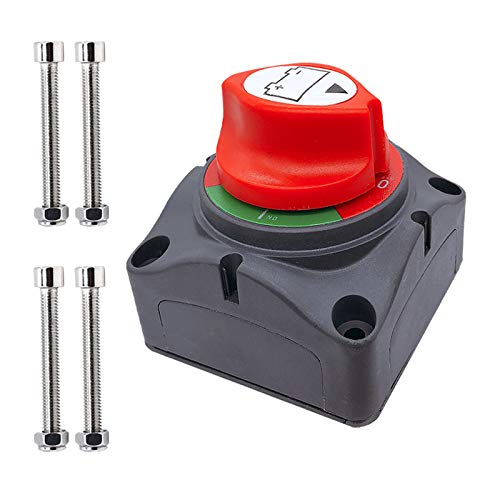
Ampper Battery Disconnect Switch 12V-48V (On/Off)

Guest Battery Switches (Selector)

Blue Sea Systems Add-A-Battery Kit 7650

Longacre 45753 Weatherproof Battery Disconnect

Fastronix 3/8″ 2-Post 180/1000A Battery Disconnect

Malictele 300A ON/Off Heavy Duty Cutoff Switch

Nilight 90015A Battery Switch 12-48V (On/Off)

QuickCar 55-010 Battery Master Disconnect (Red)

12V-48V 275A Battery Power Master Switch (GOGONFLY)
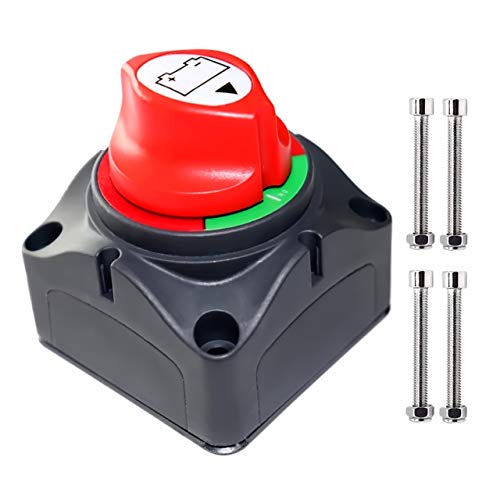
Gioyonil Battery Disconnect Switch Master 12V-48V
More On The Choices That Made The List
The Ampper switch is the kind of part most weekend boaters end up buying first and keeping for years. It covers 12V to 48V systems, uses a two-position On/Off design, and ships with the four mounting bolts and a rear terminal cover so the install stays tidy. On a single-battery setup, it’s a clean master cutoff that handles trolling motors, fish finders, and cabin loads without fuss.
It’s also one of the friendlier fits for someone who splits time between a boat, an RV, and maybe a project car, since the same switch mounts in any of them. Beginners tend to appreciate the straightforward knob and the way the housing seals around the studs. You may find the included hardware a touch basic, but the core switch itself is the part that matters.
The Case For It
- 275A continuous and 455A intermittent ratings cover most recreational loads without strain.
- Rear cover insulates terminals against shorts and accidental contact during maintenance.
- ABS plastic housing holds up well in marine bilge air and resists corrosion around the studs.
- Works across cars, boats, and RVs, so one switch can serve multiple vehicles in the household.
Things To Consider
- Knob feel is functional rather than premium, and some users note the detents soften after heavy use.
- Mounting hardware is basic; plan on adding star washers yourself for a vibration-proof install on rough water.
Who It Suits Best
Single-battery boat owners and RV travelers who want a no-fuss master cutoff that mounts in minutes.
Skip It When
You run two battery banks that need alternating between starting and house loads; the Guest Battery Switches (Selector) handles that scenario with cleaner results.
The Guest selector is the switch you reach for when two banks are part of the equation. It uses a make-before-break contact design (the new circuit connects before the old one releases, so electronics stay live during switching), and the longer stud lengths give your ring terminals actual room to land. In a saltwater setup, the sealed polycarbonate housing keeps salt spray off the contacts.
Compared to Ampper’s simple two-position cutoff, this one adds AFD protection and a dedicated OFF alongside the bank selections. Cruisers with house and start banks will read the labels and breathe easier. Depending on your existing wiring harness, the 3/8″ lug requirement may mean swapping a few terminals, so build that into your plan.
A Few Highlights
- 230A continuous and 345A momentary ratings suit mid-sized outboards and inverter loads.
- Heavy-duty copper sweep contacts ensure positive circuit control, with no chatter during transitions.
- Impact-resistant polycarbonate housing stands up to fuel splash, bilge moisture, and stray tools.
- Universal mount format fits most battery compartments without drilling new patterns.
Points To Keep In Mind
- The 5″ x 2.75″ footprint is larger than a simple on/off switch, so tight compartments get crowded.
- Owners report that the knob labeling can wear off after years of sun exposure on open consoles.
Best Suited To
Boaters running dual battery banks who want alternator field disconnect protection and marine-grade construction in one package.
A Better Fit Elsewhere
Single-battery pontoon owners would be overspending here; the Ampper Battery Disconnect Switch covers their needs at a lower tier.
The Blue Sea Systems 7650 is less a switch and more a full battery management system. The Dual Circuit Plus switch manages starter and house banks independently while allowing one combined ON position, and the included m-ACR (an automatic charging relay that connects banks only when charging is present) handles the rest. No external regulators or isolators required, which simplifies the wiring diagram considerably.
This kit is built for inboards and larger outboards where charging coordination matters. You may find the install takes a planning session rather than an afternoon, but the result is a system that thinks for itself. Unlike the simpler cutoff switches above, this one decides when to combine banks based on charging voltage.
Everyday Perks
- 120A automatic charging relay eliminates the manual switching dance between banks.
- Single ON/OFF operation simplifies use for non-technical crew or family members.
- Designed for both inboards and large outboards, so it scales with bigger electrical demands.
- All-in-one kit removes the guesswork of pairing a switch with a separate isolator.
Trade Offs
- Installation requires basic marine electrical knowledge, including safe ACR wiring practices.
- Priced higher than standalone switches, which can feel steep for a simple weekend boat.
The Right Fit
Cruisers and liveaboard boaters running multiple battery banks who want automatic charging without extra components.
Where Another Pick Suits Better
Skiff owners with one battery don’t need the management layer; the Nilight 90015A Battery Switch delivers a simpler On/Off at a friendlier entry point.
The Longacre 45753 trades convenience features for honest sealing. This is a two-terminal disconnect aimed at vehicles without an alternator, and the bright red handle is intentionally easy to spot when you’re reaching into a dark cockpit or engine bay. The fully sealed body shrugs off rain, road spray, and the occasional wash-down.
It’s a favorite among racers and off-roaders who park their vehicles for weeks at a time and want zero parasitic draw. Compared to the Ampper, it’s a heavier-duty sealing approach with a simpler internal spec. On a marine trailer or tow vehicle, the 175A continuous rating handles winches and accessories without complaint.
The Helpful Details
- 175A continuous rating suits winches, fuel pumps, and accessory loads in race or off-road vehicles.
- Weatherproof sealing protects internal contacts from wash-downs and standing water.
- Bright red handle improves visibility during emergency shutoffs in dim conditions.
- Two-terminal design works in vehicles without an alternator or external voltage regulator.
Less Ideal Details
- No panel mounting included, so you’ll need to source a bracket or fabricate one yourself.
- Designed for non-alternator vehicles, which limits fit for standard automotive installs.
Who Should Grab It
Racers, off-roaders, and trailered-boat owners who need a fully sealed cutoff that survives wash-downs.
Look Elsewhere When
You want a clean panel-mounted look inside a cabin or cockpit; the QuickCar 55-010 Battery Master Disconnect delivers a more finished dashboard appearance.
The Fastronix 3/8″ disconnect is a single-pole, single-throw (SPST) switch, meaning one input and one output, designed for high-amp cutoffs when the battery lives somewhere other than the engine bay. Rated 180A continuous and 1000A intermittent, it handles the surge demands of big starters. The 3/8″ stud size accommodates heavy-gauge welding cable.
It’s also NHRA-friendly, which matters when the battery sits in the trunk and the sanctioning body wants a remote cutoff. RV owners use it the same way: kill the entire coach from one spot before storage. Depending on your mounting location, you may want Fastronix’s surface mount plate to avoid drilling a 3/4″ hole.
Well-Handled Touches
- 180A continuous and 1000A intermittent ratings cover high-cranking-amp setups comfortably.
- Mounts in a single 3/4″ hole, or pairs with the optional surface plate for flat mounting.
- Required for NHRA competition when the battery is relocated away from the engine bay.
- Optional Fastronix terminal covers add electrical protection to the studs post-install.
Honest Caveats
- No weatherproofing on the body itself; wet installs need additional sealing.
- The 3/8″ stud spacing demands ring terminals rated for high current, which cost extra.
Whose Shelf It Belongs On
Drag racers, hot-rodders, and RV owners with relocated batteries who need a serious high-amperage cutoff on demand.
Not Your Match When
You want a sealed unit for marine bilge installs; the Longacre 45753 Weatherproof Battery Disconnect handles splash zones better.
Malictele’s 300A switch earns its place by being ignition-protected, a marine safety standard meaning the switch won’t spark under normal operation, which is a real concern near gasoline vapors in fuel compartments. The make-before-break contact design (the new connection completes before the old one opens) keeps electronics powered when you swap sources, which is handy when one bank is depleted mid-trip.
The 300A continuous rating is generous for a switch in this price range. In a single-circuit install, the streamlined knob design keeps the dashboard tidy. For most fuel-area or generator-compartment installs, the ignition-protected rating is the feature that matters more than raw amperage numbers.
Where It Helps
- Ignition-protected rating permits installation near fuel tanks and engine compartments on compliant boats.
- 300A continuous rating gives meaningful headroom over typical 275A switches for inverter surges.
- Make-before-break contact design prevents power interruptions during bank switching.
- Waterproof sealed body holds up in splash-prone zones like bilge access panels.
Small Limitations
- Single-circuit design means no built-in bank selection; you’ll add a separate switch for dual-bank setups.
- Brand recognition is lower than Guest or Blue Sea, which can affect resale on a higher-end boat.
Made For
Boat owners installing near fuel compartments who need ignition-protected hardware and solid amperage headroom.
Reach For A Different Pick When
You want a fully integrated dual-bank solution out of the box; the Guest Battery Switches (Selector) handles bank selection natively.
The Nilight 90015A reads like the Ampper’s sibling: same 275A continuous rating, same 12V to 48V range, same two-position design. The difference is mostly in the small touches: copper terminal studs with included nuts and washers, plus four mounting screw holes for clean installs. For a first-time installer, those bundled pieces save a trip to the hardware store.
It’s a strong entry-level choice for someone adding a cutoff to an older boat or RV without overspending. Compared to the Ampper, the housing finish is comparable, though some owners prefer one knob shape over the other. For most light marine and automotive use cases, this covers the basics without compromise.
What Pays Off
- 275A continuous and 1250A momentary ratings handle starter surges on most outboards and car engines.
- Copper terminal studs with included hardware speed up the install for first-timers.
- ABS plastic body resists moisture and holds up in engine-bay heat over multiple seasons.
- Backed by a two-year warranty, which adds peace of mind on a budget-friendly buy.
Points To Note
- No ignition-protection certification, so avoid mounting it directly inside fuel compartments.
- Knob detents can loosen over time in high-vibration outboard applications.
Who Should Grab It
First-time installers and budget-conscious DIYers adding a master cutoff to an older boat, car, or RV.
Consider Something Else When
Your install is near a fuel tank and requires ignition-protected hardware; the Malictele 300A is the right call there.
QuickCar’s 55-010 is the switch you choose when appearance matters as much as function. The aluminum panel and bright red rotary handle give race interiors and custom boat consoles a finished look that a bare plastic knob can’t match. At 250A continuous and 12V, it covers most automotive and marine applications without strain.
It mounts through a clean panel cutout and ships with the black mounting panel for a flush install. For someone building out a center console or dash, this switch looks intentional. The trade-off is that the panel format requires more precise cutting than a simple surface-mount knob.
What Works In Its Favor
- Aluminum panel construction adds durability and a finished, custom-installed look.
- Bright red handle improves emergency visibility and matches racing aesthetic standards.
- 250A continuous rating suits most automotive and small marine electrical demands.
- Panel-mount format integrates cleanly into custom dashboards and consoles.
Some Limits To Know
- Limited to 12V systems, so it doesn’t suit 24V or 48V marine setups.
- Panel cutout dimensions require careful measuring and a clean template before drilling.
Perfect Match For
Race car builders and custom console fabricators who want a finished dashboard look alongside reliable cutoff performance.
Swap It Out When
Your electrical system runs 24V or 48V; the Ampper Battery Disconnect Switch covers higher voltage ranges in a similar form factor.
The GOGONFLY 275A switch goes heavy on sealing. The fully enclosed ABS housing wraps around copper-tin plated studs, which adds corrosion resistance in salt air. Open-deck boats, jet ski docks, and trailer tongue mounts all benefit from this kind of weatherproofing where spray and dust are constant.
It’s a budget-friendly alternative to the Nilight with a similar spec sheet, but the focus here is on environmental protection rather than extras. In most coastal applications, the enclosed design prevents the slow terminal corrosion that kills unprotected switches over time. The trade-off is a slightly larger housing footprint.
Noteworthy Benefits
- Fully enclosed ABS housing protects internal contacts from dirt, rain, and corrosion.
- Copper-tin plating on inner studs resists oxidation in salt-air environments.
- Eliminates parasitic draw when the vehicle or boat is in long-term storage.
- Compatible with DC 12V to 48V systems for flexible install options.
Soft Spots
- Larger housing footprint requires more clearance behind the mounting surface.
- Less brand recognition means replacement parts or matching accessories are harder to source.
Built With In Mind
Coastal boaters and outdoor storage situations where spray, dust, and salt air would shorten the life of an unsealed switch.
Where Another Pick Suits Better
If you need ignition-protected hardware for a fuel compartment, the Malictele 300A is purpose-built for that environment.
The Gioyonil switch is a multi-vehicle workhorse that fits boats, RVs, trucks, ATVs, and travel trailers from a single SKU. At 275A continuous and 12V to 48V, it covers the same electrical territory as the Ampper and Nilight but with a wider vehicle compatibility claim. For households running several toys, one switch can serve the whole fleet.
The sealed housing keeps it viable in trailer tongue boxes and exposed battery compartments. On a tow vehicle, it acts as a theft-deterrent cutoff when parked at a marina or trailhead. You may find the included hardware basic compared to marine-grade kits, but the core spec holds up under typical loads.
What It Does Well
- Universal fit across cars, RVs, trucks, ATVs, and marine boats simplifies fleet maintenance.
- 275A continuous rating handles standard starting and accessory loads comfortably.
- Waterproof design holds up in trailer tongue boxes and exposed battery compartments.
- Eliminates parasitic draw during long storage periods on multiple vehicle types.
A Few Limitations
- Single-circuit design means no bank selection; dual-bank boats need a separate selector switch.
- Documentation is minimal, so first-time installers should reference standard wiring diagrams.
Best Suited To
Mixed-vehicle households and multi-toy owners who want one switch type to standardize across their fleet.
Consider Something Else When
You need dual-bank switching for a cruising boat; the Guest Battery Switches (Selector) handles that natively with marine credentials.
What Matters Most Before Choosing Battery Boat Switches
Continuous And Momentary Amp Ratings
Continuous amps describe how much current a switch carries safely for hours, while momentary (or “cranking”) amps cover the brief surge when a starter motor spins up. A switch rated 275A continuous won’t necessarily fail at 300A, but running it at the ceiling regularly shortens its life. For most single-engine outboards and small diesel auxiliaries, 200A continuous is a comfortable floor; bigger inboards and inverter banks want headroom above 250A.
Ignition Protection For Fuel Areas
Boats with gasoline tanks require ignition-protected switches (marked with a marine certification symbol), meaning the switch won’t ignite surrounding fuel vapors under normal operation. This isn’t a marketing phrase: it’s the difference between a compliant install and a code violation that can affect insurance coverage. If your switch lives inside an engine box or fuel compartment, confirm the ignition-protected rating before mounting.
Sealed Vs Open Housing
Open-deck boats, trailer tongues, and bilge compartments all expose switches to spray, salt, and dust. Sealed housings with enclosed studs (the threaded posts where battery cables attach) prevent the slow corrosion that kills unprotected switches over several seasons. For cabin-mounted switches in dry environments, open housings are acceptable and often cheaper.
Key Considerations Across These Picks
Where Shoppers Go Wrong
A common mistake is choosing a switch on continuous amps alone without checking the momentary rating. Another is mounting an unsealed switch in a bilge, where condensation and spray shorten contact life dramatically. Always match stud size to your cable lugs: a 3/8″ stud needs a 3/8″ ring terminal, and forcing the wrong size creates resistance at the joint. Finally, don’t skip the rear terminal cover on switches that include one; it’s there for a reason.
When Paying More Pays Off
Higher-tier switches earn their keep through better sealing, ignition protection, and heavier copper contacts that survive thousands of cycles. The Blue Sea Systems 7650 kit goes further by adding automatic charging relay logic that simpler switches can’t match. For a weekend skiff stored in a garage, the extra spend rarely matters. For a liveaboard cruiser or a fuel-bowrider, premium construction and certifications are worth every dollar, because replacement cost after a switch fails at sea is far higher than buying the right part the first time.
Frequently Asked Questions
What Size Battery Boat Switch Do I Need?
Match the continuous amp rating to your highest sustained load, not your cranking amps. Trolling motors and inverter loads drive the continuous number; starter surges fall under the momentary rating. For most recreational boats, 200A to 275A continuous covers the bases comfortably.
Are All Battery Boat Switches Waterproof?
No. Sealed or “waterproof” models use enclosed housings and gasketed studs, while basic switches rely on dry mounting locations. Open-deck boats, trailer tongues, and exposed battery compartments need sealed units to survive spray and weather.
What Is Ignition Protection On A Marine Battery Switch?
Ignition protection is a marine safety certification confirming the switch won’t produce sparks that could ignite gasoline vapors under normal operation. Switches with this rating are required in fuel compartments and engine spaces on gasoline-powered boats.
Can I Use A Car Battery Disconnect Switch On A Boat?
You can, but marine-rated switches offer better sealing and corrosion resistance for the marine environment. A simple car switch works for dry, indoor installs, though it may fail sooner in bilge or deck conditions where moisture and salt are present.
How Do I Wire A Dual-Battery Boat Switch?
A selector switch with OFF, Battery 1, Battery 2, and Both positions lets you choose which bank serves the loads, or combine them for emergency starting. Connect each battery to its labeled stud, run the common output to the boat’s main distribution, and mount the switch within reach of the helm.
Bottom Line
The right battery boat switch comes down to your electrical setup: single bank versus dual bank, dry cabin versus exposed deck, fuel compartment versus open bilge. Match the switch to those realities rather than chasing the highest amp number, and you’ll spend less time worrying about dead batteries and more time on the water.