A compact 12-volt, 4-amp-hour battery quietly powers a surprising slice of daily life. It keeps alarm panels alive during blackouts, supports small mobility scooters, runs kids’ ride-on toys, and serves as a portable backup for field electronics. Choosing the right chemistry and form factor matters, because a lead-acid alarm cell behaves nothing like a modern lithium alternative, even when both share the same “12V 4Ah” label.
The list below mixes trusted sealed-lead-acid alarm batteries with larger lithium (LiFePO4) options for RV and marine use, plus powersports lithium replacements. A few entries share similar specs on purpose, so the goal is honest matching, not filler. Read on to find the one that fits your setup.
A Fast Comparison Of The Options

YUASA NP4-12 General Purpose VRLA 12V 4AH Battery

Casil CA1240 12V 4Ah Alarm Battery
Casil CA-1240 12V 4AH Alarm System Battery
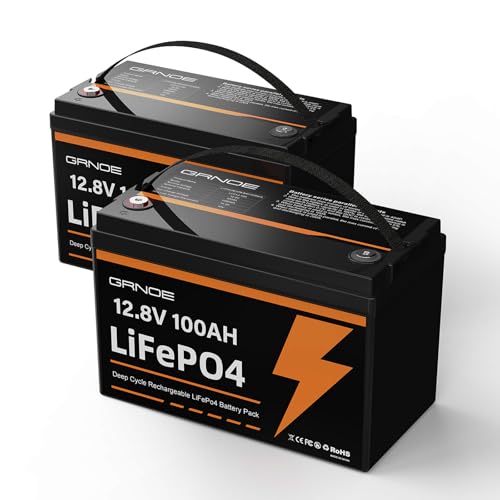
GRNOE 12V 100Ah LiFePO4 Lithium Battery Group 31 (2 Pack)
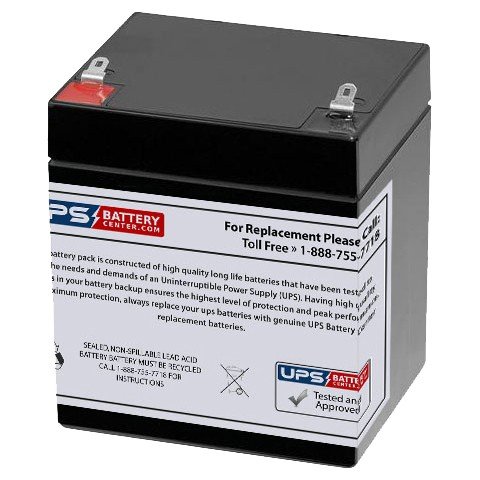
Solex SB1240 12V 4Ah Compatible Alarm Battery Replacement
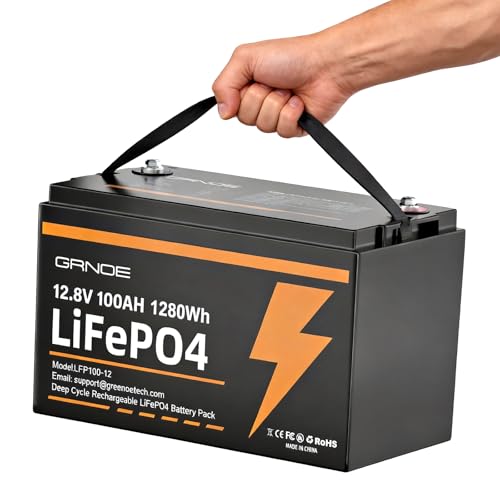
GRNOE 12V 100Ah LiFePO4 Battery Group 31

TYKOOL LFP9-BS-STD Lithium Powersports Battery 240CCA 4Ah

TYKOOL LFP14-BS-STD Lithium Battery, Replaces YTX14-BS 400CCA 8Ah

GRNOE 12V 300Ah LiFePO4 Battery Built-in 200A BMS
What Each Pick Brings To The Table
The YUASA NP4-12 is the kind of battery you buy once and forget about, which is exactly what a home alarm panel needs. Its VRLA (valve-regulated lead-acid) construction means the unit is sealed and spill-proof, so it can sit in any orientation inside a wall-mounted cabinet without leaking.
Where it really earns its reputation is longevity. Lead-calcium grids hold up better than older lead-antimony designs under float charge, the steady trickle an alarm panel applies 24/7. For most homeowners replacing a panel battery every few years, this chemistry has been a quiet workhorse for decades.
Key Advantages
- AGM (absorbed glass mat) design means no liquid acid to spill or vent, even in a closet.
- Lead-calcium grid formulation resists corrosion, giving a longer float life than generic alternatives.
- Gas recombination keeps water loss minimal, so it stays maintenance-free for the whole service life.
- Standard NP4-12 footprint matches the most common alarm panel battery trays on the market.
Points To Note
- Lead-acid weight makes it heavier than a lithium alternative of equivalent capacity.
- Capacity drops noticeably in cold garages or unheated basements.
- Not designed for deep discharge, so running it below 50% regularly shortens its useful life.
Quick Facts
Whose Shelf It Belongs On
This is the right battery for homeowners replacing a dead alarm panel cell and wanting a brand name that has been in the security industry for years.
Consider Something Else When
Riders needing a lighter powersports swap should look at the TYKOOL LFP9-BS-STD Lithium Powersports Battery 240CCA 4Ah for a fraction of the weight.
Casil’s CA1240 leans hard into the “fits your panel” side of the equation. It’s marketed as a direct swap for several major alarm systems, including ADT 804302, Ademco 467, DSC panels, Honeywell Vista 20P, and Power Patrol SLA1056. That long cross-reference list means fewer trips to return mismatched cells.
Compared to the YUASA NP4-12 above, this Casil is a value-priced alternative that still uses sealed lead-acid chemistry. You trade some brand cachet for a friendlier price tag and a broader compatibility sheet.
What Helps Most
- Long cross-reference list simplifies ordering when the original part number is unknown.
- Sealed lead-acid design mounts in any orientation inside a panel enclosure.
- 4Ah rating matches common factory specs, so panel logic stays accurate.
Trade Offs
- Generic brand means floating it next to a name-brand panel may feel like a gamble.
- Heavier than a lithium equivalent, so lifting it into a high-mounted cabinet takes more effort.
Built With In Mind
Alarm installers and DIY homeowners who need a known-compatible 12V 4Ah replacement for a mixed fleet of panels.
A Better Fit Elsewhere
Those running lithium-ready alarm hardware or wanting a longer-lasting upgrade should consider the Solex SB1240 12V 4Ah Compatible Alarm Battery Replacement instead.
The Casil CA-1240 sits in the same family as pick 2, but is positioned more toward the Honeywell Vista 20P crowd and general ADT backup use. It’s a direct-fit replacement rather than a high-end upgrade, and that simplicity is the point.
For a homeowner staring at a low-battery trouble light on a Vista panel, this is the kind of swap that takes five minutes and resolves the alert. Sealed lead-acid chemistry means no acid spills in the closet, and a 1-year prorated warranty gives a small safety net.
Positive Takeaways
- Direct-fit design for Vista 20P and common ADT panels reduces installation guesswork.
- Maintenance-free sealed construction, so you install it and walk away.
- Affordable price point for households running multiple alarm panels.
Worth Noting
- Same lead-acid limitations as the prior Casil: cold performance and heavy weight.
- Prorated warranty means coverage scales down the longer the battery sits in service.
Who It Suits Best
DIY homeowners maintaining a Vista 20P or similar panel who want a quick, no-frills replacement.
Skip It When
Anyone building a new solar or off-grid system should jump to the GRNOE 12V 100Ah LiFePO4 Battery Group 31 for far greater capacity.
Stepping well beyond the small alarm cells above, this GRNOE pack delivers 100Ah per battery in a Group 31 lithium format, and it ships as a two-pack. That alone signals the target shopper: van-lifers and RV owners building a house battery bank, not someone replacing an alarm panel.
The flexibility is the real story. You can run a single 12V 100Ah unit, parallel two for 200Ah, or string four in series and parallel for up to 51.2V at 400Ah, which is a useful range when sizing solar storage. Each unit has a built-in 100A BMS (battery management system, the onboard circuitry that protects against overcharge, deep discharge, and shorts).
Notable Upsides
- Two-pack pricing lowers the per-battery cost when building a bank.
- Series and parallel flexibility up to 48V lets you scale capacity to 20.48kWh.
- Group 31 sizing fits standard RV and marine battery boxes.
- Up to 15,000 deep cycles, so for many owners this is a multi-year investment before replacement.
Practical Considerations
- Heavy batteries ship one per box, so multi-unit orders may arrive on separate trucks.
- Requires a 14.6V LiFePO4-compatible charger, not a generic SLA (sealed lead-acid) charger.
- Higher upfront cost than lead-acid alternatives, even with the two-pack pricing.
Feature Snapshot
Made For
Van builders and RV owners planning a serious lithium house bank who want scalability from a recognized form factor.
Look Elsewhere When
Shoppers who only need alarm backup should save money with the YUASA NP4-12 General Purpose VRLA 12V 4AH Battery instead.
The Solex SB1240 is a clever drop-in: it’s sold as a 12V 4Ah replacement but actually ships as a 12V 5Ah unit that fits the same footprint. That extra amp-hour means longer runtime during an outage, which is the whole point of an alarm backup.
UPSBatteryCenter packages it pre-charged and ready to install. For anyone who’s watched a panel chirp through the night because the old cell couldn’t hold a charge, the convenience factor is real.
Real-World Strengths
- 5Ah actual capacity gives noticeably longer backup than a true 4Ah cell.
- Pre-charged and ready to install out of the box.
- Direct-fit design replaces common 12V 4Ah, 4.2Ah, 4.5Ah, and 5Ah alarm batteries.
- Includes a 1-year replacement warranty for peace of mind.
Honest Caveats
- Still lead-acid, so it’s heavier and more cold-sensitive than lithium options.
- The model name suggests 4Ah, which can confuse shoppers comparing spec sheets.
Best Suited To
Homeowners in storm-prone areas who want maximum backup hours from a standard alarm battery slot.
Not Your Match When
Riders looking to shed bike weight should pick the TYKOOL LFP9-BS-STD Lithium Powersports Battery 240CCA 4Ah instead.
The single-unit sibling of the GRNOE two-pack above, this 12V 100Ah LiFePO4 fits the same Group 31 box at 12.9 by 6.7 by 8.6 inches and about 22.48 pounds. That’s roughly a third of a comparable lead-acid battery, which matters when you’re hauling it into a boat or camper.
It’s aimed squarely at trolling motors, RV house banks, and home energy storage projects that don’t need two batteries on day one. The built-in 100A BMS and claimed 15,000-cycle lifespan give it serious long-term value for the right buyer.
Where It Delivers
- About 33% the weight of equivalent lead-acid, easing install in marine and RV compartments.
- Up to 15,000 deep cycles offers roughly 10 years of regular use per the maker.
- Grade A+ LiFePO4 cells aim for stable performance and higher energy density.
- Three-year coverage from the maker against charging or usage faults.
Things To Consider
- A 12V lead-acid charger will not fully charge it; you need a 14.6V LiFePO4-compatible charger.
- Series-stacking requires matched-state-of-charge units within 0.2V, so planning matters.
- Battery should be charged every two to three months to stay healthy during storage.
Who Should Grab It
Boaters and RV owners wanting a single high-capacity lithium drop-in without committing to a two-pack.
Swap It Out When
Anyone planning a much larger off-grid solar bank should step up to the GRNOE 12V 300Ah LiFePO4 Battery Built-in 200A BMS.
TYKOOL’s LFP9-BS-STD jumps to a different category entirely: powersports lithium. It replaces common YTX9-BS batteries used in bikes like the Ninja 400, Z650, CBR600F4i, KTM Duke 390, and the Suzuki GSX-R600 and 750.
It weighs about a third of a comparable lead-acid cell at the same 4Ah rating, which changes how a bike feels in a parking lot maneuver. The 240 CCA (cold cranking amps, a measure of starting power) rating and IP66 weather resistance make it a sensible upgrade for daily riders.
Real Benefits
- Built-in digital voltage readout gives a quick state-of-charge glance at the bike.
- IP66 rating handles rain and wash-downs without drama.
- 2,000+ deep cycles versus a few hundred from lead-acid extends service life.
- Lightweight swap improves flickability for smaller-displacement bikes.
Trade Offs
- Higher price tag per battery than a lead-acid YTX9-BS from a shop shelf.
- Requires a LiFePO4-compatible charger or tender for proper long-term care.
- Dimensions must match your bike tray; some aftermarket covers may not fit perfectly.
Feature Snapshot
Perfect Match For
Daily sport bike riders seeking a modern lithium upgrade with useful diagnostics built in.
Reach For A Different Pick When
ATV and UTV owners with larger engines should grab the TYKOOL LFP14-BS-STD Lithium Battery 400CCA 8Ah for stronger cranking.
The TYKOOL LFP14-BS-STD scales up to 400 CCA and 8Ah of LiFePO4 capacity, replacing YTX14-BS batteries found in Honda Rancher 420, Foreman 500, and Kawasaki Brute Force 750 ATVs and UTVs. At about 2.49 pounds, it sheds roughly 8 pounds compared to the stock lead-acid cell.
That weight drop matters on technical trails. Lower unsprung mass lets the suspension react faster and helps the rider feel lighter through corners and ruts.
Strong Points
- 400 CCA delivers reliable cold starts for larger utility engines.
- Significant weight savings improves handling on rough terrain.
- LiFePO4 chemistry handles deep discharge far better than lead-acid.
- Compatible with common ATVs, UTVs, motorcycles, and scooters.
Possible Compromises
- Larger physical size means verifying fitment in your specific battery tray matters.
- Upfront cost is higher than the lead-acid battery it replaces.
- Needs a lithium-compatible charger for proper long-term battery health.
Who Will Love This
ATV, UTV, and large-displacement motorcycle owners who want better starting power and less weight.
Where Another Pick Suits Better
Mid-size sport bike owners should pick the smaller TYKOOL LFP9-BS-STD Lithium Powersports Battery 240CCA 4Ah to keep weight and cost down.
The big one. GRNOE’s 12V 300Ah LiFePO4 delivers 3,840Wh at about 56 pounds, which is roughly a third of an equivalent lead-acid battery’s weight while offering double the usable capacity. That changes the math on solar, RV, and marine builds.
The 200A BMS supports serious loads, from inverters running kitchen appliances to trolling motors on long days. Multiple units can scale up to 4P4S configurations for very large banks.
Positive Points
- 3,840Wh capacity supports serious off-grid loads without constant recharging.
- 200A continuous discharge handles inverter and high-draw appliances.
- Scalable up to 4P4S for very large house banks.
- 5-year coverage from the maker for long-term ownership peace of mind.
Factors To Consider
- Heavy unit requires careful mounting and a sturdy compartment in an RV or boat.
- Needs a 14.6V LiFePO4-compatible charger; SLA chargers can damage the cells.
- Premium pricing reflects the capacity, so it’s overkill for small alarm or scooter duty.
Spec Overview
Right Fit For
Off-grid solar builders, full-time RVers, and boaters who need serious energy storage in a single package.
Not Your Match When
Casual RV weekenders should save weight and money with the GRNOE 12V 100Ah LiFePO4 Battery Group 31 instead.
What Matters Most Before Choosing a 12v 4ah Battery
Match Chemistry to the Application
Sealed lead-acid (SLA) and absorbent glass mat (AGM) variants dominate alarm panel replacements because they’re cheap, spill-proof, and tolerant of constant trickle charging. LiFePO4 (lithium iron phosphate) cells win for RV, marine, and solar use because they weigh less, survive thousands of deep cycles, and hold voltage more steadily under load. Mixing them in the same bank is asking for trouble.
Size, Terminals, and Tray Fit
Even within the “12V 4Ah” label, physical dimensions vary enough to matter. Measure the battery tray and check terminal layout before ordering, especially for powersports swaps where the stock hold-down may not hug a lithium case the same way.
Charging Compatibility Is Not Optional
Lead chargers can ruin lithium batteries, and the reverse wastes energy and shortens lead cell life. Pair every chemistry with the right charger, ideally a 14.6V LiFePO4-compatible unit for lithium or a quality float charger for SLA alarm cells.
Capacity, Runtime, and Cycle Life
A 4Ah rating is the floor for alarm duty, but the usable runtime depends on the panel’s idle draw and how often the sirens and sensors trigger. For RV and solar projects, look at cycle life rather than headline Ah. Five thousand cycles at 50% depth of discharge outlasts a thousand shallow cycles even when the nominal capacity is similar.
Buying Considerations Shoppers Often Skip
Pitfalls Shoppers Hit
The most common mistake is grabbing a generic SLA labeled “12V 4Ah” and dropping it into a lithium-ready alarm panel. The voltages stay similar enough that the panel boots, but charging profiles drift, runtime suffers, and the battery degrades faster. Always match the chemistry called for in your panel manual.
Another trap is assuming all “Group 31” batteries are physically identical. Small differences in terminal height or hold-down width can turn a clean install into a frustrating retrofit.
Where The Extra Money Goes
Paying more for a premium LiFePO4 battery typically gets you a more sophisticated BMS, better cell grading, and longer manufacturer coverage. That matters most for off-grid and marine use, where a single failed cell can take a whole system offline. For a closet-mounted alarm cell, the budget end of the SLA market works fine.