A long weekend in the woods used to mean rationing phone batteries and rationing patience. Today, a well-chosen battery bank turns a quiet campsite into a workable base: phones charged, lanterns humming, a small fridge keeping dinner cold, and a Starlink dish still pulling signal on day three. The right match depends on what you actually need to run, how far your vehicle sits from your tent, and whether you care more about watt-hours or about weight on your back.
The lineup below ranges from full-size power stations that can handle a household-style fridge to pocket-sized solar banks that live in a daypack. Pick based on your typical trip length and the gear you refuse to leave behind.
The Lineup, Simplified

BLUETTI Elite 200 V2 Portable Power Station

EF ECOFLOW Delta 3 Portable Power Station

GENDOME StarGrid 288Wh Starlink Mini Battery Pack

BLUETTI AC200L Portable Power Station

GENDOME StarGrid 288Wh Starlink Mini Kit

SOARAISE Solar Power Bank 48000mAh
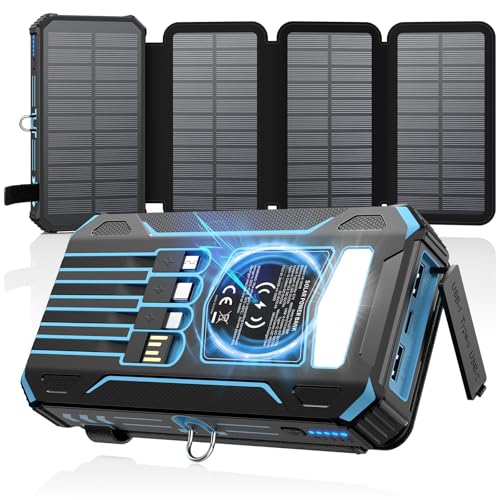
SOARAISE Solar Power Bank 48000mAh Wireless

SOARAISE Solar Power Bank 48000mAh Built-in Cables

EF ECOFLOW River 3 Plus Extra Battery EB600
Meet The Standout Selections
When a weekend camping trip starts to feel more like a base camp than a getaway, the BLUETTI Elite 200 V2 answers with real wall-outlet muscle. The 2073.6Wh (watt-hour) capacity is enough to keep a portable fridge cold, lights running, and a laptop charged through several days, and the LiFePO4 (lithium iron phosphate) cell chemistry is widely considered more durable than older lithium-ion designs for repeated deep cycles.
Continuous 2600W AC output covers most kitchen appliances and power tools you might haul along, and the unit supports up to nine devices running at once. Compared with the smaller Delta 3 below, this is the option for campers treating their setup as a mobile cabin.
What Makes Sense
- 2073.6Wh capacity stretches across multi-day trips without a recharge
- 2600W continuous AC handles refrigerators, coffee makers, and hair dryers
- LiFePO4 battery chemistry is built for long cycle life, an important spec because it tells you how many full charge-discharge cycles the battery survives before noticeable degradation
- Nine-device simultaneous output covers a family setup in one box
- Solar input support lets you recharge off the grid on longer stays
Trade-Offs Worth Weighing
- Weight and size make it a vehicle-bound unit rather than a hiking companion
- Higher capacity means longer recharge times from a wall outlet
- Storage space in a small SUV or sedan can be tight
Key Product Details
Built With In Mind
Full-feature campers running a fridge, lights, and electronics across a long weekend at a drive-in site.
Where Another Pick Suits Better
Backpackers travelling light should look at the SOARAISE 48000mAh Solar Power Bank instead, since tent weight matters more than wall-outlet power.
The Delta 3 sits in the practical middle: 1024Wh of capacity, 1800W of AC output, and a recharge cycle fast enough to top up between afternoon errands and the evening drive to the trailhead. Compared with the BLUETTI Elite 200 V2 above, this unit is roughly half the capacity but noticeably quicker to refill, which matters for campers who treat the power station like a shared household tool.
Expansion is part of the appeal. The Delta 3 plays nicely with extra battery packs and other EcoFlow ecosystem products, so a household that already owns an EcoFlow setup can grow capacity over time without buying a second platform.
Bright Spots
- 1024Wh is a generous single-trip capacity for most weekend campers
- 1800W AC output runs kitchen gear and power tools alike
- Rapid AC and solar recharge minimises downtime between trips
- Expandable with extra battery packs in the same ecosystem
- Compact footprint relative to larger 2000Wh-class stations
Practical Considerations
- Heavier than pocketable solar banks by a wide margin
- Best recharge speeds require a robust wall circuit at home
- Accessory batteries are sold separately, adding to total cost over time
Right Fit For
Weekend campers who want one station that handles a car fridge, lights, and phone charging without fuss.
A Better Fit Elsewhere
Starlink Mini users keeping a satellite dish online all weekend should consider the GENDOME StarGrid battery pack, since it pairs directly with that hardware.
Keeping a Starlink Mini online in the backcountry is its own particular problem, and the GENDOME StarGrid was built specifically for it. The 288Wh LiFePO4 pack targets up to eight hours of runtime for the dish, which translates into a full workday of remote connectivity from a single charge. The all-in-one design doubles as a stable base for the Mini, so you skip the separate stand most setups require.
This sits in a different category than the Delta 3 or Elite 200 V2. Those are general-purpose stations; this is a focused tool for a focused job. Compared with the similar GENDOME kit below, this version prioritises a built-in stand rather than a carrying case.
The Case For It
- Up to 8 hours of Starlink Mini runtime covers a full workday remotely
- Built-in stand removes the need to pack a separate mount
- LiFePO4 chemistry offers longer cycle life for repeated weekend use
- Solar and car charging support keep it topped up off-grid
Small Caveats
- Capacity is modest if you also want to charge laptops or run lights
- Specialised use case means it does less outside the Starlink context
- Best suited to flat, stable ground to use the stand function safely
Feature Snapshot
Whose Shelf It Belongs On
Remote workers, RV travellers, and emergency-prep households relying on Starlink Mini for internet off-grid.
Swap It Out When
You want a general-purpose power station instead of a satellite-focused one, in which case the BLUETTI AC200L covers much broader use.
The BLUETTI AC200L is for campers whose plans keep getting bigger. The base unit carries 2048Wh and 2400W of continuous AC output, which already covers most home and campsite appliances. The real story is expandability: compatible expansion batteries can push total capacity into the multi-thousand-watt-hour range, so the same platform scales with your trips rather than forcing a replacement later.
Van lifers and serious overlanders gravitate to this unit. Compared with the Elite 200 V2 reviewed earlier, the AC200L leans harder into a modular ecosystem, with extra battery packs designed to stack and grow over time.
Positive Takeaways
- 2048Wh base capacity handles multi-day camping without recharging
- 2400W AC output runs demanding appliances including kitchen gear
- Compatible with several expansion batteries for future scaling
- LiFePO4 chemistry supports repeated deep cycling
- Fast AC recharge reduces downtime at home between trips
Where It May Fall Short
- Full expandability requires purchasing additional battery packs
- Heavy and bulky for solo travellers with limited cargo space
- Learning curve is steeper than simpler plug-and-go stations
Quick Facts
Who Should Grab It
Van lifers, full-time overlanders, and households building a long-term off-grid power platform.
Not Your Match When
You only need light weekend phone and laptop charging, since the EF ECOFLOW Delta 3 covers that more simply.
The GENDOME StarGrid kit is the sibling to the StarGrid reviewed above, with the same 288Wh battery but a different accessory philosophy. Instead of a built-in stand, this kit includes a custom-fit carrying case, a DC cable, and a DC-to-USB-C cable, all packed into one bundle ready to toss in a vehicle. For campers moving between sites, that case matters more than a fixed stand.
If the previous GENDOME entry is the “set it and leave it” option, this one is the “pack up and drive” version. Same battery core, different travel mindset.
Everyday Perks
- Custom-fit carrying case protects the battery and accessories in transit
- Up to 8 hours of Starlink Mini runtime matches its sibling unit
- LiFePO4 cell chemistry for long-term durability
- Bundled DC and USB-C cables reduce what you need to remember
Points To Note
- Lacks the integrated stand of the related StarGrid version
- Still a single-purpose solution compared with full-size power stations
- Capacity is tight if you also want to charge phones or laptops on the same trip
At A Glance
Best Suited To
Campers and RV travellers who prioritise a tidy, portable Starlink Mini kit they can stow between sites.
Reach For A Different Pick When
You want a fixed setup at a single campsite, in which case the GENDOME StarGrid with built-in stand is a cleaner fit.
The SOARAISE 48000mAh (milliamp-hour) bank is a totally different tool from the heavy stations above. It is a pocketable lithium-polymer pack (a lighter, more compact battery type than LiFePO4) with four built-in cables and wireless charging built in, designed to top up phones and small electronics on a hike rather than to power a campsite.
For backpackers counting ounces, this lands in a useful niche. Compared with the EF ECOFLOW Delta 3 reviewed earlier, the SOARAISE is roughly twenty times lighter but also twenty times smaller in capacity, and that trade-off is the entire story.
What Works In Its Favor
- 48000mAh capacity handles several phone recharges per trip
- Four integrated cables reduce what you need to pack
- Wireless charging adds flexibility for compatible phones
- Four-panel solar array offers slow field top-ups between devices
- Pocketable size fits in a daypack without weight complaints
Honest Caveats
- Solar charging is a slow trickle, not a fast refill
- No AC outlets means no laptops, lights, or appliances
- Output is suited to phones and small devices only
Made For
Day hikers and ultralight backpackers who just need to keep a phone and headlamp alive over a long weekend.
Look Elsewhere When
You want to run a fridge, lights, or any AC appliance, since the BLUETTI Elite 200 V2 belongs in that conversation.
This SOARAISE variant carries the same 48000mAh capacity and built-in cable set as the model reviewed above but leans harder into the wireless charging pitch. For campers with Qi-compatible phones (Qi being the standard wireless charging protocol used by most modern smartphones), dropping the phone on the pad is faster and simpler than fishing for the right cable at dusk.
It sits in nearly identical territory to the previous SOARAISE entry. The honest read is that the choice between these two often comes down to which version happens to be in stock or priced lower on the listing at the moment.
Real Benefits
- Wireless charging pad simplifies phone top-ups in low light
- 48000mAh handles multiple phone or small-device recharges
- Four built-in cables cover most legacy device connections
- Compact enough for a hiking daypack or duffel
Small Limitations
- Wireless charging is slower than a wired connection for most phones
- Solar refill remains a slow trickle in real-world use
- Limited to small electronics; no AC output
Perfect Match For
Casual campers and weekenders who want grab-and-go phone charging without managing cables at the picnic table.
Where A Sibling Pick Shines
True backpackers counting grams should compare with the SOARAISE 48000mAh with built-in cables below, since minor weight differences add up over multi-day hikes.
The third SOARAISE in the lineup completes the trio with the same 48000mAh capacity and four-panel solar array, but with built-in cables as the headline feature rather than wireless charging. For families or groups where everyone has a different phone connector, four integrated cables save a lot of “who took the USB-C” arguments at the campsite.
It shares the same trade-off as the other SOARAISE banks above: small, light, phone-focused, and unsuited to anything that needs an AC outlet.
A Favorable Mix
- Four built-in cable tips cover Lightning, USB-C, and Micro-USB
- 48000mAh supports multi-day phone use across several campers
- Solar panels provide a slow top-up during daytime hours
- Wireless pad adds flexibility for Qi-compatible phones
Details To Watch
- Solar input is too slow to depend on as a primary recharge source
- No AC output, so it cannot run a laptop or any household appliance
- Built-in cables can wear out with heavy use over time
Who Will Love This
Group campers and families juggling different phone types around a shared picnic table or fire ring.
Skip It When
You mainly need a quick wireless drop-and-go, since the SOARAISE wireless variant reviewed above puts the pad front and centre.
The EF ECOFLOW EB600 is not a standalone station: it is an expansion battery designed to slot into an existing River 3 Plus setup. Stacking one onto the base unit pushes total capacity from roughly 286Wh to about 858Wh, which stretches runtimes for car fridges and travel kettles considerably. The pogo-pin connection (a magnetic contact strip that links the two units without cables) makes the add-on feel almost tool-free.
Compared with the Delta 3 reviewed earlier, this entry makes sense only if you already own or plan to own a River 3 Plus. Otherwise, the Delta 3 is the more complete starting point.
The Good Stuff
- Adds 572Wh of extra storage to a River 3 Plus base
- Pogo-pin connection stacks cleanly without extra cables
- Can be used independently of the main station when needed
- EcoFlow ecosystem integration for owners already invested in the brand
Less Ideal Details
- Not useful without the matching River 3 Plus base unit
- Total cost climbs quickly once base plus expansion are combined
- Less compelling than the Delta 3 for shoppers starting fresh
The Right Fit
Current River 3 Plus owners who want more runtime without buying a second full-size station.
Consider Something Else When
You are shopping from scratch, since the EF ECOFLOW Delta 3 covers most weekend needs in one box.
What Matters Most Before Choosing Battery Banks For Camping
Capacity vs Portability
The first real decision is how much power you need against how much weight you can carry. Capacity is measured in watt-hours (Wh) for full stations or milliamp-hours (mAh) for small banks, and the numbers only mean something once translated into your gear: a 1000Wh station roughly covers a phone and a car fridge for a weekend, while a 20000mAh pocket bank keeps a phone alive for a few days of hiking. Campers driving to a site can afford the heavier LiFePO4 stations reviewed above, while backpackers should default to the SOARAISE-class banks.
Output Type and Ports
Capacity tells you how long the power lasts, but output type tells you what you can actually run. AC outlets (the standard wall-plug style) handle everything from laptops to small appliances, while USB-C and USB-A ports (the rectangular and smaller rectangular connectors used by phones and tablets) cover phones, cameras, and headlamps. Wireless pads add convenience for Qi-compatible phones. Match the ports to the gear you refuse to leave behind, and remember that running an AC appliance off a USB-only bank is not happening.
Battery Chemistry and Cycle Life
Most modern banks use either lithium-ion (lightweight, common, moderate cycle life) or LiFePO4 (heavier, longer-lasting, more thermally stable). LiFePO4 cells, found in the BLUETTI and GENDOME units reviewed above, are widely regarded as the better long-term investment for repeated deep camping trips, and they tolerate heat better in a sun-baked car. If you camp often, paying slightly more up front for LiFePO4 pays back over years rather than months.
Charging Inputs and Speed
A bank that only refills from a wall outlet becomes useless on extended trips. Solar input support, car charging via 12V (the standard vehicle cigarette-lighter socket), and AC fast-charge all matter in different ways. For drive-in campers, AC fast-charge is the most convenient; for off-grid stays, solar input is the difference between a useful tool and a dead brick by day three.
Key Considerations Across These Picks
Pitfalls Shoppers Hit
A surprisingly common mistake is matching watt-hours to “how big the number looks” instead of “what you actually need.” Buying a 2000Wh station for a single phone and a headlamp is wasted money and weight, while under-sizing for a 60W travel fridge ends in a warm cooler and a frustrating weekend. Another trap is ignoring port type entirely: a beautiful big station with no AC outlet cannot run a laptop, and a USB-only bank cannot run a kettle. Match the gear to the ports, then match the ports to the trip.
Where The Extra Money Goes
The jump from a 48000mAh solar bank to a 2000Wh LiFePO4 station buys you three real things: AC outlets, larger capacity, and longer cycle life. The chemistry alone is often worth it for frequent campers, since LiFePO4 cells can be cycled thousands of times before noticeable degradation. Premium pricing also pays for better inverters (the internal component that converts stored battery power into usable AC wall-outlet power), which run cooler and quieter under load. The upgrade is worth it for anyone running real appliances or camping more than a handful of weekends a year.
Frequently Asked Questions
How long will a battery bank last on a single charge?
Runtime depends entirely on what you plug into it. A 1000Wh station running a 50W car fridge will last around 20 hours, while the same station running a 1500W kettle drains in roughly 40 minutes. For phone-only use, a 48000mAh bank covers multiple recharges over several days.
Can a battery bank power a Starlink Mini?
Yes. The GENDOME StarGrid packs reviewed above are built specifically for the Mini and target up to 8 hours of runtime. General-purpose stations in the 500Wh to 1000Wh range also handle the dish, just with different form factors.
Is LiFePO4 worth the extra cost over lithium-ion?
For frequent campers, usually yes. LiFePO4 cells last through far more charge cycles before noticeable degradation and handle heat better in a vehicle. Casual weekend users may find standard lithium-ion sufficient.
How do I recharge a battery bank off-grid?
Most modern stations accept solar input through a built-in MPPT controller (Maximum Power Point Tracking, a circuit that optimises solar panel output for faster, more efficient charging) or DC input from a car cigarette-lighter socket. Pairing a portable solar panel with the station keeps it topped up during multi-day trips without wall access.
Are solar banks reliable in cloudy weather?
Solar charging in overcast conditions slows considerably, and most small banks rely on solar only as a slow trickle. For dependable off-grid refills, plan on AC or car charging as the primary method, with solar as a backup.
The Takeaway
Battery banks for camping fall into two camps: serious stations for drive-in sites and small banks for hikes and weekends. Match capacity to your gear, ports to your devices, and chemistry to your trip frequency. The right pick is the one that quietly powers your trip without adding weight you regret.