A dead battery is one of the most predictable roadside headaches in motoring. Cold mornings, weak alternators, and ageing cells have a way of turning a normal Tuesday into a frustrating wait for a jump. Modern handheld testers read voltage, cold cranking amps, cranking health, and charging-system output in seconds, so you can diagnose the problem before it strands you.
The picks below cover a wide spread, ranging from basic 12V-only units meant for casual drivers, all the way to shop-style analysers with built-in printers and three-voltage coverage. We’ve grouped them by what they actually do well, not by spec lists, so you can match the tool to the kind of car owner you are.
A Snapshot Of The Selections

TOPDON BT300P 12V/24V Battery Tester

TOPDON BT600 Plus 6V/12V/24V Tester
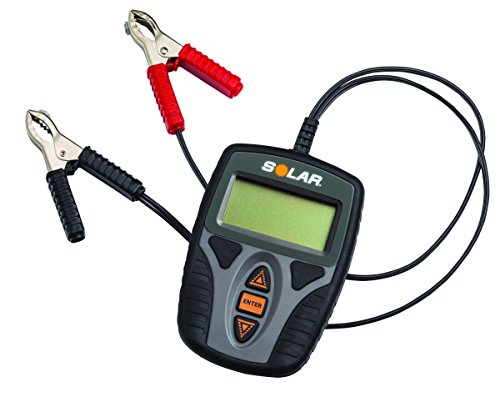
Clore SOLAR Digital 12V Battery Tester

TOPDON BT100 12V Battery Tester 100-2000 CCA
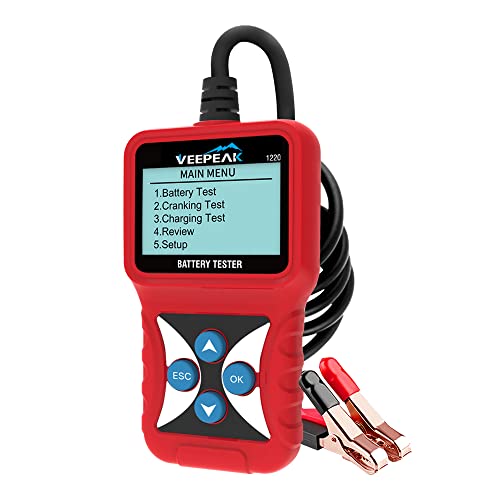
Veepeak 12V Alternator Analyzer 100-2000 CCA

ANCEL BA101 Plus 6V/12V Load Tester

ANCEL BA101PRO 12V/24V Heavy-Duty Tester

ANCEL BA101 12V Alternator Tester 100-2000 CCA

TOPDON BC100 12V Load Tester 100-2000 CCA

TOPDON BT600 12V/24V Tester with Printer
More On The Choices That Made The List
The TOPDON BT300P is the kind of unit that turns up in small workshops rather than glove boxes. It reads 12V battery health, then runs cranking and charging tests on both 12V and 24V systems, so a single tool covers a passenger car in the morning and a light truck after lunch. The built-in printer is the standout feature, useful when you want a paper receipt to hand a customer, or keep a record for warranty work.
For shop owners who test several vehicles a week, having that printout on hand speeds up conversations with customers and helps justify replacement recommendations. Compared to the entry-level TOPDON BT100 below, the BT300P trades some portability for diagnostic paperwork.
What It Does Well
- Built-in thermal printer gives you a physical record for each test, which speeds up shop documentation.
- Combined 12V and 24V cranking and charging coverage suits mixed fleets, including light trucks and vans.
- Runs battery health, starter motor, and alternator diagnostics in one connected sequence, so you stay at the bay.
- Polarity protection and a sturdy clamp design tend to be forgiving on older, slightly corroded terminals.
Things To Consider
- Printer paper is a consumable, so owners commonly keep a spare roll in the toolbox.
- Bulkier than handheld-only units and less convenient for a coat-pocket carry.
Key Specs
Who It Suits Best
Small workshop owners and mobile mechanics who test batteries daily and want a paper trail for customers.
Where Another Pick Suits Better
Casual drivers who only need a quick voltage check at home will find the TOPDON BC100 easier to live with.
The BT600 Plus is the most voltage-flexible unit in this lineup. It covers 6V batteries, which still show up in classic cars, golf carts, and some motorcycles, alongside modern 12V passenger vehicles and 24V commercial platforms. Built-in resistance and sequence testing give it some diagnostic depth beyond the typical handheld.
Garages that work on a little bit of everything benefit most, because swapping tools between bays becomes unnecessary. Compared to the BT300P above, this adds 6V coverage and a wider analytical read; the trade-off is a more involved menu system.
Where It Delivers
- Triple-voltage compatibility handles vintage 6V cars, modern 12V, and 24V trucks from a single device.
- Resistance and sequence tests dig further into cell condition than entry-level load testers manage.
- Onboard printer removes the need to write down results by hand in busy bays.
Honest Caveats
- The menu structure can take a session or two to learn for first-time shop users.
- Carrying case storage is recommended, given the printer, cables, and paper all live in one package.
Made For
Mixed-fleet technicians who service classics, daily drivers, and commercial vehicles under one roof.
Skip It When
Owners with a single 12V commuter car will get the same core answer from the simpler TOPDON BT100.
Clore Automotive has been making bench and shop tools for decades, and the SOLAR BA9 reflects that lineage. It targets 12V systems across a 40-1200 CCA range and works with flooded, AGM flat plate, AGM spiral, and gel cell batteries, which covers almost every car on the road.
The LCD is designed to read in poor lighting, which matters in dim garages or roadside situations. The unit skips the frills: no printer, no 24V, no menus. Compared to the TOPDON BT300P at the top of the list, this trades features for plain reliability and a familiar workflow for older mechanics.
Strong Points
- Wide chemistry compatibility across flooded, AGM, spiral, and gel cells.
- Backlit LCD stays readable in shaded bays and outdoor conditions.
- Operating range of 7-15V covers deeply discharged and freshly charged batteries.
Trade Offs
- Limited to 12V systems, so it does not cover light trucks with dual batteries.
- No cranking or charging diagnostics, which the ANCEL BA101 includes.
Feature Snapshot
Best Suited To
Long-time car owners who want a straightforward, dependable 12V tester for the home garage.
Reach For A Different Pick When
Drivers running a 24V commercial rig should look at the ANCEL BA101PRO for proper truck coverage.
The BT100 is the friendly starting point in the TOPDON lineup. It focuses on 12V lead-acid batteries across a generous 100-2000 CCA range, which covers everything from a compact hatchback to a heavy-duty pickup. The interface is intentionally simple: clamp, select battery type, read result.
It also handles cranking and charging tests, so beginners can check the alternator without owning a separate multimeter. Compared to the higher-end BT300P, this one skips 24V coverage and the printer, but the core diagnostic experience is similar.
Notable Upsides
- Broad 100-2000 CCA range supports small motorcycles through large truck batteries.
- Compatible with flooded, AGM flat plate, AGM spiral, EFB, and gel cells, so you are not locked out of newer start-stop vehicles.
- Cranking and charging diagnostics are bundled in, removing the need for a second tool.
A Few Limitations
- No 24V support, so commercial drivers should look elsewhere.
- The display is basic, which can feel cramped under bright shop lighting.
Quick Facts
Who Should Grab It
First-time buyers who want one honest tool that handles battery, starter, and alternator checks at home.
Look Elsewhere When
Anyone running a 24V commercial platform should step up to the ANCEL BA101PRO for accurate readings.
The Veepeak tester leans toward the cost-conscious side of the category. It evaluates state of charge, state of health, voltage, internal resistance, and CCA, then follows up with cranking and charging diagnostics that catch a failing alternator before it leaves you stranded. For a household with several 12V vehicles, it pulls double duty without dominating the toolbox.
Compared to the ANCEL BA101 covered below, the Veepeak trades a tighter brand ecosystem for a noticeably friendlier price point. It stays at 12V, so commercial rigs remain out of reach.
What Pays Off
- Alternator ripple and loaded voltage testing give a fuller picture of charging-system health.
- Reads SOH, SOC, voltage, internal resistance, and CCA in one connection, so you avoid juggling menus.
- Lightweight enough to live in a glove compartment or centre console.
Points To Keep In Mind
- Limited to 12V systems, with no support for 24V trucks or 6V classics.
- Plastic shell feels lighter than shop-grade units, so it deserves a soft pouch in transit.
The Right Fit
Drivers juggling a family car, a boat, and an ATV who want one affordable tester across the lot.
Swap It Out When
Anyone running a heavy-duty truck or fleet rig should pick up the ANCEL BA101PRO for proper 24V coverage.
The BA101 Plus extends ANCEL’s BA101 platform into 6V territory while keeping the 12V coverage that made the original popular. The 20-2000 CCA range is unusually wide at the low end, which is useful for small lawn tractors, vintage motorcycles, and powersports batteries that often fall under 100 CCA.
For mixed households that own a tractor, a modern car, and maybe a classic British roadster, having one tool that genuinely covers all three simplifies storage. Compared to the BT100 above, the BA101 Plus trades a slightly higher learning curve for that extra 6V reach.
What Helps Most
- 20-2000 CCA range reads very small batteries that mainstream testers ignore.
- Six-voltage and twelve-voltage support bridges modern and vintage vehicles.
- Cranking and charging diagnostics are integrated, sparing you a separate multimeter.
Things To Weigh
- No 24V support, so commercial trucks remain out of scope.
- Button labels are small, which can frustrate users with reduced vision or thick gloves.
Perfect Match For
Mixed-vehicle owners who bounce between a modern car, a vintage 6V project, and small-engine equipment.
Not Your Match When
Shop owners running trucks and equipment should choose the ANCEL BA101PRO for proper 24V readings.
The BA101PRO pushes the BA101 line into commercial territory with full 12V and 24V support. A 2.8-inch colour display helps in bright bays where older monochrome screens tend to wash out, and the 100-2000 CCA range covers everything from a family SUV to a heavy-duty truck.
Fleet operators and diesel owners get the most from this tool because 24V cranking systems confuse 12V-only testers. Compared to the BT600 Plus above, the BA101PRO skips the printer in exchange for a friendlier price and a colour screen.
Real Benefits
- True 24V support, so dual-battery trucks and coaches read correctly.
- Colour display improves readability in direct sunlight and busy workshops.
- Cranking and charging diagnostics help catch starter or alternator issues before they strand a rig.
Potential Drawbacks
- Heavier than 12V-only units, so it lives on a bench rather than a pocket.
- No built-in printer, which the TOPDON BT300P includes.
Whose Shelf It Belongs On
Fleet managers and diesel truck owners who need accurate 24V diagnostics in a portable shell.
A Better Fit Elsewhere
Solo drivers of a single 12V commuter car will find the BT100 easier to use day to day.
The original ANCEL BA101 has been around long enough that it has earned a loyal following among weekend mechanics. It focuses on 12V systems, supports 100-2000 CCA, and reads SOH, SOC, voltage, current, and CCA in a single sequence. Cranking and charging diagnostics are bundled in, so you cover the three main suspects without leaving the driveway.
For most home garages, the BA101 covers everything you actually need, especially if you never touch a 24V truck. Compared to the BT100 covered earlier, the BA101 swaps a slightly older interface for ANCEL’s reputation and widespread availability.
Strengths Worth Knowing
- Mature, well-documented design with plenty of community support online.
- SOH, SOC, voltage, current, and CCA readings appear on one screen for quick interpretation.
- Charging and cranking tests are built in, sparing you a separate multimeter.
Softer Spots
- Sticks to 12V systems, with no help for 24V commercial platforms.
- Display is not colour, which matters less in shaded garages than in bright daylight.
Who Will Love This
Long-time DIY drivers who want a familiar, well-supported 12V tester for routine maintenance.
Consider Something Else When
Anyone needing 24V diagnostics or a colour screen should look at the ANCEL BA101PRO instead.
The BC100 sits as TOPDON’s general-purpose 12V tester, covering flooded, AGM flat plate, AGM spiral, gel, and EFB batteries across 100-2000 CCA. EFB support matters because many start-stop vehicles ship with enhanced flooded batteries, which older testers sometimes misread.
Casual users who want one tool for the family car and the occasional mower battery find the BC100 honest and unfussy. Compared to the BT100 above, the BC100 brings similar core features with a slightly different menu layout.
A Strong Showing
- EFB chemistry support handles modern start-stop vehicles correctly.
- Generous 100-2000 CCA range suits both lawn equipment and large truck batteries.
- Battery, cranking, and charging diagnostics come bundled into one workflow.
Some Limits To Know
- No 24V coverage, so it stays out of commercial-truck territory.
- Documentation is thinner than the BT100’s, which matters for first-time buyers.
Built With In Mind
Casual DIY drivers with a modern car and a few smaller batteries to maintain.
Another Choice May Suit
Anyone who needs a paper record for shop work should look at the TOPDON BT300P instead.
The TOPDON BT600 is built around a 3.5-inch screen, which sounds modest until you try reading smaller monochrome displays in bright shop light. The screen pairs with 12V and 24V support, plus a built-in printer for paper records across 100-2000 CCA batteries.
For technicians who wear reading glasses and dislike squinting at cramped readouts, the larger display earns its keep quickly. Compared to the BT300P at the top of this list, the BT600 swaps some compactness for a more legible screen on the same printer platform.
Positive Points
- Larger 3.5-inch screen improves readability for older eyes and busy bays.
- Built-in printer supports paper records for customers and warranty claims.
- 12V and 24V cranking and charging diagnostics cover most vehicle types.
Honest Caveats
- Heavier and bulkier than handheld units, so it lives on a bench or in a toolbox.
- Printer paper is a consumable that needs occasional restocking.
Right Fit For
Detail-oriented technicians and shop owners who value large displays and paper records.
A Better Fit Elsewhere
Solo home mechanics who only need voltage and CCA will find the BT100 more than sufficient.
What To Weigh Before Choosing A Battery And Alternator Tester
Start with voltage. Most passenger cars run 12V systems, so a 12V-only tester covers the majority of household needs. If you own a classic British roadster or a vintage tractor, 6V support matters. Fleet drivers and diesel truck owners need 24V coverage, since dual-battery setups confuse simpler tools.
CCA, or cold cranking amps, is the next filter. Cold cranking amps measure how much current a battery can deliver at zero degrees Fahrenheit for thirty seconds while maintaining voltage, which is the stress test that matters most on winter mornings. A range of 100-2000 CCA handles almost every road vehicle, while extended ranges covering 20-2000 CCA add support for motorcycles, lawn equipment, and small engines.
Battery chemistry is the underrated filter. Flooded, AGM, EFB, and gel cells all behave slightly differently, and older testers misread newer start-stop vehicles. If you drive anything built in the last decade, EFB or AGM support is worth confirming.
Cranking and charging diagnostics round out the picture. Battery health alone misses a worn starter motor or a failing alternator. The best testers combine all three readings into one session, so you diagnose the whole starting system rather than guessing which part to replace.
Practical Guidance For Smart Shoppers
Where Shoppers Go Wrong
The most common mistake is buying a 12V-only tester for a 24V truck and trusting the wrong numbers. Always match the tool’s rated voltage to the vehicle, because cross-voltage readings can mislead a diagnosis. Another trap is trusting a green “good” light without checking the actual CCA value, which can hide a weak battery that passes a basic voltage test but fails under load.
Where The Extra Money Goes
Higher-tier models tend to spend the budget on display size, voltage flexibility, and paper printouts. A 3.5-inch screen matters for older eyes and bright bays, while a built-in printer justifies its cost in shops that hand customers a written report. Three-voltage support (6V, 12V, 24V) is the biggest functional upgrade, because it removes the need to own separate testers for vintage cars, daily drivers, and commercial rigs.
Frequently Asked Questions
Do battery testers actually work on modern cars?
Yes, as long as the tester supports the battery chemistry in use. Newer start-stop vehicles use AGM or EFB batteries, and older testers misread those types. Pick a tool that lists AGM and EFB support if your car is recent.
How often should you test a car battery?
Twice a year is a reasonable rhythm for most drivers, ideally before summer heat and winter cold. Batteries tend to fail at the temperature extremes, so testing in spring and autumn catches the weak cells before they strand you.
Can one tester handle both battery and alternator checks?
Many testers on this list do, including the TOPDON BT100, the ANCEL BA101, and the BT600. Cranking and charging diagnostics read the starter motor and alternator during a single connected session, so you avoid buying a separate multimeter.
What does CCA mean on a battery label?
CCA stands for cold cranking amps, the current a battery delivers at zero degrees Fahrenheit for thirty seconds while staying above a minimum voltage. Higher CCA generally means stronger cold-weather starting performance.
Is a built-in printer worth the extra cost?
For shop owners and mobile mechanics, a printed receipt speeds up customer conversations and warranty documentation. For home users, the screen output is usually enough.
Closing Thoughts
The right tester depends less on specs and more on what you drive. Most household needs are met by a solid 12V unit like the TOPDON BT100 or ANCEL BA101, while mixed garages and shops benefit from the voltage flexibility of the BT600 Plus or BA101PRO. Match the tool to your vehicles, your chemistry, and your tolerance for menu screens, and you’ll catch battery problems before they catch you on a cold Monday morning.