A dead battery rarely announces itself. One morning the engine turns over slow, the headlights dim, and you’re left hunting for jumper cables in the dark. Battery analyzers solve that problem by reading the actual health of a battery, alternator, and starter before anything fails.
This roundup covers handheld diagnostic tools built for cars, trucks, boats, and lawn equipment, ranging from dedicated testers to a 2-in-1 jump starter with built-in analysis. Each pick balances accuracy, supported chemistry, and the kind of report you’d want to hand a mechanic or keep in your glove box.
The Main Contenders

TOPDON BT300P 12V/24V Car Battery Tester

TOPDON BT600 Plus 6V/12V/24V Battery Tester with Printer
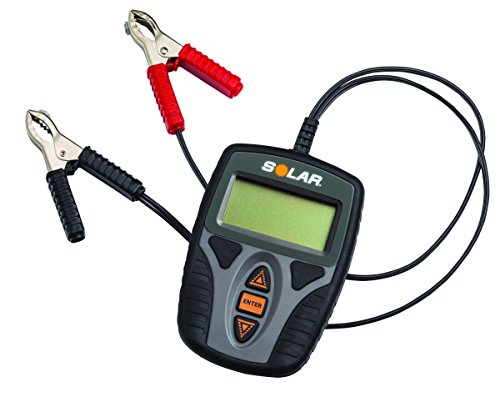
Clore Automotive SOLAR BA9 12V Battery and System Tester

TOPDON BT200 12V/24V 100-2000 CCA Load Tester

TOPDON V2200Plus 2-in-1 Jump Starter and Tester (2200A)

ANCEL BA101 Plus 6V/12V 20-2000 CCA Load Tester

ANCEL BA101PRO 12V/24V Battery Tester with Color Display

ANCEL BA101 12V Digital Battery and Alternator Tester

TOPDON BC100 12V 100-2000 CCA Load Tester

TOPDON BT600 12V/24V Battery Tester with Printer
Why These Options Stand Out
The TOPDON BT300P earns its spot at the top because it bundles three diagnostic jobs into one handheld unit. You get a 12V battery health check, plus cranking analysis for both 12V and 24V starters, and a charging system read that flags a tired alternator before it leaves you stranded.
What separates it from the typical handheld tester is the built-in thermal printer. For shop owners and mobile mechanics, that printed slip doubles as a receipt you can hand a customer, or as a paper trail when you’re troubleshooting an intermittent no-start. The cable leads are long enough to reach batteries buried under seat pans, which matters more than spec sheets admit.
What Earns Its Place
- Covers 12V battery health and 12V/24V cranking plus charging tests in a single session.
- Thermal printer produces a hard-copy diagnostic slip for customers or your own records.
- Reverse-polarity protection keeps the unit safe if you clip the leads on backward.
- Menu-driven screen walks you through CCA rating entry without needing a manual.
Things To Consider
- Thermal paper rolls are a consumable you’ll need to reorder separately.
- Screen is functional rather than large, which may slow first-time users down.
Feature Snapshot
Made For
Independent shop owners, mobile mechanics, and fleet technicians who need paper documentation and broad voltage coverage from a single handheld.
Skip It When
The TOPDON BC100 is a simpler choice if you only test 12V passenger vehicles and don’t need a printed receipt.
The BT600 Plus broadens the voltage envelope that the BT300P already covers. Where most handheld testers stop at 12V, this one reads 6V batteries too, which makes it useful for vintage motorcycle restoration shops, golf cart fleets, and any garage that still services older equipment.
It also layers in a resistance test and an internal sequence check that the entry-level TOPDON models skip. For a working tech, that extra data shows up when a battery tests “good” on voltage but still won’t hold a load under real cranking conditions.
A Few Highlights
- Three-voltage coverage (6V, 12V, 24V) in one unit, which most competitors don’t offer.
- Adds resistance and sequence readings beyond standard battery tests, useful for diagnostic depth.
- Thermal printer for paper documentation on the spot.
- Wide battery chemistry support including AGM, gel, and spiral cell types.
Trade Offs
- Carrying case, if included, tends to be basic; you may want a separate padded pouch.
- More menu options mean a slightly steeper learning curve than simpler 12V-only units.
Key Attributes
Right Fit For
Multi-voltage garages and technicians who service everything from vintage 6V systems to heavy 24V trucks in a single week.
Look Elsewhere When
Home garage hobbyists will find the ANCEL BA101 Plus easier to live with if they only own a 6V or 12V car.
The Clore Automotive SOLAR BA9 is the no-frills workhorse of the category. It’s been around long enough that many technicians learned on one, and it still earns a place on shop benches because the LCD screen reads cleanly in low light and the test cycle finishes in seconds.
Coverage runs from 40 to 1200 CCA, which leaves out the largest heavy-duty diesel batteries but handles just about every passenger car, light truck, and marine application you can name. Compared with the BT300P above, you sacrifice the printer and 24V cranking tests, but you gain a tool that’s faster to pick up on a Monday morning.
Positive Points
- 40-1200 CCA range covers most cars, light trucks, and boats without any setup fuss.
- Compatible with flooded, AGM, spiral, and gel cell batteries out of the box.
- LCD display remains readable in dim shop lighting and bright daylight.
Points To Note
- CCA ceiling of 1200 rules out larger commercial diesel packs.
- No printer, so documentation means writing down the readout by hand.
Who It Suits Best
General repair shops and DIYers who want a 12V tester that delivers a clear yes-or-no battery verdict without menus to navigate.
Consider Something Else When
The TOPDON BT200 handles a much wider CCA range and adds 24V coverage if you work on larger trucks.
The TOPDON BT200 fills the gap between a basic 12V tester and a full shop-grade analyzer. Its 100-2000 CCA range covers passenger cars, marine batteries, and most heavy-duty diesel starting packs, which is why it shows up in tow truck operators’ cabs as often as home garages.
Conductance-based testing (measuring how the battery responds to a small AC signal rather than a heavy discharge) means the BT200 reads accurately on partially discharged batteries, so you don’t have to top up a battery just to get a reliable number. That detail matters during winter calls when the customer’s already cranked the engine a dozen times.
What Pays Off
- 100-2000 CCA range covers everything from a compact car to a large diesel truck.
- 12V and 24V cranking plus charging diagnostics in one tool.
- Conductance-based readings stay accurate even on partially discharged batteries.
- Supports flooded, AGM, gel, and deep-cycle battery types.
Softer Spots
- Display is monochrome, which can feel dated next to color units like the BA101PRO below.
- Plastic housing is durable but can scratch around the clamp area with daily shop use.
Feature Snapshot
Best Suited To
Tow operators, mobile mechanics, and rural homeowners with a mix of cars, tractors, and trucks to maintain.
A Better Fit Elsewhere
The Clore SOLAR BA9 is a simpler choice if you only need 12V testing and want a faster read with fewer menu steps.
The V2200Plus isn’t a bench tool; it’s a glovebox tool. It pulls double duty as a 2200-amp lithium jump starter rated for gasoline engines up to 8.0 liters and diesels up to 6.0 liters, while a Bluetooth link pushes battery health data to your phone through a companion app.
That dual role appeals to anyone who’s been stranded at a trailhead or a winter parking lot. You can crank the engine back to life and then run a full State of Health report while the battery sits under the hood. Compared with the BT300P above, you’re trading workshop-grade documentation for portability and emergency starting power.
Advantages To Know
- 2-in-1 design combines a powerful jump starter with a full battery analyzer.
- App-based reporting lets you store battery history on your phone over time.
- Up to 35 jump-starts per charge for typical passenger engines.
Small Caveats
- Bluetooth connection adds a setup step that pure handheld testers skip.
- Larger and heavier than a dedicated analyzer, which matters for daily shop use.
Who Will Love This
Overlanders, road-trippers, and rural drivers who want a single device that handles both dead-battery emergencies and preventive health checks.
Reach For A Different Pick When
The TOPDON BT600 Plus is the better workshop fit if your priority is paper-printed diagnostics rather than emergency jump capacity.
The ANCEL BA101 Plus leans toward drivers who own older vehicles. The 20 CCA floor catches small batteries found in vintage motorcycles and lawn tractors that most testers ignore, starting the CCA range where the Clore SOLAR BA9 stops.
The interface keeps the focus on readable State of Health, State of Charge, and cranking readings without forcing you to scroll through nested menus. Compared with the BT200’s monochrome screen, the BA101 Plus offers a more guided experience, which makes it a comfortable first analyzer for a weekend mechanic.
Benefits That Matter
- 20-2000 CCA range reaches the smallest powersport batteries as well as larger automotive ones.
- Supports 6V and 12V systems, useful for classic car restorations.
- Reads State of Health (SOH), State of Charge (SOC), voltage, and internal resistance.
Minor Gripes
- No built-in printer means diagnostic results stay on screen unless you photograph them.
- Build feels lighter than heavier TOPDON units, so storage in a busy toolbox matters.
Quick Facts
Whose Shelf It Belongs On
Classic car restorers, motorcycle collectors, and DIYers who want one tool that bridges vintage 6V systems and modern 12V vehicles.
Swap It Out When
The TOPDON BC100 is a tighter fit if you only need straightforward 12V diagnostics on a single modern vehicle.
The BA101PRO steps the BA101 line into truck and RV territory by adding 24V system support and a 2.8-inch color screen. Where the BA101 Plus sits comfortably in a 6V/12V home garage, this one stretches its legs across cars, SUVs, trucks, RVs, boats, and heavy-duty diesel starting banks.
The color display pays off when you need to read results in a hurry. Status bars and voltage readouts are easier to scan at a glance than monochrome text, especially when you’re crouched next to a fifth-wheel hitch in cold weather. It carries the same SOH, SOC, and internal resistance data as its sibling, just with a wider voltage envelope.
The Upside
- 2.8-inch color screen improves readability in low-light and outdoor conditions.
- 12V and 24V support covers everything from a commuter car to a heavy-duty diesel.
- 100-2000 CCA range handles the largest commercial starting batteries.
- Multi-chemistry support includes AGM flat plate, AGM spiral, gel, and EFB types.
A Few Limitations
- Higher cost than the BA101 Plus, which may be hard to justify for a single-vehicle owner.
- Color screen adds a small amount of bulk compared with monochrome handhelds.
Perfect Match For
Fleet managers, RV owners, and hobbyists who maintain multiple vehicles across both 12V and 24V platforms.
Where A Sibling Pick Shines
The ANCEL BA101 Plus is the better value if your household only runs 6V or 12V vehicles.
The ANCEL BA101 has been on shelves long enough to build a quiet reputation. It focuses on 12V systems across cars, trucks, boats, RVs, and marine vehicles, and it delivers the core measurements (SOH, SOC, voltage, cranking, and charging tests) without piling on extras you don’t use.
That longevity tells you something useful: a tool that’s been around this long tends to have its firmware quirks ironed out. Compared with the BA101 Plus, you lose the 6V support but gain a familiar, well-documented product that replacement parts and accessories still fit.
Practical Pluses
- 100-2000 CCA load capacity covers cars, trucks, boats, and marine applications.
- Reads SOH, SOC, voltage, current, CCA, plus cranking and charging tests.
- Well-established design with broad accessory availability.
Areas To Watch
- 12V-only; no 24V support for heavy-duty trucks.
- Display is functional but not as easy to read in bright sun as color screens.
Built With In Mind
Home garage mechanics and weekend DIYers who want a proven 12V tester for one or two personal vehicles.
Not Your Match When
The ANCEL BA101PRO earns its keep over this one if you own a 24V truck or RV in addition to a 12V car.
The TOPDON BC100 covers the basics without piling on extras. It’s a 12V-only tester that handles battery health, cranking, and charging diagnostics across 100-2000 CCA, aimed squarely at the weekend DIYer who doesn’t need a printer or 24V cranking data.
What you give up compared with the BT300P at the top of this list is the printed slip and 24V cranking tests, but you save real money for a tool that still surfaces the alternator and starter problems that strand most drivers.
A Favorable Mix
- 100-2000 CCA range reaches small cars and large gasoline trucks alike.
- Three-in-one diagnostics: battery, cranking, and charging health.
- Supports flooded, AGM flat plate, AGM spiral, gel, and EFB battery types.
Honest Caveats
- 12V-only; not suitable for heavy-duty diesel systems above 12V.
- No built-in printer, so you’ll photograph results for your records.
Feature Snapshot
Who Should Grab It
Budget-conscious DIYers and first-time tool owners who drive a 12V vehicle and want a straightforward health check.
Another Choice May Suit
The TOPDON BT200 is worth the stretch if you want 24V coverage and broader CCA headroom in the same price neighborhood.
The TOPDON BT600 is the predecessor to the BT600 Plus above, and it remains a strong shop-grade choice. Conductivity-based testing drives its readings across 12V and 24V systems, and the 3.5-inch screen is one of the larger displays you’ll find on a handheld tester in this price band.
Compared with the BT300P earlier in the list, you get a bigger screen and the same kind of on-the-spot thermal printout. If your service bay sees a steady stream of cars and light trucks, that combination saves real time.
A Strong Showing
- 3.5-inch screen makes readouts easier to scan during busy service intervals.
- Built-in thermal printer for hard-copy diagnostic slips.
- 12V and 24V cranking plus charging analysis across 100-2000 CCA.
Less-Strong Areas
- Doesn’t include the 6V battery test that the BT600 Plus adds.
- Thermal paper rolls are an ongoing consumable cost.
The Right Fit
Service bay technicians and dealership staff who need a printed record for each vehicle that rolls through.
Where Another Pick Suits Better
The TOPDON BT600 Plus covers 6V batteries too, so it earns its place if your shop sees motorcycles or golf carts.
Key Factors Worth Knowing Before Picking Up a Battery Analyzer
The first question to settle is voltage. Most passenger vehicles run 12V systems, but classic cars, golf carts, and motorcycles often use 6V, and commercial diesel trucks and buses run 24V. A 12V-only tester covers the common case but leaves gaps the moment a second platform enters the household.
The second question is CCA range. CCA stands for Cold Cranking Amps, the rating that tells you how much current a battery can deliver at 0°F for 30 seconds while staying above a minimum voltage. A tester with a 100-2000 CCA window covers everything from a compact commuter to a heavy-duty diesel starting battery, while narrower ranges rule out one end or the other.
Chemistry support matters too. Modern vehicles use flooded, AGM (absorbent glass mat), AGM spiral, gel, and EFB (enhanced flooded battery) types, and start-stop systems often demand AGM or EFB. A tester that doesn’t recognize the chemistry in front of it can return readings that look fine but miss the early signs of capacity loss.
Finally, decide whether documentation matters. Shop owners and warranty-driven buyers tend to want a printed receipt, while DIYers are usually fine photographing the screen.
Smart Shopping Notes for the Category
Pitfalls Shoppers Hit
The most common mistake is buying a 12V-only tester for a fleet that includes a 24V truck or a 6V classic. The unit powers up fine, but it returns nonsense readings on the wrong system, which leads to misdiagnosed alternators and wasted battery replacements.
The next pitfall is ignoring chemistry. Many older testers assume flooded lead-acid, and they underreport the actual capacity of AGM or EFB batteries. That matters for any car built in the last decade with an automatic start-stop function.
Where The Extra Money Goes
Higher-tier models buy you three things: wider voltage and CCA coverage, broader chemistry support, and a built-in thermal printer for paper records. They also tend to have larger screens and sturdier housings, which matters in a busy shop.
For a single-vehicle owner driving a modern 12V car, the extra cost is hard to justify. For a multi-vehicle household, a small fleet, or a working shop, those upgrades earn their keep within a few diagnostic sessions.
Frequently Asked Questions
What does a battery analyzer actually measure? A battery analyzer reads State of Health (how much capacity remains compared to a new battery), State of Charge (current voltage level), internal resistance, and cranking or charging system performance.
Can a battery analyzer charge a dead battery? No. Handheld battery analyzers diagnose battery and system health but don’t deliver charge. A separate charger or jump starter handles that job.
Is a battery analyzer the same as a multimeter? No. A multimeter measures voltage at a single moment, while an analyzer runs a loaded test that reveals how the battery performs under stress, which is a better predictor of failure.
Do battery analyzers work on lithium batteries? Most handheld testers in this category target lead-acid chemistries (flooded, AGM, gel, EFB). Lithium automotive batteries need a tester that explicitly lists LiFePO4 support.
How often should you test a car battery? Twice a year is a reasonable cadence for most drivers, with extra checks before winter and after any deep discharge event like leaving the headlights on overnight.
Closing Remarks
The right battery analyzer depends less on spec sheets than on the vehicles you actually own. A single 12V commuter points toward a focused tool like the TOPDON BC100, while a garage full of mixed platforms rewards the flexibility of the TOPDON BT600 Plus. Pick the unit that matches your real workload, and the analyzer pays for itself the first time it catches a weak battery before it strands you somewhere inconvenient.