An off-grid solar setup only performs as well as the cabling and hardware that ties it together. You need proper battery wiring, the right gauge extension cables, weatherproof connectors, and reliable disconnect hardware for safe maintenance. Many newcomers focus on the panels and forget that undersized or poorly insulated wire quietly saps performance, while the absence of a shutoff switch turns a simple repair into a hazard. This roundup covers practical accessories that pair well with off-grid battery banks, from portable station adapter cables to rooftop-rated PV isolators.
The Main Contenders

ELFCULB Solar to XT60i Cable 10AWG 2FT

Hiutgowt 10AWG Solar Wire 50Ft Tinned Copper

Oududianzi 2X 65FT Solar Panel Wire 10AWG

XRDS -RF Solar to XT60 Cable 12 AWG 20FT

BougeRV 10AWG Solar Extension Cable 8FT

RIOCAN 10AWG Solar Extension Cable 3FT

SJZ SUN RUN 10AWG Solar Extension Cable 30FT

Vansdon Solar to XT60 Cable 10AWG 30FT

CNLONQ 32A PV Disconnect Switch IP66
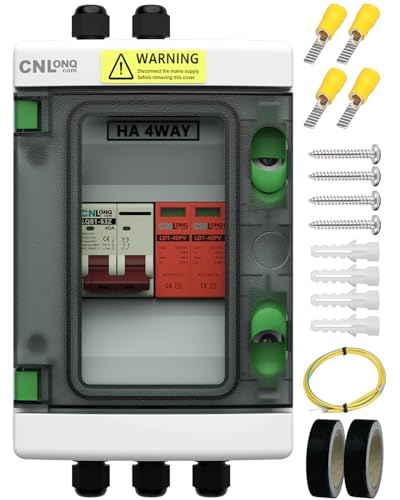
CNLONQ 40A Solar Disconnect with Surge Protection
A Breakdown Of The Leading Choices
The ELFCULB cable is built for the traveler who pulls a folding panel out of an RV bay or van build and wants a tidy adapter to a portable power station. At 2 feet, it’s intentionally short: just enough slack to reach from a panel laid on the ground to a station sitting on a tailgate, with no excess cable to trip over. The XT60i end includes reverse-polarity protection, which matters because plugging a standard XT60 in backwards is one of those small mistakes that can ruin a controller.
For a weekend camper running a single 100W panel into a 500Wh station, this kind of short adapter is all you actually need. It pairs well with the longer extension runs later in this roundup when the panel ends up further from camp.
The Value In It
- Reverse-polarity protection on the XT60i connector prevents accidental reverse hookup
- 10AWG tinned copper keeps resistance low across the short span
- Compact 2-foot length stays out of the way on tailgates and picnic tables
- PVC and nylon jacket handles sun exposure better than bare wire
Honest Caveats
- 2 feet is too short for rooftop or ground-mount array configurations
- Only useful with stations that accept the XT60i input standard
- Not rated for permanent outdoor mounting, so you’ll stow it between trips
Who It Suits Best
Weekend RVers and van-lifers running a portable panel into a compatible power station on short, tidy cable runs.
Consider Something Else When
The Hiutgowt 50Ft solar wire is a better pick when you need to mount a panel further from the station.
Hiutgowt ships a 50-foot pair (one red, one black) of 10AWG tinned copper wire, the kind of long run that solves the most common cabin problem: the panels live on a south-facing roof and the battery bank lives in a dark utility room 40 feet away. Tinned copper resists corrosion far better than bare copper in humid or marine settings, which is why serious off-grid installers reach for it over generic THHN. At 10AWG, the wire is thick enough to keep voltage drop manageable on a 50-foot pull.
Unlike the short adapter above, this is bare wire on both ends, so you’ll need to add your own ring terminals or MC4 connectors. That makes it flexible but slightly less plug-and-play for beginners.
What Makes Sense
- 50-foot reach covers most cabin or shed-to-house battery runs
- Tinned copper holds up in humid and coastal environments
- 10AWG gauge keeps voltage drop modest for 12V and 24V battery banks
- Red and black pair makes polarity straightforward during install
Worth Noting
- Bare ends require you to source and crimp your own terminals
- No pre-installed connectors, so plan extra time for termination
- 50 feet may be overkill for compact RV rooftops with the station nearby
Key Product Details
Made For
Cabin owners and boaters wiring a roof-mounted array to a battery bank across a moderate span.
A Better Fit Elsewhere
The Oududianzi 65FT 10AWG wire is the better call if you need to span a larger property or distant array.
The Oududianzi offering doubles down on the long-run problem with two 65-foot conductors, enough wire for a ground-mount array sitting at the far edge of a property. The 84-strand tinned copper conductor count is a tangible upgrade over cheaper alternatives, claiming roughly 30% lower resistance than standard 12AWG cable. For high-amperage charging, that translates into real kilowatt-hours recovered over a season rather than lost to heat in the wire jacket.
Where the Hiutgowt pair above suits mid-size cabins, this Oududianzi bundle is the right scale for a barn, shop, or full-time off-grid home pulling meaningful current. You may find yourself with extra slack, which is usually fine since trimming wire to length is easier than splicing in a run that’s too short.
Everyday Perks
- 65-foot length handles larger property layouts without splices
- Stranded tinned copper reduces resistance across the long span
- Two-conductor bundle keeps positive and negative runs parallel
- Thicker insulation tolerates outdoor conduit and attic routing
Trade Offs
- Bare ends mean you’ll need crimpers, terminals, and weatherproofing supplies
- 65 feet creates storage bulk if your final run is shorter
- Heavier than 12AWG cable, so routing through tight attic spaces takes planning
The Right Fit
Full-time off-grid homeowners and homesteaders running a sizable array across a longer property span.
Look Elsewhere When
The BougeRV 8-foot extension is more appropriate for a tight controller-to-battery jump where a long run would be wasted.
The XRDS cable trades the 10AWG thickness of earlier picks for a lighter 12AWG construction over a longer 20-foot span. Heavy-duty PVC insulation is the headline feature, giving the jacket better heat resistance than thinner alternatives that can deform near hot engine bays or sun-baked rooftop combiner boxes. For RV owners routing cable through engine compartments or past rooftop equipment, that heat tolerance is the difference between a cable that lasts one season and one that lasts five.
The XT60 female end plugs straight into the same portable station ecosystem that the ELFCULB cable above targets, just with more reach. This is the cable to grab when your portable array sits 15 feet from the van and the shorter adapter won’t reach.
What Pays Off
- Heavy-duty PVC insulation resists heat and UV better than economy jackets
- 20-foot length bridges typical RV and tailgate setups
- Tinned copper keeps conductivity stable in varied temperatures
- XT60 connector fits common portable power station inputs
Room For Improvement
- 12AWG is thinner than 10AWG options, so voltage drop matters on long draws
- Single XT60 connector limits use to compatible stations
- Not designed for permanent outdoor mounting between trips
Best Suited To
RVers and overlanders needing a heat-tolerant extension from a portable panel to an XT60-compatible station.
Reach For A Different Pick When
The Vansdon Y-branch cable is the better choice when you want to parallel two panels into a single station input.
The BougeRV 8-foot cable fills a specific gap that longer runs can’t: the short bridge between a solar charge controller and the battery bank. In most compact installations, those two components sit a few feet apart on the same shelf or wall mount, and routing a 50-foot spool is silly when 8 feet does the job. Pre-installed O-ring terminals on one end slot directly onto a battery post, while the bare opposite end drops into the controller’s wire terminal block.
Compared to the Hiutgowt bare-wire pair above, this one arrives more installer-ready for the controller-to-battery segment, which is where most DIYers make their first wiring mistakes.
Why It Works Well
- Pre-crimped O-ring terminal fits standard battery posts out of the box
- 10AWG copper holds full charging current without noticeable voltage drop
- Dual insulation layer protects against chafing in tight enclosures
- 8-foot length is just right for shelf or wall-mount layouts
Points To Keep In Mind
- Too short for any run between panels and a remote battery room
- Only one end is terminated, so the controller side still needs attention
- Single cable rather than a red/black pair, so order quantity carefully
Quick Technical Notes
Who Should Grab It
DIY installers building a compact shelf or wall-mount system where the controller and battery sit within a few feet of each other.
Where Another Pick Suits Better
The RIOCAN 3-foot cable is a more compact pick when your controller sits inches from the battery post.
The RIOCAN cable is the smallest of the bunch at 3 feet, but it ships with a pre-assembled PV (photovoltaic) connector on one end, meaning it plugs straight into the MC4-style output found on most rigid panels. The opposite end is bare, ready for you to land into a combiner box, fuse holder, or charge controller terminal. TUV-rated at 1000V DC, it carries the safety certification that off-grid wiring often demands from inspectors and insurance providers.
Where the BougeRV 8-foot bridges a controller to a battery, this RIOCAN cable does the panel-side bridge. It’s the kind of short pigtail that turns a panel with an integrated lead into a tidy plug-and-play connection to your longer extension runs.
The Case For It
- Pre-assembled PV connector mates with standard MC4 panel leads
- Tinned copper resists oxidation at the connector interface
- 3-foot length is just enough slack for strain relief at the panel
- Bare opposite end lets you land it anywhere a custom fit is needed
Some Limits To Know
- Bare end still requires a terminal, fuse, or busbar connection
- 3 feet adds little value when the panel already has a usable lead
- PV connector is one-piece, so plan polarity during installation
Whose Shelf It Belongs On
Off-grid installers wiring rigid panels into a combiner box or fuse holder with a short, tidy pigtail.
Swap It Out When
The SJZ SUN RUN 30-foot waterproof cable is a better option when the panel and combiner sit further apart.
The SJZ SUN RUN cable is a complete extension solution, with both male and female waterproof PV connectors pre-installed on opposite ends. The XLPE (cross-linked polyethylene) dual insulation is a meaningful upgrade over PVC jackets, holding up better against UV rays and salt spray. For marine decks and coastal cabins where ordinary wire jackets eventually crack, that insulation choice is the difference between annual replacement and a decade of service.
Dust plugs on the connectors keep grit out when the cable is disconnected, which matters more than it sounds for outdoor arrays that spend months unplugged. This is the cable to grab when you want a true plug-and-play array-to-controller run without buying extra connectors.
Points In Its Favor
- Pre-installed male and female PV connectors for plug-and-play use
- XLPE insulation holds up against UV and salt air
- 30-foot length covers typical deck or rooftop array spans
- Dust plugs protect unused connectors from grit and moisture
Honest Caveats
- 30 feet may fall short of longer property spans that need 50 feet or more
- Pre-installed connectors can’t be repositioned if your layout changes
- PPO connector housing is stiffer than rubber alternatives in cold weather
The Numbers That Matter
Right Fit For
Coastal homeowners and marine installers needing a weatherproof extension between an outdoor array and an indoor combiner.
Not Your Match When
The Oududianzi 65FT wire is the smarter buy when the run crosses a larger property without pre-installed connectors.
The Vansdon cable is unusual in this roundup for its Y-branch configuration: two PV leads on the panel side consolidate into a single XT60 connector on the station side. That parallel-panel hookup is exactly what portable station owners want when they want to combine two smaller panels into a higher-amperage charge without buying a separate combiner adapter. IEC 62930 certification gives the cable a meaningful safety credential beyond typical hobby-grade wire.
Compared to the single-leg ELFCULB adapter that opened this roundup, the Vansdon is the parallel-array version of the same idea, with a much longer 30-foot reach. For RVers running a pair of 100W panels in series or parallel, this is the cable that ties them to a station.
Bright Spots
- Y-branch design combines two panels into one station input
- IEC 62930 certification marks it as a safety-vetted cable
- 10AWG wire carries parallel charge current without overheating
- 30-foot length handles camp and tailgate array placement
Less-Strong Areas
- Only compatible with stations that accept XT60 input
- Two-leg parallel hookup requires matched panel voltages to avoid losses
- 30 feet is awkward when panels and station sit close together
Perfect Match For
RVers and overlanders running two matched portable panels in parallel into an XT60-equipped power station.
Another Choice May Suit
The XRDS 20-foot single-leg XT60 cable is the better choice when you only run one panel.
Stepping away from cabling, the CNLONQ 32A disconnect switch is the kind of safety hardware that serious off-grid arrays actually require. Rated for DC 1500V maximum and 32 amps of continuous current, it sits between your array and inverter so you can cut power during maintenance or emergencies. The IP66 rating (a standard that certifies dust-tight and powerful water-jet protection) means it survives exposed rooftop mounting where rain, snow, and dust would corrode an indoor-rated box.
Plug-and-play MC4 connectors make installation faster than hardwiring a traditional disconnect, which is a real time-saver on rooftop work. For homeowners adding a rooftop array to a battery bank, this switch is the missing link between “I can flip a breaker” and “I can actually kill the array safely.”
Practical Advantages
- 32A current rating covers typical residential off-grid arrays
- IP66 enclosure handles rooftop weather exposure
- Plug-and-play MC4 connectors speed rooftop installation
- Rapid shutoff function isolates the array during service
Where It May Fall Short
- Single in/out design means you may need multiple switches for parallel strings
- 32A ceiling may undersize larger commercial-scale arrays
- Wall or rooftop mounting hardware varies by surface
Feature Snapshot
Who Will Love This
Rooftop solar homeowners who want a code-friendly, weather-rated way to isolate their array for maintenance.
Skip It When
The CNLONQ 40A breaker box is the better fit when you also need surge protection in storm-prone areas.
The second CNLONQ entry in this roundup closes the list with a different value proposition. Where the 32A switch above handles isolation, this 40A breaker box combines a circuit breaker with an integrated lightning surge protector. For off-grid systems in storm-prone regions, that surge arrestor is what saves your inverter when a nearby lightning strike induces a spike in the array wiring. DC 500V ceiling is lower than the rooftop isolator, which makes this unit a better fit for grounded residential arrays than high-voltage string arrays.
The IP65 enclosure (rated for dust-tight and low-pressure water-jet protection) is slightly less aggressive than the IP66 switch, but still weather-tolerant for outdoor mounting. Position it between your array combiner and the inverter for the cleanest protection topology.
What Helps Most
- Integrated surge protector shields the inverter from lightning-induced spikes
- 40A breaker handles typical residential charge and discharge currents
- IP65 enclosure tolerates outdoor mounting under most conditions
- All-in-one design eliminates the need for a separate SPD (surge protective device)
Things To Consider
- DC 500V ceiling rules out higher-voltage residential string arrays
- Larger footprint than a simple disconnect switch
- Surge arrestor replacement eventually required after a major surge event
Built With In Mind
Off-grid homeowners in storm-prone regions who want breaker isolation and surge protection in a single weather-rated box.
Where A Sibling Pick Shines
The CNLONQ 32A PV disconnect is the better choice when you only need isolation and already have separate surge handling.
Choosing The Right Cabling And Safety Hardware For Off-Grid Solar
Wire Gauge And Voltage Drop
Voltage drop is the silent thief of off-grid performance. Undersized cable forces your charge controller to work harder and dissipates energy as heat inside the jacket. For 12V battery systems, aim for 10AWG on any run over roughly 15 feet. For 24V or 48V battery banks, you can run smaller gauges because the higher voltage carries the same power at lower current. Longer array-to-controller runs almost always benefit from 10AWG or thicker, while short controller-to-battery bridges can manage with 8AWG or even 6AWG when current is high.
Connector Compatibility
Solar panels use MC4-style connectors as a near-universal standard, but the device end varies wildly. Portable power stations often use XT60 or XT60i inputs, while inverters and combiner boxes use ring terminals, fork terminals, or specialized PV connectors. Before buying any cable, confirm both end types match your equipment. Mismatched connectors force you into adapters that add resistance and failure points. The pre-terminated cables in this roundup exist specifically to avoid that problem.
Length And Routing
Buy slightly more cable than your measured run requires. Sharp corners, conduit bends, and service loops at combiner boxes all consume slack that you cannot easily add later. Routing through attics or walls demands extra length for proper strain relief at both ends. Plan a service loop of roughly 12 inches at every junction so you can disconnect and reconnect components during future service without re-pulling the entire run.
Safety Hardware For Permanent Arrays
A disconnect switch or breaker between the array and the inverter is non-negotiable for any permanent installation. Without one, servicing the inverter means working on a live array, which is genuinely dangerous. Surge protection matters in any region with regular thunderstorms, since lightning-induced spikes can destroy inverter electronics in a single event. For rooftop arrays, weather-rated enclosures (IP65 or IP66) keep moisture and dust out of the switchgear for years of unattended service.
Key Considerations Across These Picks
Where Shoppers Go Wrong
The most common mistake is treating solar cable like indoor electrical wire. Standard THHN building wire lacks the UV resistance needed for outdoor runs and will crack within a year of sun exposure. Another pitfall is underestimating voltage drop on long runs, especially in 12V systems where every volt lost is a meaningful percentage of the battery charging headroom. Skipping a disconnect switch to save money is the third classic mistake, and it always costs more later when something needs service.
Where The Extra Money Goes
Premium solar cable earns its price through better conductor materials (tinned copper over bare copper), thicker insulation layers (XLPE over PVC), and certified safety ratings (TUV, IEC, UL listings). For permanent rooftop installations, those upgrades translate into measurable lifespan gains and reduced fire risk. For portable camping setups, the premium matters less and the practical considerations like connector type and length take priority. Spending up makes sense when the cable will live outdoors for years; spending less works fine when the cable spends most of its life coiled in an RV bay.
Frequently Asked Questions
What gauge wire do batteries for off-grid solar systems need?
Battery-to-inverter cabling typically calls for 4AWG to 2/0AWG depending on inverter size and run length, while array-to-controller runs use 10AWG or 12AWG. Always size for total current and distance, not just one factor.
Do solar cables need to be tinned copper?
Tinned copper resists corrosion far better than bare copper, especially in humid, marine, or coastal environments. For outdoor arrays or any cable that may be exposed to moisture, tinned copper is worth the modest price premium.
Can I use regular electrical wire for solar panel connections?
Standard building wire lacks the UV-rated insulation that outdoor solar arrays demand and will degrade quickly in direct sunlight. Use wire rated for photovoltaic applications with proper UV and temperature ratings.
Is a disconnect switch required for off-grid solar?
A disconnect switch is required by code for most permanent grid-tied installations and is strongly recommended for off-grid systems. It lets you safely isolate the array for inverter service or emergency shutdown.
How long do solar extension cables last outdoors?
Quality solar cables with XLPE insulation and tinned copper conductors commonly last 15 to 25 years in outdoor service. Cheaper PVC-jacketed wire may show UV damage within 3 to 5 years, especially in sunny climates.
Wrap Up
Pick cables that match your gauge, length, and connector needs without overbuying or skimping on insulation. Add a proper disconnect or breaker between the array and inverter for safe maintenance. The right combination depends on whether you live in the system full time or simply tote it to camp on weekends.