A dead riding mower at the start of mowing season is a familiar frustration, especially after a long winter in storage. The right replacement battery brings back confident cranking in cold mornings, holds a charge through weeks of sitting, and matches the physical footprint of your tractor’s tray. This list walks through eight strong options spanning classic AGM lead-acid and newer lithium chemistries, helping match the right spec to your machine and your climate.
An Overview Of The Picks

WEIZE Lawn Garden AGM Battery 12V 300CCA Group U1

WEIZE Lawn Garden AGM Battery 12V 200CCA Group U1
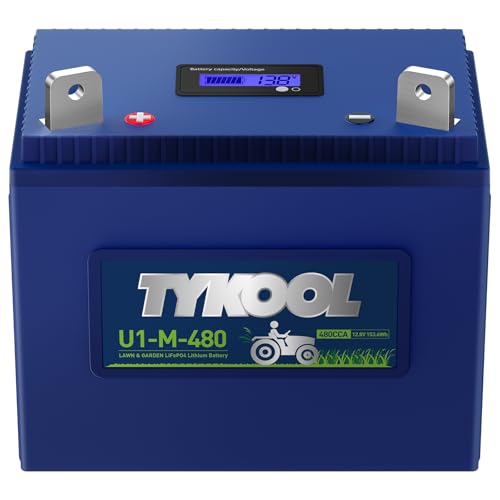
TYKOOL 480CCA Group U1 Lithium LiFePO4 Lawn Mower Battery

WEIZE Lawn Garden AGM Battery 12V 350CCA Group U1
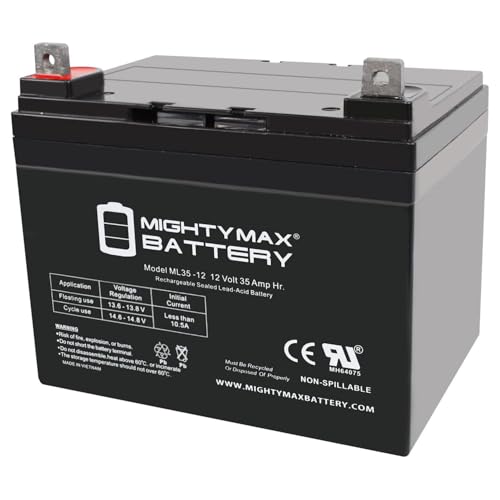
Mighty Max Battery 12V 35Ah for John Deere Lawn Tractor

UPLUS U1 Riding Lawn Mower Battery 12V 330CCA

Autocessking Lawn Garden AGM Battery Group 1 U1-320CCA

BRS U1 AGM Battery 12V 300CCA Group U1
A Closer Look At Each Pick
The WEIZE 12V 300CCA Group U1 battery sits in the comfortable middle of the riding mower battery market. It’s an AGM (Absorbent Glass Mat) sealed unit, meaning the electrolyte is held in fiberglass mats rather than pooling as liquid. The result is a spill-proof design that mounts in any orientation and resists the vibration that racks up hours on a tractor deck.
At roughly 7.68 inches long and just over 18 pounds, the case fits standard U1 trays found across John Deere, Cub Cadet, Toro, and Craftsman machines. The 300 cold cranking amps is enough confident starting power for most single- and twin-cylinder riding engines in temperate climates, making it a sensible everyday swap for owners who don’t push their tractors into extreme winter duty.
The Case For It
- Sealed AGM construction means zero water top-ups and no acid spills on the mower frame
- Square-hole nut-and-bolt terminals provide a solid mechanical connection that resists loosening from vibration
- 300CCA rating handles most mid-size riding engines down to moderate cold snaps
- Standard U1 footprint matches a wide range of OEM trays without adapter brackets
Things To Consider
- Lighter CCA than the 350CCA sibling, so very cold regions may want the heavier output version
- Hazardous-materials shipping rules mean delivery timing can vary by carrier
- No carry handle molded into the case, which makes the 18-pound swap a two-handed lift
Who It Suits Best
Owners of mid-size garden tractors in temperate climates who want a maintenance-free AGM swap and broad brand compatibility.
Where Another Pick Suits Better
Sub-zero starters and frequent winter cranks will pull more reliably out of the TYKOOL 480CCA lithium unit.
This is the lower-output cousin of the first pick, dropping from 300CCA to 200CCA while keeping the same sealed AGM case. CCA stands for Cold Cranking Amps, a measure of how much current the battery can deliver for 30 seconds at 0°F without dipping below a usable voltage. Fewer amps means gentler cold-weather performance, but it also trims cost.
The physical dimensions mirror the 300CCA unit, so installation is identical for the same tractor models. For older single-cylinder riding mowers stored in a heated garage and rolled out in spring, 200CCA is genuinely sufficient. Owners with bigger twin-cylinder engines in chilly regions should look up the ladder instead.
What Earns Its Place
- Lower price point for budget-focused replacements
- Identical sealed AGM construction as the higher-CCA sibling
- Same U1 footprint ensures drop-in fit across popular tractor brands
- Solid choice for warm-climate mowers that start easily year-round
Points To Note
- 200CCA may feel marginal on cold mornings with a larger engine
- Heavier case weight (around 21.5 pounds) than the 300CCA model despite lower output
- No visual state-of-charge indicator on the top of the case
Right Fit For
Shoppers replacing a battery on a smaller riding mower in a mild climate who want sealed AGM convenience without paying for extra cranking headroom.
Swap It Out When
Twin-cylinder tractors and cold-climate operators should reach for the WEIZE 350CCA Group U1 instead.
The TYKOOL is the only lithium option in this roundup, and the chemistry difference is significant. LiFePO4 (lithium iron phosphate) batteries hold a steadier voltage under load, weigh roughly a third of a comparable lead-acid unit, and tolerate deep discharge without the sulfation damage that kills AGM cells over time.
Rated at 480CCA, the TYKOOL posts the highest cranking number here, useful for sub-zero mornings where lead-acid voltage sags. It’s also the lightest option in this list, which makes one-handed installation realistic. The trade-off is upfront cost and the need to confirm your tractor’s charging system is lithium-compatible before swapping.
The Helpful Details
- Highest CCA rating in the lineup at 480 amps
- LiFePO4 chemistry resists voltage drop in cold weather
- Substantially lighter than any AGM competitor, easing install
- Long cycle life compared to lead-acid replacements
Honest Caveats
- Premium price tier that may not suit tight budgets
- Some older tractors with unregulated charging systems can overcharge lithium cells
- Requires confirming terminal layout matches your specific U1 tray
Best Suited To
Owners running newer riding tractors in cold climates who want the lightest, longest-lasting chemistry and don’t mind paying for the upgrade.
Reach For A Different Pick When
Budget shoppers and owners of vintage tractors with older voltage regulators should stick with the WEIZE 350CCA AGM option.
Step up from the 300CCA WEIZE and you land here, with 350 cold cranking amps in the same U1 footprint. The extra amps matter most when a tractor has sat through a hard winter or runs a higher-compression engine that demands a firmer initial spin. Same sealed AGM construction, same nut-and-bolt terminals, same overall case shape.
Weight climbs slightly to about 21.45 pounds, a small price for the reserve capacity. For owners in northern climates who don’t want to commit to lithium pricing, this is a sensible middle-ground upgrade that pairs with John Deere, Cub Cadet, Toro, and Craftsman machines.
Advantages To Know
- 350CCA delivers confident cold-weather starts on larger engines
- Sealed AGM means no maintenance schedule to remember
- Same compact U1 form factor as smaller-CCA siblings
- Spill-proof design tolerates angled mounting in tight engine bays
Worth Noting
- Modest weight gain over the 300CCA option without a dramatic capacity jump
- Hazardous-materials shipping regulations can affect delivery time
- Still heavier than lithium alternatives for those prioritizing weight
Quick Facts
Made For
Owners of larger twin-cylinder riding tractors in cold-winter regions who want AGM simplicity without stepping into lithium pricing.
A Better Fit Elsewhere
Shoppers prioritizing minimum weight should pivot to the TYKOOL 480CCA lithium unit instead.
The Mighty Max ML35-12 takes a different approach from the U1 group batteries. It’s a 12V 35Ah SLA (sealed lead-acid) unit with notably higher amp-hour capacity, meaning it can sustain accessories like headlights for longer stretches without dipping below usable voltage. The case is taller and slightly wider than standard U1 dimensions, so measuring the tray first is essential.
This battery is a known replacement for several John Deere lawn tractor models, and the listing ships with terminal screws only, no harness or mounting bracket. It’s a workhorse option for owners who care about runtime over peak cranking amps.
What Pays Off
- 35Ah capacity out-rates most U1 group batteries for accessory runtime
- SLA/AGM sealed design tolerates a wide range of operating temperatures
- Good deep-discharge recovery compared to flooded lead-acid designs
- Common drop-in for legacy John Deere riding mower models
Trade Offs
- Larger footprint than standard U1, requires tray measurement
- No wire harness or mounting hardware included in the box
- Heavier than the U1 group options at higher capacity
Whose Shelf It Belongs On
Owners of legacy John Deere riding mowers who need higher amp-hour capacity and have confirmed tray dimensions for the ML35-12 case.
Consider Something Else When
Standard U1 tray owners looking for a direct-fit swap will find the WEIZE 300CCA more straightforward.
The UPLUS U1 takes the AGM formula and broadens the brand compatibility list to include John Deere, Cub Cadet, Husqvarna, Craftsman, Toro, Ariens, Poulan Pro, and Troy-Bilt. That wide compatibility makes it a sensible choice for households running more than one brand of outdoor power equipment.
Rated at 330CCA, the unit sits between the WEIZE 300CCA and 350CCA options. The maintenance-free sealed design uses pure primary lead plates, which generally extend cycle life in AGM cells. Case dimensions stay within standard U1 territory, so most OEM trays accept it without modification.
Standout Benefits
- Broadest compatibility list across major riding mower brands
- 330CCA hits a practical middle ground for varied engine sizes
- Sealed AGM means no fluid checks or terminal corrosion
- Pure lead plate construction supports longer cycle life
Some Limits To Know
- Not the strongest CCA option for sub-zero starts
- Slightly narrower case than some U1 specs, worth double-checking tray width
- Premium positioning may price it above basic AGM alternatives
Key Product Details
Who Should Grab It
Households with multiple riding mower brands in the garage who want one battery model that fits them all.
Skip It When
Sub-zero operators should choose the TYKOOL 480CCA lithium unit for stronger cold cranking.
The Autocessking U1-320CCA lands squarely in the middle of the AGM cranking range at 320 cold cranking amps. It’s a sealed AGM unit compatible with the same John Deere, Toro, Cub Cadet, and Craftsman lineup as the WEIZE group, giving owners another option in the same spec neighborhood.
One detail worth flagging: the case dimensions run a bit larger than the WEIZE U1 batteries, so confirm your tray’s clearance before ordering. For standard riding tractors with room to spare, the unit drops in without drama and delivers the spill-proof, no-maintenance experience most shoppers want.
Useful Strengths
- 320CCA balances output and price for everyday riding tractors
- Sealed AGM design eliminates water-top maintenance
- Compatible with major riding mower brand lineups
- Stable cranking performance across moderate temperature swings
Points To Keep In Mind
- Larger case footprint than standard U1 dimensions
- Hazardous-materials shipping can affect delivery timing
- 320CCA doesn’t stand out from nearby 300CCA and 330CCA competitors
Perfect Match For
Owners of standard riding tractors with generous battery trays who want mid-range AGM output without overspending.
Not Your Match When
Tight U1 trays that can’t accommodate the larger case should pick the WEIZE 300CCA option for an exact fit.
The BRS U1 closes out the roundup with 300CCA and a feature set aimed at multi-vehicle garages. It’s labeled for riding mowers, generators, UTVs, and ATVs, and the sealed AGM construction includes vibration resistance that matters when the battery lives on equipment that crosses rough ground.
One convenience worth noting: the unit ships fully charged, so installation day is also cranking day, no waiting on a slow initial charge. Cold-weather readiness is part of the design brief, and the 375 cranking amps at warmer temperatures gives a useful headroom number beyond the CCA rating.
Where It Helps
- 300CCA plus 375CA rating gives solid cranking reserve
- Vibration-resistant build suits tractors and UTVs alike
- Arrives fully charged for immediate installation
- Sealed AGM means no spills or water top-ups
Potential Compromises
- 300CCA is on par with the WEIZE 300CCA at similar output tier
- Higher-end pricing relative to entry AGM options
- No carry handle molded into the case for transport
Built With In Mind
Owners running multiple battery-powered vehicles, from riding mowers to UTVs, who want one trusted AGM model on the shelf.
Look Elsewhere When
Budget shoppers should consider the WEIZE 200CCA option for a more affordable AGM swap.
What To Weigh Before Choosing A Riding Mower Battery
Start with the physical fit. The Battery Council International (BCI) group number, here U1 for most of these picks, standardizes case dimensions, terminal placement, and post type. Pull the old battery out and measure length, width, and height before ordering. A mismatch by even half an inch can leave the hold-down bracket unable to clamp, and an unsecured battery in a vibrating tractor loses lifespan fast.
Next, weigh cranking amps against climate. CCA measures starting power at 0°F, while standard cranking amps (CA) measures output at 32°F. In mild regions, 200 to 300CCA is generally enough. In areas with sub-freezing springs, aim for 330CCA or higher, or consider a lithium upgrade for the steadiest cold-weather voltage.
Chemistry is the third decision. Flooded lead-acid batteries are cheapest but need periodic water checks and vent gases. AGM batteries suspend the electrolyte in glass mats, sealing the case and removing maintenance. LiFePO4 batteries are lightest and longest-lasting, but cost more upfront and may need a compatible charging system.
Finally, check terminal polarity. Most U1 batteries put positive on the left, but confirm your tractor’s cable reach and post style, square nut-and-bolt versus threaded stud, before clicking order.
Key Considerations Across These Picks
Common Shopping Slip Ups
The most frequent misstep is buying a battery with the right group number but the wrong terminal polarity. Always verify positive and negative post positions match your existing cables, otherwise you’ll find yourself adding long jumper wires or returning the unit. Another trap is chasing the highest CCA number when your climate doesn’t demand it: extra cold-cranking amps come with extra weight and cost that deliver little benefit in temperate zones.
Why Top Tier Costs More
Higher-tier models command more because of plate purity, thicker internal grids, and sealed AGM construction that resists vibration and deep discharge. Lithium batteries cost more still because LiFePO4 cells, integrated battery management systems, and lighter cases all add to manufacturing. The upgrade pays off most for cold-climate operators, owners who store equipment for long stretches between uses, and shoppers who prefer install-and-forget convenience.
Frequently Asked Questions
How long does a riding mower battery typically last?
A sealed AGM battery in a riding mower commonly lasts three to five seasons with proper off-season storage. Lithium LiFePO4 units can stretch considerably longer thanks to deeper cycle tolerance and slower calendar aging.
Can you jump-start a riding mower with a car battery?
You can, briefly, using heavy-gauge jumper cables and keeping the car engine off. Limit the connection to a few seconds, and connect positive to positive, negative to a ground point on the mower frame, not the battery post, to reduce sparking risk near battery gases.
Do riding mower batteries need a tender in winter?
A maintenance tender, sometimes called a float charger, helps AGM batteries hold a full state of charge through long storage. Without one, expect to recharge before the first spring start, especially after a freezing winter.
What’s the difference between CCA and amp-hours?
CCA measures short bursts of high current for engine cranking. Ah measures total energy storage for running accessories over time. A battery with high CCA but low Ah cranks well but dies quickly under accessory load, while the reverse produces a deep-cycle battery that struggles to spin an engine.
Is a higher CCA rating always better?
Not necessarily. Higher CCA helps cold-weather starting, but excess cranking amps in a warm climate just add cost and weight. Match CCA to your lowest expected starting temperature for the best balance of performance and value.
Wrap Up
The right battery depends on climate, engine size, and how often the tractor sits between uses. Most riding mower owners will find a sweet spot in the 300 to 350CCA AGM range, while lithium makes sense for cold winters and weight-sensitive setups. Measure your tray first, confirm terminal layout, and the swap becomes a quick spring ritual rather than a guessing game.