Boats ask more of a battery than almost any other vehicle: salt spray, vibration, partial charges, long weekends at anchor, and one bad cell away from leaving you stranded. Whether you’re running a trolling motor on a jon boat, electronics on a center console, or a trolling-plus-cranking setup on a bay boat, the right cell chemistry and case size changes the whole ownership experience. This roundup walks through ten solid picks across lithium deep-cycle, dual-purpose, AGM, and small electronics sizes, so you can match capacity, terminal layout, and case size to the way you actually boat.
A Side-By-Side Look

VATRER POWER 12V 300Ah LiFePO4 Dual-Mode Battery
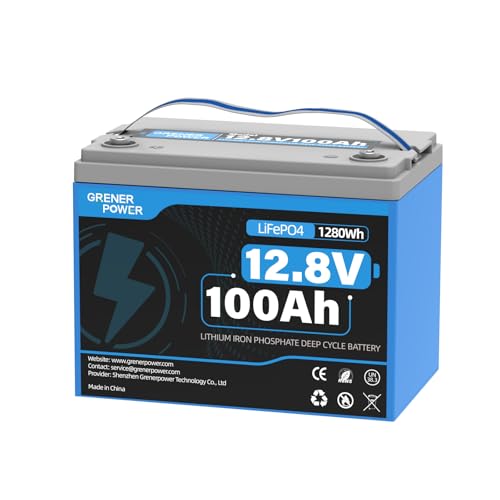
GrenerPower 12V 100Ah Group 24 LiFePO4 Battery

SOK 12V 100Ah LiFePO4 Battery Group 24 IP65

Mosasaur 48V 100Ah Golf Cart LiFePO4 Battery Kit

Mighty Max 12V 15AH SLA Hummingbird Battery
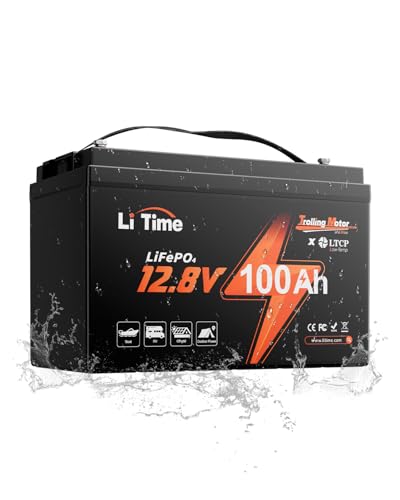
Litime 12V 100Ah Trolling Motor Group 31 LiFePO4

Litime 12V 100Ah Trolling Motor Bluetooth Group 31

Litime 12V 100Ah Group 27 LiFePO4 Bluetooth

Power Queen 12V 100Ah Group 31 LiFePO4 Battery

Litime 12V 165Ah Dual Purpose Cranking LiFePO4
More Details On Our Top Picks
Big boats often need one bank for house loads and a separate bank for engine starting, which doubles the install weight and the cable clutter. The VATRER POWER 12V 300Ah LiFePO4 Dual-Mode Battery tackles that by running a battery management system, the small onboard circuit that protects cells from overcharge, deep discharge, and shorts, that can switch between deep-cycle mode and a high-rate startup pulse. In storage mode it behaves like a 300Ah house cell rated past 5,000 cycles, and on demand it dumps enough current to crank most mid-size outboards.
The trade-off is bulk and price, and you’ll want to confirm your outboard’s peak amp draw falls inside what the BMS allows before committing. For owners running a single console with both house and starting duties, this is one of the cleanest one-box solutions on the market.
A Few Strong Suits
- Combines deep-cycle capacity and engine-start current in one case
- App monitoring lets you check state of charge from your phone at the helm
- Long cycle rating means years of partial-discharge weekends before noticeable wear
- Replaces two separate batteries, freeing real space in a cramped lazarette
Worth Noting
- Heavy compared to standard deep-cycle lithium, so plan for a sturdy tray
- Smaller outboards may not need the dual-mode capability
Who It Suits Best
Boat owners running a single helm with both house electronics and outboard starting on one consolidated bank.
A Better Fit Elsewhere
If your engine is a small trolling motor and you only need house power, the GrenerPower 12V 100Ah Group 24 LiFePO4 Battery is lighter and simpler.
Most small to mid-size boats already have a Group 24 tray bolted in, and swapping a dying AGM for a lithium cell that drops into the same footprint is a satisfying afternoon project. The GrenerPower 12V 100Ah Group 24 LiFePO4 Battery uses cylindrical Grade A+ lithium iron phosphate (LiFePO4) cells, a chemistry known for thermal stability and long cycle life, paired with a 100A battery management system that guards against overcharge, overdischarge, short circuits, overcurrent, and overheating.
It weighs a fraction of a comparable lead-acid, which matters on smaller hulls where every pound shows up in fuel economy and handling. For most kayak, jon boat, and trailer anglers, this is the easiest entry into real lithium power without reworking the electrical bay.
What It Does Well
- Direct Group 24 drop-in replacement for existing trays
- Five-layer BMS protection keeps the cells safe under rough charge conditions
- Long cycle life at partial discharge suits weekend boaters
Things To Consider
- Charging system may need a lithium-profile upgrade for full performance
- Single 100Ah bank can feel tight for cabin loads over multi-day trips
Made For
Weekend anglers and trailer-boat owners stepping up from lead-acid to lithium without rewiring the boat.
Consider Something Else When
You need real engine cranking alongside house loads, where the Litime 12V 165Ah Dual Purpose Cranking LiFePO4 makes more sense.
Owners who like to peek inside their own gear get a rare treat here: the SOK 12V 100Ah LiFePO4 Battery Group 24 IP65 ships in a translucent, shatter-resistant case rated to IP65 against dust and water jets. You can glance at the cell layout and bus bars without cracking anything open, which is genuinely useful when troubleshooting a fault or just confirming everything looks healthy after a rough tow.
The Group 24 footprint keeps the swap painless, and the IP65 sealing stands up well to splash, spray, and the occasional dunk at the ramp. It’s a smart pick for anyone who treats their battery compartment as part of the routine maintenance walk-around.
Where It Helps
- Translucent case speeds up visual inspection of internal components
- IP65 sealing handles splash, spray, and damp bilge areas
- Standard Group 24 form factor fits existing trays
Trade Offs
- Translucent case shows scuffs and salt haze over time
- Slightly heavier than some fully sealed lithium competitors
Key Specs
Best Suited To
Hands-on boat owners who service their own electrical systems and want a battery they can actually inspect.
Skip It When
You’re outfitting a kayak or small skiff where weight matters more than service visibility, and the Litime 12V 100Ah Trolling Motor Group 31 LiFePO4 is lighter.
Trolling rigs and pontoon boats running heavy 48V motor packages need a different class of battery, and the Mosasaur 48V 100Ah Golf Cart LiFePO4 Battery Kit is built for that workload. The kit ships as a single 48V pack housed in a familiar lead-acid case shape, so it lands in trays designed for legacy golf-cart banks with minimal fabrication. It also comes with a matching 18A charger, which removes one of the most common upgrade headaches.
The peak output climbs past 10kW through a 200A battery management system with cell balancing, the process of equalizing charge across all cells so they age together rather than drifting apart. Owners get an LCD touchscreen plus app monitoring for state of charge, voltage, and current on the fly.
Positive Takeaways
- 10.24kW peak output handles steep climbs on larger pontoons
- Includes the charger in the box, simplifying the upgrade
- Dual monitoring via app and built-in LCD
Room For Improvement
- 48V platform is overkill for 12V marine electronics setups
- Heavier than single 12V lithium batteries
The Right Fit
Big pontoon boats and pontoon-style platforms running a 48V trolling system that wants a turnkey lithium upgrade.
Look Elsewhere When
You’re powering a 12V cabin and electronics setup, where the Litime 12V 100Ah Trolling Motor Bluetooth Group 31 is a better voltage match.
Not every battery on a boat runs a trolling motor. Fish finders, portable GPS units, and small livewell pumps often run on compact sealed lead-acid packs, and the Mighty Max 12V 15AH SLA Hummingbird Battery is a classic 12V 15Ah replacement in the F2 terminal format. SLA here means sealed lead-acid with absorbed glass mat (AGM) construction, where the electrolyte is held in fiberglass separators rather than free-floating liquid.
It’s spill-proof, mounts in any orientation, and shrugs off vibration from rough water and trailer rides. For kayak anglers and bass-boat console replacements, it’s a straightforward, low-fuss swap.
Real Benefits
- Spill-proof AGM construction suits enclosed marine compartments
- Compact footprint fits fish finder trays and small electronics bays
- Tolerates wide operating temperatures on open decks
Points To Note
- Not designed for engine starting or trolling motor duty
- Shorter cycle life than lithium alternatives at the same capacity
Feature Snapshot
Who Will Love This
Anglers replacing a dying fish finder battery in a kayak or bass boat without upgrading the rest of the system.
Swap It Out When
You want one battery to run a trolling motor and electronics, where the GrenerPower 12V 100Ah Group 24 LiFePO4 Battery is a meaningful upgrade.
Kayak anglers and small-boat owners asked for a lithium cell that handles cold mornings and salt spray without drama, and the Litime 12V 100Ah Trolling Motor Group 31 LiFePO4 answers with thoughtful marine-specific engineering. It meets the ABYC E-13 marine lithium standard, which is the American Boat and Yacht Council’s safety benchmark for lithium installations on boats, and uses extra BMS protection against dust, water, and salt spray.
Low-temperature protection cuts charging off below 32°F and discharging off below -4°F, preventing cold-weather damage that can crack standard lithium cells. At roughly 22 pounds in a Group 31 frame, it slots into common trolling trays without forcing a layout redesign.
Useful Touches
- ABYC E-13 compliance simplifies insurance and inspection conversations
- Low-temperature cutoffs protect cells on cold-morning launches
- Standard Group 31 case fits most trolling motor trays
Small Caveats
- Low-temp protection may require manual warm-up before winter launches
- Heavier than mini lithium options for ultralight kayak builds
At A Glance
Perfect Match For
Kayak and small center-console anglers who boat in shoulder seasons and want a marine-rated lithium cell.
Not Your Match When
You mostly want phone-based monitoring rather than a basic BMS, where the Litime 12V 100Ah Trolling Motor Bluetooth Group 31 adds that layer.
The non-Bluetooth sibling in this roundup covers the basics well, but for owners who want to check state of charge from the helm without popping the console, the Litime 12V 100Ah Trolling Motor Bluetooth Group 31 adds the smart layer. Auto-connecting Bluetooth feeds real-time voltage, current, and remaining capacity straight to your phone, so you can spot a dying cell before it strands you at the ramp.
It carries the same 20-plus safety protections, low-temperature cutoffs, and IP65 sealing as the standard Group 31 version. You give up nothing in durability; you gain visibility.
Benefits That Matter
- Real-time phone monitoring of state of charge and current draw
- Same ABYC E-13 marine safety profile as the standard model
- Low-temp cutoffs preserve cells in cold shoulder-season launches
Potential Drawbacks
- Bluetooth requires phone storage and app updates over time
Built With In Mind
Boat owners who like to track system health from a phone rather than guess based on voltage alone.
Reach For A Different Pick When
You mostly leave the console closed and just want a set-and-forget house bank, where the Power Queen 12V 100Ah Group 31 LiFePO4 Battery does the job without app overhead.
Group 31 is the most common trolling battery size, but plenty of boats use Group 27 trays, and forcing the wrong footprint leads to wedged installs and rub-through on cables. The Litime 12V 100Ah Group 27 LiFePO4 Bluetooth is built specifically for that smaller bay, and the brand tailors it to fit common RV and trailer-boat compartments like those in Brinkley, Four Winds, and Forest River platforms.
Bluetooth 5.0 monitoring keeps the smart features intact while the case fits where a Group 31 won’t. For owners with tight console layouts, it’s a tidy way to keep the lithium upgrade without trimming brackets or extending cables.
Features That Help
- Group 27 footprint fits RV and trailer-boat compartments a Group 31 won’t
- Bluetooth 5.0 with smart discharge control from the app
- Low-temp and IP65 protection match the larger Group 31 sibling
Things To Weigh
- Group 27 capacity ceiling may feel tight for multi-day cabin use
Whose Shelf It Belongs On
Boat owners with a Group 27 compartment who want a Bluetooth lithium drop-in without fabrication work.
Where Another Pick Suits Better
You have a Group 31 tray and want maximum expandability, where the Litime 12V 100Ah Trolling Motor Bluetooth Group 31 fits more standard layouts.
Some owners start with one battery and grow into a four-bank house system over a season or two, and the Power Queen 12V 100Ah Group 31 LiFePO4 Battery is built with that expansion in mind. It supports up to a 4P4S configuration, meaning four in parallel for capacity and four in series for voltage, so a single purchase can grow into a serious house bank without changing platforms.
The 100A BMS handles overcharge, overdischarge, and short-circuit protection, and the Group 31 case drops into existing marine trays. It skips the Bluetooth extras in favor of a simpler, more affordable core cell, which matters when you’re stacking multiples.
Good Reasons To Consider
- 4P4S expandability supports future bank growth
- Standard Group 31 footprint eases multi-battery installs
- Solid 100A BMS protection across everyday trolling loads
Honest Caveats
- No Bluetooth monitoring on this variant
- Series and parallel setups require matched cable lengths for balanced charging
Who Should Grab It
Boat owners planning a multi-battery house bank who want a proven Group 31 cell to grow into.
Another Choice May Suit
If phone monitoring matters and you only need one or two batteries, the Litime 12V 100Ah Trolling Motor Bluetooth Group 31 fits that profile.
Cranking a cold outboard on a lithium-only bank has historically been a weak spot, because deep-cycle lithium cells prioritize steady discharge over the brief, high-amp bursts engines need to start. The Litime 12V 165Ah Dual Purpose Cranking LiFePO4 closes that gap with 1200 cold-cranking amps at 14°F and 1300 marine cranking amps at 32°F, which is enough to spin most Mercury, Honda, Suzuki, Evinrude, and Tohatsu outboards.
It also runs house loads like fish finders and trolling motors from the same bank, which simplifies small-boat wiring. A built-in 15% emergency reserve cuts discharge before the cells run too low, preserving enough power to start the engine for the run home.
Practical Pluses
- 1200 CCA handles cold-morning outboard starts on lithium alone
- Replaces a separate cranking battery and house bank
- 15% reserve cutoff protects enough power to restart and return
A Few Limitations
- Not compatible with Mercury Optimax outboards
- Heavier than a pure deep-cycle lithium of similar capacity
Right Fit For
Small-boat owners running a single outboard plus electronics who want cranking and house duty in one battery.
Where A Sibling Pick Shines
You run a separate starting bank and only need a deep-cycle house cell, where the Litime 12V 100Ah Trolling Motor Group 31 LiFePO4 keeps things simpler.
What Matters Most When Picking Marine Batteries
Cell chemistry drives the whole ownership experience. LiFePO4 (lithium iron phosphate) costs more upfront but lasts far longer than sealed lead-acid, especially on boats that sit at partial charge between trips. AGM still makes sense for tiny electronics bays and budget builds because the cells tolerate a wide charging range without fuss.
Case size matters as much as capacity. A Group 24, 27, or 31 footprint determines whether the cell drops into an existing tray or forces a fabrication job. Match the case to the bay before chasing a higher amp-hour rating.
Cranking amps versus deep-cycle ratings split the marine world into two camps. Pure deep-cycle cells run trolling motors and house loads all day but struggle to spin a cold outboard. Dual-purpose lithium cells like the Litime 12V 165Ah Dual Purpose Cranking LiFePO4 bridge the gap, though they cost more per amp-hour than dedicated deep-cycle units.
Ingress protection saves batteries in wet bilges. An IP65 rating means the case resists dust and water jets; IP67 adds short-term submersion protection. Boats with open battery compartments or livewells nearby benefit from the higher rating.
Cold-weather cutoffs prevent cell damage. Standard lithium cells can plate internal lithium metal if charged below freezing, permanently reducing capacity. Batteries with low-temperature charge protection refuse to charge below a set threshold, preserving lifespan on shoulder-season mornings.
Smart Shopper Tips For Marine Battery Upgrades
Common Slip Ups In The Marine Battery Aisle
Buying by amp-hours alone ignores case fit, terminal orientation, and cranking requirements. A 200Ah cell that won’t physically drop into your tray is wasted money, and a deep-cycle bank that can’t start your outboard leaves you calling for a tow. Always check the BCI group size (the standardized Battery Council International case dimension your tray was built for) before pulling the trigger on capacity.
Why Premium Marine Cells Cost More
Higher-tier lithium cells build in smarter battery management, marine-grade ingress sealing, Bluetooth monitoring, and sometimes self-heating for cold climates. Those features show up as real-world convenience: easier troubleshooting from the helm, fewer worries about splash and spray, and safer cold-morning operation. For weekend warriors running a single battery, mid-tier works fine. For liveaboards and serious offshore anglers, the upgrade pays off in reliability and peace of mind.
Frequently Asked Questions
What Size Battery Does My Boat Need?
Match the case size to your existing tray first, then choose capacity based on your longest typical day on the water. Most 12V trolling setups run fine on a single 100Ah Group 31 cell.
Can I Use A Car Battery In My Boat?
Car batteries are starting-focused and degrade quickly under deep discharge. Marine deep-cycle or dual-purpose cells are built for the repeated partial-discharge pattern boats actually see.
How Long Do Marine Lithium Batteries Last?
LiFePO4 cells in marine service commonly rate for 4,000 to 15,000 cycles depending on depth of discharge, which translates to many seasons of weekend use before noticeable capacity loss.
Do Lithium Batteries Need A Special Charger?
Most modern lithium cells charge fine on a standard marine charger with a lithium or AGM profile. Alternators without temperature-compensated regulation may need a DC-DC regulator to play nicely.
Is IP65 Enough For An Open Boat Bilge?
IP65 handles splash and spray well in most installations. For compartments prone to standing water or submersion, IP67 offers stronger short-term dunking protection.
Closing Remarks
The right marine battery comes down to how you actually boat: weekend trips versus liveaboard duty, trolling motors versus engine starting, tight console bays versus open lazarettes. Match the case size, decide between deep-cycle and dual-purpose, and lean into lithium if the budget stretches. Any of the picks above will serve well when chosen for the right reasons.