Running an RC workshop means juggling packs of different cell counts, chemistries, and connector types. The right balancing charger keeps your lipos healthy, extends cycle life, and gets you back on the track or flight line without babysitting a fragile pack. This roundup covers full-size smart chargers, compact travel units, balance boards, and the cables that tie everything together.
A Closer Look At The Lineup

SKYRC D200neo Dual AC/DC Smart Charger (6S/20A)

FLY RC EC5 to Banana Plug Charging Cable (2-Pack)

RuiLing JST-XH 3S Balance Extension Cable (15cm)
Traxxas 2972 EZ-Peak Plus 100W NiMH/LiPo Charger

FLY RC 4.0mm Banana Plug Charge Lead (2-Pack)

HGLRC Thor 6-Port Balance Charger Board Pro 40A

FLY RC 6S JST 7-Pin Balance Cable (10-Pack)

Yeebline EC5 to Banana Cable (12AWG, 2-Pack)
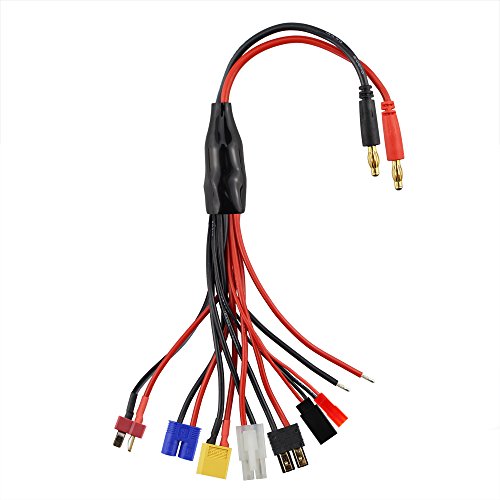
SIM&NAT 8-in-1 Octopus Connector Splitter Cable

SUPULSE 10W 2S/3S XHR Balance Charger
Meet The Standout Selections
This dual-port smart charger pulls double duty on the bench. The D200neo accepts up to 200W from a wall outlet or 800W from a DC source, which means you can charge two packs at a fair clip or push one high-capacity pack at full tilt.
Compared to the Traxxas 2972 EZ-Peak Plus covered later, this unit trades plug-and-play simplicity for deeper chemistry support. It handles up to 6S packs with 20A output per channel, and the color screen keeps voltage, current, and cell balance data readable at a glance.
A Favorable Mix
- Dual channels free you from queuing packs in series
- AC/DC input covers both home bench and field generator use
- 6S support covers most high-end flight and car batteries
- Higher DC ceiling speeds up large capacity pack top-offs
Things To Consider
- Owner setup has a steeper learning curve than single-mode chargers
- You may want a dedicated power supply for the full DC ceiling
- Bulkier footprint takes up real bench space
Key Specs
Made For
RC hobbyists running multiple chemistries or large battery fleets who want one bench-side station.
Swap It Out When
The Traxxas 2972 EZ-Peak Plus is a smarter match for someone committed to Traxxas vehicles who values one-touch iD convenience.
Cables are the unglamorous half of any charging setup, and FLY RC makes a solid EC5 lead here. The 14AWG silicone wire is flexible enough to route around a crowded pit table without kinking, and the EC5 plug locks firmly onto high-current car packs.
At 30cm these leads sit between charger and pack with just enough slack to keep things tidy. They bridge 4mm banana outputs on chargers like the SKYRC D200neo to the EC5 main lead on RC car and large heli lipos.
Useful Highlights
- Heat-resistant silicone jacket handles repeated high-current runs
- EC5 connector grips tight, resisting vibration pull-out
- Two-pack pricing keeps a spare within reach
- 30cm length suits cramped workbenches
Honest Caveats
- Not a balance cable, so it only handles the main charge lead
- No protective boots, so exposed banana ends can short on metal surfaces
Best Suited To
RC car owners running high-draw EC5-equipped lipos who need reliable adapter leads.
Look Elsewhere When
The Yeebline 12AWG cable is a better pick for very large-capacity heli or airplane packs where thicker wire is helpful.
When the JST-XH balance lead on a 3S pack sits flush inside the fuselage, adding an extension saves you from pulling the battery out every charge. RuiLing’s 15cm lead uses 22AWG silicone wire that bends without fatigue, and the shrink-tubed female end keeps polarity unmistakable.
This is a narrow-purpose accessory, but it solves a real pain point for FPV pilots and micro-builders. The shorter length keeps resistance minimal for balance leads, which only carry small monitoring currents.
What Makes Sense
- Two-pack format covers spares for a bench or a flying field
- 15cm length is enough to route around canopies and frames
- 22AWG gauge is standard for balance-lead signal work
A Few Limitations
- Limited to 3S JST-XH packs, so 4S and above owners will need a different lead
- Not intended for the main charge current path
Who Will Love This
FPV drone pilots and micro heli builders needing tidy balance access on tight builds.
Where A Sibling Pick Shines
The FLY RC 10-piece 6S balance cable set covers higher cell counts for those who upgrade to bigger packs.
Traxxas built the EZ-Peak Plus around one idea: drop in an iD battery, press start, and walk away. The proprietary iD system reads a chip inside the pack and auto-selects the right charge profile, which removes the menu-diving that scares off newcomers.
It supports both NiMH and LiPo chemistries at up to 100 watts combined, charging two packs at up to 50W each in dual mode or pushing one pack harder in high-output mode. For Traxxas-only garages, this is the smoothest path from bag to ready-to-run.
Real-World Strengths
- One-button operation removes chemistry guesswork
- Dual ports let you rotate through two packs at once
- iD compatibility covers most modern Traxxas battery lines
Worth Noting
- Charging power trails the SKYRC D200neo for big 6S packs
- Proprietary iD system locks you into Traxxas batteries for full simplicity
- Bulkier than pocket chargers for travel
Who Should Grab It
Traxxas Slash, Rustler, and E-Revo owners who want stress-free charging without learning cell counts.
A Better Fit Elsewhere
Multi-brand pilots running different connector types will find the SIM&NAT 8-in-1 octopus cable far more flexible.
This lead handles the main charge path between a 4mm banana charger output and a Traxxas-style high-current connector. The 14AWG silicone wire stays pliable in cold garages, and gold-plated banana plugs keep resistance low over many cycles.
It’s a small accessory that quietly prevents the most common pit-table failure: a corroded or loose charge lead. For Slash, Rustler, Stampede, Bandit, and E-Revo owners, the fit is dialed in from the factory.
Points In Its Favor
- Gold plating reduces oxidation on banana contacts
- Heatproof silicone jacket survives repeated high-current use
- Two-pack format suits a bench plus a travel bag
Trade-Offs To Consider
- Traxxas-specific connector limits cross-brand use
- Main lead only, no balance wires
The Right Fit
Traxxas car hobbyists who want a replacement or backup main charge lead on hand.
Consider Something Else When
Pilots running EC5 packs on helicopters should consider the FLY RC EC5 cable covered earlier.
The Thor board is a parallel charging accessory, not a charger itself. It plugs into a smart charger like an iMAX B6 or ISDT Q6 and lets you feed up to six packs at once, with XT60 and XT30 ports covering both 5-inch and micro drone setups.
Its integrated discharger function helps storage-charge lipos before they sit on the shelf. For racing squads running identical 4S or 6S packs, this board is the difference between charging overnight and being ready for the next race day.
What Helps Most
- Six ports handle full race-day battery sets
- LED short-circuit indicators surface wiring faults fast
- Self-resetting thermal fuses protect each balance pin
- 40A input supports serious parallel throughput
Things To Weigh
- Parallel charging requires matched cell counts and capacities across packs
- You’ll still need a separate smart charger as the power source
Feature Snapshot
Whose Shelf It Belongs On
FPV racers and freestyle pilots running 4S or 6S pack sets who want one charging session instead of six.
Skip It When
A casual hobbyist with two or three lipos will get more value from a single-port charger like the SUPULSE unit.
A 22.2V 6S LiPo uses a 7-pin JST balance lead, and replacing one is annoying when you’re staring at a workshop full of packs. FLY RC sells ten cables at a time, which keeps a flight club, classroom, or repair bench well-stocked.
The 150mm length suits most builds, and the silicone jacket holds up to the kind of repeated plugging that comes with active use. For anyone restocking a balance cable drawer, this is a low-fuss option.
What Earns Its Place
- Ten-pack value beats buying singles over time
- 150mm length fits standard charging cradles
- 22AWG wire matches typical balance lead signal loads
Where It Is Less Suited
- Bulk format is overkill for a hobbyist with one or two packs
- 6S only, so 2S or 3S users will need a different lead
Right Fit For
RC clubs, FPV squads, and repair benches that burn through 6S balance leads regularly.
Another Choice May Suit
Solo hobbyists with smaller packs will find the RuiLing JST-XH 3S extension a better match.
The Yeebline cable leans into the high-current end of RC charging. With 12AWG silicone wire, it carries more amps with less voltage drop than the typical 14AWG lead, which matters for 5000mAh and above helicopter or large airplane lipos.
Each cable runs 30cm, matching the FLY RC EC5 lead covered earlier. The difference shows up under load, where 12AWG stays cooler and bends without complaint in cold weather.
A Strong Showing
- 12AWG wire keeps resistance low on long or high-current runs
- Heatproof silicone jacket resists jacket melt during fast charges
- EC5 connector locks onto high-current pack leads securely
- Two-pack format covers bench and travel bag
Some Limits To Know
- Stiffer than 14AWG leads, which can feel bulky in tight pit spaces
- Main lead only, no balance wires included
Perfect Match For
Large helicopter, fixed-wing, and high-capacity RC car owners who push current limits.
Reach For A Different Pick When
Smaller 3S or 4S drone setups pair better with the RuiLing 3S extension lead for balance access.
Households juggling multiple RC brands hit a wall fast when chargers only speak one connector. The SIM&NAT octopus harness solves that with eight outputs on a single 14AWG lead: TRX, Tamiya, EC3, JST, Futaba, XT60, T-Dean, and bare wire.
Protective caps cover unused contacts, which prevents the accidental short that ruins otherwise good pit afternoons. It pairs well with budget chargers like the TB6 series that have only 4mm banana outputs.
Notable Gains
- Eight connector types cover nearly every RC fleet
- Protective caps reduce accidental short risk on unused leads
- Silicone insulation flexes in tight pit spaces
- 14AWG wire handles mid-range charge currents safely
Less Ideal Details
- Eight leads can clutter a small bench, depending on your tolerance for tangle
- No balance wires, only main charge paths
Built With In Mind
Mixed-fleet hobbyists running different RC brands and connector types from a single charger.
Not Your Match When
A dedicated Traxxas-only garage will get cleaner results from the Traxxas 2972 charger plus its own leads.
The SUPULSE charger is small enough to slip into a gear bag and light enough that you’ll forget it’s there. It weighs around 100 grams and runs from any 110-240V AC outlet, which makes it a sensible field companion for club days or weekend trips.
It targets 2S and 3S XHR-plug lipos, charging each cell through separate balance lines. Max charge current sits at 3x800mA, so it’s a slow top-off rather than a rapid turnaround, but that’s the right tradeoff for a charger this portable.
Real Benefits
- 92mm x 59mm x 35.5mm footprint fits any travel kit
- Wide AC input range covers international travel
- Separate balance lines protect each cell from drift
- XHR plug support matches many small drone and car packs
Practical Considerations
- Only one port can be connected at a time
- 10W ceiling makes large packs a long wait
Who It Suits Best
Travelers and casual hobbyists who want a grab-and-go charger for 2S or 3S XHR packs.
Where Another Pick Suits Better
Heavy workshop users with mixed cell counts will find the SKYRC D200neo a more capable station.
Choosing The Right Charging Setup For Your RC Bench
Match The Charger To Your Pack Chemistry And Cell Count
LiPo stands for lithium polymer, the most common RC chemistry today. Balancing matters because each cell in a pack can drift in voltage during charge, and any cell pushed past 4.2V degrades fast. A dedicated LiPo balance charger tops every cell to the same safe voltage, which protects both runtime and cycle life.
Before choosing, count your pack voltages: 2S (7.4V), 3S (11.1V), 4S (14.8V), 6S (22.2V). Chargers with higher cell-count support cover more packs but cost more and add weight. Newcomers with one or two small packs do fine with a 2S-3S travel unit like the SUPULSE.
Wattage And Current Shape Real-World Charging Speed
A charger’s wattage rating tells you how fast it can refill a pack. Higher wattage trims charging time on large-capacity lipos but demands a beefy power supply on the DC side. Home users without a generator or large power brick usually stick with AC chargers under 200W for simplicity.
Bench hobbyists running parallel boards like the HGLRC Thor want the highest wattage their source can deliver. That extra current heads into six packs at once instead of into one pack at speed.
Connectors Decide Whether You Actually Plug In
Main leads carry charging current and use larger plugs like EC5, XT60, Deans, and Traxxas. Balance leads carry tiny monitoring currents and use small connectors like JST-XH. The wrong adapter means no charging at all, regardless of how good the charger is.
Mixed-fleet households benefit most from octopus harnesses like the SIM&NAT 8-in-1 or from a small drawer of single-purpose leads like the FLY RC and Yeebline options above. Match the connector on the battery side first, then work back to the charger.
Cable Gauge And Length Trade Off
Lower AWG numbers mean thicker wire and lower resistance. 12AWG handles high-current car and heli lipos better than 14AWG, which itself outperforms 16AWG on long runs. Length matters too: shorter cables lose less energy as heat but restrict placement flexibility.
Most bench users settle on 30cm main leads and 15cm balance extensions. Long runs above 50cm should bump to thicker gauge to avoid voltage drop.
Smart Shopping Notes For This Category
Pitfalls Shoppers Hit
The most common mistake is buying a charger that supports the right cell count but the wrong connector, leaving you with adapters stacked on adapters. Another trap is choosing a high-wattage DC-only charger without confirming the power supply you own can feed it. Finally, ignoring balance lead compatibility means the charger works for fast charging but cannot balance cells, which shortens pack life.
Where The Extra Money Goes
Higher-tier chargers cost more for real reasons: dual channels, larger displays, more chemistry support, and higher sustained current. The upgrade pays off when you run multiple packs daily or charge large 6S airplane lipos where slow charging costs you whole evenings. A casual hobbyist with a couple of 3S drone batteries gains little from paying up.
Frequently Asked Questions
What Is A Balancing Lipo Battery Charger?
A balancing LiPo battery charger monitors each cell in a pack individually and tops them to the same voltage. That’s the balancing function, and it’s the difference between a safe charge and one that slowly damages your pack.
Can One Charger Handle Both 2S And 6S Packs?
Most modern smart chargers with 6S support also handle 2S and 3S lipos without issue. The cell range is a software setting, so a charger like the SKYRC D200neo can move between pack sizes on the same bench.
Why Do I Need Separate Balance Leads?
The main charge lead delivers current. The balance lead lets the charger read each cell’s voltage so it can top them evenly. Without balance wires, you cannot safely charge multi-cell lipos to their full capacity.
Is Parallel Charging With A Board Safe?
Parallel charging works when packs share the same cell count, capacity, and starting voltage. Mixing packs of different sizes on the same board can overcharge the smallest one. Boards like the HGLRC Thor include fuses and indicators to reduce that risk.
How Often Should I Replace Charge Cables?
Silicone-jacketed cables last years with normal use. Replace any lead that shows cracked insulation, loose connectors, or scorch marks. Owners commonly retire banana plugs after a few seasons as oxidation builds up on the contact surface.
Closing Remarks
The right balancing charger setup depends on how many packs you run and how varied your fleet is. Bench hobbyists juggling 6S airplane lipos and racing drones get the most from the SKYRC D200neo paired with a parallel board. Smaller setups with a single Traxxas car or a couple of micro drone packs thrive on the Traxxas 2972 or SUPULSE unit instead. Match the charger to your real workload, and the rest of your workshop falls into place.