A single power blip can fry a motherboard, corrupt a render, or knock a home server offline mid-backup. Anyone running a workhorse desktop, a creative workstation, or even a busy home office setup eventually deals with that gut-punch moment when the lights flicker and everything stops. The right uninterruptible power supply buys you minutes to save work, shut down cleanly, or keep a modem and router alive through a storm. The picks below cover a range of sizes and topologies, from compact battery bricks for a router to rack-ready units built for serious loads.
A Quick View Of The Lineup

CyberPower CP1500AVRLCD3 Intelligent LCD UPS

CyberPower CP1500PFCLCD PFC Sinewave UPS

CyberPower EC850LCD Ecologic UPS

APC BE600M1 and BE425M Backup Bundle

CyberPower ST425 Standby UPS

CyberPower ST625U Standby UPS

CyberPower CP2000PFCRM2U PFC Sinewave UPS

CyberPower OR500LCDRM1U Smart App UPS

CyberPower CP1500PFCRM2U PFC Sinewave UPS
The Details Behind The Selections
Picture a desk where a gaming tower, dual monitors, and a cable modem all share the same wall outlet. The CyberPower CP1500AVRLCD3 sits in the middle of that setup as a chunky mini-tower that does more than pass power through. It uses line-interactive topology, which is a step above basic standby designs: small voltage dips and surges get corrected automatically, so the battery only kicks in for actual outages rather than every minor grid wobble.
The front LCD is the part you actually interact with. It shows estimated runtime, load percentage, input voltage, and battery health at a glance, which makes the difference between guessing and knowing when to start saving work. Compared with the more compact EC850LCD you’ll meet later, this unit trades a smaller footprint for noticeably more headroom and a clearer status panel.
Advantages To Know
- Automatic Voltage Regulation (a feature that smooths out minor under- and over-voltage events without draining the battery) handles small brownouts without switching to battery power.
- The tiltable color LCD gives real-time runtime, load, and voltage numbers instead of relying on blinking LEDs.
- Plenty of outlets for a full tower-plus-peripherals arrangement in a home office.
- Simulated sine wave output (a stepped approximation of utility power, fine for most desktop PC power supplies) suits standard PC power bricks.
- Surge protection starts on day one, so even if the battery is exhausted the gear stays safe.
Things To Consider
- Simulated sine wave output is not ideal for some active PFC power supplies (power supplies that actively shape the incoming waveform for efficiency) found in higher-end workstations.
- The mini-tower footprint is larger than compact standby units, so under-desk space matters.
- Replacement batteries eventually wear out after years of frequent cycling, which is normal for the category.
Feature Snapshot
Who It Suits Best
Home users running a full desktop tower plus monitor and network gear who want clear runtime data and AVR on a single unit.
Where Another Pick Suits Better
Pros with active PFC workstations should look at the CyberPower CP1500PFCLCD, whose pure sine output plays nicer with those power supplies.
Active PFC power supplies, the kind built into most modern workstations and gaming rigs, behave badly on stepped sine wave current. The CyberPower CP1500PFCLCD solves that with true sine wave output, which mirrors the smooth waveform the grid normally provides. For owners of higher-end desktop hardware, this difference shows up as fewer shutdowns, less fan ramp-up, and cleaner behavior during the battery-hand-off moment.
Like the CP1500AVRLCD3 above, it carries AVR and a color LCD, but its waveform purity is the headline feature. Think of it as the pro-leaning sibling in the same mini-tower family: same bones, gentler power.
Everyday Perks
- Pure sine wave output (a smooth, grid-matched waveform) keeps active PFC supplies happy during switchover.
- Multifunction LCD reports runtime and load, which helps when sizing how long you can ride out an outage.
- AVR smooths brownouts so the battery stays topped off for genuine failures.
- Strong outlet count for mixed workstation setups.
Worth Noting
- Heavier and pricier than simulated sine units at similar VA ratings.
- Some owners report the fan cycling up under heavier loads, which is normal but audible in quiet rooms.
- Battery replacement after several years of cycles is part of long-term ownership.
Feature Rundown
Right Fit For
Pros and serious hobbyists running active PFC workstations, gaming PCs, or sensitive audio gear who need clean switchover behavior.
Consider Something Else When
Outlet space is the only concern, in which case the rackmount CyberPower CP1500PFCRM2U offers the same sine output in a 2U form factor.
Apartment dwellers and dorm-room setups rarely have room for a tower-sized UPS. The CyberPower EC850LCD is a compact standby unit that slides under a desk or behind a printer without complaint. It runs simulated sine wave output with surge protection on every outlet, and the “Ecologic” branding hints at its trick: when your connected PC is asleep or off, the unit can shut off power to peripheral outlets to cut phantom draw.
Compared with the heavier CP1500AVRLCD3, this one trades runtime for footprint and simplicity. For a router, a small desktop, and a monitor, that tradeoff usually works out fine.
Everyday Advantages
- Small footprint fits beside a printer, monitor stand, or media console.
- LCD panel shows basic status without taking up desk space.
- Peripheral outlet control helps curb idle power waste.
- Simulated sine wave handles typical home-office gear comfortably.
Room For Improvement
- Standby topology means no AVR, so brownouts below threshold trigger the battery.
- Runtime is shorter than tower units, so save work fast during outages.
- Not the right match for active PFC workstations needing pure sine.
Best Suited To
Anyone protecting a router, a small PC, a NAS, or a home entertainment setup where floor space matters more than extended runtime.
Swap It Out When
You need AVR plus longer runtime; the CP1500AVRLCD3 covers that need in a larger chassis.
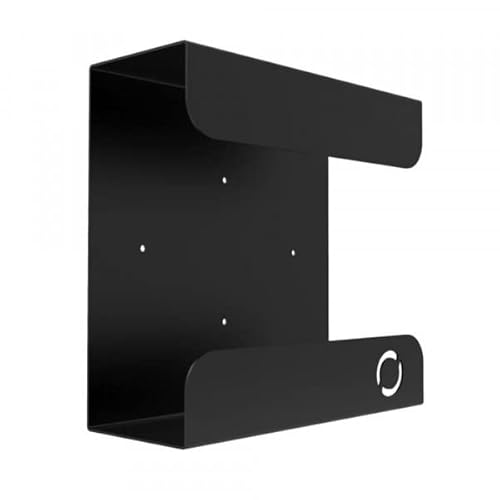
It is unusual to see a mount in a UPS roundup, but anyone running a server closet or a tight home-office nook eventually hits the cable mess. The Oeveo UPS Mount 143 is a flat-black steel bracket that holds a compatible UPS off the floor against the wall. Listed at 11 inches deep, 4.3 inches wide, and 10.65 inches high, it lines up with many APC and CyberPower chassis.
Mounting hardware ships in the box, and the powder-coated finish shrugs off scuffs in a utility closet. For a setup where the UPS already exists but the floor is unusable, this is the tidy fix.
Features That Help
- Holds up to 70 lbs, enough for mid-size UPS units without flex.
- Flat black powder coat matches most utility-room aesthetics.
- Designed for common APC and CyberPower footprints.
- All mounting hardware included, so no extra trip to the hardware store.
- Available in 3, 5, and 10-pack multi-packs for larger installs.
Points To Note
- Single pack only covers one UPS; multi-packs cost more up front.
- You’ll need to confirm your UPS dimensions match the 11D x 4.3W x 10.65H spec before buying.
- Wall installation requires basic tools and a stud finder for a secure mount.
Feature Snapshot
Who Will Love This
IT hobbyists, home lab builders, and small-business owners tidying a network closet with limited floor space.
Reach For A Different Pick When
You need the UPS itself; in that case the CyberPower OR500LCDRM1U is the rackmount alternative that pairs well with this kind of install.
Sometimes the answer is two smaller UPS units instead of one big one. This APC bundle pairs the BE600M1 and BE425M, two compact battery backups designed to be deployed separately rather than chained together. The BE600M1 handles a modest desktop setup, while the BE425M covers a router, modem, or a secondary workstation in another room.
For mixed home environments where one outlet cluster lives in the office and another covers the entertainment shelf, splitting coverage keeps each device on its own clean circuit. The units are made in the Philippines and ship as a single package, but they function as independent pieces once unpacked.
What Helps Most
- Two units let you cover separate zones without buying one oversized UPS.
- Compact form factors slide behind furniture or onto a shelf.
- APC brand carries wide recognition in the battery backup space.
- Useful for protecting networking gear and a PC on independent circuits.
Some Limits To Know
- Designed to be used separately; do not daisy-chain them together.
- Neither unit provides AVR or pure sine wave, so they’re best for basic desktop and networking loads.
- Runtime per unit is limited, so plan around short outages.
Made For
Home users who want battery coverage in two distinct spots without investing in a single large unit.
Look Elsewhere When
You run a single power-hungry workstation; one larger tower UPS like the CyberPower CP1500AVRLCD3 handles that scenario with more headroom.
Some setups only need a basic safety net: a small PC, a router, maybe a monitor. The CyberPower ST425 is a standby UPS, meaning the battery sits idle until the wall power actually drops. That approach keeps cost down, and for non-critical gear, it’s a reasonable trade.
Compared with the AVR-equipped CP1500AVRLCD3 higher up the list, this unit skips voltage regulation entirely. If your area sees only occasional outages and clean utility power, the ST425 still gets the job done at the entry level.
Positive Points
- Lower cost makes battery backup accessible for first-time shoppers.
- Surge protection covers lightning-induced spikes on connected devices.
- Compact wall-wart style keeps floor space open.
- Enough runtime to perform a graceful shutdown on a basic desktop.
A Few Limitations
- No AVR means brownouts will trigger battery use and shorten lifespan.
- Simulated sine wave output is not the right match for active PFC workstations.
- Limited outlets mean you may need to prioritize what gets backed up.
Best Suited To
Light home computing tasks where budget matters more than runtime or waveform purity.
Skip It When
You need voltage smoothing; the CP1500AVRLCD3 or EC850LCD handles brownouts without battery drain.
The CyberPower ST625U is the slightly larger sibling to the ST425 reviewed above, adding a USB monitoring port and a touch more capacity in roughly the same enclosure. The USB port lets a connected PC see the UPS as a smart device, so you can configure graceful shutdown behavior through standard OS tools. For most home users, that single feature turns a basic battery brick into something that actually coordinates with the computer it protects.
It still runs simulated sine wave output without AVR, so think of it as a step up from entry-level, not a leap into pro territory. For a modem, a router, and a mid-sized desktop, that’s usually plenty.
The Case For It
- USB connectivity enables automated shutdown signaling on a connected PC.
- Slightly higher capacity than the ST425 for modestly larger loads.
- Surge protection engages from day one even when the battery is spent.
- Affordable entry point for adding smart UPS features to a home setup.
Trade Offs
- No AVR means brownouts will drain the battery unnecessarily.
- Simulated sine wave is not the right match for active PFC hardware.
- Outlet count is modest, so plan your connections carefully.
Perfect Match For
Modem-and-router combos and entry-level desktops where USB shutdown signaling adds genuine value.
Another Choice May Suit
Power users with active PFC workstations should reach for the CyberPower CP1500PFCLCD for clean sine output instead.
Racks change the rules. The CyberPower CP2000PFCRM2U is a 2U rackmount unit aimed at small server closets, AV gear, and networking equipment that requires compatibility with active PFC power supplies. Pure sine wave output is the headline, paired with EMI/RFI noise filtering (suppression of electromagnetic and radio-frequency interference that can creep in along power lines) to keep sensitive electronics happy.
Capacity is generous, and AVR handles the small voltage swings that show up in older buildings with marginal wiring. Compared with the mini-tower CP1500PFCLCD above, this unit trades desktop-friendly looks for a proper rack footprint and more headroom.
Strong Points
- Pure sine wave output keeps active PFC hardware behaving during switchover.
- EMI/RFI filtering reduces line noise that can confuse sensitive AV and network gear.
- 2U rack form factor suits small server cabinets and AV racks.
- AVR extends battery life by handling brownouts without engaging the battery.
Honest Caveats
- Rackmount orientation is overkill outside a rack setup.
- Higher capacity raises the price compared with tower equivalents.
- Internal fans ramp under load, which may matter in noise-sensitive rooms.
Built With In Mind
Small-business IT, home lab enthusiasts, and AV pros running gear in standard 19-inch racks.
Not Your Match When
You need a desktop tower UPS; the CP1500PFCLCD offers similar sine output in a friendlier form factor for desks.
For network closets and entry-level server racks, the CyberPower OR500LCDRM1U is a 1U rackmount unit that packs AVR, an LCD, and network-grade management into a slim chassis. It carries six outlets and runs simulated sine wave output, which suits most networking gear without active PFC power supplies.
The “Smart App” feature refers to CyberPower’s management software, which talks to the UPS over a connection to log events and trigger remote shutdowns. Where the larger CP2000PFCRM2U above focuses on high-capacity sine output, this model targets the lighter side of the rack with management built in.
What Stands Out
- 1U height leaves room for other rack gear.
- AVR handles brownouts before they reach connected equipment.
- Management software adds remote monitoring and shutdown options.
- LCD front panel keeps status visible at a glance.
Things To Weigh
- Simulated sine wave output is not the right match for active PFC hardware.
- 500VA/300W capacity is modest for full server loads.
- Rack ears and rails may need to be sourced separately for some cabinets.
The Right Fit
Network closet operators, telecom rooms, and small-office rack owners who want managed battery backup on a slim budget.
A Better Fit Elsewhere
Higher-load racks with active PFC hardware should step up to the CyberPower CP2000PFCRM2U for pure sine output and more capacity.
The CP1500PFCRM2U closes the list as the rackmount cousin of the CP1500PFCLCD reviewed earlier. Same pure sine wave output, same AVR, but rebuilt into a 2U chassis that bolts into a standard 19-inch rack. EMI/RFI filtering keeps line noise from sneaking into security systems, AV components, and network devices.
It’s the right call for professionals who already work in rack environments and want desktop-class sine-wave output without sacrificing rack real estate. Compared with the OR500LCDRM1U above, this unit trades 1U slimness for substantially more capacity and true sine output.
A Few Highlights
- Pure sine wave output for active PFC compatibility in rack-mounted gear.
- EMI/RFI filtering reduces noise on power lines for sensitive electronics.
- AVR extends battery life by smoothing out minor voltage dips.
- 2U rack form factor suits mid-sized server and AV racks.
Where It Is Less Suited
- Premium pricing compared with simulated sine units at similar VA.
- Overkill for a single desktop tower without rack infrastructure.
- Fan noise may matter in small, quiet offices without rack ventilation.
Whose Shelf It Belongs On
Small-business IT, AV integrators, and prosumers with rack-mounted workstations running active PFC hardware.
Where A Sibling Pick Shines
For a desk-side install without a rack, the CyberPower CP1500PFCLCD delivers the same sine output in a friendlier form factor.
Matching Capacity To The Gear You Actually Run
Start with a real load estimate. Add up the watts your PC tower, monitors, modem, and router actually pull from the wall, then size the UPS to that number with at least 25 percent headroom. A unit that runs flat-out during normal use has no reserve for the surge that hits when a hard drive spins up.
Topology matters more than marketing copy. Standby units pass grid power through unchanged until an outage, which is fine for clean power environments. Line-interactive designs add AVR, smoothing minor brownouts and over-voltages without dipping into the battery. For active PFC power supplies, pure sine wave output is the deciding factor because stepped waveforms can trigger protective shutdowns in modern hardware.
Runtime is a sizing question, not a specs question. Bigger VA ratings mean longer runtime at the same load, but the trade-off is size, weight, and cost. Match the unit to your “must stay alive for ten minutes” gear: a workstation and monitor, or just a modem and router, or a full rack of network hardware.
Connectivity rounds out the picture. USB ports let a PC trigger a graceful shutdown when the battery gets low. LCD panels show load and estimated runtime so you stop guessing. Management software turns a UPS into a logged, monitored piece of infrastructure rather than a silent brick under a desk.
Practical Notes Before You Buy
Common Shopping Slip Ups
The biggest mistake is undersizing. A UPS rated for 900 VA looks generous until a tower, two monitors, and a printer draw more than it can supply during switchover. Owners commonly report the unit clicking straight to battery and dying within minutes because the load exceeded what the unit could handle.
Another trap is ignoring waveform. Buying a simulated sine unit for an active PFC workstation leads to random shutdowns during switchover, and the root issue never appears until the next real outage. Match the output type to your hardware’s PSU type before anything else.
Forgetting about replacement batteries is the third common miss. UPS batteries wear out after a few years of cycles, and sealed lead-acid replacements are part of long-term ownership. Picking a model with documented battery availability keeps the unit useful past its first battery cycle.
Where The Extra Money Goes
Higher-tier models add AVR, which means small grid hiccups don’t waste battery cycles. They also tend to ship with pure sine wave output, larger VA ratings, and management software that turns the UPS into logged infrastructure.
The upgrade pays off in two scenarios. First, active PFC workstations need pure sine output to behave under switchover, and cheaper simulated sine units cause problems there. Second, larger capacity translates to longer runtime, which matters when an outage stretches past a quick blip or when you need to ride through long enough to save work and shut down cleanly.
Frequently Asked Questions
How long will a UPS actually keep a desktop running?
Runtime depends on your load and the unit’s VA rating. A mid-sized desktop on a 1500VA unit typically gets 5 to 15 minutes, which is enough to save work and shut down. Lighter loads stretch that window considerably.
Is pure sine wave really necessary?
For active PFC power supplies in modern workstations and gaming rigs, pure sine output avoids switchover glitches and shutdowns. For older or simpler hardware, simulated sine wave output usually works fine.
Can a UPS protect against lightning strikes?
Surge protection handles small spikes and indirect lightning events, but a direct strike can overwhelm any consumer UPS. For high-risk areas, layered surge protection at the panel adds another line of defense.
How often do UPS batteries need replacing?
Sealed lead-acid batteries typically last 3 to 5 years depending on cycle count and operating temperature. Many units signal when the battery needs replacement through the LCD or management software.
Do UPS units work with macOS and Linux?
Yes, most modern UPS units communicate over USB and work with built-in power management on macOS and Linux, plus vendor software for Windows. Networked units often add web interfaces that work across operating systems.
Closing Remarks
The right UPS depends less on spec sheets and more on the gear you actually run. A small desktop, a modem, and a router can ride out outages on a compact standby unit. A workstation with active PFC hardware wants pure sine output and AVR for clean switchovers. Server racks need rackmount form factors with management software baked in. Match the unit to your real load, your real environment, and the kind of outages your area actually sees, and the rest falls into place.