When the grid goes quiet, the difference between a ruined evening and a calm one usually comes down to one decision you made ahead of time. Outage prep, off-grid work, or simply keeping a fridge cold during a storm, the right portable power setup keeps the lights on without the noise, fumes, or last-minute scramble.
This roundup looks at ten current options built for that exact moment. Each pick brings something different to the table, from compact lithium stations that slip under a desk to fuel-driven workhorses and whole-home expandable systems. Read through to find which profile fits how you actually live, then act before the next storm watch.
A Side-By-Side Look

Honda EU2200i Companion Inverter Generator

EF ECOFLOW Delta 3 Portable Power Station

Jackery Explorer 2000 v2 Portable Power Station

Jackery HomePower 3600 Plus Power Station

Honda EB2200i Super Quiet Inverter Generator

Honda EB5000 Quiet Generator

Jackery Explorer 1000 v2 Portable Power Station
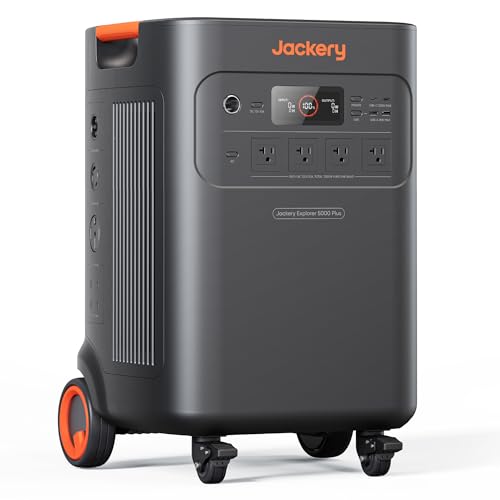
Jackery Solar Generator 5000 Plus

Jackery HomePower 3600 Plus with 2 Solar Panels

Jackery Solar Generator 1000 v2 with Panel
Why These Options Stand Out
The Companion trim of the EU2200i is built around a 30A twist-lock outlet, which removes the usual adapter dance when you back up an RV or parallel a second unit. Inverter technology (cleaner sine-wave output that won’t confuse sensitive electronics) means you can run a laptop, a charger, or a small fridge without flinching about fried circuitry. At 48 to 57 dB(A) under load, it reads closer to a conversation than a lawn tool, which matters at a campground or a quiet neighborhood.
Honda leans on decades of small-engine refinement here, so the recoil starts predictably and the throttle responds smoothly when a compressor kicks in. Fuel economy is a quiet advantage: Eco-Throttle lets the engine breathe only as hard as the load demands, stretching a tank further than fixed-RPM competitors. For RV owners and campers who already have a propane-free fuel plan, this is the textbook answer.
Points In Its Favor
- Built-in 30A outlet cuts adapter clutter at the campsite.
- 48 to 57 dB(A) operation earns quiet hours in residential areas.
- Inverter output stays safe for laptops, phones, and modern appliances.
- Parallel-ready design scales output if a second unit joins the setup.
Things To Consider
- Gasoline-only operation means fuel storage and rotation during long outages.
- Engine oil changes every 100 hours or so, a routine chore most lithium owners skip.
Who Will Love This
RVers, tailgaters, and homeowners who want a fuel-based unit that runs quietly and tolerates sensitive electronics.
Look Elsewhere When
Apartment dwellers with no outdoor storage should consider the EF ECOFLOW Delta 3 instead, since it stays silent and stores indoors.
The Delta 3 packs 1024Wh of LFP storage (lithium iron phosphate, a chemistry prized for thermal stability and long cycle life) into a footprint that fits beside a desk or in a closet. The standout spec is its recharge speed: combined AC plus solar input can refill the pack in roughly 56 minutes, and an 80% top-up takes about 30. That changes how you think about outage prep, since the unit can recover between morning and evening storms.
Expansion hooks into EcoFlow’s broader battery ecosystem, so an entry-level buy today can grow into a multi-kWh array later. For renters and condo owners banned from open-flame or fuel-burning gear, the silent, vent-free operation removes the usual friction. It also runs CPAPs, routers, and laptops without complaint, which covers most overnight scenarios.
Everyday Perks
- 56-minute full recharge minimizes downtime between outages.
- LiFePO4 chemistry delivers longer cycle life than older NMC packs.
- Expandable architecture scales up to 5kWh with add-on batteries.
- Silent, emission-free operation suits indoor and apartment use.
Worth Noting
- 1024Wh won’t run a full-size fridge for more than a handful of hours.
- Fastest AC charging requires a high-amp circuit; standard outlets slow the refill.
- Expansion batteries raise the total cost of ownership noticeably.
Quick Facts
Made For
Renters, condo residents, and apartment households needing silent indoor backup for essentials and small appliances.
Consider Something Else When
Homeowners backing up well pumps or dryers should step up to the Honda EB5000 for true 240V split-phase output.
The Explorer 2000 v2 hits a sweet middle ground: 2042Wh of capacity in a body Jackery describes as the smallest and lightest 2kWh option in its class. Three AC ports share 2200W of output, enough to run a microwave, a fridge, and a CPAP at once without tripping protection. The USB-C PD 100W port means a laptop or camera battery charges directly without a brick adapter.
LiFePO4 chemistry keeps the unit cool under heavy load and extends cycle life well beyond older NMC-based stations. If your outage plan spans two or three days of partial-grid living, this is the floor of where capacity starts to feel comfortable. Compared to the Delta 3 above, you’re roughly doubling storage for moderate weight gain.
The Case For It
- 2042Wh covers multi-day essential loads without recharge.
- 2200W shared AC output handles simultaneous kitchen and medical gear.
- USB-C PD 100W charges laptops and cameras without extra adapters.
- LiFePO4 cells resist thermal stress during long, hot summer outages.
Trade Offs
- Weight sits well above 40 lb, so plan for two hands or a cart.
- Single-unit 120V only, no native split-phase for dryers or ovens.
Best Suited To
Suburban homeowners and remote workers who want multi-day silent backup for kitchen appliances and electronics.
Swap It Out When
Anyone needing expandable whole-home capacity should consider the Jackery HomePower 3600 Plus for its 240V parallel option.
The HomePower 3600 Plus stretches the Jackery lineup into serious backup territory: 3600W of output, 7200W when paralleled, and dual 120V plus 240V capability. That means a well pump, a dryer, or a standard water heater can run without rewiring tricks. The 3584Wh LFP core expands up to 21kWh per unit, and stacking two units pushes that to 43kWh, enough for a three-person household across a two-week outage in moderate climates.
The ceramic-membrane battery cell design is rated for high-temperature resistance, which matters in attics, garages, and southern summers. For someone replacing a permanently installed whole-house generator, this gets close without trenching gas lines or pulling permits. Compared to the Explorer 2000 v2 above, you’re paying roughly twice for nearly seven times the expansion ceiling.
Benefits That Matter
- 3600W output with 240V parallel covers heavy appliances like pumps and dryers.
- Expandable to 21kWh per unit, or 43kWh stacked, for two-week resilience.
- LFP cells with ceramic-membrane design improve heat tolerance in summer outages.
- Silent operation removes the noise complaints that come with fuel generators.
Points To Note
- Base price tag is steep before adding expansion batteries.
- Full kWh expansion requires substantial storage space and charging planning.
Key Product Details
Whose Shelf It Belongs On
Homeowners in storm-prone or rural areas who want fuel-free whole-house backup with room to grow.
Reach For A Different Pick When
Anyone planning to back a five-ton AC or a stick-built home should look at the Jackery Solar Generator 5000 Plus for higher output headroom.
The EB2200i carries Honda’s industrial-grade chassis design into a portable footprint, swapping the RV-friendly outlet of the EU2200i above for a contractor-focused spec sheet. At 48 to 57 dB(A), it’s among the quietest 2200W gas generators you can park on a job site, which keeps work crews from shouting over it and keeps HOA letters away in residential neighborhoods.
Inverter output protects laptops, laser levels, and battery chargers from the power fluctuations that wreck older alternators. For tradespeople who already manage fuel storage, this trades the RV outlet for a more rugged roll-cage feel. The trade-off is real though: no 30A twist lock means RV owners should still lean toward the EU2200i Companion for that specific use.
The Value In It
- Industrial-grade build tolerates daily job-site handling.
- 48 to 57 dB(A) operation suits early-morning residential work.
- Clean inverter power runs sensitive tools and laptops safely.
- Honda’s reputation for long engine life lowers total cost of ownership.
Honest Caveats
- Standard outlet configuration, not the 30A RV outlet the EU2200i offers.
- Gas-only operation requires fuel rotation and outdoor running only.
The Right Fit
Contractors, tradespeople, and homeowners wanting a quiet fuel-based unit for occasional power needs.
A Better Fit Elsewhere
RV owners will be happier with the Honda EU2200i Companion above since it ships with the 30A outlet they actually need.
The EB5000 steps into a different weight class: 5000 running watts on both 120V and 240V split-phase, with a 7000-watt surge window for ten seconds to start motors up to 3 horsepower. That covers a well pump, a 240V table saw, or a stick-welder running off a smaller rod. iAVR (Intelligent Automatic Voltage Regulation) holds the output steady as loads cycle, which keeps motor-driven tools from bogging.
For 63 to 65 dB(A), it’s quieter than most open-frame 5000W units, though not silent. The chassis is built for daily transport on a job site, and the wheel kit (sold with the unit) makes positioning manageable. Compared to the smaller Honda EB2200i above, this is the right choice once you start talking about 240V appliances or serious surge loads.
Notable Upsides
- 5000W running with 7000W surge handles 3HP motor starts.
- 120V and 240V split-phase output covers pumps and welders.
- iAVR technology stabilizes voltage under fluctuating tool loads.
- 63 to 65 dB(A) keeps it tolerable in residential settings.
Room For Improvement
- Dry weight climbs past 200 lb, so plan vehicle placement.
- Fuel consumption scales quickly under sustained 240V loads.
Built With In Mind
Homeowners with 240V appliances or contractors running heavy motor-driven tools who need reliable split-phase power.
Skip It When
Indoor or apartment use calls for the EF ECOFLOW Delta 3 instead, since vent-free operation matters more than raw wattage.
The Explorer 1000 v2 is the grab-and-go member of the family: 1070Wh, 1500W of AC output, and a 23.8 lb body with a foldable handle. That’s small enough to live in a trunk or a closet, yet powerful enough to run a fridge, a fan, and a laptop at the same time. The 1-hour fast-charge window sets a new floor for convenience in this size class.
The LiFePO4 cell chemistry pushes cycle life into the thousands of full-charge cycles, so daily weekend use won’t punish the pack. USB-C PD 100W output means a single cable handles laptops and modern phone chargers. Against the larger Explorer 2000 v2 above, you’re trading capacity for portability, a worthwhile swap for tent camping or car-camping trips.
Key Advantages
- 23.8 lb weight with foldable handle suits trunk and tent use.
- 1-hour recharge keeps weekend trips moving without overnight waits.
- 1500W AC handles AC units, fridges, and small kitchen gear.
- USB-C PD 100W output charges modern laptops directly.
Small Caveats
- 1070Wh limits whole-day fridge runtime under heavy cycling.
- Single-unit 120V only, with no native 240V option.
Feature Snapshot
Perfect Match For
Campers, tailgaters, and weekend warriors who need a portable station that disappears in a closet between trips.
Another Choice May Suit
Long-duration home backup buyers should consider the Jackery Explorer 2000 v2 above for its doubled capacity.
The Solar Generator 5000 Plus is Jackery’s heavyweight answer for homes that can’t accept downtime. Rated at 7200W (14,400W surge), it covers five-ton central AC units, electric water heaters, and 240V appliances without complaint. The 5040Wh base capacity expands to 60kWh, which can keep a typical home running for roughly 13 days of moderate consumption.
Both 120V and 240V are native, so you don’t have to rewire a subpanel or add transfer switches for the heavy loads. Compared to the HomePower 3600 Plus below, the 5000 Plus doubles down on continuous output rather than parallel expansion. In our view, this is the model for anyone whose outage plan includes a stick-built home with central air.
What Makes Sense
- 7200W continuous output runs central AC up to five tons.
- Native 240V output backs water heaters and electric dryers.
- 5040Wh base expands to 60kWh for multi-week resilience.
- Silent operation replaces whole-home fuel generators cleanly.
Less Ideal Details
- Physical size and weight require a fixed storage spot.
- Total system cost climbs sharply as you add expansion batteries.
Right Fit For
Off-grid households, large suburban homes, and homeowners in hurricane or wildfire zones needing silent whole-home backup.
Where A Sibling Pick Shines
Mid-size homes that don’t need central AC backup will find the Jackery HomePower 3600 Plus a more proportional fit.
This bundle pairs the HomePower 3600 Plus with two 200W Jackery solar panels, giving you 400W of input to keep the 3584Wh core topped off during daylight. For outage prep, that’s the difference between a finite run and a self-refilling system. Setup is genuinely plug-and-play: the panels connect directly to the station’s solar input, no separate charge controller required.
You get the same 3600W output, dual 120V plus 240V parallel capability, and ceramic-membrane LFP cells as the standalone unit. In our view, the bundled version is the smarter entry point if you already know you’ll add panels later, since pricing typically favors bundles. Compared to the EF ECOFLOW Delta 3 above, you’re stepping into a much larger capacity tier with true home-backup muscle.
The Helpful Details
- Bundled 400W solar input keeps the station refilling during daylight outages.
- 3600W output with 240V parallel covers pumps, heaters, and dryers.
- Expandable architecture reaches 21kWh with add-on battery packs.
- Ceramic-membrane LFP cells tolerate garage and attic storage temperatures.
Where It May Fall Short
- Solar panel output drops on cloudy days, so charging speeds vary.
- Panels need outdoor placement and south-facing orientation to peak.
Who Should Grab It
Homeowners in storm zones or remote properties wanting long-duration silent backup with renewable recharge built in.
Not Your Match When
Shoppers with limited roof or yard space should consider the Jackery Explorer 1000 v2 instead for smaller-scale portable needs.
This bundle pairs the Explorer 1000 v2 station with a single 200W panel, which is the gentlest way to step into solar-backed emergency prep. The 1070Wh capacity, 1500W AC output, and 100W USB-C PD ports come straight from the standalone model, while the panel adds a meaningful recovery path during a multi-day outage. For most people, this is the right starting point.
You won’t run a central AC or a well pump, but a fridge, a router, and a string of lights stay covered across two sunny days. The 23.8 lb station body still carries with one hand, so you can drag it onto a porch for sun or back inside for the evening. In our view, this is the most forgiving entry tier in the entire list.
Noteworthy Benefits
- All-in-one bundle skips separate panel shopping for first-time buyers.
- 200W solar input refills the station during a multi-day outage.
- 1070Wh capacity covers fridge and electronics for a weekend.
- Portable 23.8 lb body moves easily between porch and closet.
Practical Considerations
- Single panel charges slowly in cloudy or winter conditions.
- No 240V output limits appliance coverage to standard 120V gear.
Built With In Mind
First-time backup shoppers and renters who want a gentle entry into solar emergency prep without overspending.
Look Elsewhere When
Homeowners ready to commit to whole-home backup should jump to the Jackery HomePower 3600 Plus bundle above for serious capacity.
What to Match Up Before You Pick
Start with how the power gets used, not how big the box is. Watt-hours tell you how long, watts tell you what you can run, and voltage tells you which appliances join the party. A 1000Wh station covers a weekend for one person, while a 3500Wh-plus system is where family-level resilience begins. Match capacity to the realistic worst case: a summer storm that knocks the grid out for three days, a winter ice event that lasts a week, or a wildfire evacuation where you can only carry a portable unit.
Next, think about where the unit will live. Lithium stations run indoors, in closets, in apartments, and they make no noise. Fuel generators need outdoor placement, fuel rotation, oil changes, and a clear exhaust path. If you rent or live in an HOA, a fuel model often creates friction that a lithium station avoids entirely.
Finally, check the appliance list. Well pumps, dryers, ovens, and central AC all want 240V split-phase. Laptops, routers, fridges, and lights are happy on 120V. You may find that the right answer is a smaller station paired with a transfer switch, or a larger expandable unit that grows over time.
Smart Pitfalls to Skip Before You Commit
Pitfalls Shoppers Hit
The most common mistake is buying watts without considering watt-hours. A 2000W output with 200Wh of storage runs a microwave for ten minutes, then sits dead. Always size capacity to the longest realistic outage window you want to cover. Skipping this is how people end up recharging hourly instead of daily.
When Paying More Pays Off
Higher-tier models usually earn the upgrade through three paths: longer-lasting LiFePO4 cells, native 240V split-phase output, and expansion capability. In our view, anyone backing a well pump, a dryer, or central AC should pay for the 240V tier. The cycle-life gain on LFP cells means the unit survives a decade of weekend trips instead of needing a battery swap in year three.
Frequently Asked Questions
How long will a 1000Wh station run a full-size refrigerator?
A typical 18 to 22 cubic foot fridge draws about 100 to 150W while the compressor runs, cycling on and off throughout the day. Expect roughly 8 to 12 hours of runtime from a fully charged 1000Wh station, depending on how often the door opens and the ambient temperature.
Can a portable power station run a well pump?
Only if it offers 240V split-phase output and at least 3600W of continuous power. Standard 120V stations cannot start the motor on most residential well pumps, which makes the Jackery HomePower 3600 Plus and Honda EB5000 the realistic options in this list.
How do LiFePO4 and NMC batteries differ for backup use?
LiFePO4 (lithium iron phosphate) cells offer longer cycle life, better thermal stability, and slower degradation, making them the standard for stationary backup. NMC packs are lighter and cheaper, but they wear out faster under daily deep cycling and run hotter under heavy load.
Do I need solar panels to back up my home?
Solar panels extend runtime during multi-day outages, but they’re optional. You can recharge any station from a wall outlet or a portable fuel generator. Panels become valuable when you anticipate a long grid outage and want to avoid burning fuel.
How loud is a Honda inverter generator compared to a portable power station?
Honda’s inverter models run at 48 to 65 dB(A), comparable to a quiet conversation or a dishwasher. Portable power stations produce zero noise, only fan hum under heavy load. For noise-sensitive neighborhoods or indoor use, lithium stations win outright.