Nothing ruins a morning faster than a click-less ignition on a car that started fine yesterday. A reliable handheld battery tester turns that mystery into a thirty-second answer, telling you whether the battery is fading, the alternator is undercharging, or the starter is drawing too much. The ten options below cover weekend hobbyists, daily commuters, mobile mechanics, and shop pros who want printed reports for customers.
The Essentials At A Glance

TOPDON BT300P 12V/24V Automotive Battery Load Tester

TOPDON BT600 Plus 6V/12V/24V Battery Tester with Printer
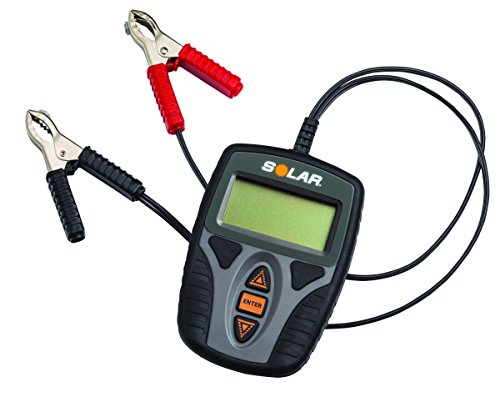
Clore Automotive SOLAR Digital 12V Battery and System Tester

TOPDON BT100 12V Car Battery Tester 100-2000 CCA
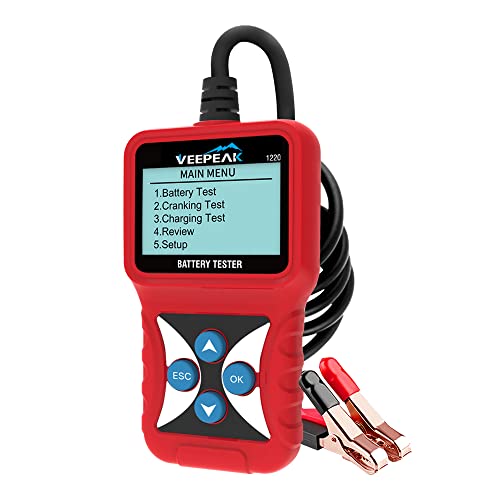
Veepeak 12V Car Battery Tester 100-2000 CCA

ANCEL BA101 Plus 6V/12V Battery Tester 20-2000 CCA

ANCEL BA101PRO 12V/24V Battery Tester with Color Display

ANCEL BA101 12V Digital Alternator Tester 100-2000 CCA

TOPDON BC100 12V Automotive Battery Load Tester

TOPDON BT600 12V/24V Battery Tester with Built-in Printer
Why These Options Stand Out
The BT300P sits in that sweet spot where a serious hobbyist crosses into light professional use. It handles 12V and 24V systems, which means it follows you from a sedan to a diesel pickup without skipping a beat. The built-in thermal printer is the feature that surprises people: it produces a physical record you can hand to a customer, tape to a work order, or keep in the glovebox for warranty conversations.
Compared to the simpler TOPDON BT100 below, this model adds printed proof and 24V capability, making it a meaningful step up for anyone who diagnoses more than just their own car. In a busy Saturday garage, that printed slip is worth its weight in trust.
Positive Takeaways
- Built-in printer produces a paper record after each test, useful for customer hand-offs or personal logs.
- Covers 12V battery health plus 12V and 24V cranking and charging system checks, expanding the range of vehicles you can service.
- Reads cranking status under load, so a borderline starter shows up before it strands you on a Monday morning.
- Diagnostic receipt shows clear pass or replace guidance, removing the guesswork for less experienced owners.
Trade-Offs To Consider
- Printer paper rolls are a consumable you will need to reorder, so keep a spare in the toolbox.
- The 12V focus on the battery health side means the deep 6V classic-car crowd will need to look at the BT600 Plus instead.
Feature Snapshot
Who Should Grab It
Independent mechanics, mobile techs, and serious DIYers who want documented proof of battery health for customers or their own records.
Skip It When
You mostly work on older 6V classics, where the ANCEL BA101 Plus has the broader battery chemistry coverage you actually need.
The BT600 Plus is the BT300P’s older sibling with more voltage range and tighter diagnostics. It adds 6V testing on top of 12V and 24V, which sounds minor until you service a vintage tractor, a golf cart, or a small European classic. Resistance and sequence tests push it deeper into shop-grade territory, giving a technician actual numbers to compare battery-to-battery rather than just a pass or replace verdict.
Compared to the BT300P above, the trade-off is a slightly steeper learning curve, and the printer remains, so paperwork is still part of the workflow. For a multi-bay garage or a mobile mechanic working on mixed fleets, that flexibility tends to justify itself quickly.
Benefits That Matter
- Tri-voltage coverage (6V, 12V, 24V) makes it the only tester a mixed-fleet shop needs on the bench.
- Resistance measurement adds an early warning layer before traditional CCA readings turn ugly.
- Built-in printer supports a clean paper trail for warranty claims and customer invoices.
- System-level diagnostics reach beyond the battery into cranking and charging performance in one session.
Points To Keep In Mind
- Higher cost than 12V-only units, so weekend hobbyists may not tap into its full capability.
- Menus run deeper than basic testers, so plan a short familiarization period before using it on customer vehicles.
Best Suited To
Full-time technicians and fleet managers who need voltage flexibility, system-level diagnostics, and printed reports from a single handheld unit.
Swap It Out When
You only own one or two 12V daily drivers, where the TOPDON BT100 covers your needs at a friendlier price point.
The SOLAR BA9 is a no-nonsense shop favorite with a long history behind it. It works in a 7V to 15V operating window, so it handles anything from a deeply discharged battery up to a fully topped-off charging system. The 40 to 1200 CCA range covers most cars, light trucks, and a fair share of marine applications, and the LCD is readable in dim garages and bright sun alike.
Versus the TOPDON units on this list, the SOLAR trades app-style screens for a classic dedicated interface that just gets out of your way. For a tech who runs the same test sequence fifty times a day, that direct-button feel has real appeal.
Standout Benefits
- Supports flooded, AGM flat plate, AGM spiral, and gel cell batteries, so chemistry rarely catches you off guard.
- Wide CCA testing capacity (40 to 1200) covers everything from a small motorcycle battery to a heavy-duty truck.
- LCD stays legible in both low light and direct sunlight, which matters in real shop conditions.
- Combined battery and system testing in one compact unit keeps your tool bag uncluttered.
Less-Strong Areas
- Sticks to 12V systems, so 24V trucks and 6V classics fall outside its scope.
- No built-in printer, which means handwritten notes if you keep paper records for customers.
The Right Fit
Working mechanics and serious home garage tinkerers who want a tried-and-true 12V tester that handles mixed battery chemistries without menus getting in the way.
Where A Sibling Pick Shines
Shops that need 24V support or printed diagnostic slips should step up to the TOPDON BT300P or BT600 Plus for the additional capability.
The BT100 is the tester you hand to a friend who has never used one before. Four buttons, a clear screen, and step-by-step prompts mean you can walk through state of health (SOH), state of charge (SOC), voltage, and cranking data without cracking a manual. The 100 to 2000 CCA range is plenty for almost any 12V vehicle in a typical driveway, including motorcycles, ATVs, boats, and SUVs.
Set against the Veepeak 12V unit further down, the BT100 trades a slightly larger feature list for a more guided experience. For a first-time owner, that guidance is often the difference between confidence and confusion.
The Practical Payoff
- Reads SOH, SOC, voltage, current, and rating in plain numbers that beginners can interpret without a textbook.
- Works on regular flooded, AGM flat plate and spiral, EFB, and gel batteries, so chemistry rarely blocks the test.
- Cranking and charging system tests run from the same tool, saving a second device in the drawer.
- The compact shell fits a glovebox or center console for roadside confidence checks.
Honest Caveats
- Limited to 12V batteries, so 24V trucks and 6V classics are out of reach.
- Screen is functional rather than fancy, which is fine indoors but a little tougher to read in harsh afternoon sun.
Perfect Match For
New DIYers and weekend drivers who want a forgiving 12V tester that explains its own readings without needing a YouTube tutorial.
Consider Something Else When
You maintain a fleet with mixed voltages, where the TOPDON BT600 Plus is the more honest long-term match.
The Veepeak 12V tester makes a strong case for the household that runs a sedan, a motorcycle, a boat, and maybe an ATV from the same garage. The 100 to 2000 CCA window and broad vehicle compatibility mean swapping between battery types rarely requires a different tool. SOC, SOH, voltage, internal resistance, and CCA all show up on one screen.
Versus the TOPDON BT100 above, the Veepeak leans a touch more toward measured data and a denser display. Owners who want numbers, not just a verdict, tend to appreciate that approach.
Everyday Advantages
- Vehicle compatibility stretches across cars, trucks, motorcycles, boats, ATVs, and RVs, removing the “wrong tool” problem in mixed garages.
- Alternator and starting system testing go beyond a basic health check, so charging ripple and loaded voltage both surface.
- Internal resistance reading adds an early signal before traditional CCA numbers drop noticeably.
- Fast results keep the test from interrupting a busy weekend of vehicle maintenance.
Things To Weigh
- Display packs in a lot of data, which can feel busy for first-time users.
- Limited to 12V systems, so 24V commercial trucks need a different tool.
Whose Shelf It Belongs On
Multi-vehicle owners and small-fleet hobbyists who want one tester that moves between battery types without re-learning the menu each time.
Reach For A Different Pick When
Your garage leans heavily on classic 6V vehicles, where the ANCEL BA101 Plus handles that lower-voltage territory better.
The BA101 Plus keeps the trusted BA101 experience and adds wider 6V and 12V lead-acid battery support. The standout number here is 20 CCA on the low end, which opens the door to small-displacement motorcycles, vintage tractors, and lawn equipment that other testers refuse to even acknowledge. Cranking, charging, and overall system health still sit on the menu.
Stacked against the older ANCEL BA101 below, this newer Plus version brings 6V support and a lower starting CCA, which matters more than people expect until they actually own an old British roadster or a riding mower.
Where It Excels
- 20 CCA lower limit catches small motorcycle and equipment batteries that most testers skip past.
- Reads regular flooded, AGM flat plate, AGM spiral, gel, and EFB batteries for broad chemistry coverage.
- Cranking and charging system checks add diagnostic depth beyond a simple voltage reading.
- Internal resistance measurement gives an extra data point before a battery fails outright.
Practical Considerations
- No 24V coverage, so heavy-duty truck electrical systems fall outside this tool’s reach.
- Reading-heavy interface rewards owners who take time to learn the labels, so patience up front helps.
Built With In Mind
Vintage car collectors, motorcycle restorers, and homeowners with mixed small-engine vehicles who need that low-end CCA coverage.
Look Elsewhere When
You mostly service 24V commercial trucks, where the ANCEL BA101PRO handles that higher-voltage work without compromise.
The BA101PRO is the BA101 family member that grew up and got a job in a fleet yard. 12V and 24V support means cars, trucks, SUVs, RVs, boats, and heavy-duty vehicles all live on one device. The 2.8-inch color display is a noticeable upgrade over the older BA101’s monochrome screen, which helps in low light and when you are crouching awkwardly next to a fifth-wheel.
Compared to the BA101 Plus just above, this Pro trades 6V classic-car coverage for 24V commercial reach and a sharper screen. For owners who tow, plow, or run work trucks, that is usually the better compromise.
Real Benefits
- 12V and 24V coverage handles everything from a commuter to a class-A motorhome from a single unit.
- Color display improves readability in dim garages and under dashboards in the field.
- Cranking and charging diagnostics confirm whether a weak start is the battery, the starter, or the alternator.
- Chemistry support covers flooded, AGM flat plate, AGM spiral, gel, and EFB batteries.
Room For Improvement
- Larger housing than the standard BA101, so pocket storage is less practical.
- Lower CCA floor (100) means small motorcycle batteries may not register accurately.
Made For
Truck, RV, and boat owners who need 24V capability and a brighter display without jumping to a full shop-grade analyzer.
Not Your Match When
You mainly maintain small motorcycles and lawn equipment, where the BA101 Plus reaches lower CCA values more reliably.
The original BA101 has earned its reputation as the long-running value pick in this category. It targets 12V systems across cars, trucks, boats, RVs, and marine vehicles with a 100 to 2000 CCA range. SOH, SOC, voltage, current, and cranking and charging system tests all sit on a familiar monochrome screen that has not changed much for a reason: it works.
Set next to its newer siblings above, the BA101 gives up 6V support and 24V coverage in exchange for a friendlier price. For the daily commuter who just wants to know whether their battery will start in the morning, that trade usually lands well.
Key Advantages
- Charging and cranking analyzer readings help confirm alternator health, not just battery condition.
- Wide vehicle compatibility covers trucks, boats, RVs, and marine applications from one handheld.
- Established track record means replacement parts and support resources are easier to find.
- Budget-conscious entry point into load testing without giving up core diagnostics.
Where It May Fall Short
- No 24V or 6V support, so commercial trucks and vintage vehicles sit outside its scope.
- Monochrome screen is harder to read in bright sun compared to the BA101PRO color display.
Quick Facts
Right Fit For
Budget-minded commuters and weekend tinkerers who want dependable 12V diagnostics without paying for voltage ranges they will never use.
Another Choice May Suit
You split time between 12V and 24V vehicles, where the ANCEL BA101PRO is the more honest long-term match.
The BC100 is positioned as the single-tool solution for nearly any 12V lead-acid battery in a residential garage. Regular flooded, AGM flat plate, AGM spiral, gel, and EFB chemistries all sit on the compatibility list, and the 100 to 2000 CCA range covers cars, trucks, boats, and even lawnmowers without breaking a sweat. The 3-in-1 diagnostic menu bundles battery, cranking, and charging tests in one workflow.
Versus the BT100 a few spots up, the BC100 trades some menu depth for a more streamlined experience. Owners who like their tools to feel quick and decisive tend to appreciate that approach.
What Stands Out
- Universal 12V lead-acid battery support means one tool for the whole driveway.
- 3-in-1 diagnostic menu shortens the time between clip-on and result.
- Lawnmower compatibility saves a separate trip to the small-engine shop.
- Reads a wide CCA band, so swapping from a Civic to a Suburban stays on the same device.
Some Limits To Know
- Stuck at 12V, so 24V trucks and 6V classics remain outside its reach.
- Lacks the built-in printer of the BT300P, so paper records are not part of the package.
Who Will Love This
Home mechanics who service a wide range of 12V vehicles and want a single unit that handles cars, trucks, boats, and lawn equipment.
A Better Fit Elsewhere
Your work produces printed reports for customers or insurance claims, where the TOPDON BT300P covers that documentation gap.
The BT600 earns its place at the end of the list by combining a generous 3.5-inch screen with a built-in printer in a 12V and 24V package. The larger display makes a real difference when you are reading dense system data at an awkward angle under a hood, and the printer keeps a paper trail for each test. The 100 to 2000 CCA range covers most consumer and light-commercial vehicles.
Compared to the BT300P at the top, the BT600 leans into visibility and documentation more than extra voltage range. Mobile diagnostic services that hand receipts to clients often find that emphasis worthwhile.
Noteworthy Benefits
- Larger screen improves readability during long diagnostic sessions or in awkward positions.
- Built-in printer delivers a tangible report without a paired phone or tablet.
- 12V and 24V support widens the addressable vehicle pool from one tool.
- Cranking and charging diagnostics isolate fault location faster than a single-purpose tester.
Factors To Consider
- Bigger screen adds some bulk, so it lives better in a drawer than a glovebox.
- Printer paper is a recurring consumable, so budget for replacements if you test daily.
Feature Card
Best Suited To
Mobile mechanics and small shops that want clear on-screen data plus a printed receipt from a single handheld unit.
Skip It When
You mostly diagnose 6V classics alongside 12V vehicles, where the TOPDON BT600 Plus covers that voltage spread more thoroughly.
Choosing a Battery Tester That Actually Fits Your Garage
Match Voltage to the Vehicles You Service
The single biggest decision is voltage range. Most passenger vehicles run on 12V electrical systems, while heavy-duty trucks and some diesel equipment use 24V, and older European and motorcycle-era vehicles often run on 6V. A tester that only covers 12V leaves entire corners of your garage off-limits, while a tri-voltage tool costs more and adds menu depth you may never touch.
Understand CCA, SOH, and SOC
Cold cranking amps (CCA) measure how much current a battery can deliver at 0°F for 30 seconds without dropping below a minimum voltage. State of health (SOH) and state of charge (SOC) describe how worn and how full a battery currently is. A tester that reports all three gives you the full picture: a battery can read fully charged yet still be on its last legs because the internal plates have degraded.
Look for System Tests Beyond the Battery
Cranking and charging system tests catch the alternator and starter problems that masquerade as battery issues. An owner chasing a no-start condition needs to know whether the real culprit is the battery, the wiring, or the alternator under load. Testers that only report voltage can leave you replacing a perfectly good battery.
Decide If You Need a Printer
Built-in thermal printers add cost and consumables, but they create paper records that customers trust and warranty departments accept. Mobile mechanics and small shops usually find the printer pays for itself in credibility. Home users testing one car a season rarely need it.
Key Considerations Across These Picks
Common Buying Slip Ups
A frequent mistake is choosing a tester based on maximum CCA alone. A tool with a 2000 CCA ceiling sounds impressive, but the lower bound matters just as much, especially for motorcycles, lawn equipment, and vintage vehicles that often sit below 100 CCA. Another trap is ignoring chemistry support. EFB and AGM batteries need testers that recognize their different internal resistance profiles, or the readings drift toward false confidence.
Why Higher Tier Models Cost More
Premium testers add larger screens, built-in printers, wider voltage coverage, and deeper diagnostic menus. The extra spend usually reflects better internal conductance measurement hardware, more durable housing, and firmware that interprets results across more battery chemistries. For a working technician or a multi-vehicle household, those upgrades save time per test. For a single-car commuter, a mid-tier unit typically delivers the same diagnostic accuracy at a friendlier entry cost.
Frequently Asked Questions
What does CCA mean on a battery tester?
CCA stands for cold cranking amps, a rating that tells you how much current a fully charged battery can deliver at 0°F for 30 seconds while staying above a minimum voltage threshold. Higher CCA usually means stronger cold-weather starting performance.
How often should a battery be tested?
Testing once per season catches gradual decline before a cold morning strands you. In harsher climates, a quick check before winter and again at the end of summer is a sensible rhythm.
Can a battery tester diagnose alternator problems?
Yes, when the tester includes a charging system test. It measures voltage while the engine runs to confirm the alternator is topping off the battery properly rather than undercharging or overcharging.
Do all testers work on AGM and gel batteries?
Not all of them. AGM and gel chemistries have different internal resistance profiles, so the tester needs explicit compatibility. Most modern units in this list cover both, but it is worth confirming before testing.
Is a built-in printer worth the extra cost?
A built-in printer adds credibility for mobile mechanics and small shops that hand customers paper receipts. Home users testing their own vehicles rarely need it, since a phone note works fine.
The Takeaway
A good battery tester turns a mysterious no-start into a clear answer in under a minute. Match the voltage range to the vehicles you actually own, confirm the chemistry support covers your batteries, and decide whether printed reports or a color screen will make your diagnostic sessions smoother. The right pick is the one that fits your garage, not the one with the longest spec sheet.