A dead battery never shows up at a good time. It usually catches you rushing to work, parked at a trailhead, or sitting in a grocery lot with the lights still on. A portable jump starter turns that stranded moment into a five-minute fix, no second vehicle required, and the models below cover everyone from daily commuters to overlanders running diesel trucks.
An Overview Of The Picks

BRPOM 8000A Jump Starter with Air Compressor, 160 PSI

GOOLOO GT4000S 100W Two-Way Fast-Charging Jump Starter

WOLFBOX 4000A Rose Gold Jump Starter with 65W Charger

HALO Bolt Air 58830 Jump Starter with 100 PSI Compressor (Black)
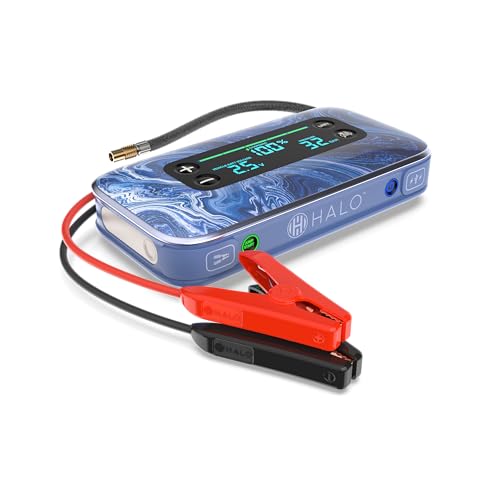
HALO Bolt Air+ 1750A Jump Starter with 130 PSI Compressor
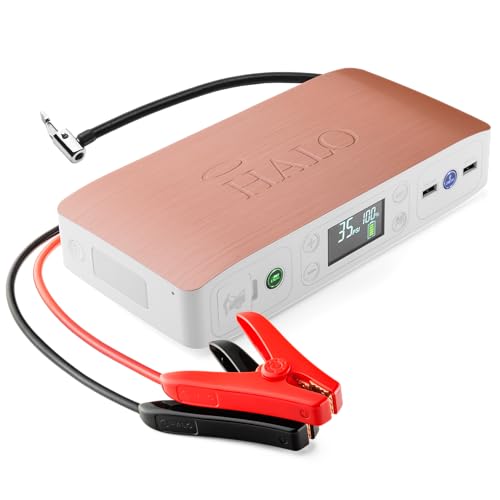
HALO Bolt Air 58830 Jump Starter with 100 PSI Compressor (Rose Gold)

HALO Bolt Ultimate 2 Jump Starter with AC Outlet

HPBS 5000A Jump Starter with 150 PSI Tire Inflator

HPBS H50 5000A Jump Starter with 3.0″ LCD

HPBS 5500A Jump Starter with 3.0″ LCD
A Deeper Look At The Lineup
The BRPOM 8000A is built for the moment a normal jump box flinches. Peak current here reaches 8000A, which is the kind of headroom that makes sense if you drive a heavy truck, tow often, or live somewhere a winter morning can drag a battery past zero. The integrated 160 PSI air compressor turns the same unit into a roadside tool that handles soft tires too, so one device covers two of the most common reasons a car sits dead in a parking lot.
A Force Start function lets you attempt a crank even when the battery is too low for the clamps to read a normal voltage, which separates it from the BRPOM’s slimmer siblings. For a pickup owner who wants a single box for the truck bed or the garage, this is the role it plays best.
The Upside
- 8000A peak current supports gasoline engines plus up to 12L diesel setups.
- 160 PSI compressor covers most passenger tire top-ups without a separate inflator.
- Force Start helps recover batteries that show no readable voltage at the clamps.
- One device replaces both a booster pack and a standalone compressor.
Points To Weigh
- Peak current claims this high often come at the cost of size, so expect a heavier pack than a 1500A unit.
- Combined jump and inflation functions tend to drain capacity faster than single-purpose units when used back-to-back.
Whose Garage It Belongs On
Diesel truck, SUV, or tow rig owners who want one box for both dead batteries and low tires.
Swap It Out When
You mainly drive a compact commuter and want a lighter glove-box unit, in which case the HPBS 5000A with 150 PSI inflator is a friendlier carry.
The GOOLOO GT4000S is the model you grab when patience runs out before the battery does. Its 100W two-way fast charging takes the pack from empty to full in roughly an hour, and a five-minute top-up is enough to crank most cars. That changes how often you actually recharge it, which matters if your jump box tends to live in the trunk and quietly lose charge for months.
Beyond jumping, the 26800mAh internal cell acts as a power bank with three USB ports and a 15V/10A output for running tire inflators or small inverters. Compared with the BRPOM at the top of this list, the GT4000S skips the built-in compressor but adds genuine laptop-class charging through its Type-C port.
What Works In Its Favor
- 100W input means short top-ups before a weekend trip instead of overnight waits.
- 4000A peak cranking current handles 12L gasoline and 10L diesel engines.
- Three USB ports plus Type-C turn it into a real travel power bank.
- Includes EVA storage case for tidy trunk storage.
Trade-Offs To Consider
- No integrated air compressor, so tire top-ups need a separate inflator.
- Fast charging speeds typically require the included 100W car charger to hit the claimed refill time.
Feature Snapshot
Who Will Love This
Tech-heavy daily drivers and remote workers who want fast refill and laptop charging from one box.
Look Elsewhere When
Roadside inflation is a regular need, in which case the BRPOM 8000A or HPBS 5000A with built-in compressors fits better.
The WOLFBOX 4000A in Rose Gold treats the jump box as something you might leave on a passenger seat instead of hiding under a floor mat. The rose gold finish is unusual in a category dominated by black and yellow plastic, and the 88.8Wh internal cell backs that styling with real starting power for 12V systems up to 10L gas or 10L diesel.
The 65W quick-charge input means it refills faster than older 10W or 15W jump boxes, so a coffee stop can put meaningful charge back into the pack. Compared with the GOOLOO GT4000S directly above, the WOLFBOX trades some capacity for a more compact body and that color option.
Well-Handled Touches
- Rose gold finish stands out in a category full of industrial-looking boxes.
- 65W input shortens downtime between uses.
- 4000A peak current supports a wide range of 12V engines, including 10L diesel.
- Built-in LED light for nighttime jump situations.
Honest Caveats
- No built-in tire inflator, so roadside tire work needs another tool.
- Distinctive color may show scuffs more visibly than a black shell over years of trunk use.
Made For
Style-conscious SUV owners and gift shoppers who want a jump starter that looks at home in a clean cabin.
Where Another Pick Suits Better
Drivers who prioritize compressor output over color should look at the HPBS 5000A with 150 PSI inflator instead.
The HALO Bolt Air 58830 is the right answer for people who don’t want to choose between a jump starter and a carry-on. Its 58.8Wh capacity sits under the 100Wh threshold that governs airline lithium battery rules, so the pack can ride in your luggage instead of being left at home. That changes who actually packs emergency gear, because most travelers skip anything they can’t bring on the plane.
The 100 PSI compressor handles slow leaks on road-trip tires, and the USB ports keep a phone alive during long detours. Against the GOOLOO GT4000S in this roundup, the HALO trades raw cranking amps for portability and that flier-friendly rating.
The Value In It
- 58.8Wh capacity stays within common airline carry-on rules.
- 100 PSI compressor handles slow top-ups without a separate inflator.
- Doubles as a USB power bank for phones and tablets.
- Emergency floodlight built in for nighttime breakdowns.
Some Limits To Know
- 100 PSI is on the lower end for filling completely flat truck tires from zero.
- Smaller internal cell means fewer jumps per charge than higher-capacity units.
Best Suited To
Frequent flyers and road-trippers who want one device that handles dead batteries and low tires across both driving days and flight days.
Not Your Match When
Heavy-duty diesel cranking is the priority, in which case the BRPOM 8000A or HPBS H3000 makes more sense.
The HALO Bolt Air+ leans into the everyday family-driver role. With 1750 peak amps and a 130 PSI compressor, it covers the two most common roadside issues without forcing you to learn a new device. The larger integrated display reads clearly in daylight, which sounds small until you try to read a dim LED while holding jumper cables in the rain.
The 59.9Wh internal cell gives it enough capacity for multiple jump attempts on a single charge. Compared with the standard HALO Bolt Air reviewed earlier, this Air+ version pushes higher PSI and a clearer readout, which is the difference between guessing your tire pressure and actually knowing it.
The Practical Payoff
- 130 PSI inflator fills standard passenger tires more quickly than 100 PSI units.
- Large built-in display shows pressure readings without squinting.
- 600 cranking amps handle cars, SUVs, and light trucks.
- LED light covers nighttime breakdowns.
Practical Considerations
- 1750 peak amps is solid but lower than the HPBS 5500A or BRPOM 8000A on this list.
- No AC outlet, so it cannot power small household appliances during outages.
Quick Facts
Right Fit For
Family drivers who want one reliable device for dead batteries and low tires without learning complicated menus.
Consider Something Else When
You want an AC outlet for camping gear or small appliances, where the HALO Bolt Ultimate 2 fits better.
The Rose Gold version of the HALO Bolt Air 58830 is functionally identical to the black unit reviewed earlier, but the color changes who buys it. It sits naturally next to a leather interior or in a handbag rather than getting buried in a work truck. For gift-givers or anyone whose car interior reads more “weekend brunch” than “job site,” that’s a meaningful difference.
Under the hood, you still get the 58.8Wh cell, 100 PSI compressor, USB power bank, and emergency floodlight covered in the black model. Compared with the WOLFBOX 4000A also on this list, the HALO here adds a built-in compressor at the cost of some raw cranking amps.
Where It Helps
- Rose gold finish matches interiors where black plastic looks out of place.
- 58.8Wh capacity stays within common airline carry-on rules.
- Built-in 100 PSI compressor for slow-leak tire top-ups.
- USB ports keep a phone topped up during delays or detours.
Worth Bearing In Mind
- Identical hardware to the black HALO, so the price premium reflects finish more than performance.
- 100 PSI tops out lower than the 130 or 150 PSI options elsewhere on this list.
Who Should Grab It
Glove-box gift shoppers and drivers who want a jump starter that looks as considered as the rest of the cabin.
A Better Fit Elsewhere
You need higher compressor output for truck tires, where the HPBS 5000A with 150 PSI inflator is the stronger tool.
The HALO Bolt Ultimate 2 leans into “portable power station with a jump starter built in.” The standout is the AC outlet, which lets you run a small lamp, laptop charger, or fan during a roadside stop or a power outage. That single feature shifts the unit from purely automotive gear into general emergency kit territory.
You still get a 130 PSI compressor, a 55.5Wh USB power bank, and an emergency floodlight in the same box. Against the HALO Bolt Air+ earlier in the list, the Ultimate 2 trades a bit of internal capacity for that AC output, which is a worthwhile swap for campers and storm-prep households.
Strengths Worth Knowing
- AC outlet runs small household electronics without an inverter.
- 130 PSI compressor handles car, SUV, and light-truck tires.
- Acts as a USB power bank for phones and tablets.
- Integrated floodlight covers nighttime emergencies.
Where It May Fall Short
- 55.5Wh internal cell is smaller than some compressor-only rivals on this list.
- AC outlet adds bulk, so this is a car-camping unit more than a glove-box one.
Built With In Mind
Camping households, tailgaters, and anyone preparing for storm-season outages who wants AC output alongside jump-starting.
Reach For A Different Pick When
You mainly want a compact commuter booster and don’t need AC power, where the HALO Bolt Air+ keeps things lighter.
The HPBS 5000A jumps, inflates, and tolerates rough use, which is the short version of why it earns the workshop label. The 5000A peak current covers up to 10L gasoline and 8L diesel engines, while the 150 PSI compressor tops off truck and SUV tires faster than the 100 or 130 PSI units elsewhere in this roundup. A dedicated “RST” button helps recover batteries that read nearly zero at the clamps.
Operation is rated across a wide temperature range, which matters if you keep a box in an unheated garage. Compared with the BRPOM 8000A at the top of this list, the HPBS trims peak current for a friendlier size without giving up the compressor side of the equation.
Good Reasons To Consider
- 150 PSI inflator outpaces the HALO Bolt Air units in this roundup.
- RST boost helps recover deeply discharged batteries.
- Rated for use in cold and hot conditions, from roughly -4°F up to 140°F.
- Up to 50 jump starts per full charge based on rated capacity.
Less-Strong Areas
- Higher PSI inflator adds bulk versus compressor-free jump starters.
- Red plastic shell tends to show scuffs from workshop use over time.
Spec Overview
Perfect Match For
Garage owners, hobby mechanics, and small-fleet drivers who want one rugged box for both jumps and tire work.
Skip It When
You want a slimmer commuter booster without an inflator, in which case the GOOLOO GT4000S is easier to live with.
The HPBS H50 is aimed at first-time jump starter shoppers. The 3.0-inch LCD gives you a clear readout of charge level, voltage, and status, which removes the guesswork that makes a small plastic box feel intimidating. Peak current of 5000A covers up to 10L gasoline and 8L diesel engines, so the unit is friendly without being weak.
It skips the built-in compressor in favor of a smaller, lighter body. That makes the H50 a strong fit for drivers who want straightforward jump-starting without learning a multi-function device. Relative to the HALO Bolt Air+ reviewed earlier, the HPBS H50 trades compressor output for a larger, easier-to-read screen.
Everyday Advantages
- 3.0-inch LCD shows status clearly in daylight.
- 5000A peak handles most 12V cars, SUVs, and light trucks.
- Compact form factor fits in a trunk organizer without dedicated space.
- Up to 40 jump starts per full charge based on rated capacity.
Potential Sticking Points
- No built-in compressor, so tire work needs a separate inflator.
- LCD adds some cost and weight versus simpler LED-indicator units.
Best Suited To
First-time jump starter owners and newer drivers who want readable status without studying a manual.
Where A Sibling Pick Shines
Drivers who also want tire inflation from the same box should step up to the HPBS 5000A with 150 PSI compressor.
The HPBS 5500A rounds out the list with the kind of balanced spec sheet that suits a mixed-fleet household. Peak current of 5500A starts every gasoline engine plus 10L diesel setups, and a 10-layer safety system covers reverse polarity, short circuits, and over-current situations. The 3.0-inch LCD keeps the on-device information readable without menus.
Up to 60 jump starts per full charge is generous for a unit in this size class. Compared with the HPBS H50 directly above, this H3000 variant pushes higher peak current and adds a more robust safety stack. It skips the compressor, so it stays focused purely on starting.
Positive Takeaways
- 5500A peak current handles all gasoline engines plus 10L diesel.
- 10-layer safety protection covers common clamp errors.
- 3.0-inch LCD displays voltage and status without button-diving.
- Up to 60 jump starts per full charge based on rated capacity.
What To Weigh
- No built-in compressor for tire top-ups.
- Higher peak current than some competitors but no AC outlet for emergency power.
Feature Rundown
Right Fit For
Mixed-fleet households with one commuter and one larger vehicle who want a single booster for both.
Another Choice May Suit
You also want a built-in tire inflator, in which case the HPBS 5000A with 150 PSI compressor covers more bases.
What To Weigh Before Choosing Automotive Battery Jump Starters
Peak current is the headline spec, but it only tells part of the story. Match the jump starter to your largest engine first, then think about how you actually use it. A daily commuter with a 2.0L four-cylinder gets along fine with 1500 to 2000 peak amps, while a 6.2L V8 or a diesel truck wants 4000A or more to crank in cold weather without drama.
Engine displacement matters because every extra liter roughly doubles the cranking load a starter motor asks of the battery. A unit rated for “all gasoline” might struggle on a 5.7L V8 left sitting through a hard freeze, even if it works perfectly on a four-cylinder sedan in summer.
Size and weight follow naturally. A 5000A to 8000A pack with a built-in compressor weighs more than a slim 1500A booster, so think about where it lives. Trunk-dwellers can handle the bulk, but a backpack or glove-box setup calls for something lighter like the GOOLOO GT4000S or HALO Bolt Air.
Built-in compressors are the second decision point. A 100 PSI compressor is enough for slow-leak top-ups on passenger tires. If you run light-truck or SUV tires, 130 to 150 PSI fills faster and gives more headroom for higher-pressure tires.
Charging speed is the underrated one. A 100W input refills the pack in roughly an hour, while older 10W or 15W inputs take a full day. If the box lives in the trunk and gets grabbed twice a year, faster charging means it is more likely to be at full power when you actually need it.
Finally, think about airline rules. A 58.8Wh or 59.9Wh pack stays under common 100Wh carry-on limits, so travelers can bring it on the plane. Anything over that threshold typically has to stay home, which removes the device from road trips that start with a flight.
Where Shoppers Go Wrong With Automotive Battery Jump Starters
Where Shoppers Go Wrong
Chasing the highest peak amp number is the classic trap. A 8000A unit on a 1.5L commuter is overkill, and the extra size and weight often push people to leave it at home. Match the spec to the engine you actually own, not the engine you might own someday.
Ignoring storage temperature is the second slip. Lithium packs left in a freezing car overnight lose effective capacity, so drivers in northern climates should look for rated operating ranges that include sub-zero temperatures, like the HPBS 5000A’s -4°F rating.
When Paying More Pays Off
Higher-tier jump starters earn their premium through three things: faster charging, better safety electronics, and more useful displays. A 65W or 100W input means the pack is actually charged when you grab it, a 10-layer safety system prevents clamp errors from frying the unit, and a 3-inch LCD removes the guesswork that makes a stressed-out driver second-guess the clamps.
The honest read is this. If you jump more than a couple of times a year or you own a diesel, the upgrade pays for itself in fewer failed attempts and faster recovery. A weekend driver with a small commuter car gets along fine with a more modest unit.