A slow parasitic drain is the kind of trouble that hides for weeks before it strands you at the worst possible moment. Anything with electronics that sits for a while (classic cars, weekend RVs, work trucks, marina boats, off-grid setups) keeps sipping current even when you think it’s off, and that’s where a hard cutoff earns its keep. A battery disconnect switch gives you a deliberate break between the battery and the rest of the system, so storage, theft risk, and accidental shorts all drop at once.
The ten options below cover the two main flavors: manual rotary cutoffs you twist by hand, and remote-operated units that kill power from a key fob. Sizing, voltage range, and mounting style matter more than brand name in this category, so each pick below is matched to a real scenario you can picture.
The Picks In Brief
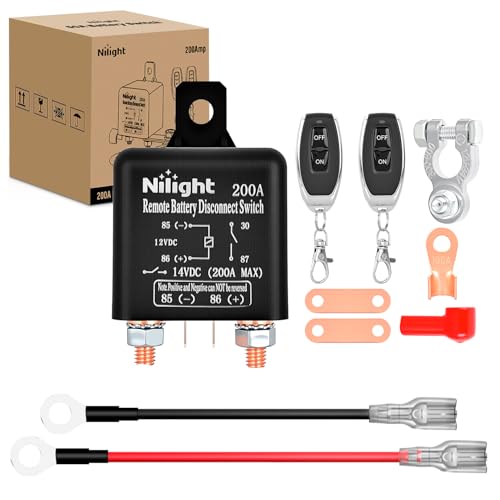
Nilight Remote Battery Disconnect Switch 12V 200A

Nilight Remote Battery Disconnect Switch 12V 250A

Nilight Remote Battery Disconnect Switch 12V 250A w/Black Negative Cable

Nilight Remote Battery Disconnect Switch 12V 24V 360A w/Voltmeter Display
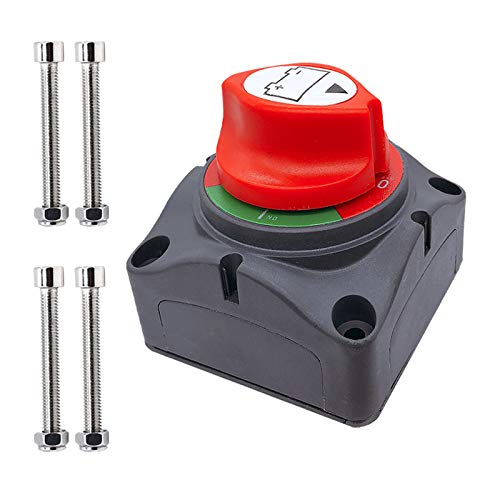
Ampper Battery Disconnect Switch 12V-48V On/Off

FEITON 12-48V Master Battery Disconnect Switch 200A

Malictele 300A ON/Off Cutoff Switch 12V-48V Waterproof

HELLA Battery Disconnect Kill Cut-Off Switch 24V

FEITON 500A Battery Cut Off Switch 12V-36V Lock-Out

FEITON 300A Battery Disconnect Switch with Faceplate 12-48V
Why These Options Stand Out
If you want the convenience of killing power without popping the hood, the Nilight Remote Battery Disconnect Switch 12V 200A handles it from a key fob. Rated for 200 amps at 12V, it sits between the battery and the rest of the electrical system and uses a wireless signal to open or close the circuit, so a quick click from the cab does the job a wrench used to.
Range is the headline feature: two paired remotes work up to roughly 164 feet, which is generous for a parking-lot or driveway scenario. Compared with the manual rotary cutoffs later in this list, the trade-off is that you’re trusting a relay and a small receiver instead of a mechanical knob, so wiring quality matters more than usual. For most daily drivers and light trucks parked outdoors or on the street, that’s a fair swap.
Notable Upsides
- 200A continuous rating covers most passenger vehicles and light trucks without strain.
- Two remotes included, so a spare lives on a keychain or in a glove box.
- Wireless range up to 164 feet means you can cut power before walking up to a suspicious situation.
- No mechanical knob to forget in the wrong position before a long sit.
Points To Note
- Owners commonly report that receiver mounting location affects remote range, so antenna placement near metal can shorten reach.
- Lighter-duty than the 250A and 360A Nilight options higher in the list, so high-stereo or winch-equipped trucks may outgrow it.
Feature Snapshot
Right Fit For
Commuters and street-parked car owners who want a quick way to kill power without lifting the hood every time.
Where Another Pick Suits Better
The Nilight Remote Battery Disconnect Switch 12V 250A fits better if you run larger accessories and want extra headroom on current.
Step up the current rating without giving up the fob-in-pocket convenience. The Nilight Remote Battery Disconnect Switch 12V 250A is the same form factor as the 200A version above but raises continuous current to 250 amps, which is meaningful if your truck runs auxiliary lights, a heavy stereo, or a winch that draws big current at the solenoid.
The wiring approach is identical: a latching relay sits on the battery side, and two paired fobs close or open the circuit from up to 164 feet away. You may find that the extra 50 amps of headroom pays for itself the first time a cold morning demands heavy cranking with accessories still live. For work trucks and overland rigs, it’s the more honest choice over the lighter 200A unit.
What Earns Its Place
- 250A continuous handles larger alternators and accessory loads common on work trucks.
- Same 164-foot remote range as the 200A sibling keeps the convenience factor identical.
- Latching relay design keeps quiescent current draw on the battery itself minimal.
Trade Offs
- Higher amp rating requires appropriately gauged cables, so first-time installers may need to upgrade lugs and wire.
- Still a relay-based unit, so a failed fob battery can leave you reaching for a manual override.
Built With In Mind
Work-truck owners and overlanders running high-draw accessories who want remote cutoff without undersizing the switch.
Not Your Match When
Pick the FEITON 500A Battery Cut Off Switch 12V-36V Lock-Out instead if you need a heavy-duty rotary for lockout/tagout compliance on a jobsite.
The first-time installer is the audience here. The Nilight Remote Battery Disconnect Switch 12V 250A w/Black Negative Cable ships with the same 250A relay unit as the previous pick but adds a pre-terminated black negative cable in the box, so you don’t need to source one separately or guess at gauge. That single inclusion removes the most common wiring stall for newcomers.
Functionally, it behaves identically to the 250A remote above: two fobs, 164-foot range, latching relay. The difference is purely on the install side, where the bundled cable saves a trip to the parts store and keeps the negative lead matched to the switch rating. If you’ve never wired a remote cutoff before, that’s a real win.
Notable Gains
- Bundled negative cable removes the guesswork on wire gauge for first-time installers.
- 250A continuous matches the higher-demand end of the remote-switch category.
- Two remotes included as standard, so no accessory shopping required.
Honest Caveats
- The pre-terminated cable length may not suit every battery tray layout, so measure before mounting.
- Adds little over the standard 250A version for experienced installers who already have cable on hand.
Best Suited To
First-time installers who want a complete kit without separate trips for cabling or lugs.
Swap It Out When
Pick the Nilight Remote Battery Disconnect Switch 12V 24V 360A w/Voltmeter Display if your system runs 24V or you want a built-in voltage readout.
Two upgrades in one box. The Nilight Remote Battery Disconnect Switch 12V 24V 360A w/Voltmeter Display bumps continuous current to 360A and accepts either 12V or 24V systems, which opens the door to heavy equipment, box trucks, and dual-battery setups. An integrated LED voltmeter sits on the unit itself, so you can read system voltage at the battery without a separate gauge.
The voltmeter is the quiet hero here. Checking resting voltage tells you whether the battery is holding a full charge or quietly bleeding off, which is exactly the kind of early warning a disconnect switch is meant to support. In our view, the 360A rating also leaves more headroom than most passenger vehicles need, so this is sized for heavier commercial or overland use.
Why It Works Well
- 360A continuous handles commercial alternators and dual-battery banks without strain.
- 12V and 24V compatibility widens the install options beyond passenger cars.
- Integrated LED voltmeter gives instant state-of-charge visibility at the battery.
Some Limits To Know
- Higher price tier in the lineup, so casual users may pay for capacity they won’t draw on.
- Voltmeter adds wiring complexity compared with the bare 250A versions.
Quick Facts
Whose Shelf It Belongs On
Commercial operators, overlanders, and 24V system owners who want monitoring alongside remote cutoff.
Consider Something Else When
Pick the HELLA Battery Disconnect Kill Cut-Off Switch 24V if you need a keyed mechanical switch rather than a fob-operated relay.
The old-school choice, and still the right one for many installs. The Ampper Battery Disconnect Switch 12V-48V On/Off is a manual rotary knob mounted through a panel hole, with an ABS plastic housing and a rear cover that insulates the terminals against accidental shorts. Twist for off, twist back for on, no electronics involved.
Its specs read broad: 275A continuous at 12V, 455A intermittent, and 1250A momentary at 12V, with compatibility spanning 12V to 48V systems. The honest read is that this is the kind of switch you fit when you want something you can see, feel, and verify with a glance. For DIYers on a budget who don’t need remote operation, it punches well above its modest positioning.
Strong Points
- Mechanical design means no relay or fob batteries to fail over time.
- Rear cover shields terminals from shorts, a real safety plus in tight engine bays.
- 275A continuous at 12V handles most vehicles without strain.
Small Caveats
- Manual operation requires reaching the switch, which means mounting location matters more.
- ABS housing is durable but less rugged than the all-metal marine-style units further down.
Spec Overview
Made For
DIYers and budget-conscious owners who prefer a visible, mechanical cutoff over a relay-driven remote.
Look Elsewhere When
Pick the FEITON 300A Battery Disconnect Switch with Faceplate 12-48V if you want a similar rotary action but with a cleaner dashboard-mounted faceplate.
Same rotary-knob logic as the Ampper above, but dressed up with a faceplate that gives the install a finished look. The FEITON 12-48V Master Battery Disconnect Switch 200A covers 12V to 48V systems at 200A continuous, which is more than enough for typical charging systems on cars, trucks, RVs, boats, and ATVs.
The faceplate is the practical differentiator. Mounting the switch through a hole in a panel or bulkhead leaves a tidy, labeled surface instead of bare hardware, which matters when the cutoff lives in a visible spot like beside the driver’s seat or on an RV interior wall. For garage builds and interior retrofits, the cosmetic upgrade is worth noticing.
Useful Touches
- Included faceplate produces a finished, labeled look on visible mounts.
- 200A continuous rating matches the demands of most automotive and RV charging systems.
- Voltage range covers 12V through 48V for versatile vehicle compatibility.
Where It Is Less Suited
- Lower continuous rating than the 300A and 500A FEITON options in the same family.
- Faceplate requires a clean, flat mounting surface to look its best.
Perfect Match For
Garage builders and RV retrofitters who want a tidy, labeled install on an interior panel.
A Better Fit Elsewhere
Pick the FEITON 500A Battery Cut Off Switch 12V-36V Lock-Out if you need heavier continuous current and a lockable handle for safety.
Ignition-protected is the phrase that matters here. The Malictele 300A ON/Off Cutoff Switch 12V-48V Waterproof is rated to resist ignition of surrounding flammable gases, which is the safety bar set for marine fuel-bay and engine-compartment installs. Waterproofing and a single-circuit ON/OFF knob round out a switch designed for harsh bilges and outdoor bays.
The “make-before-break” contact design inside allows switching between sources without interrupting downstream power, which is more relevant for marine battery banks than for a single-battery car. With four mounting screws in the box and a 300A continuous rating, the honest fit is a boat, a saltwater trailer, or a vehicle with an exposed engine bay.
What Helps Most
- Ignition-protected rating meets marine safety standards for fuel-bay installs.
- 300A continuous handles substantial marine and RV charging loads.
- Waterproof construction holds up to spray, salt, and damp conditions.
Possible Compromises
- Single-circuit design means no battery-bank selector, so dual-battery boats may need two switches.
- Mounting hardware is functional but light, so stainless replacements are a common upgrade.
Feature Card
Who Should Grab It
Boat owners and marine-RV travelers who need an ignition-safe, waterproof cutoff in fuel or splash zones.
Skip It When
Pick the FEITON 500A Battery Cut Off Switch 12V-36V Lock-Out for higher current or when a lockable handle is required for jobsite safety.
Built like it belongs on a commercial truck or a piece of heavy equipment, because it does. The HELLA Battery Disconnect Kill Cut-Off Switch 24V uses a removable red key for two-position operation (0 = off, 1 = on) inside a plastic housing with M10 x 1.5 screw terminals. IP69K protection, the highest practical ingress rating, means it shrugs off pressure-wash cleaning and road grit.
Cross-section guidance at continuous current runs from 35 mm² at 100A up to 250 mm² at 500A, with a 24V capacity of 2000A for 5 seconds during cranking surges. That spec sheet reads like a truck spec because it’s aimed at commercial vehicles and fleet service. For a home mechanic on a passenger car, it’s overkill in the best possible way.
Practical Pluses
- IP69K rating handles pressure washing and harsh environments.
- Removable key provides a visual deterrent against unauthorized use.
- 2000A momentary at 24V handles starter surges on commercial trucks.
Factors To Consider
- 24V focus means 12V-only vehicles will leave capacity unused.
- Larger terminals and heavier cabling raise the install effort for first-timers.
The Right Fit
Fleet technicians and commercial-truck owners who want a key-removable, pressure-wash-rated disconnect.
Reach For A Different Pick When
Pick the Ampper Battery Disconnect Switch 12V-48V On/Off for a simpler, lighter install on a passenger vehicle or RV.
The big-amp rotary. The FEITON 500A Battery Cut Off Switch 12V-36V Lock-Out is rated for 500A continuous and 5000A instantaneous current, with 10mm threaded studs, polarity-marked negative wiring, and watertightness treatment on the housing. It replaces common OE part number 20247, so it drops into many existing installations without rewiring.
The lockable handle is the standout feature for safety-minded owners. A padlock through the handle prevents operation during service or storage, which satisfies basic lockout/tagout thinking on jobsites and boats. For yachts, work crews, or anyone storing a vehicle for extended periods, that’s a tangible layer of protection.
Real-World Strengths
- 500A continuous and 5000A instantaneous handle the largest alternators and starter surges.
- Lockable handle supports lockout/tagout during maintenance.
- Waterproof treatment protects against bilge moisture and weather exposure.
- OE 20247 compatibility simplifies replacement on vehicles already equipped.
Details To Watch
- Larger footprint than lower-amp rotaries, so cramped battery boxes may not fit it cleanly.
- Requires appropriately heavy-gauge cable to actually use the 500A rating.
Key Attributes
Who Will Love This
Yacht owners, jobsite crews, and heavy-equipment operators who need a lockable, high-amp cutoff for safety compliance.
Where A Sibling Pick Shines
Pick the HELLA Battery Disconnect Kill Cut-Off Switch 24V if you prefer a removable-key design with industrial ingress protection.
A tidy middle ground between the lighter 200A FEITON and the heavy-duty 500A lockable unit. The FEITON 300A Battery Disconnect Switch with Faceplate 12-48V delivers 300A continuous across a 12V to 48V range, and ships with the same faceplate treatment as its 200A sibling for a clean panel-mounted look.
Where it lands is the everyday vehicle with a slightly bigger appetite: a tow vehicle, an overland rig with a moderate inverter, or an RV that runs a residential fridge on 12V. You may find the 300A figure is the sweet spot for owners who feel the 200A is a bit close to the wire but don’t need the 500A unit’s footprint. It’s a calm, capable step up from the entry rotaries earlier in the list.
Positive Takeaways
- 300A continuous covers most overland and RV inverter setups comfortably.
- 12V to 48V compatibility makes it flexible across vehicle classes.
- Faceplate finish keeps interior mounts looking intentional.
Worth Bearing In Mind
- Not lockable like the FEITON 500A, so jobsite safety compliance may require the bigger unit.
- Manual rotary means reaching the switch each time, so location planning still matters.
Right Fit For
Everyday drivers and overlanders with moderate accessory loads who want a clean, mid-range rotary install.
Skip It When
Pick the Nilight Remote Battery Disconnect Switch 12V 24V 360A w/Voltmeter Display if you’d rather cut power from a key fob than twist a knob.
What Matters Most Before Choosing Automotive Battery Disconnect Switches
Match The Rating To Your System
Continuous current rating is the number that decides whether a switch is safe in your setup. Look at your alternator’s output, add up the worst-case accessory draw, and pick a switch whose continuous rating sits above that figure. Cranking spikes are absorbed by the momentary or intermittent rating, so undersizing the continuous number is the real risk.
Remote Vs Manual Comes Down To Access
A fob-operated relay cuts power from inside the cab, which matters on street-parked cars and vehicles with awkward battery locations. A rotary knob is simpler, more reliable long-term, and gives you a visual confirmation of state at a glance. For vehicles you access easily, manual wins; for hard-to-reach batteries, remote wins.
Voltage Range And Environment
Most cars and light trucks run 12V, while commercial and marine systems often run 24V. Picking a switch with a wider voltage range (12V-48V covers almost everything automotive) gives you room to grow. Marine and outdoor installs also benefit from waterproof or ignition-protected ratings to handle moisture and fuel vapors.
Safety Features Worth Their Cost
Lockable handles, removable keys, and rear terminal covers all exist for real reasons. On jobsites and boats, lockout/tagout compliance is non-negotiable. In tight engine bays, terminal insulation prevents shorts that could otherwise become bigger problems. These are the features that turn a switch from a convenience into a genuine safety device.
Key Considerations Across These Picks
Where Shoppers Go Wrong
The most common error is sizing by peak number instead of continuous rating. A 500A momentary rating means nothing if the continuous rating is 75A and your alternator pushes 120A at idle. The next mistake is ignoring cable gauge: a high-amp switch wired with thin cable creates a bottleneck that defeats the whole point.
Mounting location catches a lot of first-timers off guard. A switch near the exhaust manifold, in the path of road splash, or behind removable trim is going to be a frustration. Plan the install path before you commit to a switch, and make sure the handle or fob reach is realistic for daily use.
The Case For Spending Up
Premium switches earn their higher tier through materials, sealing, and certifications. An IP69K-rated HELLA switch survives commercial-truck duty cycles that would fatigue a basic ABS-housing rotary within a few seasons. A lockable FEITON 500A buys genuine safety compliance for jobsite work.
Where spending up pays off is in any scenario where the switch is touched often, exposed to weather, or expected to handle near-maximum current for long periods. For a weekend car stored in a dry garage, the entry rotaries handle the job. For a working boat or commercial truck, the upgraded sealing, ratings, and locking hardware are worth every dollar.
Frequently Asked Questions
Do battery disconnect switches really prevent parasitic drain?
Yes, when wired between the battery and the rest of the system, they create a true open circuit that stops even small standby draws from electronics and alarms. They are the simplest mechanical answer to a battery that goes flat during long storage.
Is a remote switch less reliable than a manual rotary?
Remote switches add a relay and a small receiver, so there are more failure points than a pure mechanical knob. Quality units hold up well over time, but for a vehicle you depend on daily, a manual rotary gives you a visual state confirmation that a relay cannot match.
Can I install a battery disconnect switch myself?
Most rotary units and many remote units are within reach of a careful DIYer with basic hand tools, a wrench set, and a multimeter. The work involves disconnecting the battery, mounting the switch, and rerouting the main cable through it, which is straightforward but requires attention to polarity and torque.
What does ignition-protected mean for a battery switch?
Ignition-protected means the switch is designed so its internal contacts cannot ignite surrounding flammable gases, which matters in marine fuel-bay and bilge environments. For automotive engine bays it is not strictly required, but the rating usually comes with waterproofing that helps in any harsh environment.
How do I pick the right amperage rating?
Match or exceed your alternator’s maximum output and any large accessory draw, focusing on the continuous rating rather than momentary spikes. If your alternator produces 150A, a 200A continuous switch is the safe minimum, with 275A or 300A leaving comfortable headroom for growth.
Wrap Up
The right automotive battery disconnect switch is the one sized to your system and installed where you can actually use it. Manual rotaries deliver honest, visible control for vehicles you reach easily, while remote fobs pay off when the battery hides under a cover or sits in a tight bay. Match the current and voltage first, then let features like waterproofing, locking handles, or voltmeters earn their place based on how and where you actually drive.