A dead battery never warns you at a good time. Whether you commute daily, wrench on weekends, or keep a boat anchored for the season, an automotive battery load tester turns a guessing game into a 30-second answer. These handheld tools plug into your battery, push a controlled load through it, and tell you whether the cells are holding charge or quietly failing. The picks below cover cars, trucks, motorcycles, marine batteries, and heavy-duty gear, so you can match the right tool to the vehicles in your life.
A Side-By-Side Look

TOPDON BT300P 12V/24V Battery Tester with Printer

TOPDON BT600 Plus 6V/12V/24V Battery Tester

TOPDON AB101 12V Battery Load Tester
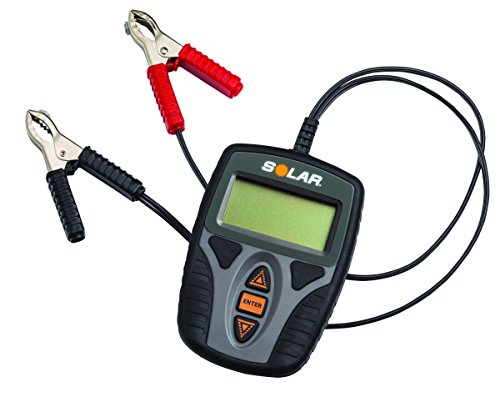
Clore Automotive SOLAR Digital 12V Battery Tester

TOPDON BT100 12V Battery Tester 100-2000 CCA

TOPDON BT200 12V/24V Battery Tester 100-2000 CCA

ANCEL BA101 Plus 6V/12V Battery Tester 20-2000 CCA

ANCEL BA101PRO 12V/24V Battery Tester

ANCEL BA101 12V Digital Battery Tester

TOPDON BC100 12V Battery Tester 100-2000 CCA
Taking A Closer Look At The Options
Walk into a busy service bay and you will usually find a tester with a printer bolted to it, and the TOPDON BT300P is built for exactly that kind of workflow. It evaluates 12V batteries, checks 12V and 24V starter cranking behavior, and reads the 12V and 24V charging system to confirm your alternator is doing its job. The headline feature, though, is the integrated thermal printer, which spits out a paper receipt you can hand to a customer or clip to a work order.
Where it really earns its place is in shops that document every diagnostic for warranty or resale reasons. The screen layout is straightforward enough that a tech can hand it to a more junior colleague without much coaching. It also doubles as a system tester, so you do not need to swap tools when a battery check turns into an alternator check.
Where It Helps
- Built-in printer creates paper records for each test, helpful for warranty claims and customer transparency
- Covers both 12V and 24V systems, so it works on cars and larger trucks from the same device
- Includes starter cranking and charging diagnostics alongside the battery health reading
- Handheld form factor that fits in a drawer or hangs on a shop wall mount
Things To Consider
- Replacement printer paper rolls are a recurring accessory you will need to stock
- More menu layers than basic testers, so first-time users face a short learning curve
Quick Facts
Who It Suits Best
Service writers, mobile mechanics, and shop owners who want hard-copy proof with every diagnostic.
Skip It When
You are a casual home owner who does not need paper documentation; the TOPDON BT100 covers that need with less complexity.
The TOPDON BT600 Plus steps up where the BT300P leaves off, adding 6V coverage for golf carts, vintage vehicles, and small engine equipment alongside the usual 12V and 24V ranges. It also folds in resistance testing and sequence tests, two metrics that go beyond a basic health snapshot and give you a fuller picture of how a battery is degrading. A built-in printer closes the loop for shops that still want paper records.
This is the tester you reach for when a fleet rolls in with mixed vehicles and you cannot afford to grab a different tool for each bay. Compared with the BT300P, the extra voltage range and resistance data matter most to technicians troubleshooting intermittent electrical complaints rather than just confirming a swap-out.
What Stands Out
- Covers 6V, 12V, and 24V systems in one unit, useful for varied vehicle inventories
- Adds internal resistance and sequence tests on top of standard health and system checks
- Built-in printer supports paper-based diagnostic records without extra accessories
- Higher voltage range than most consumer testers in this size class
Worth Noting
- Premium feature set comes with a higher cost than entry-level handheld units
- 6V range will go unused if your garage only sees modern cars and trucks
Right Fit For
Professional technicians managing mixed fleets, classic car restorers, and shops that handle vintage electrical systems alongside modern vehicles.
A Better Fit Elsewhere
Home users with only a daily driver should consider the simpler TOPDON BT100, which covers standard 12V needs without the higher cost.
The TOPDON AB101 targets the owner who has never met a multimeter and just wants a yes-or-no answer about their battery. It benchmarks battery health, then advises whether replacement makes sense, and also runs cranking and charging system checks so a sluggish start gets diagnosed in one pass. Compared to the BT300P, the AB101 strips out the printer and the 24V range to keep the workflow short.
For someone working on a single family vehicle, that trade-off lands well. The unit stays compact, plugs in with standard clamps, and shows readings on a screen you can actually read in a dim garage. You give up the printer paper trail and the heavy-truck compatibility, but most commuters never need either.
Practical Advantages
- Straightforward workflow that walks new users through the test step by step
- Includes cranking and charging system checks alongside the battery health reading
- Compact enough to store in a glove box or small drawer
- Lower entry cost than full-shop testers with the same core accuracy
Room For Improvement
- No 24V support, so it cannot diagnose heavy trucks or some commercial setups
- Screen is smaller and less detailed than the BT300P and BT600 Plus
Feature Snapshot
Made For
First-time car owners, students learning basic diagnostics, and anyone who wants a low-effort health check before a long trip.
Look Elsewhere When
You service a fleet that includes 24V trucks; the TOPDON BT200 handles those voltages with similar simplicity.
Clore Automotive has been in the charging and jump-starting world long enough that the SOLAR BA9 carries a workshop-friendly reputation. The unit reads batteries across a 40 to 1200 CCA range, supports flooded, AGM, spiral, and gel cell chemistries, and operates across a 7 to 15V window that handles most 12V systems including some mildly discharged states. An LCD readout keeps numbers visible in shop lighting.
It leans toward the technician who values chemistry coverage over flash. CCA stands for Cold Cranking Amps, a measure of how much current a battery can deliver at 0°F, and that wide window catches everything from a small motorcycle battery to a heavy pickup. Owners commonly report the rugged housing holds up to daily shop abuse better than glossy consumer designs.
A Strong Showing
- 40 to 1200 CCA range fits motorcycles, lawn tractors, cars, and many trucks
- Compatible with flooded, AGM flat plate, AGM spiral, and gel cell chemistries
- LCD display stays legible under bright shop lights
- Brand with deep roots in professional charging and diagnostics
Trade Offs
- 12V only, so it skips 6V vintage and 24V heavy-duty applications
- No built-in printer, which matters for shops that want paper records
Best Suited To
Independent mechanics, dealership techs, and serious DIYers who run a mix of vehicles through their garage and want a no-nonsense daily tester.
Reach For A Different Pick When
You want paper documentation built into the device; the TOPDON BT300P prints receipts without needing a separate printer.
The TOPDON BT100 is the kind of tester you keep on a shelf because it handles almost anything 12V that walks through the door. It reports State of Health (SOH), State of Charge (SOC), voltage, current, and rating data across 100 to 2000 CCA, and it covers regular flooded, AGM flat plate, AGM spiral, EFB, and gel batteries. The chemistry list alone lets you test modern start-stop vehicles without guessing.
Compared with the AB101 reviewed earlier, the BT100 adds EFB support, which matters for newer cars with start-stop systems, and pushes the CCA ceiling higher. EFB stands for Enhanced Flooded Battery, a flooded design built to handle frequent engine restarts. For a household with a sedan, a motorcycle, and a lawn tractor, this single unit covers all three.
Real Benefits
- EFB compatibility for start-stop vehicles that other 12V testers ignore
- 100 to 2000 CCA range fits everything from motorcycles to heavy-duty pickups
- Reports SOH, SOC, voltage, current, and rating in one reading
- Single device for cars, motorcycles, ATVs, SUVs, boats, and yachts
Small Caveats
- 12V only, so trucks with 24V systems need a separate tool
- Reading menus require navigating more options than a single-purpose tester
Feature Card
Who Should Grab It
Households and small shops that own a mix of cars, motorcycles, marine batteries, and recreational vehicles.
Swap It Out When
You need 24V coverage for commercial trucks; the TOPDON BT200 steps up to that voltage range.
The TOPDON BT200 takes the BT100 platform and adds 24V system coverage, which is the difference between testing the family sedan and being able to diagnose a diesel work truck. It uses conductance-based measurement, a method that applies a small alternating signal to read internal resistance and infer battery health, and it covers regular flooded, AGM, gel, and deep-cycle battery types across 100 to 2000 CCA.
For an owner who already added EFB support on the BT100 but now needs heavier vehicles, the BT200 is the natural upgrade. It also reads charging system voltage, which helps catch a failing alternator before it strands you on a highway pull-off.
Why It Works Well
- 12V and 24V coverage in one device, so cars and trucks share the same tester
- Supports deep-cycle batteries found in RVs, boats, and off-grid setups
- Reports internal resistance, voltage, and CCA readings for trend tracking
- Wider vehicle compatibility than 12V-only models in the same price bracket
Honest Caveats
- Bulkier than the BT100 due to higher-voltage internal components
- No built-in printer, so paper records require a separate accessory
Perfect Match For
Owners of mixed fleets that include a daily driver and a larger diesel truck, plus RV and marine enthusiasts.
Where A Sibling Pick Shines
The TOPDON BC100 is a simpler 12V-only option if you want the smallest possible form factor for glove-box storage.
The ANCEL BA101 Plus drops the CCA floor to 20, which is unusual for this category and unlocks testing for very small batteries. Most consumer testers start at 100 CCA, which leaves motorcycle, ATV, scooter, and lawn tractor batteries untestable. This one picks up that gap while keeping the 2000 CCA ceiling for bigger applications. It also supports 6V and 12V systems, including regular flooded, AGM flat plate, AGM spiral, gel, and EFB chemistries.
You also get SOH, SOC, internal resistance, voltage, and CCA readings in a single test, which gives more diagnostic detail than entry-level units. Compared with the ANCEL BA101PRO covered next, the Plus trades 24V support for the lower CCA range, making it a better fit for powersports than commercial trucks.
What It Does Well
- 20 CCA floor reaches small batteries most testers ignore, like ATVs and lawn gear
- Covers 6V and 12V systems for vintage cars and modern vehicles alike
- Reads SOH, SOC, voltage, internal resistance, and CCA in one pass
- Supports EFB chemistry for vehicles with start-stop systems
A Few Limitations
- No 24V coverage, so heavy-duty trucks fall outside its range
- Smallest batteries may need extra clamp care to get a solid connection
Built With In Mind
Powersports owners, small engine repair shops, and households with a mix of lawn tractors, motorcycles, and a daily driver.
Consider Something Else When
You mostly test heavy trucks; the ANCEL BA101PRO adds 24V coverage for those applications.
The ANCEL BA101PRO takes the brand’s BA101 design and points it at heavier vehicles, adding 24V support so trucks, RVs, boats, and commercial rigs fall within reach. It pairs that range with a 2.8-inch color display that makes the screen easier to read than the older monochrome BA101 design. Coverage runs from 100 to 2000 CCA across regular flooded, AGM flat plate, AGM spiral, gel, and EFB chemistries.
For someone stepping up from the original BA101, the draw is the larger display and the extra voltage range. The trade-off is no 6V support, so vintage owners will still need a dedicated tool for that battery class. Cranking and charging system checks round out the package, which keeps the tester useful beyond a basic health reading.
Key Advantages
- 2.8-inch color display improves readability over older monochrome testers
- 12V and 24V compatibility covers cars, trucks, RVs, and boats in one tool
- Cranking and charging system diagnostics alongside battery health
- EFB support handles newer start-stop vehicles in the household fleet
Less-Strong Areas
- Skips 6V coverage, so vintage cars and small engine gear need another tester
- CCA floor starts at 100, leaving small powersports batteries out of reach
Whose Shelf It Belongs On
Truck and RV owners, marine enthusiasts, and anyone running a fleet that includes heavy-duty vehicles.
Not Your Match When
You mostly test small batteries; the ANCEL BA101 Plus starts at 20 CCA and includes 6V support for that profile.
The original ANCEL BA101 has been a fixture in the budget-friendly battery tester category for years, and it still holds its ground for owners who want straightforward 12V diagnostics. It reads SOH, SOC, voltage, current, and CCA, and runs cranking and charging system tests so a single device covers the three checks most people actually need. Coverage runs across 100 to 2000 CCA for standard flooded, AGM, and gel chemistries.
For shoppers who do not need 6V, 24V, or fancy color screens, this is a sensible cost-conscious pick. Compared with the BA101 Plus reviewed earlier, you give up 6V support and the 20 CCA floor. The payoff is a familiar design that has earned its reputation across many product cycles.
The Good Stuff
- Entry-level price point that fits a basic home toolbox budget
- SOH, SOC, voltage, current, and CCA in a single read
- Cranking and charging system diagnostics built into the workflow
- Long-running design with a wide installed base and known track record
Points To Note
- 12V only, so it does not cover 24V trucks or 6V vintage batteries
- Display and interface are simpler than newer color-screen options like the BA101PRO
The Right Fit
Cost-conscious owners with a single 12V vehicle who want a proven, no-frills tester they can pull out twice a year.
Reach For A Different Pick When
You want a color display and 24V coverage in one device; the ANCEL BA101PRO fits that profile.
The TOPDON BC100 closes the list as the smallest, most pocketable option in the lineup. It targets a single job, testing 12V lead-acid batteries across 100 to 2000 CCA, and it covers regular flooded, AGM flat plate, AGM spiral, gel, and EFB chemistries. Cranking and charging system checks are folded into the workflow, so it still gives a three-point diagnostic in a body that fits in a glove box.
For someone who wants a tester they can leave in the car and pull out at a trailhead, the BC100 is the easy choice. The trade-off versus the BT100 is screen size and menu depth, which the larger unit handles more comfortably. For quick checks, the simpler BC100 interface is a feature rather than a limitation.
Strong Points
- Compact body that fits in a glove box, tool drawer, or small shop tray
- EFB support means it works on modern start-stop vehicles
- Three-in-one diagnostic combines battery, cranking, and charging tests
- 100 to 2000 CCA range fits most 12V vehicles and lawn equipment
Things To Weigh
- 12V only, leaving heavy trucks outside its range
- Smaller screen is harder to read in bright outdoor light than larger units
Who Will Love This
Daily drivers, road trippers, and weekend mechanics who want a tester small enough to live in the vehicle full time.
Where Another Pick Suits Better
You want broader vehicle coverage with similar simplicity; the TOPDON BT100 adds menu depth and screen space.
Choosing the Right Battery Tester for Your Garage
Picking an automotive battery load tester comes down to matching voltage range, chemistry coverage, and CCA span to the vehicles you actually own. CCA, or Cold Cranking Amps, measures how much current a battery delivers at freezing temperatures, and that rating lives on every battery label. A tester that cannot reach your battery’s CCA number will give you a flat reading or refuse to test, so always cross-check the spec against the batteries in your garage before you buy.
Match Voltage Range to Your Fleet
Most passenger cars run 12V systems, while heavy-duty diesel trucks often use 24V systems built from two 12V batteries in series. If you only drive a sedan, a 12V tester covers your needs and saves cost. Owners who split time between a daily driver and a pickup or RV should look at 12V and 24V dual-voltage models like the TOPDON BT200 or ANCEL BA101PRO.
Verify Chemistry Compatibility
Lead-acid batteries come in flooded, AGM, gel, and EFB variants, and each behaves differently under load. Start-stop vehicles rely on EFB or AGM designs that need a tester rated for them, while older vehicles and marine setups often use flooded or gel cells. A tester that lists chemistry support across all four gives you flexibility as your fleet changes.
Decide on Features That Matter
Built-in printers, color screens, and resistance readings all add value, but they also add cost. A casual owner who tests twice a year does not need a thermal printer, while a shop that documents every diagnostic finds one essential. Decide which extras you will actually use, then buy the simplest tool that covers those needs.
Plan for Storage and Frequency
A glove-box-sized tester gets used more often than one buried in a drawer. If you want frequent quick checks, look at compact options like the TOPDON BC100. If the tester lives on a workbench and rarely moves, prioritize screen size and chemistry coverage over portability.
Common Buying Mistakes and Where the Extra Money Goes
Battery testers look similar at a glance, but a few details separate a worthwhile tool from a frustrating one.
Traps First Timers Fall Into
Skipping the voltage check is the biggest miss. A 12V-only tester will not diagnose a 24V heavy-duty system, even if the price looks right. Buyers also sometimes focus on the lowest CCA rating and forget the upper ceiling; a tester with a 1000 CCA max will not read a 1500 CCA truck battery accurately. Confirm both ends of the CCA range before you commit.
Where The Extra Money Goes
Higher-tier testers earn their cost through three upgrades: broader voltage and chemistry coverage, integrated printers or color displays, and conductance-based measurement for higher accuracy. For a shop or fleet owner, those features pay back through faster diagnostics and clearer records. For a casual home owner, a mid-tier unit usually covers everything needed without the premium price.
Frequently Asked Questions
What is a load tester and how does it differ from a multimeter?
A load tester applies a controlled discharge to the battery and measures how voltage holds under stress, while a multimeter only reads resting voltage. Under-load testing gives a truer picture of battery health, especially for batteries that read fine at rest but fail under cranking demand.
Can one tester cover both 12V and 24V systems?
Yes, dual-voltage testers like the TOPDON BT200 and ANCEL BA101PRO handle both standards. A 12V-only unit will give misleading results on a 24V system, so dual-voltage is worth the upgrade for anyone with mixed vehicles.
How often should you test a car battery?
Testing once before summer and once before winter catches most seasonal failures, since heat and cold both stress batteries. Owners with high electrical loads or vehicles parked for long stretches benefit from quarterly checks.
Do battery testers work on lithium or AGM batteries?
Most testers in this category focus on lead-acid chemistries, including flooded, AGM flat plate, AGM spiral, EFB, and gel. Lithium automotive batteries need a tester rated specifically for lithium chemistry, which is a different product category.
What is a good CCA range for a home tester?
A range from about 100 to 2000 CCA covers nearly every consumer application, from motorcycles and lawn tractors to heavy pickups. Smaller ranges work for single-vehicle owners, while wider ranges help anyone with a mixed garage.
Final Take
The right tester depends less on specs than on your garage. Match the voltage range and CCA span to the vehicles you own, then add the features you will actually use. Anything from this list will give you a clear answer about a battery’s health, so the choice is really about how much coverage and documentation you need day to day.