Replacing a battery cable sounds simple until you’re crouched behind a wheel well, fighting a corroded terminal that refuses to budge. The right gauge, length, and terminal fit turn that Sunday afternoon into a smooth job. Garage tinkerers, weekend off-roaders, RV owners, and anyone wiring a solar bank all need cable that won’t fight back. This lineup covers short jumper-style runs, mid-length inverter leads, and long bulk wire with lugs for custom builds, so you can match the cable to the project instead of the other way around.
A Quick View Of The Lineup

End Game 6 Gauge Marine Grade Battery Cables

WINDYNATION 2/0 AWG Welding Lead & Car Battery Copper Cable

Sky High Car Audio 1/0 Gauge Power Ground Wire
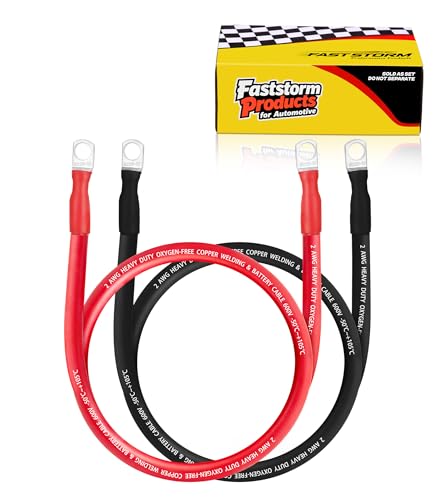
FASTSTORM 2 AWG Battery Cable 2FT Pair
FASTSTORM 2 AWG Battery Cable 3FT Pair

MOOKEERF 4 Gauge Battery Cable 10FT

FASTSTORM 6 AWG Battery Cable 40FT with Lugs

Nilight 6 AWG Battery Cables 1FT Pair

FASTSTORM 4 AWG Battery Cable 3FT Pair

FASTSTORM 2 AWG Battery Cable 20FT with Lugs
Why These Options Stand Out
Boat owners and overlanders chasing a cable that shrugs off salt spray and engine heat will find a lot to like in this End Game assembly. The 12-foot run lands in a sweet spot for most marine battery-to-switch paths, and the fully sealed tinned lugs are designed for the kind of damp bilge or splash-prone engine bay that eats plain copper alive.
Unlike the bulk welding cable on later picks in this list, this one ships fully assembled, so you skip the crimp-and-shrink step entirely. The PVC jacket resists oil and fuel, which matters in a garage where drips happen. For most weekend skippers, the 6-gauge thickness is plenty for typical house-bank runs without the stiffness of the heavier 2/0 and 1/0 options below.
Strengths Worth Knowing
- Fully assembled with sealed tinned copper lugs, so install time drops to minutes rather than an afternoon of crimping.
- PVC insulation rated for oil and fuel exposure, useful in engine bays where small leaks are a fact of life.
- Multiple length and lug options (3/8″ and 5/16″) cover both battery posts and starter-side connections in one purchase.
- Designed to handle marine and outdoor conditions, so corrosion around the lugs tends to show up much later than with bare copper.
- 12-foot reach works for many mid-sized boats and RVs without forcing a splice or extension.
Things To Consider
- 6 gauge is on the thinner side for high-amperage inverter banks, so heavy solar users may need to step up to the WindyNation 2/0 below.
- The pre-sealed lugs limit you to the included ring sizes, which can complicate custom panel fitments.
- Owners commonly report the PVC jacket stiffens in deep cold, so routing in unheated engine spaces can feel rigid mid-winter.
Made For
Boat owners and RV owners who want a turnkey marine-rated cable without buying a crimper and lug assortment separately.
Where Another Pick Suits Better
Shoppers wiring a 2000-watt inverter or larger battery bank should reach for the WINDYNATION 2/0 AWG cable, which handles far heavier current loads.
When the project calls for serious current, this WindyNation 2/0 bulk cable is the kind of wire you see in off-grid solar sheds and high-output car audio installs. The 2/0 gauge (that’s roughly 70 square millimeters of copper cross-section) moves the kind of amperage that would make a 6-gauge wire run hot under the same load. It’s sold by the foot in matched red and black pairs, so you can build exactly the runs you need without leftover scrap.
Unlike the pre-terminated End Game cable in pick 1, this one ships as raw cable, meaning you’ll source your own lugs and do the crimping. The flexibility is impressive for a conductor this thick, which makes routing through tight battery compartments far easier than you’d expect. For most people running 2000-watt inverters or large lithium banks, this is the workhorse wire you’ll keep reaching for.
Notable Gains
- 2/0 gauge handles high-amperage loads that would overheat thinner cables, ideal for inverter and solar bank wiring.
- Highly flexible stranded copper construction, so it bends around tight corners without kinking.
- Sold in matched red and black pairs, which keeps polarity obvious during installation.
- Suitable for welding, battery, RV, and solar applications, so one spool covers multiple project types.
Worth Noting
- Cable ships without terminals, so you’ll need a heavy-duty crimper and tinned lugs to finish the install.
- Bare copper without tinned coating, so marine and high-humidity environments may require extra sealing.
- Bulk format means some measuring and planning is required before cutting to length.
Best Suited To
Off-grid solar builders, RV owners, and high-power audio installers running large inverters who already own a quality crimping tool.
Skip It When
Casual commuters doing a simple battery terminal replacement will find the FASTSTORM 2 AWG pre-terminated pair a much quicker fit.
Car audio competitors and SPL enthusiasts have leaned on Sky High Car Audio’s oversized 1/0 wire for years, and a 5-foot red run gives you enough reach for a clean ground path from battery to chassis in most sedans and coupes. The 1/0 gauge sits between the 2/0 WindyNation above and the smaller 2 AWG FASTSTORM pairs below, hitting a sweet spot for mid-to-large amplifier builds without the bulk of 2/0.
This listing is for a single red 5-foot length, so keep that in mind for ground-and-power paired installs. Compared to the all-purpose welding cable from pick 2, this wire is specifically voiced for the audio community, which often means tighter strand counts and cleaner jacket finishes. For most people running 1000- to 2000-watt systems, it provides a noticeable step up in current capacity over 4 AWG without the routing headache of true 2/0.
Positive Points
- 1/0 gauge comfortably handles high-wattage amplifier current without voltage drop at the speaker terminals.
- Oxygen-free copper construction, which tends to maintain cleaner signal transfer for sensitive audio gear.
- 5-foot length suits most under-hood-to-cabin amplifier runs in compact and mid-size vehicles.
Trade Offs
- Listing is for a single red cable, so a matched ground run requires a second purchase.
- 1/0 cable is stiff, and routing through factory firewall grommets can require enlarging the opening.
- Pure focus on audio use means no included terminals, leaving lug selection up to you.
Feature Snapshot
Right Fit For
Car audio enthusiasts running mid-to-high wattage subwoofer amplifiers who want dedicated audio-grade wire without stepping up to full 2/0 cable.
Look Elsewhere When
Off-grid solar and inverter builders will get more versatile value from the WINDYNATION 2/0 AWG set, which ships in matched pairs.
Tight engine bays where every inch counts call for a short pre-terminated pair, and this FASTSTORM 2 AWG set delivers exactly that. The 2-foot run is purpose-built for linking a secondary battery next to the main unit or jumping a battery switch, with 3/8″ tin-plated copper lugs already crimped on both ends.
Compare that to the bulk 2/0 WindyNation in pick 2, which assumes you’re building longer runs and finishing the ends yourself. The 2 AWG thickness here is overkill for a simple accessory tap but ideal for parallel battery wiring on trucks and boats, where current sharing between banks matters. For most people adding a house battery to a pickup, this is the kind of drop-in part that makes a Saturday project feel like a Tuesday.
A Favorable Mix
- Pre-crimped 3/8″ tin-plated copper lugs at both ends, removing the need for a separate crimping step.
- 2-foot length suits compact parallel-battery setups without coiling excess cable behind the seat.
- Pure copper conductor, which generally outperforms copper-clad aluminum for voltage stability under load.
- Red and black pair included, keeping polarity identification straightforward during install.
Room For Improvement
- 2-foot length is too short for any run beyond adjacent battery boxes, limiting use cases.
- No heat shrink included on the lug crimps, so some installers add their own marine-grade adhesive shrink for extra sealing.
Who It Suits Best
Truck and SUV owners adding a secondary battery next to the main unit who want a clean factory-style install without fabricating their own cables.
Consider Something Else When
Boat owners tackling a longer run from stern to helm should consider the End Game marine-grade 12-foot assembly from pick 1 instead.
Sometimes one extra foot of cable is the difference between a clean install and a tight bend, and this 3-foot FASTSTORM pair covers that exact gap. Built on the same platform as the 2-foot set in pick 4, the added reach helps when batteries sit slightly farther apart, like in a dual-battery tray under the rear seat of a sedan or a marine pod with a battery switch nearby.
Most DIYers tackling their first parallel-battery install find a 3-foot pair easier to work with than cutting bulk wire and guessing on length. The tin-plated copper terminals resist corrosion, which matters in any environment where moisture finds its way in. For most people wanting a middle-ground option between the compact 2-foot set and the 20-foot bulk kits below, this 3-footer is a practical sweet spot.
Positive Takeaways
- Pre-crimped 3/8″ tin-plated copper lugs at both ends speed up install time considerably.
- 3-foot length handles most under-seat and trunk-mounted dual-battery setups with cable to spare.
- Pure copper conductor construction, which generally keeps resistance low for stable parallel-battery performance.
Points To Note
- Lugs come pre-installed, so the ring size is fixed, which can complicate non-standard battery post configurations.
- No heat shrink tubing over the crimps, so additional sealing is recommended for marine and off-road applications.
Quick Facts
Who Should Grab It
First-time dual-battery installers in sedans, coupes, and small SUVs who want a forgiving length that won’t leave them short mid-project.
Not Your Match When
Builders wiring a long run from trunk to engine bay will get better mileage out of the 20-foot FASTSTORM bulk kit in pick 10.
Anyone whose truck or generator sees genuine winter mornings or scorching summer engine bays will appreciate the operating range MOOKEERF built into this 4 AWG cable. Rated from -40°F up to 221°F, it stays flexible in cold garages where typical PVC-jacketed wire turns brittle, and it tolerates under-hood heat that would soften cheaper insulation.
The 5-foot red and 5-foot black pair totals 10 feet of stranded oxygen-free copper, covering most mid-size generator, inverter, and solar array connections. Compared to the heavier 2/0 WindyNation in pick 2, this 4 AWG wire is far easier to bend around corners, but it can’t carry the same sustained amperage. For most people running a 1000-watt inverter or a portable generator battery trickle setup, 4 gauge hits the practical middle of the road.
The Case For It
- Operating range of -40°F to 221°F, so it stays usable in frozen garages and hot engine bays alike.
- 469 strands of 0.24mm copper, which translates to excellent flexibility for tight routing paths.
- 600V rated insulation, which provides headroom for most automotive and renewable energy installations.
- Resistant to most common solvents, useful in engine bays where oil and fuel exposure happens.
Minor Gripes
- Cable ships without terminals, so plan to source your own lugs and a crimping tool.
- 4 AWG is on the lighter side for inverters above 1500 watts, where 2 AWG or 2/0 becomes a safer pick.
Key Product Details
Perfect Match For
Northern-climate truck owners and generator users who need cable that won’t crack on cold mornings or sag near exhaust manifolds.
Another Choice May Suit
Off-grid solar builders with long cable runs should look at the FASTSTORM 6 AWG bulk kit in pick 7, which includes lugs and heat shrink for a complete install package.
Custom installers and small-shop fabricators will appreciate the all-in-one nature of this FASTSTORM kit. You get 20 feet of red and 20 feet of black 6 AWG cable, ten tinned copper lugs split between 5/16″ and 3/8″ rings, and heat shrink tubing, so a multi-circuit build doesn’t require five separate trips to the parts store.
Compare this to the 4 AWG MOOKEERF pair in pick 6, which ships as bare cable only. The 6-gauge thickness handles moderate loads like accessory lighting, smaller inverters, and auxiliary battery taps, where 4 AWG would be overkill. For most people wiring a sprinter van conversion or a small solar array with several parallel runs, the included hardware saves meaningful time.
What Pays Off
- 40 feet of cable (20 red + 20 black) supports multiple separate circuits from one purchase.
- Ten tinned copper lugs in two common ring sizes, which cover most automotive and marine terminal posts.
- Heat shrink tubing included, which lets you finish the lugs properly for moisture-prone environments.
- 6 AWG pure copper conductor, which generally keeps resistance low for accessory loads.
Honest Caveats
- 40 feet of cable is more than many single-circuit projects need, leaving leftover scrap if your run is short.
- 6 AWG is too thin for high-amperage inverters above roughly 1000 watts, where 2 AWG or 2/0 becomes necessary.
- Cutting and crimping still required, so plan on owning or borrowing a proper crimping tool.
Feature Card
Whose Shelf It Belongs On
Van builders, marine fabricators, and solar hobbyists running multiple parallel circuits who want one kit instead of sourcing parts piecemeal.
Reach For A Different Pick When
Single-circuit installers wiring one short battery run will overspend on this kit and should consider the Nilight 1-foot pair in pick 8 instead.
Sometimes the job is a 12-inch hop from a battery post to an adjacent switch, and that’s exactly where this Nilight 1-foot pair earns its keep. The 6 AWG thickness matches the FASTSTORM kit in pick 7, but the pre-terminated 5/16″ tinned lugs on both ends mean there’s no cutting, no crimping, and no second trip to the hardware store.
Most people use this kind of short cable for battery-to-ground bonding, switch-to-starter jumps, or accessory fuse block feeds where a longer cable would just coil behind the panel. The compact form factor disappears neatly inside a battery box or under a seat. For most quick electrical fixes where you’d otherwise scrounge for scrap wire, a dedicated 1-foot pair feels like the right tool for the job.
Real Benefits
- Pre-crimped 5/16″ tinned copper lugs on both ends, so install is a bolt-on operation.
- 1-foot length is purpose-built for battery-to-switch and post-to-ground connections with zero excess.
- 6 AWG handles typical accessory and starter-side current without voltage drop concerns.
A Few Limitations
- 1-foot length is too short for any cross-vehicle or compartment-to-compartment routing.
- Fixed 5/16″ ring size won’t fit 3/8″ posts without adapter hardware.
Built With In Mind
DIYers making short battery-to-switch or post-to-ground bonds who want a clean factory look without fabricating their own jumpers.
A Better Fit Elsewhere
Anyone needing multiple circuits or a longer reach should look at the FASTSTORM 6 AWG 40-foot kit in pick 7, which covers many runs in one box.
Mid-power amplifiers and smaller inverter installs often sit in a no-man’s-land between 6 AWG and 2 AWG, which is exactly where this FASTSTORM 4 AWG 3-foot pair lives. Pre-terminated with 3/8″ tin-plated copper lugs on both ends, it bridges the gap between the entry-level 6-gauge kits and the heavier 2 AWG pairs earlier in this list.
Compared to the bulk MOOKEERF 4 AWG in pick 6, this one ships ready to bolt on without any crimping. The 3-foot length handles most mid-size vehicle amp racks and small inverter-to-battery links. For most people upgrading from factory wiring to handle a 500- to 800-watt amplifier, this gauge and length combination removes the guesswork.
Features That Help
- 4 AWG pure copper conductor, which balances current capacity with manageable cable thickness.
- Pre-crimped 3/8″ tin-plated lugs on both ends, eliminating the need for a separate crimping step.
- 3-foot length covers most amp-to-battery runs in sedans and compact SUVs without excess coil.
- Red and black pair included for straightforward polarity identification.
Small Caveats
- 3/8″ lugs may not fit smaller 5/16″ battery posts, so check your hardware before ordering.
- No heat shrink over the crimps, so marine and off-road users should add their own adhesive-lined shrink.
Spec Overview
Who Will Love This
Mid-power car audio installers and small-inverter users who want a pre-made cable that fits between the entry-level and heavy-duty options.
Swap It Out When
Anyone running a 1000-watt-plus subwoofer amp should step up to the Sky High 1/0 cable in pick 3 for cleaner current delivery.
Long battery bank runs in vans, boats, and off-grid setups need serious cable length, and this FASTSTORM 2 AWG kit delivers 20 feet each of red and black with the lugs and heat shrink to finish the job. The 2 AWG thickness (substantially beefier than the 6 AWG kit in pick 7) supports the kind of current draw that mid-size inverters and accessory banks require over distance.
Compare this to the WindyNation 2/0 bulk cable in pick 2, which assumes you’re doing your own finishing work. The included ten tinned lugs and heat shrink tubing make this kit more approachable for first-time installers. For most people wiring a sprinter van house battery, a small boat bank, or a remote solar shed, the combination of length, gauge, and included hardware hits a practical sweet spot.
Strong Points
- 20 feet of red and 20 feet of black 2 AWG, supporting long-distance battery and inverter runs.
- Ten tinned copper lugs in two common ring sizes cover most terminal configurations.
- Heat shrink tubing included, so you can finish the crimps properly for marine and outdoor durability.
- 2 AWG pure copper, which generally outperforms copper-clad aluminum for sustained high-current loads.
Factors To Consider
- Cutting and crimping still required, so plan on owning a quality crimping tool before starting.
- 2 AWG is heavier and less flexible than 4 AWG, making tight routing paths more challenging.
The Right Fit
Van and boat builders running long house-battery-to-inverter links who want a complete kit instead of sourcing cable, lugs, and shrink separately.
Where A Sibling Pick Shines
Users with shorter dual-battery setups under a hood will find the FASTSTORM 2 AWG 2-foot pair in pick 4 a much simpler drop-in solution.
What Matters When Sizing Up Automotive Battery Cables
Picking the right cable really comes down to three questions: how much current the circuit will see, how far that current has to travel, and what environment the cable lives in once installed. Gauge is the headline number, where lower AWG ratings mean thicker wire and more current capacity. A 6 AWG cable handles accessory and lighting loads comfortably, while 2 AWG and 2/0 step in for inverters and high-output audio systems. Going too thin for the load is a real fire risk and causes voltage drop that dims lights and starves electronics, so oversizing a touch is generally safer than undersizing.
Length matters just as much as gauge. The longer the run, the more resistance builds up, which is why an inverter sitting 15 feet from the battery bank often needs a heavier cable than one mounted a foot away. For most home installers, measuring the actual routing path (including any curves around obstacles) before ordering prevents the all-too-common “I need two more feet” parts store run. Environment seals the deal: marine and off-road installations benefit from tinned copper conductors, sealed lugs, and adhesive-lined heat shrink to keep moisture and salt from wicking into the strands.
The right match between cable and project also depends on your comfort with finishing work. Pre-terminated pairs like the FASTSTORM sets remove the need for a crimping tool, while bulk cable like the WindyNation 2/0 assumes you’re investing in proper lug crimping. Either path produces a solid result, but choosing the format that fits your tool collection saves a Saturday afternoon.
Key Considerations Across These Picks
Where Shoppers Go Wrong
The most common slip-up in this category is treating gauge as a one-size-fits-all spec, grabbing whatever’s on the shelf without checking the actual current draw. A winch that pulls 400 amps needs very different cable than a USB charger tapping off an accessory fuse block. Pairing your cable to the load, not the other way around, prevents melted insulation and underwhelming performance.
Another trap is ignoring the terminal ring size. Battery posts, switches, and starter studs come in different diameters, and a 3/8″ lug simply won’t seat on a 5/16″ post without an adapter. Checking the hardware you already have before ordering saves a frustrating mid-project parts run. Finally, skipping the heat shrink on crimped lugs leaves copper exposed to moisture, which is how corrosion gremlins sneak into marine and off-road electrical systems over time.
Where The Extra Money Goes
Higher-tier cables in this category earn their keep through conductor purity, strand count, and environmental sealing. Tinned copper strands resist corrosion far longer than bare copper, especially in salt air or humid battery compartments, and that’s where marine-rated cables like the End Game assembly justify a premium. More strands also mean more flexibility, so a 600-strand cable routes through tight firewall grommets where a stiff 50-strand wire would fight you.
The upgrade pays off most when the cable lives in a hostile environment, sees sustained high current, or needs to flex repeatedly without work-hardening and cracking. For occasional garage use in a daily driver, a mid-range OFC pair is plenty. For a boat that lives at the dock, an RV that sees four seasons, or a competition audio system that runs at full tilt for hours, the tinned and sealed options tend to outlast their cheaper counterparts by years rather than months.
Frequently Asked Questions
What gauge automotive battery cable do most cars need?
Most factory automotive battery cables fall in the 4 to 6 AWG range for the main battery-to-starter and ground paths, with 2 AWG or heavier used in trucks and vehicles with high-output alternators. The exact gauge depends on the current draw and cable length, so checking your vehicle’s specifications before ordering is worth the few minutes it takes.
Can battery cable be too long?
Battery cable itself doesn’t wear out from length, but longer runs introduce more electrical resistance, which causes voltage drop and heat buildup under load. For runs beyond 10 to 15 feet, stepping up to a thicker gauge compensates for the added distance. Keeping cables as short as practical is a simple way to keep electrical systems efficient.
Is tinned copper worth it for automotive use?
Tinned copper resists corrosion far better than bare copper, which makes a real difference in marine, off-road, and high-humidity environments. For daily drivers in dry climates, bare copper is generally fine, but tinned cable tends to outlast its untinned counterpart by years when moisture is in the picture.
What’s the difference between welding cable and battery cable?
Welding cable uses highly flexible stranded construction designed for the repeated movement of a stinger, while battery cable can be slightly stiffer but is rated for the constant DC loads of automotive systems. Many people use welding cable for battery applications because the flexibility is welcome, though cable labeled specifically for battery use often comes pre-terminated for convenience.
Do I need heat shrink on battery cable lugs?
Heat shrink over crimped lugs adds a moisture barrier that prevents corrosion, which is especially valuable in marine, off-road, and outdoor installations. For dry engine bay applications, the omission is less critical, but adding adhesive-lined heat shrink is a low-cost upgrade that tends to extend the life of any electrical connection.
The Takeaway
The right automotive battery cable comes down to matching gauge to current, length to routing path, and terminals to your existing hardware. Pre-terminated pairs like the FASTSTORM sets get you on the road faster, while bulk options like the WindyNation 2/0 reward installers who already own proper crimping tools. Marine and harsh-environment owners get the most from tinned, sealed assemblies, and everyday drivers in dry climates can save by sticking with quality OFC cable in the gauge their electrical system actually demands.