A dead battery on a frosty morning tends to happen exactly when you need the car most. Garage queens, daily drivers, weekend motorcycles, classic trucks sitting through a long winter: each one needs a different kind of attention. Picking the right automotive battery chargers matters because the wrong tool cooks a battery over time, while the right one quietly keeps it topped off for years.
The list below covers compact maintainers for powersport batteries, mid-current smart chargers for everyday cars, and heavier units for workshops and bigger electrical systems. One of them will match your situation, your vehicles, and your tolerance for fiddling with cables.
Your Options, Compared

BatteryMINDer 210-AY Multiple Battery Charger Connector

Victron Energy Blue Smart IP65 12V 7A Charger
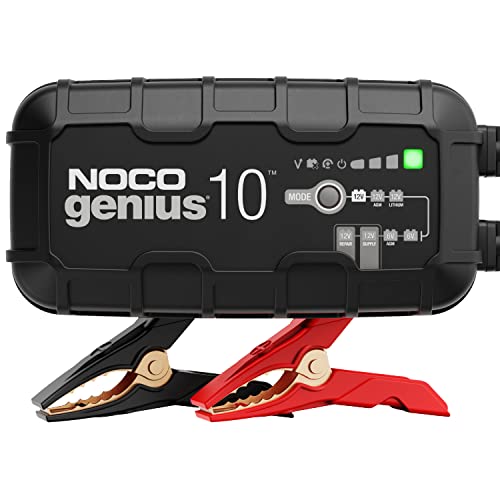
NOCO GENIUS10 10A 6V/12V Smart Charger

OptiMate3 0.8A 12V Motorcycle Charger

NOCO GENIUS5 5A 6V/12V Smart Charger

Schumacher Electric SC1280 6V/12V Charger

NOCO GENIUS2 2A 6V/12V Smart Charger

Schumacher Electric SC1361 6A 12V Charger

Schumacher Electric SC1281 6V/12V Charger

Einhell Power X-Car Charger 3A
What Each Pick Brings To The Table
The 210-AY isn’t a charger on its own. It’s a parallel cabling kit that lets a single BatteryMINDer maintenance unit feed two batteries at once, which makes it a quiet hero for households running a daily driver and a project car in the same driveway. Each lead ends in a fused line with a 15-amp blade fuse tucked into the holder, and the harness pairs with ring terminals, battery clips, or insulated clips depending on how tidy you want the install.
Garage owners with multiple stored vehicles get the most out of this, since one wall-mounted maintainer can handle both a truck battery and a motorcycle battery in parallel. Note that the connectors themselves are sold separately for the actual battery ends, so budget for those if your existing hardware doesn’t already match.
Strong Points
- One maintainer can top off two batteries at the same time
- Inline 15-amp fuses on each leg protect against accidental shorts
- Pairs with three common battery-end connector styles
- SmarTECHnology compatibility keeps charging profiles matched to each battery’s chemistry
Things To Consider
- Ring terminals, clips, and similar hardware are sold separately
- You still need a BatteryMINDer main unit to actually supply current
- Wiring routing through an engine bay requires some planning for heat and moving parts
Key Specs
Built With In Mind
Two-vehicle households with an existing BatteryMINDer charger who want one tidy station instead of two separate maintainers.
Reach For A Different Pick When
The NOCO GENIUS5 is a better match for someone who needs an all-in-one charger rather than an add-on harness.
Where most maintainers hide their brains behind a single LED, the Victron Blue Smart IP65 wears its intelligence on the outside. Built-in Bluetooth ties the unit to the Victron Connect app, so you can watch voltage and current climb in real time on a phone, change the charge profile, and pull up charging history without walking to the garage. The IP65 rating means it shrugs off a little rain and dust, which matters when the charger lives near an open garage door.
Tech-minded car owners get a lot of mileage from that app integration. You can monitor a stored classic from across the room, or confirm a charger is actually pushing current before leaving on a trip. The trade-off is that you do need a compatible phone or tablet to unlock the smartest features.
Useful Strengths
- Bluetooth app shows live charging data and historical trends
- IP65 sealed case handles workshop dust and incidental splashes
- Seven-amp output covers most 12V car batteries in a reasonable window
- Multi-stage charging adapts to common lead-acid battery types
Worth Noting
- Smartest controls require a phone with the Victron Connect app installed
- App features can feel like overkill for someone who just wants a simple maintainer
- Premium positioning pushes it above basic trickle chargers
Feature Snapshot
Whose Shelf It Belongs On
Car owners who enjoy data, like to tweak settings from a phone, and want a charger that can survive a busy workshop.
Consider Something Else When
The NOCO GENIUS10 is the better value for someone who wants similar smart charging without leaning on an app interface.
The GENIUS10 sits in that sweet spot where it can wake up a dead battery and then quietly maintain it for months without supervision. It works across 6V and 12V systems, which means the same unit can handle a vintage tractor on Saturday and a modern SUV on Sunday. The Force Mode is the standout feature: it can take a battery that has dropped to almost zero volts and start pushing current into it, where many chargers refuse to engage at all.
Multi-vehicle households benefit most, since the GENIUS10 covers lead-acid flooded, gel, AGM, and LiFePO4 lithium packs without needing separate chargers. Compared with the smaller GENIUS5, the GENIUS10 cuts charging time noticeably on larger batteries and works harder on trucks and SUVs. For someone juggling a daily car plus a weekend toy, this is the most flexible pick on the list.
Everyday Wins
- Force Mode revives batteries that other chargers refuse to touch
- 10-amp output handles larger truck and SUV batteries efficiently
- Compatible with lead-acid and lithium chemistries for broader use
- Built-in desulfation (a pulse routine that breaks down lead sulfate crystals on battery plates) helps recover stored batteries
- Temperature compensation adjusts voltage for hot garages or cold winters
Trade Offs
- 10 amps is overkill for tiny powersport batteries, which can take longer on lower settings
- Fan-cooled design tends to run audible under heavy load
- Premium pricing compared with single-mode trickle chargers
Quick Facts
The Right Fit
Owners with a mixed garage of daily drivers, classics, and powersport equipment who want one charger that does nearly everything.
Skip It When
The Victron Energy Blue Smart is a better match if you want app-based monitoring and aren’t worried about peak output.
Motorcycle, ATV, and personal watercraft batteries don’t need much current to stay happy, and they suffer badly from overcharged electrolyte. The OptiMate3 leans into that reality with a gentle 0.8-amp output and a multi-step program designed to save batteries that other chargers have given up on. It runs a desulfation stage, a bulk charge, and a long-term maintenance mode that you can leave connected for months.
Riders who store bikes through winter get the most out of this. Plug it in before you hang up the helmet, and the battery should be ready to fire up the first warm day. Compared with the NOCO GENIUS2, the OptiMate3 leans harder into battery rescue than into chemistry flexibility, which makes it a more specialist tool.
A Strong Showing
- Gentle 0.8-amp output suits small motorcycle and powersport batteries
- Multi-step program includes a recovery stage for deeply discharged cells
- Connect-and-forget maintenance mode runs indefinitely without damage
- Compatible with AGM, gel, and standard flooded lead-acid packs
Points To Note
- 0.8 amps is too slow for full-size car or truck batteries
- Limited to 12V systems, so it won’t touch 6V classics
- Specialty positioning means it isn’t a versatile all-household charger
Best Suited To
Riders and powersport owners who want a low-amp maintainer designed specifically for small batteries.
Look Elsewhere When
The NOCO GENIUS10 handles a much wider range of batteries if you want a single unit that covers motorcycle, car, and truck.
The GENIUS5 hits a comfortable spot for most car owners. Five amps is enough current to top off a sedan or small SUV overnight without cooking the battery, and the same charger will quietly maintain that battery through a long business trip. The GENIUS5 supports both 6V and 12V systems and handles the same wide range of chemistries as its bigger GENIUS10 sibling.
Family car owners who don’t want to think about charging profiles get a friendly fit here. It’s a step up from the smaller GENIUS2 in current output, and a sensible downgrade from the GENIUS10 for anyone who doesn’t need to crank-charge larger trucks. The trade-off is that you’ll wait longer than the GENIUS10 on big-displacement batteries.
Reasons It Performs
- 5-amp output suits most sedan and small-SUV batteries
- Force Mode recovers batteries that have dropped close to zero volts
- Wide chemistry support covers lead-acid and lithium packs
- Compact body fits easily in a trunk or shelf
Honest Caveats
- Slower than the GENIUS10 on larger truck batteries
- No engine-start or boost mode like the heavier Schumacher units
- Premium pricing for a 5-amp unit compared with basic trickle chargers
Technical Highlights
Perfect Match For
Sedan and small-SUV owners who want a versatile smart charger without paying for truck-class output.
Swap It Out When
The NOCO GENIUS10 makes more sense if your garage includes a larger truck or SUV battery.
The Schumacher SC1280 brings genuine workshop muscle to the list. Microprocessor-controlled charging means it manages its own multi-stage routine while you focus on other jobs, and the 15-amp output pushes a big truck battery from low to ready faster than most consumer chargers can. It covers 6V and 12V systems, plus AGM, gel, and deep-cycle packs, so it can move between a vintage daily driver and a marine battery without skipping a beat.
DIYers with a real garage get the most out of this. The onboard diagnostics and reconditioning mode help recover batteries that have been sitting for too long, which is a common reality in a shop setting. The honest read is that the SC1280 is bigger and louder than the NOCO units, and you’ll want a permanent spot on a bench for it.
Positive Points
- 15-amp output charges large batteries in less time than maintainers
- Microprocessor adjusts charge stages automatically across battery types
- Reconditioning mode helps recover sulfated batteries
- Compatible with AGM, gel, deep-cycle, and standard flooded batteries
Soft Spots
- Bench-top footprint takes up more space than compact NOCO units
- Higher amperage means more heat and fan noise under heavy load
- More complex controls feel like overkill for simple maintenance duty
Who It Suits Best
Garage owners and serious DIYers who want a higher-output charger for trucks, SUVs, and deep-cycle batteries.
Not Your Match When
The NOCO GENIUS5 is a quieter, smaller alternative if you mostly tend to a single sedan.
Small batteries deserve a small charger, and the GENIUS2 fits that brief nicely. Two amps is plenty for motorcycles, lawn tractors, and the occasional weekend car, and the body is small enough to toss in a trunk without thinking about it. Despite the modest output, it still offers Force Mode and works across 6V and 12V lead-acid packs, plus LiFePO4 lithium batteries.
Anyone running a smaller fleet, or an apartment dweller with just a scooter or motorcycle, will find the GENIUS2 easy to live with. Compared with the GENIUS5 and GENIUS10, it lacks the punch to revive a deeply discharged truck battery quickly, but for the right size of vehicle it does exactly what you need.
Why It Works Well
- Compact and lightweight for easy storage or trunk carry
- Force Mode revives batteries that have dropped close to zero volts
- Works with lead-acid and lithium battery chemistries
- Quiet operation since it barely generates heat at 2 amps
Worth Bearing In Mind
- 2 amps is slow for full-size automotive batteries
- No engine-start or boost function
- Premium price relative to basic 1-amp trickle chargers
Feature Snapshot
Made For
Owners of motorcycles, scooters, lawn tractors, and small classic cars who want a tidy, low-amp charger.
A Better Fit Elsewhere
The NOCO GENIUS10 is the smarter pick if you also need to maintain a full-size daily driver.
The SC1361 packs a small but useful engine-start assist into a chassis that still fits on a shelf. Six amps of charging current is enough for sedans and small SUVs, and when a battery simply won’t turn an engine over, the unit can push a short, high-amp boost to get things moving. That combination is rare in this size class.
Farm owners and small-shop DIYers who occasionally need both charging and a quick engine boost will appreciate the dual role. The trade-off compared with the bigger SC1281 is that the SC1361 sticks to 12V systems, so it can’t help with a 6V classic.
Everyday Advantages
- Combined charger and engine-start function in one unit
- 6-amp charging suits most daily-driver batteries
- Compact bench footprint for crowded work areas
- Microprocessor-controlled charging adapts to battery condition
Small Limitations
- 12V-only, so 6V vehicles need a different charger
- Engine-start assist is best for occasional emergency use, not daily shop work
- Heavier than a plain maintainer and not designed for permanent trunk storage
Who Should Grab It
Owners who want a single 12V unit that handles routine charging and the occasional dead-engine situation.
Another Choice May Suit
The Schumacher SC1281 is the better match for someone who needs both 6V and 12V coverage plus stronger engine-starting power.
The SC1281 leans into flexibility. Six amps of charging covers cars and small trucks comfortably, and the engine-start assist adds a serious safety net for stubborn cold mornings. Both 6V and 12V systems are supported, which makes this a useful tool around a workshop that might see a vintage tractor one week and a modern pickup the next.
Workshop owners benefit most from the broad voltage support. You may find the body a bit large for permanent mounting in a trunk, but it earns its place on a bench. Compared with the smaller SC1361, the SC1281 adds 6V support and a stronger engine-start function for tougher situations.
A Few Strong Suits
- Engine-start assist provides backup for stubborn batteries
- 6V and 12V support covers classics and modern vehicles
- Multi-stage charging managed automatically by the microprocessor
- Useful for cars, trucks, SUVs, and deep-cycle batteries
Possible Compromises
- Larger footprint than typical consumer chargers
- Engine-start mode requires the unit to be plugged into a wall outlet
- Heavier than a basic maintainer, so it’s less portable for travel
Right Fit For
Workshop and garage owners who want a 6V/12V charger that also offers engine-start capability for emergencies.
Where A Sibling Pick Shines
The NOCO GENIUS10 is the smarter option for someone who values lithium battery support over engine-start power.
The Einhell Power X-Car Charger is built for a different reason than the rest of this list. Instead of topping off a 12V car battery, it charges the 18V Li-ion battery packs from the Einhell Power X-Change cordless tool system, using a 12V car-outlet plug so you can top up batteries between jobs without AC power. The seven-stage LED display keeps you posted on progress.
Contractors and serious DIYers who already own Einhell cordless tools get a practical travel companion here. The honest read is that this isn’t a charger for your car’s starter battery, so it only makes sense if you’re already invested in the Einhell ecosystem.
What Pays Off
- Charges Power X-Change 18V Li-ion batteries on the go
- 12V plug lets you charge from a vehicle outlet
- Seven-stage LED display shows charging status at a glance
- Permanent battery monitoring manages charge health
Where It May Fall Short
- Not designed to charge standard 12V automotive starter batteries
- 3-amp output is slow for higher-capacity Power X-Change packs
- Limited usefulness outside the Einhell tool ecosystem
Who Will Love This
Tradespeople and homeowners already invested in the Einhell Power X-Change cordless tool lineup.
Where Another Pick Suits Better
The NOCO GENIUS2 is the right tool for the job if you need to maintain a small car or motorcycle battery.
What Matters Before Choosing Your Next Charger
The first question is really about battery size. A motorcycle or lawn tractor battery asks for a low-amp maintainer in the 0.8 to 2-amp range, while a full-size truck battery benefits from 10 amps or more. Mismatched current leads to either slow charging or unnecessary stress on a smaller battery.
Voltage and chemistry support comes next. Modern chargers that handle 6V and 12V systems, plus flooded, AGM, gel, and LiFePO4 chemistries, save you from buying multiple units as your garage changes. Desulfation modes and temperature compensation matter for stored vehicles, since they extend battery life through long winters.
Think about how you’ll actually use the charger. A permanently mounted workshop tool can be larger and louder, while a unit that lives in a trunk needs to be compact and quiet. Engine-start assist is useful for occasional emergencies but unnecessary if you only want maintenance. Bluetooth and app controls are genuinely helpful for data-driven owners and irrelevant if you prefer set-and-forget simplicity.
Key Considerations Across These Picks
Common Buying Mistakes
The most common slip-up is buying too much charger for too little battery. A 15-amp unit sounds powerful, but on a small motorcycle battery it can shorten cell life if left connected longer than needed. Smart chargers with adjustable modes handle this automatically, while basic units require you to monitor timing.
Another frequent trap is ignoring chemistry compatibility. Lithium and lead-acid batteries charge differently, and forcing the wrong profile can damage cells. Match the charger to the batteries you actually own today, plus the ones you’re likely to add in the next few years.
When Paying More Pays Off
Premium pricing on smart chargers usually buys smarter charging stages, broader chemistry support, and recovery modes for neglected batteries. The NOCO GENIUS10’s Force Mode is a clear example: a cheaper charger may refuse to engage at all on a deeply discharged battery, while a premium unit can bring it back from near-zero volts. For multi-vehicle households, that flexibility tends to justify the cost.
Frequently Asked Questions
How long does it take to charge a dead car battery?
Most automotive battery chargers in the 4 to 10-amp range will bring a fully depleted 12V car battery to a usable level in several hours, with a full charge taking longer depending on amp rating and battery size.
Can I leave a smart charger connected indefinitely?
Yes, modern smart chargers with float or maintenance modes are designed to stay connected for weeks or months without overcharging the battery.
Do I need a special charger for AGM or lithium batteries?
You need a charger that explicitly lists AGM or LiFePO4 support, since these chemistries use different voltage profiles than standard flooded lead-acid batteries.
What’s the difference between a charger and a maintainer?
A charger pushes higher current to refill a depleted battery, while a maintainer delivers low current over long periods to keep a stored battery topped off.
Is engine-start assist worth having on a charger?
Engine-start assist is worth it if you work in cold climates or own vehicles that sit for long stretches, since it can get you moving without calling for a jump.
Closing Remarks
The right automotive battery charger depends less on specs and more on what actually sits in your garage. A motorcycle-only household needs different tools than a workshop with three vehicles, and a casual driver needs less than a serious hobbyist. Match the charger to your real fleet, and the rest takes care of itself.