Drop-in battery cable work feels like plumbing with electricity. You are routing current from a battery to whatever demands it, and the wrong cable runs hot, fights you around tight bends, or corrodes inside a year. The right cable, by contrast, slides through engine bays, holds tight under vibration, and shrugs off the kind of moisture and heat that kills cheap copper.
This list looks at ten solid options across common gauge sizes, length bundles, and use cases. Several come with terminals pre-crimped, a few ship as raw spools for custom runs, and one delivers a different job entirely: the end terminals that actually bolt onto the battery post. The honest read is that gauge, copper quality, and terminal fit matter more than brand recognition.
A Closer Look At The Lineup

WINDYNATION 2/0 AWG Welding Lead & Car Battery Copper Cable

Sky High Car Audio 1/0 OFC Power Ground Wire
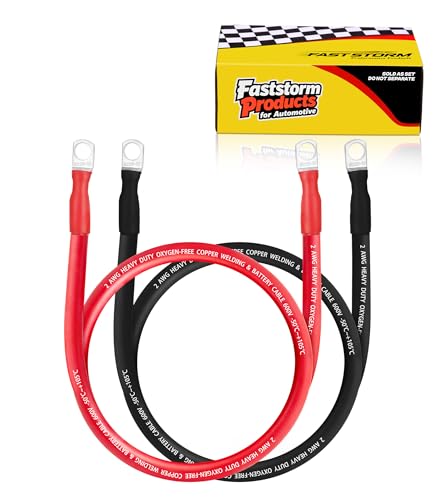
FASTSTORM 2 AWG Battery Cable 2FT Pair with Terminals
FASTSTORM 2 AWG Battery Cable 3FT Pair with Terminals

FASTSTORM 6 AWG Battery Cable 20FT Pair with Lugs

MOOKEERF 4 Gauge Battery Cable 3FT Pair

KnuKonceptz Kolossus Flex Kable 0 Gauge OFC (10 ft)

Quick Cable Lead Military Style Battery Terminal Pair

FASTSTORM 4 AWG Battery Cable 3FT Pair with Terminals

FASTSTORM 2 AWG Battery Cable 10FT Pair with Lugs
What Each Pick Brings To The Table
WINDYNATION’s 2/0 gauge cable ships as raw, unterminated lead wire in red and black, sized for serious current work. The 2/0 AWG rating is one of the thickest commonly used in 12V mobile applications, and the copper conductor stays flexible enough to bend around engine bay obstacles without kinking. Unlike the pre-terminated FASTSTORM and MOOKEERF options later in this list, this one is built for people who want to cut, crimp, and route to spec.
It is the right pick when you are building a high-amperage run for a winch, a large inverter, or a battery bank in an off-grid solar setup. For most daily driving, the gauge is overkill, and you will also need to source lugs and a crimper separately.
Useful Strengths
- 2/0 AWG copper handles very high current loads without significant voltage drop over long distances.
- Highly flexible jacket bends easily through tight routing paths.
- Available in multiple length options so you buy only what you need.
- Works across automotive, solar, RV, and inverter applications.
- Raw lead wire lets you cut custom lengths and pick your own terminal hardware.
Honest Caveats
- No terminals included, so a separate crimper and lug purchase is required.
- For standard car starting and accessory loads, the gauge is heavier than necessary.
- Bulkier cable can be harder to hide in factory-style routing.
Key Specs
Who It Suits Best
DIYers running heavy inverter banks, winches, or solar storage who want to cut and crimp their own runs.
Consider Something Else When
Quick Cable Lead Military Style Battery Terminals are a better fit when the actual battery post hardware is the failing part, not the cable length.
Sky High Car Audio’s 1/0 gauge OFC cable is built for one specific job: feeding high-current amplifiers with the cleanest ground path possible. Oxygen-free copper (OFC) reduces oxidation at the strand level, which matters in car audio where resistance compounds into noise and voltage sag. The 5 ft length is sized for a typical amp-to-battery run in a trunk-mounted install.
It pairs naturally with the KnuKonceptz Kolossus Flex Kable later in this list, which handles the power side at a similar gauge. For non-audio applications, the 1/0 rating is more conductor than most vehicles need.
A Few Strong Suits
- OFC construction reduces resistance compared to CCA alternatives.
- 1/0 gauge handles the current demands of serious amplifier setups.
- 5 ft length fits common rear-mounted amp locations.
- Flexible jacket routes around seat mounts and through factory grommets.
Points To Keep In Mind
- Single-color red wire means you will need a separate ground or color discipline for the negative run.
- 5 ft may run short in larger vehicles like trucks and full-size SUVs.
- No terminals included, so ring lugs and a crimper are add-ons.
Made For
Car audio enthusiasts upgrading ground runs for a single large amplifier or a multi-amp rack.
Skip It When
The MOOKEERF 4 Gauge Battery Cable is a more appropriate choice for general automotive and inverter use where 1/0 gauge is overkill.
The FASTSTORM 2 ft 2 AWG pair is the shortest option on the list and is meant for very compact links. Think battery-to-battery jumpers under a seat, a tight inverter tie-in, or a secondary battery mount in a pickup bed. The 2 AWG pure copper conductor moves significant current while staying small enough to tuck behind trim panels.
Compare that to the 3 ft FASTSTORM 2 AWG cable further down, which gives you modest extra reach for slightly more spread-out installations. The 2 ft version really shines only when space is at a premium.
The Practical Payoff
- 2 AWG copper handles high current for inverter and dual-battery use.
- Pre-crimped 3/8″ lugs cut install time substantially.
- Short length avoids excess cable clutter in tight installs.
- Red and black pair keeps polarity obvious at a glance.
Less Ideal Details
- 2 ft is too short for any run that crosses a vehicle firewall or reaches a trunk.
- Pre-attached lugs cannot be repositioned if terminal spacing is unusual.
Feature Snapshot
Best Suited To
Installers linking two batteries or an inverter mounted inches from the battery bank.
A Better Fit Elsewhere
The FASTSTORM 6 AWG 20FT Pair is a stronger match when you need to run cable through a boat hull or across a van conversion.
The 3 ft FASTSTORM 2 AWG pair extends the reach just enough to bridge a battery mounted under the hood to a secondary battery behind the firewall or in a cabin cubby. It carries the same 3/8″ tin-plated copper lugs found on the 2 ft version, so swapping between the two feels familiar if you size up.
For most passenger vehicles, 3 ft hits a sweet spot. You get slack for clean routing without burying excess cable behind panels.
Well-Handled Touches
- 3/8″ terminals match common battery and inverter stud sizes.
- Pure copper conductor delivers strong current flow with minimal loss.
- Flexible jacket navigates around engine components without kinking.
- Red and black pair simplifies polarity identification at install.
Some Limits To Know
- 3 ft is still too short for trunk-mounted audio or rear RV battery placements.
- Tin plating helps corrosion resistance, but marine splash zones still benefit from additional heat-shrink sealing.
Right Fit For
People adding a secondary battery under the hood or in a nearby cabin compartment without custom cable cutting.
Reach For A Different Pick When
The FASTSTORM 2 AWG 10FT Pair makes more sense for full-cab or trailer runs where 3 ft simply will not reach.
FASTSTORM’s 6 AWG 20 ft pair is the long-distance runner of the list. The 6 gauge rating sits between the heavier inverter cables and lighter accessory wiring, and the 20 ft per color gives you room to span an RV, a boat hull, or a van conversion without splicing. The kit ships with five 5/16″ and five 3/8″ tinned copper lugs, plus heat shrink tubing for sealed terminations.
For shorter engine bay work, the 20 ft length becomes a liability. Excess cable can introduce voltage drop noise in audio runs and just gets in the way of clean routing.
What It Does Well
- 20 ft per leg covers most full-vehicle, boat, and RV runs.
- Tinned copper lugs resist corrosion in marine and outdoor use.
- Heat shrink tubing included for proper strain relief and sealing.
- 6 AWG suits moderate loads like lighting circuits and small inverters.
Possible Compromises
- 20 ft is excessive for typical under-hood battery replacements.
- 6 AWG is not thick enough for high-amperage inverters over 1000W.
Quick Facts
Who Will Love This
Van builders, boat owners, and RV renovators running accessory circuits across long distances.
Not Your Match When
The Sky High Car Audio 1/0 OFC Power Ground Wire is a stronger fit for car audio installers who need thicker gauge for amplifiers.
MOOKEERF’s 4 gauge cable lands in the middle of the gauge range and works for the broadest spread of vehicles. The 469 strands of 0.24mm copper keep the cable extremely flexible, which matters when routing around tight engine components or through factory grommets. Rated from -40°F to +221°F, the jacket tolerates under-hood heat swings and resists most solvents.
It serves the same general purpose as the FASTSTORM 4 AWG 3 ft pair, but ships without pre-crimped terminals. That gives you freedom to cut and terminate exactly where you need, at the cost of a little extra install work.
Notable Upsides
- 4 AWG fits a wide range of cars, light trucks, and small inverters.
- Stranded OFC conductor bends tightly without cracking.
- Broad temperature rating supports harsh under-hood environments.
- Strand count contributes to long-term flexibility over years of vibration.
Trade-Offs To Consider
- No lugs or terminals included.
- 4 AWG is too thin for high-amperage amplifier or winch installations.
- Solvent resistance helps, but the jacket still needs routing away from sharp exhaust edges.
Key Product Details
Perfect Match For
Daily drivers and weekend DIYers replacing worn factory battery cables with a flexible, mid-gauge upgrade.
Where Another Pick Suits Better
KnuKonceptz Kolossus Flex Kable is a better fit when you are building a high-current 0 or 1/0 gauge audio system and want tinned OFC strands.
The KnuKonceptz Kolossus Flex Kable takes the 1/0 AWG concept and pushes it further with 5145 strands of tinned oxygen-free copper. The tin coating on each strand is the real story: it blocks oxygen from reaching the copper, which dramatically slows the corrosion that turns bare copper green in a few years. The cable also exceeds AWG specifications, meaning you get more conductor than the gauge label claims.
It is a step up from the Sky High Car Audio 1/0 OFC cable earlier in the list, in both strand count and corrosion protection. The trade-off is price, but the long-term durability often justifies it for daily-driven audio builds.
The Value In It
- 5145 tinned strands resist oxidation far better than bare copper.
- Exceeds AWG conductor area specifications for a true 0 gauge rating.
- Flexible jacket handles tight amplifier rack and trunk routing.
- 10 ft length covers most full-vehicle audio power runs.
Worth Bearing In Mind
- Single 10 ft red cable means you may need a separate ground or extended run.
- 0 gauge is overkill for factory audio systems without a large amplifier.
- Tinned strands need quality lugs rated for the conductor to avoid loose crimps.
Who Should Grab It
Car audio competitors and high-power system owners who need tinned OFC and extra conductor headroom.
Look Elsewhere When
FASTSTORM 2 AWG 10FT Pair is a more cost-effective match for a moderate inverter or dual-battery setup where 0 gauge is unnecessary.
Quick Cable’s military-style terminals solve a different problem than the rest of the list. Instead of cable, you get a positive and negative lead terminal set with zinc-plated steel fasteners. The 3/8″ stud on the positive post accommodates multiple cable connections, and the low 3/4″ profile keeps the setup from interfering with battery hold-downs or close-fitting hoods.
Where every other item on this list handles the run between battery and load, this one handles the connection right at the post. Stock terminals corrode and crack, especially in older vehicles, and a clamp failure on a battery cable is one of the most common no-start causes.
What Stands Out
- Exceeds military specification for positive and negative terminals.
- Long bolts accept additional power, ground, and accessory ring terminals.
- Lead body clamps tightly to the battery post for solid contact.
- Made in the USA with consistent casting quality.
Smaller Caveats
- Lead terminals are heavier than aftermarket brass or copper options.
- Pair only, so vehicles with side-post batteries need a different terminal type.
Built With In Mind
Owners of older vehicles with corroded or loose factory battery terminals who want a service-grade replacement.
Swap It Out When
WINDYNATION 2/0 AWG Cable is the better starting point when the existing cable itself, not the terminal, is the weak link in the system.
The 4 AWG FASTSTORM 3 ft pair brings the same pre-lugged convenience as the 2 AWG version, but at a slightly thinner gauge. For mid-sized loads, that balance can actually be the smarter call. 4 gauge handles most moderate inverter setups and small winch systems without the bulk of 2 AWG routing through the firewall.
Compared to the MOOKEERF 4 gauge cable earlier, the trade-off is the opposite of what you might expect. FASTSTORM ships with lugs already attached, while MOOKEERF requires you to source and crimp your own.
Why It Works Well
- Pre-crimped 3/8″ lugs speed up the install significantly.
- 4 AWG handles 12V loads up to moderate inverters cleanly.
- 3 ft length fits common secondary battery placements.
- Red and black pair keeps polarity obvious during install.
What To Weigh
- 4 AWG is undersized for amplifiers drawing serious current.
- 3 ft may not reach a trunk-mounted battery or rear inverter location.
Feature Rundown
Whose Shelf It Belongs On
Garage hobbyists running a small inverter or accessory battery who want a clean, lug-free install.
Another Choice May Suit
FASTSTORM 2 AWG 3FT Pair is a smarter match when you need the extra current headroom for heavier inverter loads.
The 10 ft 2 AWG pair is the long-distance version of FASTSTORM’s pre-lugged line, and it works well for full-cab runs, trailer battery placements, or rear-of-vehicle inverter installations. The kit ships with five 5/16″ and five 3/8″ tinned copper lugs, plus heat shrink tubing for sealed terminations.
Compared to the 6 AWG 20 ft FASTSTORM pair, the 2 AWG 10 ft option handles substantially more current over a shorter distance. The catch is that 10 ft at 2 AWG is heavier and stiffer to route than the same length at 6 AWG.
Notable Gains
- 10 ft per leg covers most cross-vehicle battery and inverter placements.
- 2 AWG supports high-amperage loads for larger inverters.
- Tinned copper lugs handle moisture and corrosion well.
- Heat shrink tubing included for proper termination sealing.
Smaller Caveats
- 10 ft is shorter than full RV or trailer runs require.
- 2 AWG cable is stiff and harder to bend in tight engine bays.
Essential Details
Who Should Grab It
Van lifers and overlanders running an inverter to a rear cabinet or auxiliary battery without buying extra hardware.
Look Elsewhere When
FASTSTORM 6 AWG 20FT Pair is a smarter choice for accessory circuits that prioritize flexibility and reach over current capacity.
Choosing The Right Cable Gauge And Length
Gauge and length work together. Thicker wire (lower AWG number) carries more current with less voltage drop, but heavier gauge cable is stiffer, harder to route, and more expensive. For typical car starting batteries, 4 to 2 AWG is the common range, and going thicker helps only when the run is long or the load is high.
Length matters just as much. A 10 ft run at 4 AWG behaves very differently from a 1 ft run at the same gauge. Longer cables accumulate resistance, which shows up as dimming lights, weak inverter output, and slow cranking. The general rule: size up one gauge for every 10 to 15 feet of additional run, especially for inverter and audio applications.
Conductor material is the third decision. Pure copper, sometimes labeled OFC, has lower resistance than copper-clad aluminum (CCA). For battery cables specifically, the difference matters because these cables carry high current intermittently, and any extra resistance translates directly to voltage drop at the load. Tinned copper adds a corrosion-resistant layer that pays off in marine, off-road, and salt-belt environments.
Finally, plan your terminations before you buy. Lugs, ring terminals, and battery post clamps each come in different stud sizes, and the cable you choose should match the hardware on your battery, chassis ground, and load. The Quick Cable Lead Military Style Battery Terminals in this list are worth pairing with any cable when the factory terminals are worn or loose.
Key Considerations Across These Picks
Where Shoppers Go Wrong
The most common mistake is buying cable that is too thin for the actual run length. A 4 AWG cable that performs well at 3 ft can drop enough voltage across 15 ft to make an inverter underperform or headlights dim at idle. Measure the routing path carefully, including any bends and chassis ground points, before committing to a length.
The other trap is mixing CCA and OFC cables in the same system. CCA cables cost less, but their higher resistance creates uneven current sharing across battery banks. Stick with OFC throughout any multi-battery setup to keep charging balanced.
The Upgrade Payoff
Higher-tier cables earn their premium through conductor purity, strand count, and corrosion protection. The KnuKonceptz Kolossus Flex Kable in this list, for example, uses tinned OFC strands that resist oxidation for years longer than bare copper in the same conditions. You pay more up front, but you avoid the green-copper failure mode that takes out cheaper cables after a few winters.
The upgrade makes sense when the cable sits in a hard-to-reach location, runs through a salt-exposed environment, or feeds a load where voltage drop is a performance problem. For a basic battery relocation in a garage-kept daily driver, the mid-tier options are plenty.
Frequently Asked Questions
What gauge battery cable do most cars use? Most factory automotive battery cables run between 2 AWG and 6 AWG, depending on the starter motor’s current draw. 4 AWG is a common middle ground for replacements and dual-battery additions.
Does OFC really matter for battery cables? OFC (oxygen-free copper) has lower resistance than copper-clad aluminum, which reduces voltage drop and runs cooler under load. For high-current applications like inverters and audio systems, the difference is noticeable.
How long should my battery cables be? Measure the actual routing path, including any bends around engine components and through the firewall. Add about 10% extra for slack and strain relief, but avoid leaving large loops that can chafe or trap heat.
Can I use welding cable as battery cable? Welding cable and battery cable use similar stranded copper construction, and many installers use them interchangeably. Make sure the insulation is rated for the temperature and chemical exposure of your engine bay.
How do I know if my battery terminals need replacing? Visible corrosion, loose clamping on the post, or intermittent electrical issues after a battery replacement are the usual signs. Upgrading to military-style terminals like the Quick Cable pair in this list is a solid fix.
Closing Remarks
The honest read is that most daily-driven vehicles never need anything thicker than 4 AWG, and a flexible OFC cable with the right lug hardware covers the bulk of real-world jobs. Pick the gauge and length for your specific run, match the terminations to your battery and load, and you will avoid the most common cable failures. The list above is a strong starting point, whether you are wiring a basic replacement, an inverter, or a full audio system.