A dead battery rarely announces itself at a convenient moment. Cold mornings, seasonal toys sitting in storage, classic cars driven only on weekends, and the occasional forgotten dome light can all leave you stranded, and that’s exactly where a dependable auto battery charger earns its place on the shelf. The right unit quietly tops off a battery during weeks of inactivity, rescues you after a missed start, and even extends the life of batteries that would otherwise sulfate and die young. This list focuses on chargers suited to real garages and driveways, from low-amp maintainers for motorcycles and lawn tractors to higher-output units that can handle trucks, SUVs, and marine batteries. Each pick below has been chosen for a specific role, with honest notes on trade-offs so you can match the charger to your vehicles rather than chasing the biggest number on the box.
The Picks In Brief

Battery Tender Junior 12V 750mA Charger and Maintainer
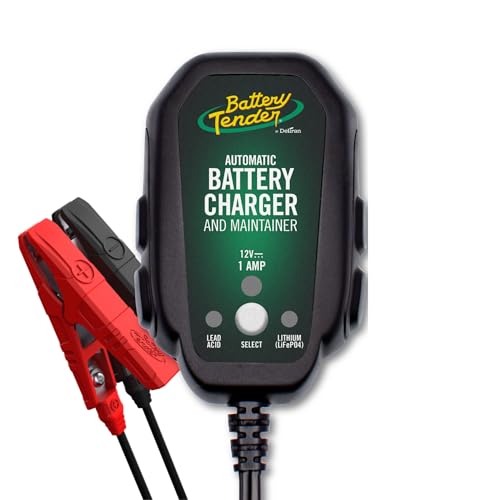
Battery Tender Junior 12V 800mA Lead Acid/Lithium Charger

Battery Tender Plus 12V 1.25A Charger and Maintainer

Schumacher SL1674 12V Lithium Jump Starter Power Pack

NOCO GENIUS1 1A 6V/12V Smart Charger
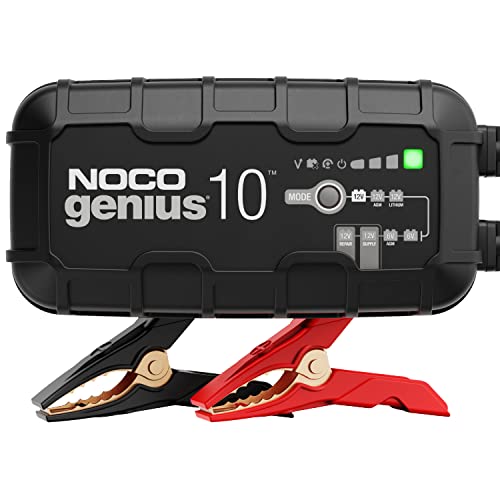
NOCO GENIUS10 10A 6V/12V Smart Charger

NOCO GENIUS5 5A 6V/12V Smart Charger

Schumacher SC1355 1.5A 6V/12V Charger and Maintainer

Schumacher SC1280 12V/6V Trickle Charger and Maintainer

Schumacher SC1445 6/12V 250A Wheeled Starter/Charger
A Closer Look At Each Pick
Few chargers have earned the long-term reputation of the Battery Tender Junior. At 750mA, it’s deliberately gentle, and that’s exactly the point: this is a maintainer designed to sit connected for weeks at a time without overcooking a battery. Plug it into a motorcycle, ATV, or small lawn tractor before winter storage, and it tops the battery off, then idles in float mode holding voltage steady. Lead-acid flooded, AGM, and gel chemistries are all covered, which makes it a flexible choice for a mixed powersports fleet.
For a small powersports battery, the 750mA output can feel modest compared with the NOCO GENIUS1 further down this list. Owners with deeply discharged or larger batteries may want more amperage. Still, for its intended role, the Junior remains one of the most proven designs in the category.
Practical Pluses
- Four-step charging program (initialization, bulk, absorption, float) keeps batteries topped without overcharging.
- Compatible with 12V flooded, AGM, and gel batteries for wide powersports coverage.
- Lightweight and small enough to leave permanently mounted in a bike or ATV for months.
- Spark-resistant connection sequence and reverse-polarity protection reduce hookup mishaps.
Things To Consider
- 750mA is slow for reviving a deeply discharged battery on a tight schedule.
- No lithium support, so newer LiFePO4 batteries need a different unit.
Feature Snapshot
Whose Garage It Belongs On
Riders and powersports owners who store bikes, ATVs, or lawn tractors over winter and want a quiet, set-and-forget maintainer.
Look Elsewhere When
You run lithium (LiFePO4) batteries in any of your vehicles, in which case the Battery Tender Junior 12V 800mA Lead Acid/Lithium Charger handles both chemistries on a single unit.
If the first Battery Tender Junior feels a little too narrow in scope, this updated model adds the one feature many riders now want: lithium support. LiFePO4 batteries are increasingly common in modern motorcycles and ATVs because they’re lighter and hold their charge longer in storage, but they demand a different charging profile than flooded or AGM cells. A push-button chemistry switch on the front lets you toggle between lead-acid and lithium, so a household with both battery types doesn’t need two separate maintainers cluttering the bench.
Output climbs slightly to 800mA, which is still a maintenance pace rather than a recovery pace. For owners of small-to-mid powersports batteries who want one maintainer that handles everything from an old AGM to a new lithium pack, the trade-off versus the original Junior is simple: pay a touch more for genuine chemistry flexibility.
Points In Its Favor
- Selectable charging mode covers both lead-acid (AGM, flooded, gel) and lithium (LiFePO4) batteries.
- 800mA output is a slight step up from the original 750mA Junior for marginally faster top-offs.
- Same compact form factor, so it tucks into a saddlebag or shop drawer without taking up bench space.
Honest Caveats
- Still too gentle to rescue a deeply discharged battery quickly, especially in cold weather.
- Chemistry switch requires the user to confirm battery type on each session, a small step that can be missed.
Made For
Households running a mix of lead-acid and lithium powersports batteries who want a single compact maintainer rather than two dedicated units.
Not Your Match When
You mostly work on larger car or truck batteries, where the NOCO GENIUS10 10A 6V/12V Smart Charger offers the higher amperage those batteries respond to.
Step up in amperage and you land at the Battery Tender Plus, a 1.25-amp unit that still behaves like a maintainer but brings noticeably more muscle to the bulk charge stage. The extra current makes a real difference for slightly larger batteries: bigger motorcycles, riding lawn mowers, side-by-sides, and small classic cars. It runs the same four-step program as the Junior (initialization, bulk, absorption, float), so the long-term storage behavior is familiar.
Compatibility leans toward AGM and flooded lead-acid formats, which covers the bulk of vehicles in a typical driveway. Compared with the second Battery Tender on this list, you trade away the lithium switch for higher output, so think of this as the choice for someone with conventional batteries who simply wants faster, more confident top-offs.
Everyday Wins
- 1.25A output recharges larger powersports batteries more quickly than the Junior models.
- Four-stage charging program with float mode for worry-free long-term connection.
- Solid fit for AGM and flooded batteries common in motorcycles, ATVs, and classic cars.
Room For Improvement
- No native lithium (LiFePO4) support, so newer lithium-equipped bikes need a different unit.
- Still a maintainer at heart, not a high-amperage charger for cars or trucks.
Best Suited To
Owners of larger powersports vehicles and classic-car hobbyists who need more charging headroom than a Junior offers but still want a plug-and-forget experience.
Skip It When
Your fleet includes any lithium powersports batteries, where the Battery Tender Junior 12V 800mA Lead Acid/Lithium Charger covers both chemistries in one box.
The Schumacher SL1674 isn’t a garage charger, it’s a roadside rescue kit in a small box. Rated at 1500 amps of jump-starting power, the lithium pack can crank most 12V cars, trucks, and SUVs without needing a second vehicle for a jump. Beyond the jump function, the unit doubles as a portable power bank: USB-A and USB-C fast charging for phones and tablets, a 10W wireless charging pad on top for compatible phones, and a multi-mode LED flashlight for nighttime breakdowns or campsite use.
Think of the SL1674 as a complement to a wall charger rather than a replacement. Where the Battery Tender Junior is something you leave clipped to a bike all winter, this is the device that lives in your trunk. It’s the kind of gear that pays for itself the first time you turn the key on a freezing January morning and nothing happens.
Positive Takeaways
- 1500A peak jump-starting power handles most 12V gas and diesel engines without a second vehicle.
- Integrated 10W wireless charging pad plus USB-A and USB-C fast charging ports for travel electronics.
- Multi-mode LED flashlight adds genuine utility for roadside repairs and power outages.
Points To Keep In Mind
- Internal battery needs periodic recharging, and that habit is easy to forget between emergencies.
- Not designed as a long-term maintainer, so it won’t replace a wall charger for seasonal storage.
Who It Suits Best
Daily commuters, road-trippers, and anyone whose vehicle sits in parking lots overnight who wants a self-contained emergency kit for dead-battery moments.
Another Choice May Suit
You mostly charge at home and rarely travel far from a garage, in which case the Schumacher SC1280 12V/6V Trickle Charger and Maintainer is a more useful permanent install.
Small enough to fit in a glovebox and smart enough to leave connected indefinitely, the GENIUS1 is the lightest unit on this list. It’s a 1-amp charger and maintainer that works with both 6V and 12V batteries across lead-acid (AGM, gel, flooded, deep-cycle) and lithium-ion (LiFePO4) chemistries. For owners of vintage 6V classics or small modern lithium setups, having a single charger that speaks both voltages is genuinely handy.
The trade-off is raw output. At 1A, the GENIUS1 is best for batteries up to about 30 amp-hours, which covers motorcycles, lawn equipment, and small classic cars. It also includes a desulfation mode for reviving lightly sulfated batteries, and a force mode that lets you push charge into a deeply discharged battery the unit might otherwise refuse.
Good Reasons To Consider
- Dual 6V/12V compatibility opens up classic cars, vintage tractors, and modern powersports on one device.
- Supports lead-acid (AGM, gel, flooded, deep-cycle) and lithium-ion (LiFePO4) chemistries.
- Built-in desulfation and force modes help recover neglected batteries the unit would otherwise reject.
Trade Offs
- 1A output is slow on anything larger than a small powersports battery.
- Lead-acid and lithium handling on one unit means owners must double-check the selected mode before connecting.
Quick Facts
Right Fit For
Owners of small vehicles and 6V classic-car restorers who want a tiny, multi-chemistry charger that doesn’t take up valuable bench space.
Swap It Out When
You regularly charge full-size car or truck batteries, where the NOCO GENIUS10 10A 6V/12V Smart Charger delivers ten times the output in a still-modest footprint.
When a 1-amp maintainer isn’t enough and a 3-amp trickle still feels slow, the GENIUS10 steps in with real charging muscle. At 10 amps, it handles batteries up to about 230 amp-hours, which covers everything from a small sedan to a heavy-duty truck or a large marine deep-cycle bank. It also covers both 6V and 12V systems and works with lead-acid (wet, gel, AGM) plus lithium LiFePO4 chemistries, so one unit can serve an entire household fleet.
Where the GENIUS1 was a maintainer first and a charger second, this is the reverse. Overcharge protection, desulfation, temperature compensation, and a force mode for stubborn deeply discharged batteries all show up on the spec sheet. It’s the closest thing on this list to a do-everything garage charger for someone who doesn’t want to think about amperage.
Everyday Perks
- 10A output handles batteries up to roughly 230Ah, including trucks, SUVs, and large marine banks.
- Temperature compensation adjusts charge profile to ambient conditions for more accurate top-offs.
- Force mode can push charge into deeply discharged batteries other chargers refuse to start.
- Compatible with 6V and 12V lead-acid (wet, gel, AGM) and lithium (LiFePO4) batteries.
Less Ideal Details
- Larger and heavier than the GENIUS1 or GENIUS5, so it’s a permanent shelf unit rather than a grab-and-go tool.
- Higher output means more heat under heavy use, so ventilation around the unit matters in a closed garage.
Who Will Love This
Multi-vehicle households and hobbyists who want one capable charger to cover everything from a 6V tractor to a 12V truck battery.
Reach For A Different Pick When
You only maintain small powersports batteries, where the NOCO GENIUS1 1A 6V/12V Smart Charger does the same job in a much smaller package.
The GENIUS5 is the middle child of NOCO’s smart-charger line, and for most daily drivers it’s the sweet spot. At 5 amps and rated for batteries up to roughly 120 amp-hours, it comfortably handles a typical car or SUV battery without the bulk or cost of the 10-amp version. It inherits the same 6V/12V compatibility, lead-acid and lithium support, and desulfation logic as its siblings.
For someone who wants more than a maintainer but doesn’t run a fleet of heavy trucks, the GENIUS5 is the kind of unit that mounts to a garage wall and quietly does its job for years. It sits exactly between the GENIUS1 and GENIUS10 in both capability and physical size, which is why it’s the most frequently recommended pick in its family.
A Few Highlights
- 5A output hits the practical middle ground for most car and SUV batteries up to about 120Ah.
- Compact enclosure is wall-mount friendly for permanent garage installation.
- Charges and maintains lead-acid (AGM, gel, flooded, deep-cycle) and lithium LiFePO4 batteries across 6V and 12V systems.
Small Caveats
- 5A is still on the slow side for very large truck or marine banks better served by the GENIUS10.
- More advanced modes like force-charge require reading the manual before relying on them in a pinch.
Perfect Match For
Daily-driver households with one or two cars and an SUV who want a single mounted charger that handles almost any battery they own.
Where A Sibling Pick Shines
You frequently charge large deep-cycle or commercial batteries, where the NOCO GENIUS10 10A 6V/12V Smart Charger offers double the amperage.
The Schumacher SC1355 is the kind of charger you can hand to a non-technical family member without a training session. It charges, maintains, and reconditions 6V and 12V batteries including standard, AGM, and deep-cycle types, with a 1.5-amp output that’s gentle enough to leave connected indefinitely. The reconditioning mode is a useful feature for batteries that have sat through a long winter and need a slow recovery rather than a fast top-off.
This unit is best thought of as a multi-purpose home-garage tool rather than a specialist. It won’t recover a deeply discharged truck battery in an afternoon the way a higher-amp unit will, but for typical seasonal storage and occasional topping-off across cars, motorcycles, ATVs, and boats, it handles the job without complication.
The Good Stuff
- Multi-mode design charges, maintains, and reconditions 6V/12V batteries in one unit.
- Supports standard, AGM, and deep-cycle battery types common in home garages.
- Simple interface with clear mode selection keeps the learning curve short.
A Few Limitations
- 1.5A output is on the slow side for reviving larger batteries in a hurry.
- Reconditioning mode is most useful on lightly neglected batteries, not severely damaged ones.
Who Should Grab It
Home-garage owners with a mixed collection of vehicles and boats who want one straightforward charger that handles the basics across voltages and chemistries.
Consider Something Else When
You want lithium compatibility for newer vehicles, where the NOCO GENIUS5 5A 6V/12V Smart Charger offers similar versatility with explicit LiFePO4 support.
The SC1280 sits in the middle of Schumacher’s lineup and covers a lot of ground: 6V and 12V support, AGM, gel, and deep-cycle batteries, a 3-amp trickle charge rate, and a fully automatic microprocessor-controlled profile. The “4-in-1” framing means it charges, maintains, tests, and restores batteries, which gives a single unit a real role across both daily drivers and occasional-use vehicles.
For most households, 3 amps lands in a useful middle ground. It’s faster than a 1-amp maintainer on a real car battery, but slower than a workshop-grade charger on a big truck bank. Owners with cars, motorcycles, boats, and small equipment sharing one charger will find this a sensible middle-of-the-road pick.
What Earns Its Place
- 3A trickle output strikes a useful balance between maintainer speed and full-size recovery.
- Works across 6V/12V systems and AGM, gel, and deep-cycle batteries.
- Microprocessor-controlled automatic operation removes guesswork for less experienced owners.
Possible Compromises
- 3 amps remains modest for large trucks or commercial deep-cycle banks that benefit from higher-amperage units.
- Clamshell lead-acid and gel focus means lithium owners still need a separate LiFePO4-capable charger.
Right Fit For
Multi-vehicle households that need one charger to handle cars, motorcycles, and marine batteries without buying specialized units for each.
Where Another Pick Suits Better
You work on a heavy-duty truck or large RV bank, where the Schumacher SC1445 6/12V 250A Wheeled Starter/Charger is built for that scale of work.
The SC1445 is in a different category from the rest of this list. This is a wheeled shop unit that combines a 250-amp engine starter with a 10-amp manual charger, designed for garages that actually turn wrenches. When a stubborn truck battery needs a real jump-start or a deeply discharged bank needs a serious recovery, this is the kind of equipment that earns its footprint.
Operation is manual rather than fully automatic, which is appropriate for the audience: someone who knows when to switch from charge to start and can read an analog ammeter. Homeowners with one small sedan will find this overkill, but for home workshops, hobbyist mechanics, and anyone running larger vehicles, it pulls double duty as both charger and starter.
Reasons It Performs
- 250A engine starter handles stubborn truck and equipment engines that plug-in chargers can’t revive.
- 10A charging output supports faster recovery on large lead-acid batteries.
- Wheeled design with a long cable reach suits fixed shop layouts and driveway use alike.
Trade-Offs To Consider
- Manual operation demands more user judgment than fully automatic smart chargers.
- Wheeled cart and metal housing make it far heavier and bulkier than any other unit on this list.
- Overkill for households with only small vehicles, so it really earns its keep in a working shop.
Technical Sheet
Built With In Mind
Home mechanics, hobbyists, and small-shop owners who need both a charger and a starter in one piece of equipment.
Skip It When
Your only battery service is keeping a commuter car topped off in the driveway, where the NOCO GENIUS5 5A 6V/12V Smart Charger does the same maintenance job at a fraction of the footprint.
What To Weigh Before Buying an Auto Battery Charger
Choosing a charger really comes down to matching amperage and features to the batteries you own. A 1-amp maintainer is plenty for a motorcycle that sits all winter, but the same unit will feel glacial trying to recover a deeply discharged truck battery. For most households with one car and one seasonal vehicle, a 3-amp to 5-amp smart charger covers the bases without overpaying for shop-grade output.
Chemistry support matters just as much as amperage. Modern lithium (LiFePO4) batteries need a charger with an explicit lithium mode, while classic 6V systems demand dual-voltage hardware. If your garage holds a 1972 Beetle and a 2024 motorcycle with a lithium pack, look for a charger that lists both on the box rather than relying on adapters.
Finally, think about where the unit will live. Wall-mounted smart chargers suit daily-driver households, while wheeled shop units belong in dedicated workspaces. A charger that never gets used because it’s buried in a closet helps no one, so pick a form factor you’ll actually plug in.
Charging Smarter: What Most Buyers Miss
Pitfalls Shoppers Hit
The most common mistake is matching charger amperage to impatience rather than battery size. A small powersports battery on a 10-amp charger can overheat and warp plates if left connected too long, while a large truck battery on a 1-amp unit can take days to recover. Reading the battery’s amp-hour rating and matching the charger’s output to roughly 10% of that figure is a safer rule of thumb than chasing the highest number on the spec sheet.
Another frequent slip is buying a lead-acid-only unit for a vehicle that ships with a lithium battery. Even short connections with the wrong profile can damage LiFePO4 cells over time, so confirming chemistry support before clicking buy saves real money down the road.
Where The Extra Money Goes
Higher-tier chargers earn their premium through smarter charging profiles, better thermal management, and extras like desulfation, temperature compensation, and force modes for stubborn batteries. Those features matter most for owners who maintain a fleet of vehicles or who regularly deal with deeply discharged batteries in cold weather.
For someone with a single commuter car parked in a mild climate, a mid-tier smart charger delivers nearly all the practical benefit of a premium unit. The upgrade really pays off when you regularly store multiple vehicles, work on classic cars, or live somewhere with extreme seasonal temperatures that push batteries to their limits.
Frequently Asked Questions
What’s the difference between a charger and a maintainer?
A charger pushes higher amperage into a battery to bring it back to full charge, while a maintainer delivers a low, steady current designed to keep a topped-off battery healthy during long storage. Most modern smart chargers combine both functions in one unit.
Can I leave an auto battery charger connected all winter?
Yes, when the unit has a float or maintenance mode that drops to a low voltage once the battery is full. Chargers without that feature can overcharge and damage batteries over weeks of continuous connection.
Do I need a separate charger for lithium batteries?
Most LiFePO4 batteries benefit from a charger with an explicit lithium charging profile. Using a lead-acid-only charger long-term can shorten lithium battery life, so verify the unit you choose supports your battery’s chemistry.
How many amps do I need for a car battery?
A 3-amp to 5-amp charger suits most everyday cars and SUVs. Larger trucks and deep-cycle banks recover faster on 10 amps, while motorcycles and lawn equipment rarely need more than 1.5 amps.
Is a jump starter the same as a battery charger?
No. A jump starter delivers a short burst of high current to crank an engine, while a charger slowly restores a battery’s stored energy over hours. Many owners keep both: a charger for routine maintenance and a jump starter for emergencies.
Wrap Up
The right auto battery charger depends less on specs and more on what you drive and where you park it. A motorcycle in winter storage, a daily commuter, and a weekend project truck each ask for different things, and the picks above cover that range from gentle 750mA maintainers to workshop-grade wheeled starters. Match the chemistry, voltage, and amperage to your real garage, and you’ll spend less time worrying about dead vehicles and more time driving them.