A bike parked for winter, a classic car that only sees weekends, a boat sitting on a trailer through the off-season; lead-acid batteries hate sitting still. Sulfation (the buildup of lead sulfate crystals on the plates) creeps in whenever voltage drops below a healthy resting range, and a dead powersports battery has ended more Saturday mornings than bad fuel. Auto battery charger maintainers solve this by delivering a small, controlled current and switching to a float stage (a steady holding voltage that keeps the battery topped off without overcharging) once the battery reaches full charge.
The category covers a wide range: tiny 750mA trickle units for motorcycles, mid-amp smart chargers for daily drivers, and higher-output multi-mode models for shops and garages. What follows are ten options that cover the realistic use cases most owners actually face.
The Leading Options At A Glance

Battery Tender Junior 12V, 750mA Charger and Maintainer (021-0123)
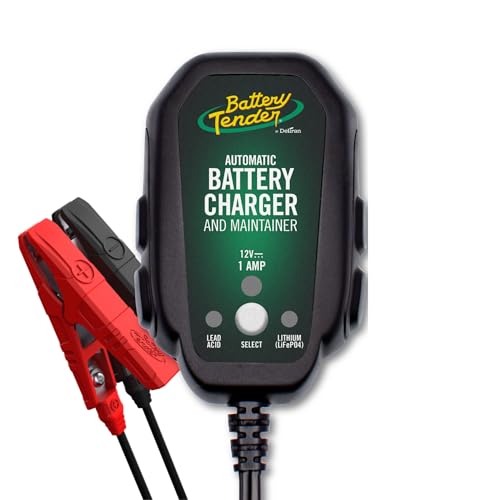
Battery Tender Junior 12V, 800mA Battery Charger and Maintainer (022-0199-DL-WH)

Battery Tender Plus 12V, 1.25 AMP Battery Charger and Maintainer

NOCO GENIUS1 1A 6/12V Smart Battery Charger

OptiMate3 0.8A Smart Battery Saving Charger

NOCO GENIUS5 5A 6/12V Smart Battery Charger

Schumacher Electric SC1280 12V/6V Battery Charger

NOCO GENIUS2 2A 6/12V Smart Battery Charger

Schumacher Electric SC1361 6A Charger & Maintainer

Schumacher Electric SC1281 6V/12V Charger & Maintainer
Taking A Closer Look At The Options
The Battery Tender Junior has earned its long-running reputation by being the charger that owners wire up to a motorcycle in October and forget about until spring. At 750mA, it delivers a gentle push of current that’s well-matched to small powersports batteries without overwhelming them. The 4-step charging program moves a battery from initialization through bulk and absorption stages before settling into a float holding pattern, which is why people trust it across long winters.
It works on flooded, AGM (absorbed glass mat), and gel cell batteries, and the included ring terminals or alligator clips make it easy to set up a permanent connection. Compared to the other Battery Tender Junior on this list, this one is strictly lead-acid, so it’s a better fit for owners who don’t need lithium flexibility.
Bright Spots
- 4-step charging with float mode keeps batteries topped off for months unattended
- Compatible with flooded, AGM, and gel cell batteries
- Spark-resistant connection and reverse polarity protection add a layer of safety
- Compact body fits easily in a saddlebag or under a seat
Things To Consider
- 750mA output is slow on larger automotive batteries
- Lead-acid only; no lithium mode for newer LiFePO4 (lithium iron phosphate) packs
Who It Suits Best
Riders storing a motorcycle, ATV, or similar powersports vehicle for months at a time will appreciate the set-and-forget behavior.
Consider Something Else When
The NOCO GENIUS1 suits owners who also want 6-volt support for a classic car or tractor in the same garage.
The upgraded Battery Tender Junior adds a button that genuinely matters: a manual switch between lead-acid and lithium charging profiles. With LiFePO4 batteries becoming common in newer motorcycles and powersports vehicles, having one unit that handles both chemistries removes the need to keep two chargers on the shelf. The 800mA output is a small bump over the original Junior, which makes routine top-offs a touch faster.
Like its sibling, this unit walks the battery through initialization, bulk, absorption, and float stages automatically. For owners running a mix of older lead-acid and newer lithium bikes, it’s the more flexible Junior of the two.
The Practical Payoff
- Selectable lead-acid or lithium charging via a front-panel button
- Works with flooded, AGM, gel, and LiFePO4 battery types
- Spark-proof clamps and reverse polarity protection for safer hookups
- Compact, lightweight chassis fits crowded garage shelves
Honest Caveats
- Still slow on large automotive or deep-cycle banks
- Lithium switch must be set manually; mismatching profiles can undercharge a battery
Made For
Multi-bike households and powersports enthusiasts who have upgraded one vehicle to lithium and still own older lead-acid machines.
Skip It When
The Schumacher Electric SC1280 is a stronger match for owners with a 6-volt battery in the mix who also want restore-mode recovery.
The Plus steps current up to 1.25 amps, which is meaningfully faster at bringing a deeply discharged powersports battery back from a low voltage state. It also runs a smarter adaptive charging routine that adjusts its absorption phase based on what the battery actually needs, rather than a fixed timer. For owners with bigger V-twin batteries or a small automotive battery on a second vehicle, the extra headroom is welcome.
It targets 12V AGM and flooded batteries specifically, and it follows California energy-efficiency compliance for charger standby draw. Compared to the two Juniors above, the Plus is the natural pick when 750mA or 800mA feels too leisurely.
The Upside
- 1.25A output noticeably faster on larger powersports batteries
- Adaptive charging algorithm tailors the absorption phase to battery condition
- Maintains proper voltage over months of storage without overcharging
- Solid fit for AGM and flooded 12V batteries
Small Caveats
- Lead-acid focused; no lithium profile for newer LiFePO4 bikes
- Still undersized for full-size car and truck batteries
Best Suited To
Owners of touring bikes, large ATVs, or any powersports vehicle with a battery that needs a faster, smarter recovery after storage.
Reach For A Different Pick When
The NOCO GENIUS5 is a better match for owners who want both powersports and full automotive charging from one unit.
The GENIUS1 is NOCO’s smallest, most approachable charger, and it’s the one most people reach for when they want a single unit that handles everything in the garage. It works on both 6-volt and 12-volt batteries, which makes it equally suited to a vintage tractor, a motorcycle, and a modern daily driver. Force mode can even push a charge into a battery that’s dropped to zero volts, which is genuinely handy for vehicles parked all winter.
At 1A output, it’s not going to refuel a deeply discharged truck battery in an afternoon, but as a long-term maintainer it’s quiet, reliable, and chemistry-flexible. Compared to the GENIUS2 and GENIUS5 reviewed below, it leans toward low-amp maintenance rather than active charging.
Where It Delivers
- 6V and 12V compatibility covers classic vehicles and modern equipment
- Handles lead-acid (AGM, gel, flooded, deep-cycle) and lithium-ion batteries
- Force mode can charge batteries that have dropped to zero volts
- Built-in desulfation mode (a high-frequency pulse cycle that helps break down sulfate buildup) helps recover neglected batteries
Worth Noting
- 1A output is modest for larger automotive starting batteries
- Larger battery banks may need the GENIUS5 for reasonable recovery times
Who Will Love This
Owners who want a tiny, do-everything charger for a garage that holds a mix of powersports, classic, and everyday vehicles.
Look Elsewhere When
The NOCO GENIUS5 suits owners with larger batteries who want faster recovery times alongside the same multi-chemistry flexibility.
The OptiMate3 leans hard into the rescue side of the category. Where most maintainers assume the battery has some life left, this unit is built around the idea of saving batteries other chargers have given up on, including those that have sat deeply discharged for months. The 0.8A output is small, but the multi-stage recovery routine is the point, not raw speed.
It supports 12V AGM, GEL, STD (standard flooded), starter, and deep-cycle batteries, making it a strong match for powersports, ATV, side-by-side, and personal watercraft applications. Compared to the Battery Tender Junior at the top of this list, the OptiMate3 is the better pick when you suspect the battery is already in rough shape.
Useful Strengths
- Multi-stage recovery routine designed to rescue deeply discharged batteries
- Supports AGM, gel, standard flooded, starter, and deep-cycle 12V batteries
- Connect-and-forget operation with automatic long-term maintenance
- Optimized for motorcycles, ATVs, side-by-sides, and personal watercraft
Points To Note
- 0.8A output is slower than competing junior-class chargers
- Primarily a 12V-only unit, no 6V option for older vehicles
Perfect Match For
Owners of motorcycles, ATVs, side-by-sides, and personal watercraft who store their machines through long off-seasons and worry about deeply discharged batteries.
A Better Fit Elsewhere
The Battery Tender Junior 800mA is a better pick for owners who prefer a simpler lead-acid-or-lithium toggle over a recovery-focused routine.
The GENIUS5 jumps into the territory where a maintainer starts to behave like a real charger. With 5 amps available across both 6V and 12V batteries, it can revive a deeply discharged car battery in a reasonable window and still settle into long-term float maintenance without intervention. It also supports lead-acid and lithium-ion batteries across flooded, AGM, gel, deep-cycle, and LiFePO4 chemistries, which makes it one of the most flexible units in this roundup.
Compared to the smaller GENIUS1 and GENIUS2, the GENIUS5 trades some portability for raw capability, and it pairs well with cars, SUVs, trucks, and boats. For most home garages, it covers the realistic range of vehicles that show up.
Real-World Strengths
- 5A output handles larger automotive batteries without the long wait
- 6V and 12V compatibility covers a wide garage inventory
- Works with lead-acid and lithium-ion chemistries, including deep-cycle
- Force mode handles batteries that have dropped to zero volts
A Few Limitations
- Larger and less portable than the GENIUS1 or GENIUS2
- Overkill for a single motorcycle or small powersports battery
The Right Fit
Shops, multi-vehicle households, and anyone who treats the charger as a garage workhorse rather than a single-bike accessory.
Swap It Out When
The NOCO GENIUS1 is a more sensible choice for owners who only maintain smaller powersports batteries.
The Schumacher SC1280 leans into the workshop side of the category with a 4-in-1 design that charges, maintains, tests, and restores batteries. The microprocessor-controlled routine handles 6V and 12V AGM, gel, and deep-cycle batteries, with a 3A trickle charge rate that suits mid-size automotive and marine applications. Restore mode is the standout, using a higher-voltage pulse routine to help recover sulfated batteries that have been sitting too long.
It’s a heavier unit than the Battery Tender Juniors or the OptiMate3, and it expects to live on a workbench rather than tuck into a saddlebag. Compared to the GENIUS5 above, the SC1280 trades faster charging for a broader set of onboard diagnostic features.
The Helpful Details
- 4-in-1 charging, maintenance, testing, and restoration modes
- Restore mode targets sulfated batteries that other chargers reject
- 6V and 12V support for automobiles, marine, and powersports batteries
- Compatible with AGM, gel, and deep-cycle battery chemistries
Less Ideal Details
- Bulkier chassis is less portable for travel or track-day use
- More modes can feel like overkill for owners who only need maintenance
Whose Shelf It Belongs On
Home mechanics and marine owners who want diagnostic and recovery features alongside standard maintenance.
Another Choice May Suit
The NOCO GENIUS5 is a lighter, more travel-friendly alternative for owners who don’t need the restore-mode routine.
The GENIUS2 sits in the middle of the NOCO lineup and is often the most sensible choice for a household with a single daily driver plus occasional powersports vehicles. It covers 6V and 12V batteries across lead-acid and lithium-ion chemistries, including flooded, AGM, gel, deep-cycle, and LiFePO4 cells. The 2A output is a meaningful step up from the GENIUS1 without jumping to workshop-scale current.
It also handles batteries that have dropped to zero volts and runs a desulfation routine for neglected packs, so it’s not just a maintainer, it’s a small charger that also maintains. Compared to the GENIUS1 above, the extra amp makes recovery noticeably quicker on sedans and crossovers.
Useful Touches
- 2A output strikes a balance between recovery and maintenance
- Compatible with lead-acid and lithium-ion batteries up to 40 amp-hours
- Force mode handles zero-volt batteries that other chargers refuse
- Desulfation routine helps revive lightly neglected batteries
Soft Spots
- Limited to smaller battery capacities compared to the GENIUS5
- 2A output still feels slow on a deeply discharged truck battery
Built With In Mind
Daily drivers and commuters who want one charger that also handles the occasional powersports battery without overbuilding.
Where A Sibling Pick Shines
The NOCO GENIUS5 is a stronger match for owners with trucks, SUVs, or marine batteries that need faster charging.
The SC1361 steps up to 6 amps of charging current and adds an engine-start function, which makes it less of a maintainer and more of a full garage tool. It targets 12V batteries and works as a 3-in-1 unit: charger, maintainer, and starter. For farm, workshop, and rural owners who occasionally need to bring a stubborn engine back to life, the extra capability is the draw.
It runs a fully automatic microprocessor-managed routine and pairs naturally with cars, trucks, SUVs, and farm equipment. Compared to the SC1280 above, it trades 6V support for stronger 12V charging and starting capability.
Practical Pluses
- 6A charging current handles larger automotive batteries faster
- Built-in engine start function adds emergency utility
- Fully automatic microprocessor-controlled charging routine
- Sturdy construction suits workshop and farm environments
Trade-Offs
- 12V-only design omits 6V classic car support
- Heavier and bulkier than maintenance-focused chargers
Right Fit For
Farm, workshop, and rural owners who want a single tool that charges, maintains, and occasionally jump-starts.
Not Your Match When
The Schumacher SC1281 suits owners who also want 6V support and a more powerful 100A engine-start feature.
The SC1281 tops out the Schumacher line in this roundup with 6 amps of charging current and a serious 100-amp engine start mode. It covers both 6V and 12V batteries and handles everything from routine maintenance to emergency starting, which is why it lands as the boost-and-maintain pick. For a garage that needs to be ready for a dead battery on a cold morning, the integrated starting capability is the headline feature.
It’s a larger, heavier unit than anything else in this list and expects a permanent spot on a workbench. Compared to the SC1360 reviewed above, the SC1281 trades a smaller footprint for 6V support and a much stronger engine-start function.
Useful Highlights
- 100A engine start function brings deeply discharged batteries back fast
- 6V and 12V support covers classic and modern vehicles
- Fully automatic charging routine for routine maintenance
- Sturdy construction suits long-term shop installation
Points To Keep In Mind
- Large and heavy compared to maintenance-focused chargers
- Engine-start feature requires a nearby outlet and proper setup
Who Should Grab It
Garage owners and home mechanics who want a single bench unit that charges, maintains, and jump-starts a range of vehicles.
Where Another Pick Suits Better
The Schumacher SC1360 is a lighter alternative for owners who only need 12V support and a smaller engine-start boost.
What Matters Most When Picking A Maintainer
Match the charger’s amp output to the battery size you actually own. A 750mA trickle unit will keep a small motorcycle battery topped off indefinitely, but it’ll take all day to revive a deeply discharged car battery. Higher-amp chargers like the GENIUS5 or the Schumacher SC-series cover automotive work without forcing you to wait two days for a full charge.
Voltage support matters more than people expect. Most modern vehicles run 12V batteries, but classic cars, vintage tractors, and some golf carts still use 6V. Chargers like the NOCO GENIUS line and the Schumacher SC1281 cover both, which removes the need for a second unit on the shelf.
Chemistry compatibility has become the new decision point. Lithium-ion (specifically LiFePO4) batteries are showing up in newer motorcycles and powersports vehicles, and they need a different charging profile than flooded or AGM lead-acid batteries. Chargers with a manual lead-acid/lithium switch, like the Battery Tender Junior 800mA, handle both safely.
Look at the multi-stage routine, not just the listed amps. A proper maintainer should walk a battery through initialization, bulk charging, absorption, and float mode automatically. Chargers with desulfation or restore modes add recovery capability for batteries that have already been neglected.
Smart Buying Considerations
Pitfalls Shoppers Hit
Buying a 12V-only charger when your garage also holds a 6V classic car is a common and expensive mismatch. Owners also underrate chemistry support; a charger that doesn’t offer a lithium profile can quietly undercharge a LiFePO4 battery, leading to the same dead-battery problem the maintainer was supposed to prevent. Amp output gets misread as well: a tiny 750mA unit can keep a motorcycle happy but won’t bring a deeply discharged truck battery back in any reasonable time.
What The Higher Tier Buys
Higher-output maintainers like the GENIUS5 and the Schumacher SC-series earn their higher position by adding faster recovery, broader voltage and chemistry support, and sometimes an engine-start function. The extra output also handles larger battery banks, which matters if you maintain a truck, an SUV, or a marine application. For owners who only maintain small powersports batteries, that extra capability is overhead you don’t need.
Frequently Asked Questions
Do I really need a maintainer if I drive my vehicle regularly? Regular driving keeps most batteries charged, but short trips and infrequent use still allow gradual discharge. A maintainer is most useful for vehicles that sit for more than a couple of weeks at a time.
Can a maintainer overcharge a battery? Modern smart maintainers are designed to switch into a float stage once the battery reaches full charge, preventing overcharge. Leaving a properly designed maintainer connected for months is generally safe.
Is a higher amp charger always better? Higher amps charge faster, but they aren’t necessary for small batteries. A 1A or 2A charger is usually enough for routine maintenance on motorcycles and similar vehicles.
Do lithium batteries need a special charger? Yes. Lithium-ion and LiFePO4 batteries use a different charging profile than lead-acid batteries. Chargers without a dedicated lithium mode can undercharge or damage these batteries.
Can I use one charger for both my car and my motorcycle? Multi-voltage chargers like the NOCO GENIUS line and the Schumacher SC1280/1281 handle both 6V and 12V batteries across multiple chemistries, making them practical for mixed garages.
Closing Remarks
The right maintainer depends less on raw specs and more on what sits in your garage. A small powersports-only setup is well served by a Battery Tender Junior or the OptiMate3, while a multi-vehicle household benefits more from a GENIUS5 or a Schumacher SC-series unit. Match the output, voltage, and chemistry support to the batteries you actually own, and the rest takes care of itself.