Your riding mower won’t care about its battery until the first cold morning, when the starter clicks and nothing happens. An AGM lawn mower battery (Absorbed Glass Mat, a sealed lead-acid design that holds its electrolyte in fiberglass mats, so it resists vibration and won’t leak) keeps that first crank strong. The eight picks below cover Group U1 fits, higher-output lithium options, and one smart charger worth keeping in the garage.
A Quick View Of The Lineup

WEIZE 12V 300CCA BCI Group U1 SLA Starting Battery

WEIZE 12V 200CCA BCI Group U1 SLA Starting Battery
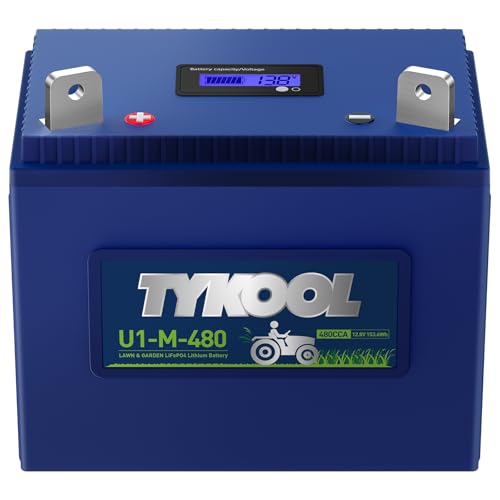
TYKOOL 480CCA Group U1 Lithium LiFePO4 Lawn Mower Battery

WEIZE 12V 350CCA BCI Group U1 SLA Starting Battery

Mighty Max ML-U1-CCAHR 12V 320CCA SLA Battery
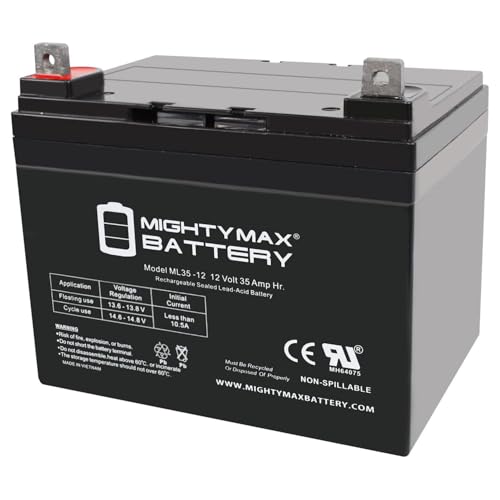
Mighty Max 12V 35Ah Battery for John Deere Riding Mower 108
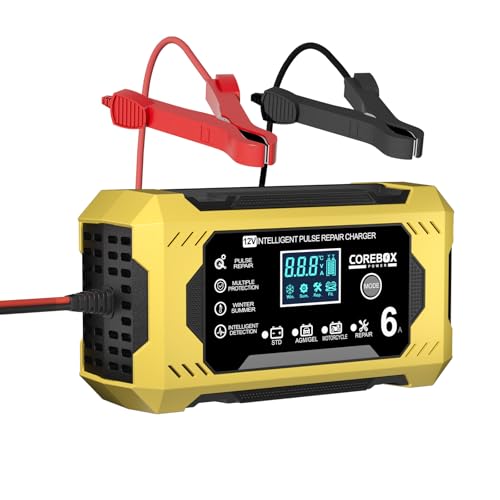
Corebox 6-Amp 12V Smart Battery Charger Maintainer

BRS U1 AGM Battery 12V 300 CCA Maintenance-Free
The Picks, Examined More Closely
The WEIZE 300CCA sits right in the middle of the AGM Group U1 crowd, and that’s exactly why it ends up in so many garages. At 7.68 inches long, 5.12 wide, and 6.22 tall, it drops into the same tray your old battery came out of, no trimming or shimming required. The square-hole nut-and-bolt terminals match what John Deere, Cub Cadet, Craftsman, and Toro machines have used for years.
For a homeowner who cuts a half-acre most weekends and parks the tractor in an unheated shed, 300 cold cranking amps is comfortable. You may find the WEIZE 200CCA option above easier on the wallet if you live somewhere warm, but this version gives you a meaningful cold-start buffer without overpaying.
The Upside
- Group U1 footprint fits the most common riding mower trays without adapter plates
- Sealed AGM construction means no topping off with distilled water during the season
- 300 CCA handles cool spring mornings and short winter layovers in a garage
- Left-positive, right-negative polarity matches the standard layout on most U1 trays
Points To Keep In Mind
- Hazardous-materials shipping rules can slow delivery and limit return options
- At roughly 18.68 pounds, it is on the lighter side of U1 batteries, which some owners associate with a shorter service life in heavy-duty use
Quick Facts
Who Should Grab It
Suburban homeowners with a single riding mower who want a no-fuss AGM swap that just works on the first turn of the key.
Swap It Out When
Pick the TYKOOL 480CCA lithium battery instead if your tractor sees heavy use, long sitting periods, or you simply want the weight savings of LiFePO4 (lithium iron phosphate, a lighter chemistry that holds voltage steadier than lead-acid).
This is the lower-output sibling of the WEIZE 300CCA above, and it shares the same Group U1 dimensions and left-positive layout. The drop to 200 cold cranking amps makes it a sensible choice for southern and coastal climates where engines rarely face a hard freeze. Where the 300CCA version shines on a 30-degree spring morning, this one coasts through on the same kind of day.
For a flat-lot homeowner with a small engine, 200CCA is honest performance without overspending. If your winters dip below freezing often, you may find yourself reaching for jumper cables more than you’d like, and the 300CCA version is a smarter bet.
Practical Pluses
- Same U1 footprint as the higher-CCA WEIZE batteries for drop-in compatibility
- Sealed AGM body means no acid spills on the garage floor
- Nut-and-bolt terminals work with the stock cables on most John Deere and Cub Cadet machines
- Generally the lightest option in this lineup, helpful when handling a tight battery tray
Small Caveats
- 200 CCA leaves little headroom for cold snaps or weak charging systems
- Heavier than its 300CCA sibling at 21.5 lbs, which feels counterintuitive but reflects plate construction differences
Right Fit For
Warm-climate homeowners with a smaller engine who only need reliable starts during mild mowing seasons.
Look Elsewhere When
The BRS U1 AGM Battery is a stronger call for anyone in a four-season region who faces sub-freezing mornings regularly.
The TYKOOL 480CCA is the only lithium option in this roundup, and it carries the chemistry switch proudly. Where the WEIZE and Mighty Max AGMs above rely on sealed lead-acid plates, this one uses LiFePO4 cells that hold voltage steadier under load and weigh a fraction of the equivalent AGM. For larger-displacement tractor engines that bog down a 200 or 300CCA AGM, the 480-amp surge is a real upgrade.
You may find the upfront cost harder to swallow than the AGMs earlier in this list, but cycle life is where lithium earns its keep. The chemistry tolerates deep discharge better than lead-acid and holds a charge over long winter storage without the slow drain that flattens AGM batteries on the shelf.
Useful Highlights
- 480 CCA delivers noticeably stronger cold starts than any AGM U1 in this roundup
- LiFePO4 chemistry weighs significantly less, which matters on machines with the battery mounted high on the frame
- Long cycle life suits daily-use grounds crews and acreage owners who rack up seat time
- Steady voltage output keeps headlights and electric PTO clutches running at full strength
Worth Bearing In Mind
- Lithium batteries need a charger that respects their charging profile, so an old automotive trickle charger can be a problem
- The cold-cranking spec is real, but prolonged sub-zero storage without a maintainer can reduce usable capacity
- Compatibility with older charging systems is generally fine, though worth confirming on a vintage tractor
Best Suited To
Owners of mid-to-large riding mowers in cold climates who want stronger cranking, lighter weight, and a battery that outlasts two or three AGM cycles.
A Better Fit Elsewhere
The WEIZE 12V 350CCA is a more practical pick for anyone who mows a modest yard and doesn’t need the lithium upgrade.
Step the WEIZE line up to 350 cold cranking amps and you have the most powerful AGM Group U1 in this roundup. The footprint stays at the familiar 7.68 by 5.12 inches, so it slots into the same tray the 200 and 300 versions already live in. The bump in CCA matters most in northern garages where a tractor sits from November to April and then gets asked to fire up on a frosty morning.
Compared with the TYKOOL lithium option, this battery is heavier, but you avoid the lithium-specific charger question entirely. For most homeowners, the 350CCA AGM is the most reassuring all-around choice.
What It Does Well
- Highest AGM cranking output in this roundup at 350 CCA
- Group U1 dimensions fit common riding mower trays without modification
- Sealed AGM means no water top-ups and no acid venting in a hot engine bay
- Strong choice for machines that sit unused for months between cuts
Less-Strong Areas
- Heavier than the 300CCA sibling at 21.45 lbs, so tray mounting needs a firm hold-down
- Still a lead-acid battery at its core, so deep discharges shorten service life compared with lithium
Key Product Details
Who Will Love This
Rural and suburban owners in four-season climates who need a reliable cold start without moving to lithium.
Reach For A Different Pick When
The TYKOOL 480CCA lithium battery suits heavy users with long mowing days who want lighter weight and longer cycle life.
The Mighty Max ML-U1-CCAHR leans into the rugged side of the AGM category. Where the WEIZE batteries above focus on cranking output, this one highlights vibration tolerance and a wider operating temperature range. For a mower that rolls over uneven ground, hits tree roots, and lives outside the garage, that matters.
At 320 CCA, it sits comfortably between the WEIZE 300CCA and the WEIZE 350CCA in raw cranking power, and it ships with mounting hardware but no wire harness. You may need to reuse the cables from the old battery, which is standard practice for most U1 swaps.
Notable Upsides
- AGM chemistry tolerates bumps and rough terrain better than flooded lead-acid designs
- 320 CCA provides solid cranking for typical residential riding mower engines
- Wide operating temperature range suits both hot-summer and cold-winter regions
- Sealed construction can be mounted in multiple orientations without leaks
Trade-Offs
- Battery and screws only; no wire harness or accessory leads in the box
- Slightly taller footprint than the WEIZE Group U1 batteries, so tray clearance should be measured first
Made For
Homeowners with rough acreage lawns whose tractors see vibration, temperature swings, and uneven terrain through the mowing season.
Consider Something Else When
The Mighty Max 12V 35Ah Battery for John Deere Riding Mower 108 is a more direct match for older John Deere owners needing higher reserve capacity.
This Mighty Max entry swaps the typical CCA race for amp-hour reserve. The 35Ah rating means the battery holds more usable energy than a standard U1, which matters on older John Deere machines with electric PTO clutches and headlights that draw on the battery between starts. Where the 320CCA version above is tuned for pure cranking, this one stays useful across a longer cutting session.
It is positioned as a direct replacement for the John Deere Lawn Tractor 108, but the 7.76 by 5.12 footprint stays compatible with a wide range of U1-equipped machines. For an older rider with a tired electrical system, the extra reserve feels like a small mercy.
Real Benefits
- 35Ah capacity gives meaningfully longer runtime for accessories between starts
- Sealed AGM build resists spills when mounted at an angle on older tractor frames
- Direct-fit intent for John Deere Lawn Tractor 108 simplifies the swap
- Wide operating temperature range keeps the battery useful from summer into early winter
Soft Spots
- Listing does not emphasize CCA, so cranking strength in deep cold is a question worth checking against your engine
- Older tractor charging systems may not fully top off the higher-capacity cells
Whose Shelf It Belongs On
Owners of older John Deere riding mowers and similar U1-platform machines who need more reserve capacity for accessories.
Where A Sibling Pick Shines
The Mighty Max ML-U1-CCAHR is a smarter upgrade when cold cranking power matters more than reserve capacity.
The Corebox is the odd one out in this roundup, and that is exactly why it earns its place. Every AGM battery above can sit for months and come back flat, especially through a winter in an unheated shed. A smart 6-amp charger with temperature compensation (the charger adjusts its voltage up or down based on ambient temperature, which prevents overcharging in heat and undercharging in cold) and a built-in desulfator (a pulse mode that helps break down sulfate crystals that build up on lead plates during long storage) keeps the batteries ready between uses.
If you rotate between a lawn tractor, an ATV, and a motorcycle, the multi-mode design earns its garage space quickly. You may not need it for everyday weekly mowing, but for off-season storage it pays for itself by extending AGM service life.
What Makes Sense
- Acts as charger, maintainer, trickle charger, and desulfator in one unit
- Temperature compensation adjusts output for hot summers and cold winters
- Compatible with cars, trucks, motorcycles, mowers, and marine batteries
- Multiple charging protections reduce the risk of damage from incorrect hookup
Honest Caveats
- 6 amps is on the modest side, so very large or deeply discharged batteries need overnight runs
- Not all lithium chemistries are supported, so pairing with the TYKOOL battery above requires checking the manual
Perfect Match For
Garage tinkerers and acreage owners who rotate between multiple 12V batteries and want one charger to maintain them all through the off-season.
Not Your Match When
The Mighty Max ML-U1-CCAHR makes more sense if the priority is simply replacing a dead battery rather than maintaining an existing one.
The BRS U1 rounds out this list with the most installation-friendly approach of the bunch. It arrives fully charged, so you unbox it, drop it into the tray, and go. The Group U1 footprint mirrors the WEIZE batteries above, and the sealed AGM body means no acid spills even if the tractor sits on a slope.
The 300 CCA rating matches the WEIZE 300CCA directly, so the comparison really comes down to convenience and intent. BRS targets cold-weather readiness with vibration resistance built in, which is exactly what an outdoor rider parked through a Canadian winter needs.
Strong Points
- Ships fully charged for true drop-in installation on day one
- 300 CCA delivers reliable cold starts down to freezing conditions
- Maintenance-free sealed AGM body suits outdoor storage without water checks
- Vibration-resistant construction handles rough turf and gravel drives
Areas To Watch
- U1 dimensions should still be measured against the tray, since real-world mounts vary by tractor model
- Compatible with UTVs, ATVs, and generators, which broadens use but means verifying fit for non-mower applications
Built With In Mind
Rural homeowners in cold-winter regions who want a battery that ships ready to bolt in and start on the first try.
Where Another Pick Suits Better
The WEIZE 12V 350CCA fits shoppers who want a stronger CCA cushion and don’t mind charging the battery themselves before first use.
What To Weigh Before Picking An Agm Lawn Mower Battery
Group size matters more than people expect. Group U1 is the standard for most riding mowers, and the dimensions across all eight picks above hover around 7.6 to 7.8 inches long and 5 to 5.2 inches wide. Measure the tray before ordering, and check that the new battery’s footprint clears the hold-down bracket, especially on machines like older John Deere models where tolerances run tight.
CCA, or cold cranking amps, tells you how much current the battery can deliver at zero degrees Fahrenheit for 30 seconds while staying above a minimum voltage. For southern climates, 200CCA is enough. Northern regions benefit from 300CCA or higher, and the WEIZE 350CCA option in this roundup is the most generous AGM choice for a hard frost. The TYKOOL 480CCA lithium option steps further ahead for daily-use riders.
Terminal polarity, the orientation of the positive and negative posts, is the silent mistake people make. Most Group U1 batteries use left-positive, right-negative, but a flipped terminal can leave you with cables that won’t reach. Compare the existing battery’s terminal layout to the spec sheet before clicking order.
A smart maintainer like the Corebox charger in this list extends battery life across winter storage. For occasional-use riders that sit for months, AGM batteries slowly self-discharge, and sulfation (the buildup of lead-sulfate crystals on internal plates) shortens plate life. A periodic top-off charge keeps plates clean and the battery responsive on the first crank of spring.
Key Considerations Across These Picks
Common Shopping Slip Ups
The most frequent mistake is assuming any Group U1 battery fits any Group U1 tray. Some manufacturers design trays slightly larger or smaller than the nominal spec, and a too-tall battery can contact the hood or seat bracket. Measure twice. Another trap is ignoring the terminal polarity on machines from older vintages, where a previous owner may have already swapped in a battery with reversed posts. Always cross-check the existing battery’s layout.
Where The Extra Money Goes
Higher-tier AGM batteries like the WEIZE 350CCA or the TYKOOL lithium option charge more because of three things: stronger internal plates for higher CCA output, denser active material that resists sulfation over time, and tighter quality control that reduces early failure rates. The lithium upgrade in the TYKOOL also brings chemistry-level benefits like weight savings and longer cycle life, though it pairs best with a smart charger like the Corebox to reach its full lifespan.
Frequently Asked Questions
How long does an AGM lawn mower battery usually last?
A well-maintained AGM battery typically delivers three to five seasons of reliable service for a residential rider. Storage habits and charging system health matter more than brand choice in many cases.
Can I use a lithium LiFePO4 battery in any riding mower?
Most modern riding mowers accept lithium drop-ins, but the charging system should be checked first. Older machines with unregulated voltage can shorten a LiFePO4 battery’s service life.
Do AGM batteries need a special charger?
AGM batteries charge well with any modern 12V smart charger. The Corebox option in this roundup is a strong example, with temperature compensation to adjust output based on conditions.
What is the difference between CCA and amp-hours?
CCA measures how much current a battery delivers for cranking in cold conditions. Amp-hours, like the rating on the Mighty Max 35Ah, measures total energy capacity for accessories over time. Both matter, but for different reasons.
How should I store my mower battery over winter?
A fully charged battery stored in a cool, dry place holds its charge best. Pairing it with a smart maintainer like the Corebox during the off-season extends usable life significantly.
The Takeaway
The right AGM lawn mower battery comes down to your climate, your engine size, and how long the tractor sits between uses. The WEIZE 350CCA covers most cold-climate homes, the TYKOOL 480CCA lifts heavy riders into lithium territory, and the Corebox charger keeps any of them ready through a long winter. Match the battery to your yard, not to the spec sheet, and the first crank of spring will tell you you got it right.