Hanging a cranky old AGM on the transom used to feel like the only option, but the marine lithium category has caught up fast. LiFePO4 batteries now drop straight into the same Group 24 and Group 31 trays your boat or RV already has, they weigh a fraction of a flooded cell, and they keep cranking through long days on the water or off-grid weekends without sulking. The catch is that not every 12V LiFePO4 box is built for the same job. The ten options below cover everything from kayak trolling motors to full coach power banks, with notes on who each one actually serves.
A Side-By-Side Look

Redodo 12V 200Ah Marine LiFePO4 Battery, 200A BMS

Power Queen 12V 100Ah Trolling Motor LiFePO4 Battery
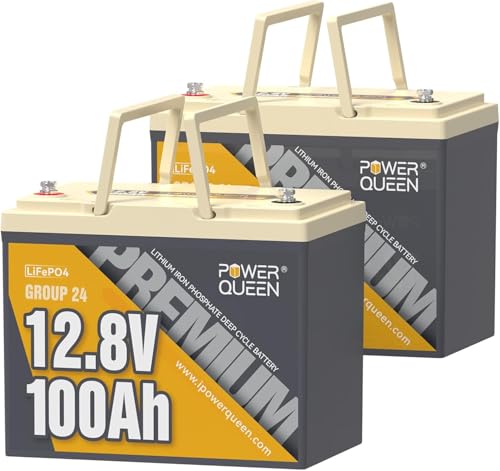
Power Queen 2PACK 12V 100Ah LiFePO4 Battery Group 24

Redodo 12V 100Ah LiFePO4 Battery, Group 31

Redodo 2 Pack 12V 100Ah RV LiFePO4 Battery, Group 31, Bluetooth

Power Queen 12V 100Ah LiFePO4 Battery Group 31

Power Queen 12V 100Ah LiFePO4 Battery, Group 24

TEMGO 12V 300Ah LiFePO4 Lithium Battery with Bluetooth & APP

Redodo 12V 165Ah LiFePO4 Battery, Bluetooth, Group 31
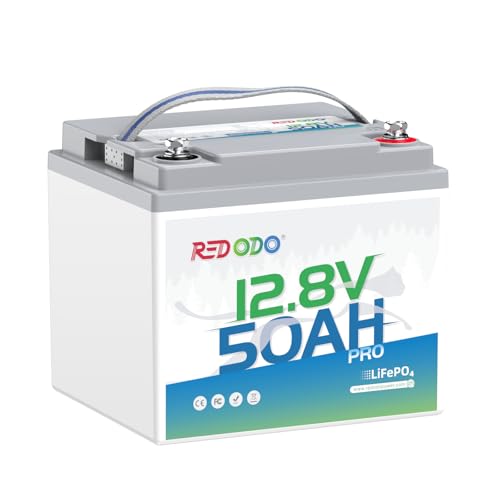
Redodo 12V 50Ah Trolling Motor LiFePO4 Battery
Taking A Closer Look At The Options
The Redodo 12V 200Ah sits at the heavy end of the marine lithium conversation, and it’s aimed at anyone whose AGM was straining to keep up with the fridge, lights, and trolling load at the same time. Continuous output is rated around 2560W, which is enough headroom to run a microwave or small inverter without dimming the cabin lights.
If your boat or off-grid cabin feels like a small apartment on weekends, this box is built for that kind of duty. The internal BMS (Battery Management System, the protective circuit board inside LiFePO4 packs) handles 200A, meaning high-draw appliances stay steady. Compared to the smaller Power Queen Group 31 option below, this one is the “stop messing around” choice.
What Makes Sense
- Continuous 2560W output, enough for microwaves, AC inverters, and electric cooking gear.
- Replaces two 200Ah AGM batteries in roughly 57% less space.
- Massive weight reduction versus flooded lead-acid, easier to wrestle into a bilge.
- 200A BMS guards against overcharge, over-discharge, short circuits, and thermal events.
Practical Considerations
- The 45.59 lb weight is light for its class, but still a two-hand lift into a battery compartment.
- Total capacity is high, which means a full recharge takes longer on smaller marine chargers.
Key Specs
Right Fit For
Full-time liveaboards, off-grid cabins, and weekend warriors running inverter loads from a single house bank.
Swap It Out When
The Redodo 12V 50Ah Trolling Motor LiFePO4 Battery suits anglers who only need a small box for one motor on a kayak or jon boat.
Where the Redodo 200Ah is a brute-force house battery, this Power Queen 12V 100Ah is built specifically for the abuse that trolling motors dish out. It carries a built-in TVS surge protector, which clamps voltage spikes from 12V-36V motors, and the package covers thrust ratings up to 120 lb.
That motor-class rating matters because anglers running 24V or 36V setups often wire two or three of these in series. The cold-weather protection also stops charging below freezing and discharging at very low temps, which keeps the cells happy on early-morning launches. Compared to the larger Redodo 200Ah above, this one focuses on motor-side protection rather than raw inverter output.
The Upside
- TVS surge protection defends electronics from motor voltage spikes.
- Low-temperature cutoff prevents cold-weather cell damage.
- ABYC E-13 alignment for marine installation expectations.
- Handles up to 120 lb thrust motors when wired correctly.
Things To Consider
- Single-pack 100Ah may be limiting on multi-day bass tournaments without recharging.
Made For
Anglers running 12V-36V trolling motors on bass boats or jon boats up to 120 lb thrust.
Consider Something Else When
The Power Queen 12V 100Ah LiFePO4 Battery, Group 24 fits anglers who want a more universal battery tray footprint for mixed boat and shore use.
Trailer campers often run two batteries for a 12V system or series them for 24V, and this two-pack ships both units matched and ready to drop into the same Group 24 boxes many RVs already use. You get roughly 1280Wh usable per battery, compared to the 500Wh most owners pulled from a 70Ah AGM at half-depth discharge (DOD, or how much of the battery’s rated capacity is safely used per cycle).
The Group 24 form factor is the quiet hero here: it slots into older battery trays without rewiring, which is a big relief for anyone who has stared at corroded terminal bolts in a tight compartment. Owners commonly report the weight savings (around a third of an equivalent AGM pair) make routine maintenance far less of a wrestling match.
Everyday Wins
- Group 24 footprint means a true drop-in AGM swap with no tray mods.
- About one-third the weight of a matched AGM pair.
- 1280Wh usable per battery, double the usable AGM output.
- Matched pair simplifies series or parallel wiring in trailers.
Honest Caveats
- Two-pack pricing is heavier on the wallet up front than a single 100Ah.
- Group 24 may not physically fit every compartment, especially tight marine boxes.
Best Suited To
RV trailer owners running dual-battery 12V banks or wanting matched cells for a 24V setup.
A Better Fit Elsewhere
The Redodo 12V 200Ah Marine LiFePO4 Battery suits boaters who would rather run a single high-capacity unit than manage a paired bank.
Group 31 is the bracket-shop standard, and this Redodo 12V 100Ah drops into the same trays most marine and RV owners already have wired up. The cells are automotive-grade LiFePO4, which is the chemistry shorthand for lithium iron phosphate, the safer, longer-lasting lithium variant favored for house banks. Cycle life is the headline here: 4000+ cycles at 100% DOD is the kind of number that makes AGM look like a rental.
Self-discharge is rated around 3%, which means the battery holds its charge during long storage stretches better than a lead-acid pack. For full-time RVers who store for months between trips, that’s the practical difference between arriving with a dead bank and showing up ready to roll.
Strengths Worth Knowing
- 4000+ cycles at 100% DOD, dramatically outpacing lead-acid chemistry.
- 3% self-discharge rate holds charge across winter storage.
- Automotive-grade cells for stable daily use in marine or RV service.
- Standard Group 31 footprint fits existing trays with no modification.
Trade-Offs To Consider
- Heavier than a 50Ah class battery, so still a careful lift into a hatch.
- Charging profile differs from AGM, so older chargers may need an LiFePO4 setting.
Perfect Match For
Boat and RV owners who want a long-cycle lithium swap without reworking their existing battery trays.
Look Elsewhere When
The Redodo 12V 50Ah Trolling Motor LiFePO4 Battery suits small craft owners where weight matters more than total amp-hours.
If the standard Redodo 12V 100Ah Group 31 above is the workhorse, this twin-pack adds the kind of telemetry that RV owners increasingly expect. Built-in Bluetooth and a low-temperature cutoff ship standard, and both batteries ship paired so wiring and state-of-charge reading line up cleanly across the bank.
The low-temp cutoff is the practical win for cold-weather campers: charging below freezing is the silent killer of LiFePO4 cells, and a battery that protects itself is a battery you don’t have to babysit. Versus the non-connected twin pack earlier, this set trades a slightly higher sticker for real-time monitoring through the app.
Notable Gains
- Bluetooth monitoring keeps state of charge visible on a phone.
- Low-temperature cutoff preserves cell health in cold storage.
- Matched pair simplifies installation for 12V or 24V systems.
- Group 31 footprint aligns with common RV battery trays.
Points To Keep In Mind
- Premium over the non-Bluetooth Redodo Group 31.
- Both units may arrive on separate shipments, which complicates a weekend install.
Who Should Grab It
Smart-RV owners who want matched, app-monitored batteries for a 12V or 24V coach system.
Another Choice May Suit
The Power Queen 12V 100Ah Trolling Motor LiFePO4 Battery fits anglers who need motor-side surge protection more than app telemetry.
Off-grid solar systems rarely stay the same size forever, and this Power Queen 12V 100Ah Group 31 is built around that reality. The configuration allows expansion up to 4P4S, which is industry shorthand for wiring four batteries in parallel (more amp-hours) and four strings in series (higher voltage), enough to grow a small cabin bank into a serious power wall.
100A BMS protection and up to 15000 cycles at lower depth-of-discharge values make this the most “plant the seed” pick on the list. Owners who plan to scale their solar array over several seasons should find the expandability removes a common pain point. Compared to the fixed two-pack above, this one is the modular option.
A Favorable Mix
- Expandable architecture up to 4P4S for growing solar banks.
- 15000-cycle potential at conservative depth-of-discharge levels.
- 100A BMS protection handles demanding inverter loads.
- Standard Group 31 footprint for clean tray replacement.
Smaller Limitations
- Full 15000-cycle rating requires staying below 60% DOD, which limits daily usable capacity.
Key Specs
Whose Shelf It Belongs On
Off-grid solar planners who want a battery they can grow into rather than replace.
Not Your Match When
The Redodo 12V 200Ah Marine LiFePO4 Battery suits owners who prefer one large battery over managing a multi-pack bank.
The single Power Queen 12V 100Ah in Group 24 trim is the friendliest “first lithium” pick on the list. Group 24 boxes are everywhere in smaller RV compartments and bass boats, and the swap from a tired AGM is genuinely a 30-minute job, no tray work, no rewiring, no terminal gymnastics.
Usable capacity sits around 1280Wh versus the roughly 500Wh a 70Ah AGM would give you at half-depth discharge. Owners commonly report the weight drop is the most surprising part: roughly one-third the mass of the lead-acid unit it replaces. If you’ve been curious about lithium but nervous about the install, this is the low-stress entry.
Features That Help
- True drop-in fit into any Group 24 battery tray.
- About one-third the weight of the AGM it replaces.
- 1280Wh usable capacity doubles effective runtime over AGM.
- Single-pack purchase keeps the budget manageable for first-timers.
Where It May Fall Short
- Single-pack capacity may feel small for multi-day boondocking without solar.
Built With In Mind
First-time lithium upgraders stepping out of a single AGM and looking for the cleanest possible install.
Skip It When
The Power Queen 2PACK 12V 100Ah LiFePO4 Battery Group 24 fits owners who already know they want a matched pair on day one.
The TEMGO 12V 300Ah is the capacity statement of the lineup, packing 300Ah into a single case with Bluetooth and APP monitoring on top. For liveaboards running refrigeration, water pumps, lighting, and nav electronics around the clock, that reserve is the difference between anchoring out for a week or heading back to the dock to charge.
The low-temperature cutoff protects cells in shoulder-season cruising, and the app gives you a real-time state-of-charge reading without climbing into the bilge. This battery ships under hazardous-materials shipping rules, so delivery timing can stretch a few extra days, worth planning around.
The Helpful Details
- 300Ah single-box capacity supports multi-day liveaboard loads.
- Bluetooth app monitoring for real-time state of charge.
- Low-temperature cutoff preserves cells in cold climates.
- LiFePO4 chemistry for long cycle life under daily use.
Trade-Offs To Consider
- Hazardous-materials shipping rules extend delivery windows.
- Returns are restricted, so confirm your compartment dimensions before ordering.
Key Specs
Who Will Love This
Liveaboards, off-grid cabins, and serious cruisers who want the largest single-box lithium reserve available.
Consider Something Else When
The Redodo 12V 200Ah Marine LiFePO4 Battery fits owners who don’t need the full 300Ah but want solid continuous output at a more compact size.
The Redodo 12V 165Ah splits the difference between a standard 100Ah Group 31 and the much larger 200Ah marine box. You get roughly 2112Wh of usable energy in the same physical footprint, which means RV owners who found 100Ah tight but 200Ah overkill finally have a middle option that still drops into a Group 31 box.
Bluetooth comes standard, so you can keep tabs on state of charge from inside the cab without climbing around the coach. The 165A BMS supports roughly 2112W continuous output, enough for short inverter bursts without tripping protection.
A Strong Showing
- 165Ah fits the gap between 100Ah and 200Ah in a Group 31 case.
- 2112Wh usable capacity for larger coach loads.
- 165A BMS supports short bursts of high inverter draw.
- Bluetooth monitoring through the Redodo app.
Points To Note
- Priced between the 100Ah and 200Ah options, so not always the obvious budget pick.
- Higher continuous output means a charger rated for LiFePO4 is recommended.
Right Fit For
RV owners who want more headroom than 100Ah but don’t need to step all the way to a 200Ah box.
Reach For A Different Pick When
The Power Queen 12V 100Ah LiFePO4 Battery, Group 24 fits owners whose existing tray is Group 24 sized.
The smallest box on the list, this Redodo 12V 50Ah weighs in at 11.6 lb and still delivers the full 100% usable capacity LiFePO4 is famous for. On a kayak, canoe, or small jon boat where every pound matters and the trolling motor draw is modest, this is the kind of battery that disappears into the hull and just works.
Cycle life is rated at 4000+ deep cycles at 100% DOD, which is a wild number for a battery this small. Owners fishing remote lakes appreciate the lighter carry from the truck to the launch ramp, and the lithium chemistry holds a charge through long stretches between trips far better than the SLA it likely replaces.
A Few Strong Suits
- 11.6 lb weight is genuinely one-hand portable.
- 100% usable capacity doubles effective runtime over lead-acid.
- 4000+ cycle rating at full depth of discharge.
- Compact form factor fits small craft with limited storage.
Honest Caveats
- 50Ah total capacity limits runtime for high-thrust motors on full-day outings.
The Right Fit
Kayak anglers, canoe campers, and small jon-boat owners running a single modest trolling motor.
Where A Sibling Pick Shines
The Power Queen 12V 100Ah Trolling Motor LiFePO4 Battery fits bass-boat anglers who need 12V-36V motor support with TVS surge protection.
What Matters Most Before Choosing Agm Marine Battery
Match the tray size first. Group 24 and Group 31 are the two physical standards you’ll see over and over, and getting the right one for your existing battery box saves hours of fabrication. Measure length, width, and terminal position before ordering; a 1-cm terminal offset can ruin an otherwise perfect swap.
Match the chemistry to your charger. LiFePO4 batteries want a charger with a lithium profile (higher absorption voltage around 14.4-14.6V, no float stage). Older AGM chargers often work, but using one without a dedicated lithium mode may undercharge the bank. Cold-weather owners should also look for a low-temperature cutoff, which prevents cell damage when charging near freezing.
Plan your expansion path. A single 100Ah battery works for weekenders, but liveaboards and full-time RVers usually grow into 200Ah, 300Ah, or multi-pack configurations within a season or two. Choosing a battery that supports series or parallel expansion (like the 4P4S-ready Power Queen Group 31) removes the need to scrap your first investment when loads grow.
Key Considerations Across These Picks
Pitfalls Shoppers Hit
The most common mistake is grabbing a battery with the right amp-hours but the wrong physical size. Group 24 and Group 31 boxes look similar in photos but differ by several centimeters in length and terminal placement, and a forced install in a tight compartment is the kind of regret that lasts years. Another trap is assuming an old AGM charger will “just work” with lithium chemistry; many will undercharge or skip the absorption stage entirely, leaving you with a battery that never quite reaches full capacity.
What The Higher Tier Buys
Stepping up from a 100Ah to a 200Ah or 300Ah battery is really a question of daily energy budget, not raw quality. The higher-capacity units typically ship with stronger BMS protection, which translates into better inverter support and more headroom for short high-draw bursts. Bluetooth monitoring and low-temperature cutoffs also tend to appear at the upper tier, both features that earn their keep over years of real-world use.
Frequently Asked Questions
Can a lithium battery really drop into an existing AGM tray?
In most cases, yes, provided the lithium battery uses the same BCI group size (Group 24 or Group 31) and the terminal orientation matches. The chemistry change does not alter the physical footprint, so tray fabrication is rarely needed. Always double-check dimensions before ordering.
Do LiFePO4 batteries need a special charger?
A charger with a lithium or LiFePO4 mode is strongly recommended, since lithium cells prefer a higher absorption voltage and no continuous float. Many modern marine and RV chargers offer selectable profiles. Using a lead-acid-only charger typically results in an undercharged bank rather than damage.
How long do marine lithium batteries actually last?
Quality LiFePO4 packs are commonly rated for 4000+ deep cycles at 100% DOD and significantly more at conservative depths. For an RV or boat owner running partial cycles, the battery can outlast a decade of regular use. Storage conditions, charging habits, and operating temperatures all influence real-world longevity.
Are lithium batteries safe on boats?
LiFePO4 chemistry is widely regarded as the safest lithium variant for marine use, because the cells are thermally stable and resistant to thermal runaway. Built-in BMS protection against overcharge, over-discharge, and short circuits adds another safety layer. As with any house battery, proper fusing and ventilation around the compartment remain essential.
What capacity do most weekend boaters actually need?
A 100Ah battery typically covers lights, phone charging, a small pump, and a fish-finder for a full day or two of casual use. Anglers running higher-thrust trolling motors or weekend liveaboards should consider 200Ah or larger. Solar charging or shore-power access shifts the math toward smaller banks.
Conclusion
The right lithium replacement comes down to matching capacity, tray size, and expansion plans to your actual boat or RV, rather than chasing the biggest amp-hour number. Anglers should weigh motor-class protections, full-timers should look at BMS strength and expandability, and weekend warriors usually find the cleanest fit in a single Group 24 or Group 31 drop-in. Browse the options above with your own compartment measurements and typical daily draw in mind, and the right choice usually becomes obvious.