A dead coach battery can ruin a weekend faster than a flat tire on a backroad. Choosing the right deep cycle setup matters whether you dry-camp for days, run a solar array, or simply need reliable power for lights and a fridge. This roundup pairs trusted AGM workhorses with modern LiFePO4 (lithium iron phosphate, a lighter, longer-lasting battery chemistry) options and the chargers that keep them healthy, so you can match capacity, weight, and budget to your rig without guesswork.
A Fast Comparison Of The Options
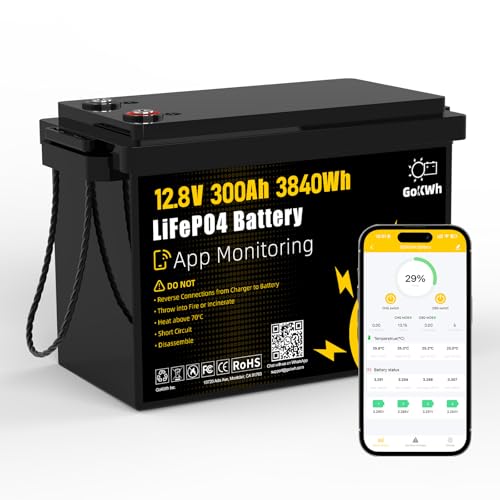
GOKWH 12V 300Ah LiFePO4 Battery with Bluetooth Monitoring

Tecmate Optimate 7 Select 12V 10A Battery Charger
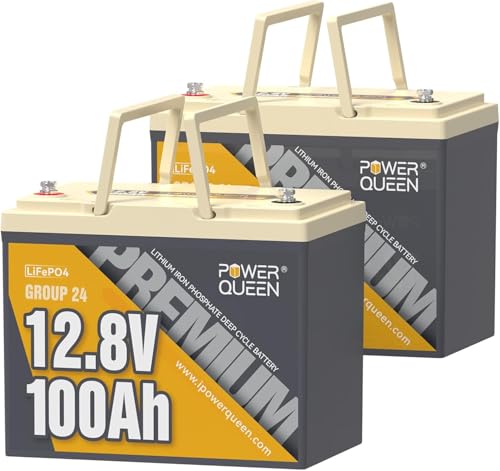
Power Queen 2-Pack 12V 100Ah LiFePO4 Battery Group 24

LiTime 12V 20A Lithium Battery Charger

Renogy 12V 100Ah Deep Cycle AGM Battery

GOKWH 12V 280Ah LiFePO4 Battery 2-Pack with Bluetooth

Renogy 12V 200Ah Deep Cycle AGM Battery
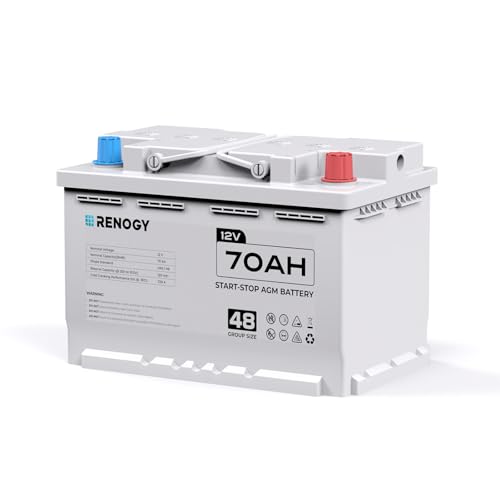
Renogy 12V 70Ah AGM Starting Battery Group 48
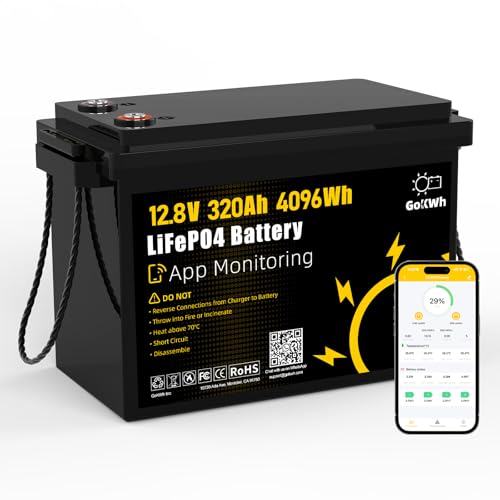
GOKWH 12V 320Ah LiFePO4 Battery with Bluetooth
When your RV trips run past a week and your fridge stays loaded, the GOKWH 300Ah LiFePO4 steps in with 3840Wh of usable energy and a 200A BMS (battery management system, an internal circuit that protects against overcharge, over-discharge, and short circuits). Built-in Bluetooth 5.0 streams voltage, temperature, and cell status straight to your phone, so you spot trouble before it strands you in a remote canyon.
You can parallel and series up to 16 units, expanding toward a 61kWh bank if your ambitions stretch that far. That scalability gives this battery a serious edge over traditional AGM, and it weighs a fraction of the lead-acid it replaces. Most full-time nomads find one of these covers their entire coach without stacking extras.
Why It Works Well
- 300Ah at 12V delivers multi-day runtime for typical RV loads including a 12V fridge, lights, water pump, and laptop charging.
- Bluetooth app monitoring means you never have to guess remaining capacity or walk outside with a multimeter.
- 200A BMS handles high inverter draws without tripping, so running a microwave or induction cooktop stays worry-free.
- 8000+ cycle rating translates to roughly 10 years of daily cycling for most weekend warriors.
Points To Keep In Mind
- The 200A continuous output limits simultaneous heavy loads, so running an air conditioner off a single unit may fall outside its comfort zone.
- Shipping falls under hazardous-materials rules, so delivery can take longer than a standard parcel and returns are restricted.
- The unit lacks an integrated heater, so sub-freezing charging requires a low-temp BMS upgrade or warmed storage.
At A Glance
Who It Suits Best
Full-time RVers and serious off-grid cabin owners running refrigerators, lights, and inverters every day.
Look Elsewhere When
Budget-focused travelers should consider the Renogy 12V 100Ah Deep Cycle AGM Battery for a simpler, lower-cost AGM setup.
A great battery dies young without proper charging, and the Optimate 7 Select brings serious intelligence to your shore-power hookup. Nine charging stages plus selectable 14.7V output for premium AGM cells like Optima and Odyssey let you tailor the charge curve to whatever chemistry sits in your bay. Temperature compensation adjusts voltage higher in the cold and lower in the heat, which matters more than most shoppers realize.
The power supply mode holds stable voltage during ECU (engine control unit) programming work, a niche use case that mechanics will appreciate. Compared with the LiTime charger ahead, this unit flexes across lead-acid and AGM chemistry where the LiTime stays committed to lithium only.
Reasons It Performs
- 10A output recharges large AGM banks noticeably faster than typical 2-4A maintainers.
- Selectable programs cover standard, premium AGM, and recovery modes for deeply discharged batteries.
- Power supply mode supports diagnostic work without dropping voltage mid-program.
- Long-term maintenance mode keeps stored batteries topped off through winter without overcharging.
Small Caveats
- Premium AGM mode runs at 14.7V, which can exceed the absorption rating of standard flooded batteries, so confirm your battery type before selecting.
- 10A continuous output means a longer runtime on a household 15A circuit if other loads share the line.
- The unit does not include a lithium-specific profile, unlike the GOKWH chargers reviewed earlier.
Quick Facts
Right Fit For
Garage-kept RVs and seasonal vehicles that sit for weeks between trips and benefit from intelligent maintenance charging.
Skip It When
Lithium-focused owners should consider the LiTime 12V 20A Lithium Battery Charger for proper LiFePO4 charging profiles.
Swapping out old lead-acid for lithium used to mean custom trays and rewiring, but Power Queen sized these 100Ah cells to slide into a standard Group 24 box. Two batteries arrive in a single shipment, giving you 200Ah at 1280Wh of usable energy per unit, roughly double what the equivalent AGM delivers at 50% depth of discharge (the safe discharge limit for lead-acid batteries, beyond which lifespan drops sharply).
Travel trailer owners upgrading from a single AGM bank find this the easiest path forward. The cells run about a third of the weight of comparably sized AGM, which matters when you are wrestling batteries into a tight compartment.
Notable Gains
- Drop-in Group 24 form factor fits existing trays and boxes without modification.
- Two-pack configuration provides 200Ah total, enough for a weekend of moderate RV use.
- EV-grade LiFePO4 cells deliver longer cycle life than budget lithium cells in the same price bracket.
- Weight savings of roughly two-thirds compared to equivalent AGM banks improve payload and fuel economy.
Trade Offs
- Requires a lithium-compatible charger for full benefit, so pairing with the LiTime 20A charger avoids partial-charge frustration.
- Series or parallel configurations need matched internal resistance for balanced aging, and these arrive as a matched pair.
- Low-temperature charging protection is not built in, so winter travelers in freezing climates need a heated compartment or low-temp BMS.
Best Suited To
Weekend trailer owners replacing tired AGM batteries with a lighter, longer-lasting lithium upgrade.
Swap It Out When
Larger rigs needing higher continuous draw should step up to the GOKWH 12V 300Ah LiFePO4 Battery with Bluetooth Monitoring.
You invested in lithium, so charging it with a lead-acid profile wastes money and time. The LiTime 12V 20A charger delivers the 14.6V absorption voltage LiFePO4 cells actually need, with 0V activation that revives packs drained all the way down, a real lifesaver if a load was left on during storage.
Anderson connectors on the output side make it plug-and-play with most lithium battery leads, and the LED indicator keeps you posted on charge stage at a glance. Six safety protections cover over-voltage, over-current, short circuits, and reverse polarity, so you can leave it plugged in during long winter storage without anxiety.
A Few Strong Suits
- 20A output recharges a 100Ah lithium bank in roughly five hours from empty.
- 0V activation recovers deeply discharged batteries that standard chargers refuse to touch.
- Anderson connector output simplifies the cable run between charger and battery bay.
- Six-layer safety suite covers reverse polarity, over-voltage, and thermal runaway concerns.
Areas To Watch
- Not waterproof, so outdoor or marine installations need a covered mounting location to keep the electronics dry.
- Designed specifically for 12V LiFePO4 and is not a multi-chemistry unit like the Tecmate Optimate.
- Fan-cooled operation produces audible noise during bulk charge stage in quiet campsites.
Perfect Match For
LiFePO4 owners running a single 100Ah to 200Ah house bank who need a purpose-built charger at a reasonable cost.
Consider Something Else When
Mixed-chemistry shops with both AGM and lithium should reach for the Tecmate Optimate 7 Select 12V 10A Battery Charger instead.
Renogy built its reputation in solar and off-grid circles, and this 100Ah AGM carries that DNA at an approachable price. Absorbed glass mat construction means the acid stays locked in fiberglass separators, so you get the spill-proof, maintenance-free convenience that makes AGM the default choice for RV compartments.
Compared to the Power Queen lithium covered earlier, this battery weighs noticeably more and only delivers about half its rated capacity in usable energy due to AGM’s 50% depth-of-discharge limit. The trade-off shows up in price, where AGM still wins for budget-conscious builds.
Everyday Advantages
- Maintenance-free sealed design eliminates the need to check water levels or clean terminals.
- Parallel support up to four units lets you scale capacity as your system grows.
- Proven AGM chemistry tolerates wider temperature ranges than lithium for garage-stored RVs in cold climates.
- Lower upfront cost than equivalent lithium makes it accessible for first-time buyers.
Practical Considerations
- Usable capacity is roughly half the rated 100Ah due to AGM’s recommended 50% depth-of-discharge ceiling.
- Heavier than lithium alternatives, so payload-conscious truck campers and vans may feel the difference.
- Slower charging acceptance means longer generator runtimes to top off from solar or alternator.
Feature Snapshot
Made For
First-time RV owners and weekend campers who want reliable power without the lithium price tag.
A Better Fit Elsewhere
Frequent travelers who want lighter weight and deeper usable capacity should consider the Power Queen 2-Pack 12V 100Ah LiFePO4 Battery Group 24.
Sometimes one battery is not enough, and buying matched pairs keeps your bank balanced for the long haul. The GOKWH 280Ah 2-pack lands 560Ah total with 3584Wh per cell, all governed by a 200A BMS and viewable through Bluetooth 5.0 monitoring. Real-time data on voltage, current, and temperature means you can spot a weak cell before it ruins the whole bank.
Large RVs running residential refrigerators, residential-style inverters, and long stretches of solar-only camping benefit most from this doubled capacity. Compared to the single 300Ah GOKWH reviewed first, the 2-pack configuration offers more flexibility for parallel and series expansion into a 24V or 48V system.
The Case For It
- Two matched batteries eliminate the capacity mismatch risk of pairing cells from different batches.
- 560Ah combined runtime powers high-draw loads like induction cooking and microwave use without anxiety.
- Bluetooth monitoring tracks each cell independently so you can balance your bank for maximum longevity.
- Series capability lets you build 24V or 48V banks for higher-efficiency inverter systems.
Some Limits To Know
- Larger footprint means measuring your battery bay before ordering, since two units take more space than a single block.
- Combined weight of roughly 70 pounds requires careful handling and a sturdy mounting surface.
- Higher upfront investment compared to single units, though cost-per-amp-hour stays competitive.
Who Will Love This
Large-class motorhome owners and off-grid cabin builders who need serious capacity from day one.
Not Your Match When
Smaller trailers with limited battery space may prefer the single GOKWH 12V 300Ah LiFePO4 Battery with Bluetooth Monitoring.
When 100Ah feels thin and lithium feels steep, the Renogy 200Ah AGM sits in the comfortable middle. Quinary alloy plates (a five-metal alloy formulation that improves corrosion resistance and cycle durability) and specially treated grids lower internal resistance, supporting high discharge currents up to 10 times the rated capacity for short bursts. Thick AGM separators and valve-regulated sealing mean no acid leaks and zero routine maintenance.
This Group 48 footprint fits standard RV battery trays, and the maintenance-free convenience matches what you get from the smaller Renogy 100Ah covered earlier, just doubled.
Practical Advantages
- 200Ah capacity doubles the runtime over a single 100Ah AGM at the same depth-of-discharge ceiling.
- Maintenance-free sealed construction removes the hassle of terminal cleaning and water checks.
- High discharge current support handles inverter surges from microwaves and power tools.
- Group 48 footprint fits common RV and marine battery boxes without modification.
Where It May Fall Short
- Substantial weight at roughly 130 pounds requires sturdy mounting and two-handed installation.
- AGM charging profiles require a compatible charger, so pairing with a quality unit matters.
- Usable energy sits around 100Ah due to the 50% depth-of-discharge rule that applies to all AGM chemistry.
Right Fit For
Mid-sized fifth wheels and travel trailers running moderate house loads like a residential fridge and entertainment systems.
Another Choice May Suit
Weight-sensitive van conversions should consider the Power Queen 2-Pack 12V 100Ah LiFePO4 Battery Group 24 for roughly equivalent usable energy at a third of the mass.
Not every battery in your rig is a house bank. Starting duties demand high cold-cranking amps (CCA, a measure of how much current a battery can deliver at 0°F for 30 seconds while maintaining voltage), and the Renogy 70Ah AGM delivers 720 CCA in a Group 48 envelope that fits modern cars, SUVs, trucks, and marine engine bays. A 120-minute reserve capacity (RC, the minutes a fully charged battery can sustain a 25-amp draw before dropping below a usable voltage) gives you a comfortable buffer if the alternator ever decides to take a day off.
Operating range from -22°F to 158°F handles everything from frozen mountain mornings to desert afternoons. Owners commonly report reliable starts in conditions where conventional flooded batteries would struggle.
A Few Highlights
- 720 CCA delivers confident cold-weather starts for gasoline and diesel engines in tow vehicles.
- Sealed AGM construction eliminates acid leaks and corrosion on terminals.
- Wide temperature operating range covers everything from arctic winters to desert summers.
- Start-and-stop compatibility suits modern vehicles with idle-kill systems that punish traditional batteries.
Things To Weigh
- This is a starting battery, not a deep cycle unit, so it should not be used as a house bank for sustained RV loads.
- Higher price than equivalent flooded batteries reflects the AGM technology, though longevity often offsets the cost difference.
- Group 48 sizing may not match older vehicles that require different BCI group numbers.
Built With In Mind
Tow vehicle owners and marine operators who need a reliable cranking battery that tolerates vibration and temperature extremes.
Reach For A Different Pick When
House battery needs should be filled by the Renogy 12V 100Ah Deep Cycle AGM Battery or one of the lithium options reviewed earlier.
The biggest single-block capacity in this lineup, the GOKWH 320Ah delivers 4096Wh of usable energy, enough to run a typical RV galley, lights, and entertainment for a long weekend without shore power. Bluetooth 5.0 streams battery status to your phone, and the 200A BMS keeps the cells safe under demanding loads.
Compared to the 300Ah GOKWH reviewed first, this version adds modest capacity and similar monitoring in a single integrated case. Extended boondockers who want maximum runtime without stacking batteries appreciate the simplicity.
The Practical Payoff
- 320Ah single-block capacity simplifies wiring compared to parallel pairs for moderate-size systems.
- 4096Wh usable energy covers multi-day off-grid camping without solar recharges.
- Bluetooth monitoring provides real-time visibility into voltage, current, and temperature.
- 200A BMS handles microwave, induction, and air-compressor loads without tripping protection.
Honest Caveats
- Higher cost than mid-capacity lithium options, though per-amp-hour pricing stays reasonable.
- Physical size requires careful bay measurement, and you may need to upgrade hold-down brackets.
- Shipping under hazardous-materials rules extends delivery windows compared to standard parcels.
Whose Shelf It Belongs On
Extended-stay RVers and full-time travelers who want maximum single-battery capacity without managing multiple parallel units.
Where A Sibling Pick Shines
Builders planning to expand toward 24V or 48V architectures should consider the GOKWH 12V 280Ah LiFePO4 Battery 2-Pack with Bluetooth for easier series configuration.
How Capacity And Chemistry Shape The Right Choice
Picking a deep cycle battery comes down to understanding how you actually use power on the road. A weekend camper running lights and a phone charger has very different needs than a full-timer with a residential fridge and inverter. The first question to answer is usable capacity, not raw amp-hours, because AGM only safely delivers about 50% of its rating while lithium can use 80 to 100%.
Weight and footprint matter next. Lithium (LiFePO4) cuts mass by roughly two-thirds compared to equivalent AGM, which adds up fast when you are juggling multiple batteries or watching payload. Cold-weather behavior also separates the chemistries: AGM tolerates freezing storage without fuss, while lithium needs protection from charging below 32°F unless the BMS includes low-temperature cutoff.
Charging compatibility often gets overlooked. A lithium bank charged with a lead-acid profile never reaches full capacity, so pair lithium with a purpose-built charger like the LiTime 20A or a multi-chemistry unit such as the Optimate 7 Select. Starting batteries, like the Renogy Group 48, serve a completely different job from house banks and should never be substituted for deep cycle duty.
Mistakes Worth Dodging And Where The Extra Money Goes
Pitfalls Shoppers Hit
The most common slip-up is treating amp-hour ratings as equal across chemistries. A 100Ah AGM and a 100Ah lithium look identical on paper, but the lithium delivers roughly twice the usable energy. Skipping the math on depth of discharge leaves you underpowered halfway through a trip. Another trap is mixing old and new batteries in the same bank, which drags the older cell down and shortens overall lifespan.
When Paying More Pays Off
Higher-tier models earn their premium through cycle life, BMS sophistication, and monitoring features. A lithium battery rated for 8000+ cycles can outlast three or four AGM replacements, so the cost-per-cycle often favors the premium option for full-time users. Bluetooth monitoring, while not essential, catches problems early and helps you balance your bank for maximum longevity. Heavier BMS ratings also support more demanding inverters, which matters once you add a microwave or induction cooktop to the load list.
Frequently Asked Questions
How Long Will An Agm Deep Cycle Rv Battery Actually Last?
AGM batteries typically deliver 3 to 5 years of service in RV applications when maintained properly. Cycle life depends heavily on depth of discharge; staying within the recommended 50% limit roughly doubles the lifespan compared to deep discharges.
Can I Replace My AGM Battery With Lithium Directly?
In most cases yes, but you should verify charging compatibility first. Lithium batteries need a charger with a 14.4 to 14.6V absorption profile, and many older RV converters and solar controllers default to lead-acid settings. Swapping the charger alongside the battery prevents chronic undercharging.
What Does Bluetooth Monitoring Actually Do For Me?
Bluetooth modules report voltage, current, temperature, and state of charge to a phone app, letting you check battery health without climbing into the bay. For lithium banks with multiple cells, early warning of imbalance helps you address issues before they damage the pack.
Is A 100Ah Battery Enough For Weekend Camping?
For most weekend setups running lights, water pump, phone charging, and a small fridge, a single 100Ah lithium battery covers the trip comfortably. AGM at the same rating delivers about half the usable capacity, so weekend-only AGM users often run two in parallel for adequate runtime.
Do I Need A Special Charger For Lithium Batteries?
Yes, a lithium-compatible charger with the correct 14.6V absorption voltage maximizes capacity and protects cell health. Lead-acid chargers can technically work in a pinch but leave lithium chronically undercharged, reducing usable capacity and shortening cycle life over time.
The Takeaway
Your rig, your climate, and your camping style should drive the decision more than raw specs. Lithium rewards frequent deep cycling with years of reliable service, while AGM still earns its place for budget builds and cold-climate storage. Pair whatever battery you choose with a charger matched to its chemistry, and you will spend more time enjoying the trip and less time worrying about the next power reading.