A reliable AGM battery turns a good day on the water into a stress-free one, powering everything from your bilge pump to your fish finder without complaint. Choosing the wrong size or chemistry means cold mornings spent pumping a dead start, or electronics that flicker at the worst moment. This guide breaks down ten solid options across different capacities, chemistries, and onboard accessories, so you match the right battery to your hull, your gear, and how you actually use your boat.
An Overview Of The Picks

NPP NP12-45Ah 12V 45Ah Rechargeable Battery

Victron Energy Blue Smart IP65 Battery Charger 12V 7A
NPP HR1228W F2 12V 7.5Ah SLA Battery

NPP 12V 1.2Ah AGM SLA Battery F1 Terminal

Minn Kota Precision On-Board Charger

Battery Tender 12V Voltage Indicator LCD

NPP 12V 24Ah SLA Battery INT Terminal
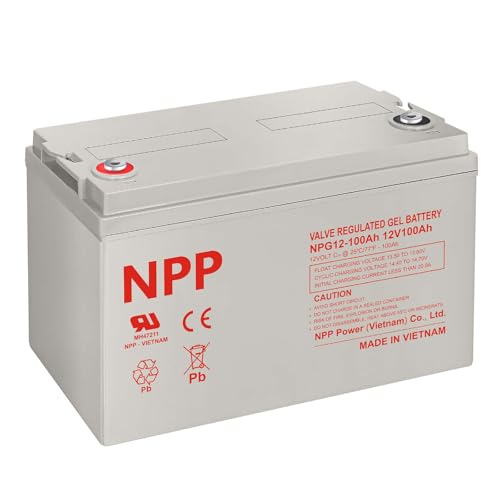
NPP NPG12-100Ah 12V Gel Battery

NPP FT12-200AH 12V 200Ah Deep Cycle AGM

NPP 12V 40Ah Deep Cycle AGM Battery (2 Pack)
More Details On Our Top Picks
The NPP NP12-45Ah slots into a sweet spot for anglers running larger trolling motors or anyone building a 24V or 36V system from matched units. Absorbed Glass Mat (AGM) construction holds the electrolyte in fiberglass mats, so the case resists vibration and can be mounted in tight battery compartments without worrying about spills. At 45Ah, the pack delivers enough runtime for a full day of moderate trolling on mid-horsepower setups before needing a charge.
Series-stacking is where this pick earns its place. You can pair two units to build a 24V bank or three for a 36V rig, and the T14 button terminals simplify the wiring job. Recreational boaters upgrading from a single 12V setup often land here first.
Everyday Wins
- 45Ah capacity covers full days of moderate trolling motor use
- AGM sealed design resists vibration and spills in rough water
- Series-friendly terminals make 24V and 36V banks simple to build
- Maintenance-free, so no topping off electrolyte after the season
Things To Consider
- Heavier than lithium alternatives at the same capacity
- Button terminals may require adapters if your existing cables use posts
Who It Suits Best
Multi-bank trolling motor setups where series-stacking two or three units gives anglers the voltage they need.
Consider Something Else When
You need a compact single-cell backup; the NPP HR1228W F2 12V 7.5Ah SLA Battery fits alarm and electronics standby roles in a much smaller footprint.
The Victron Energy Blue Smart IP65 earns its place in any boater’s dock cart who treats batteries like part of the electronics stack. A 12V 7A output is gentle enough for AGM house banks during the off-season and powerful enough to recover a deeply discharged starting battery overnight. The IP65 rating means the sealed housing shrugs off spray and rain when you leave it on the dock or in the bilge.
Built-in Bluetooth pairs with the Victron Connect app, so you watch voltage rise and current taper in real time without crawling back to the charger. Compared to bulk chargers that just push amps and call it done, the Blue Smart manages absorption and float stages properly, which extends AGM service life.
What Earns Its Place
- Bluetooth monitoring shows voltage and current straight on your phone
- Sealed IP65 housing tolerates splash and outdoor mounting
- Multi-stage charging protects AGM cells from overcharge damage
- Compact form factor slips into tight dock boxes
Points To Keep In Mind
- 7A output charges slowly on very large 200Ah banks overnight
- App-based setup takes a brief learning curve for first-timers
Made For
Boaters who want charger diagnostics in their pocket and trust software to manage the long-term health of their AGM banks.
Not Your Match When
You run a multi-bank trolling system on the trailer; the Minn Kota Precision On-Board Charger handles per-bank chemistry selection in a hardwired setup.
Small in stature, big on output; the NPP HR1228W delivers 28W per cell for a total of 168W, which matters more than the 7.5Ah rating suggests for short, high-current bursts. UPS (uninterruptible power supply) backups, alarm panels, and security systems need that punchy delivery during switchover, not a slow drip. The 5.94 by 2.56 by 3.94-inch body slips into standard 12V 7Ah and 8Ah compartments, so retrofitting older APC units like the BE700G and BX750M is straightforward.
A flame-retardant ABS case and sealed Valve Regulated Lead Acid (VRLA) design keep things safe in cabinets and utility closets. The wide F2 tab terminals match the wiring hardware already on most UPS battery compartments.
Practical Advantages
- 168W high-rate output handles UPS switchover cleanly
- F2 tab terminals match standard UPS battery wiring
- Flame-retardant case adds a margin of safety indoors
- VRLA sealed design tolerates a wide operating temperature range
Trade Offs
- Capacity tops out at 7.5Ah, so runtime is limited during long outages
- Dimensional fit must be verified before ordering to avoid terminal mismatch
Right Fit For
Backup power for UPS units, alarm panels, and networking gear where quick, high-current switchover matters more than long runtime.
Look Elsewhere When
You need a true deep-cycle bank for trolling motors; the NPP 12V 24Ah SLA Battery with INT Terminal handles sustained marine loads much better.
Tiny backup cells rarely make headlines, but the NPP 1.2Ah shows up in places where nothing else fits. Home alarm panels, ADI/Ademco security systems, and emergency exit lights all rely on standby cells like this to ride out short power interruptions. The sealed AGM design means you can drop it into a wall-mounted cabinet and forget about it for years, then swap it out when the panel’s low-battery chirp eventually fires.
F1 spade terminals match the standard wiring on most residential alarm boards and small UPS bricks. The compact case footprint is the whole point; this is not a battery you choose for capacity, you choose it because nothing larger will physically fit.
Reasons It Performs
- Compact footprint fits alarm panels and exit light housings
- Sealed AGM construction lasts years in standby service
- F1 spade terminals match common residential alarm wiring
- Maintenance-free, no need to check electrolyte levels
Worth Noting
- 1.2Ah capacity is only suitable for low-drain standby loads
- Not designed to start engines or run trolling motors
Best Suited To
Replacing the small standby cell inside a home alarm panel or emergency lighting fixture.
Skip It When
You need anything more than a brief outage buffer; the NPP HR1228W F2 12V 7.5Ah SLA Battery handles larger UPS loads with much more headroom.
Hardwired on-board chargers earn their keep the first time you forget to plug in before a trip and your trolling bank is dead. The Minn Kota Precision gives each bank its own chemistry profile, so AGM house batteries, gel banks, and flooded starter cells can all charge from the same unit without manual switching. That’s a real benefit for anglers running mixed banks on bigger boats.
Automatic temperature compensation adjusts the charge curve when summer heat pushes a battery box above 100°F, or cold mornings slow the chemistry down. Low-line voltage compensation matters on docks with sketchy shore power; the charger still delivers a consistent output instead of giving up.
Positive Takeaways
- Per-bank chemistry selection protects AGM, gel, and flooded cells together
- Temperature compensation adjusts for cabin heat and cold mornings
- Low-line voltage compensation handles weak shore power gracefully
- Permanent on-board installation means no forgetting to plug in
Small Caveats
- Higher capacity output makes it heavier than portable units
- Installation requires basic marine electrical comfort
Who Will Love This
Boats with separate starting and trolling banks running different battery chemistries from the same charger.
A Better Fit Elsewhere
You mainly charge a single AGM bank on a trailer; the Victron Energy Blue Smart IP65 Battery Charger 12V 7A handles that with phone-based diagnostics.
The Battery Tender 081-0157 isn’t a battery at all, but it belongs on this list because every AGM bank eventually fails quietly. Plug the lead into your ring terminals, mount the small LCD where you can see it, and a single button press gives you an open-circuit voltage reading. LEDs offer a quick go/no-go verdict for the moments when you don’t want to think about decimals.
Open-circuit voltage is the easiest sanity check in the marine world; if the resting number sits at 12.6V or above, the bank is healthy. Anything under 12.2V means you have a problem before you even load the trolling motor.
What It Does Well
- Single-button readout gives a voltage number in seconds
- LED go/no-go lights for quick pre-launch checks
- Ring-terminal lead connects without tools
- Compact LCD mounts almost anywhere on the console
Honest Caveats
- Only reads voltage, not state-of-charge or internal resistance
- Requires an existing ring-terminal connection on the battery
Perfect Match For
Boaters who want a quick visual health check before each launch without hauling out a multimeter.
Reach For A Different Pick When
You want full Bluetooth diagnostics and charger integration; the Victron Energy Blue Smart IP65 Battery Charger 12V 7A delivers that in one box.
The 24Ah mid-range is the unsung hero of the marine battery world, big enough to run a fish finder and small trolling motor all day, small enough to slide into a kayak hatch or jon boat storage compartment. NPP’s sealed lead acid version uses internal thread terminals, which accept bolts for a tight, vibration-resistant cable connection on rough water.
Mobility scooter owners have long trusted this size for daily reliability, which speaks well of its deep-cycle tolerance. The spill-proof SLA design lets you mount it on its side if your battery compartment shape demands it.
Benefits That Matter
- 24Ah capacity covers fish finders and small trolling motors for a full day
- Internal thread terminals give a tight, vibration-resistant cable clamp
- Sealed SLA construction allows flexible mounting orientation
- Works across kayaks, jon boats, scooters, and standby backup roles
Areas To Watch
- Internal thread terminals require specific bolt hardware that may not match existing cables
- Capacity is moderate; sustained heavy trolling motors will still drain it quickly
Built With In Mind
Anglers running fish finders and small trolling motors from kayaks or jon boats where space is at a premium.
Swap It Out When
You need a house bank for overnight loads; the NPP FT12-200AH 12V 200Ah Deep Cycle AGM Battery delivers ten times the capacity for serious off-grid use.
Gel batteries sit in a different lane from standard AGM, and the NPP NPG12-100Ah makes that trade-off clear. Instead of fiberglass mats holding liquid electrolyte, gel cells use a thickened silica-based electrolyte that resists stratification and self-discharge far better than flooded lead acid. For seasonal cabins and boats that sit unused for months, that translates to batteries that wake up ready after a long winter without a marathon charging session.
The 67-pound weight and substantial 13 by 6.8 by 8.4-inch footprint are real considerations, but for stationary solar banks and remote off-grid setups, the long storage tolerance and deep-cycle capability justify the bulk. Gel chemistry also handles slow discharge rates gently, which matches the way solar panels typically feed a bank.
Strengths Worth Knowing
- Gel chemistry can sit in storage for nearly two years and recover
- 100Ah capacity handles multi-day cabin solar loads
- Compatible with PV solar, wind turbine, and inverter setups
- Low self-discharge rate ideal for seasonal use
Things To Weigh
- Charging profiles differ from AGM and require a compatible charger
- 67-pound weight rules out portable or kayak applications
Whose Shelf It Belongs On
Off-grid cabins, RVs, and seasonal properties where long storage tolerance outweighs the weight penalty.
Another Choice May Suit
You want classic AGM behavior with lighter weight; the NPP FT12-200AH 12V 200Ah Deep Cycle AGM Battery doubles the capacity without gel’s charging quirks.
The 200Ah class marks the line between casual weekend boating and serious off-grid house power. NPP’s FT12-200AH ships 2400Wh of stored energy in a single 12V brick, enough to run cabin lights, a fridge, and a trolling motor bank through a multi-day trip without shore power. The 3% self-discharge rate is impressively low, so sitting in storage between seasons won’t drain it to nothing.
An ABS shell resists vibration, flame, and temperature swings, which matters when the battery lives in an uninsulated engine room or RV bay. Deep cycle recovery means you can pull the bank down hard without permanently damaging the plates.
Useful Touches
- 200Ah capacity covers multi-day house loads off-grid
- Low 3% self-discharge rate survives long storage
- ABS shell resists flame, vibration, and temperature swings
- Deep-cycle recovery tolerates heavy discharge
Potential Drawbacks
- Footprint is substantial, so measure your battery compartment carefully
- Charging from empty requires a properly sized marine charger
The Right Fit
Large house banks on cruising sailboats, off-grid RVs, and trolling motor setups that need sustained runtime.
Where A Sibling Pick Shines
Your boat runs on a smaller 24Ah trolling setup; the NPP 12V 24Ah SLA Battery with INT Terminal handles those needs without the bulk.
Two-packs solve a specific frustration for mobility scooter owners and anyone running a 24V bank from matched cells. NPP’s 40Ah pair ships with T14 nut-and-bolt terminals and a standard Group U1 footprint of 7.76 by 6.50 by 6.69 inches, so they drop into common power wheelchair and scooter battery trays without modification. Buying matched pairs from the same production run also reduces capacity drift over time.
Deep-cycle AGM construction means the pair tolerates the daily discharge cycles that mobility and backup power demand. Sealed maintenance-free operation removes the chore of checking water levels.
Strong Points
- Two-pack ships matched cells for balanced series banks
- T14 nut-and-bolt terminals provide solid cable connections
- Standard Group U1 size fits common wheelchair compartments
- Maintenance-free AGM design simplifies ownership
Where It May Fall Short
- Two-pack adds shipping weight compared to a single cell
- Terminal adapters may be needed for some existing cable hardware
Who Should Grab It
Power wheelchair and mobility scooter owners replacing worn 12V 35Ah or 40Ah banks with matched replacements.
Not Your Match When
You only need a single 12V cell for alarm or UPS backup; the NPP 12V 1.2Ah AGM SLA Battery handles that role in a much smaller box.
What To Weigh Before Choosing Agm Boat Battery
Capacity vs. Footprint
Capacity (measured in amp-hours, or Ah) tells you how long a battery can supply a given load before it runs flat. Higher Ah numbers mean longer runtime, but the trade-off shows up as bulk and weight, and not every boat has the space to spare. Small jon boats and kayaks do well with 24Ah units like the NPP 12V 24Ah SLA Battery, while house banks for cruising sailboats often need 200Ah or more.
Match capacity to the actual load you run, not the maximum rating printed on a sticker. A fish finder and small trolling motor pull a fraction of what a cabin fridge and inverter cycle through overnight.
Chemistry and Charging
AGM batteries, gel cells, and flooded lead acid each behave differently under a charger. Standard AGM accepts the broad bulk-absorption-float profiles common in marine chargers. Gel cells need lower voltage setpoints or the plates get damaged over time. Pick a charger that matches your chemistry, or pick batteries that match your charger, before you commit.
The Victron Blue Smart and Minn Kota Precision both handle multi-chemistry setups, which removes a step of guesswork when your bank grows over time.
Terminal Style and Cabling
Button terminals, nut-and-bolt posts, internal threads, and F1/F2 spades all exist in this category, and not every cable set fits every terminal. Measure your existing cables and tray dimensions before ordering, and remember that series banks need matching units from the same production run to stay balanced over years of cycling.
Maintenance and Storage Tolerance
AGM and gel batteries are sealed, so the maintenance chore list shrinks to occasional terminal cleaning and a winter top-up charge. Self-discharge rate matters most for seasonal boats; the NPP NPG12-100Ah gel cell and the NPP FT12-200AH AGM both keep their charge through months of sitting, which beats crawling under a tarp to find a dead bank every spring.
Key Considerations Across These Picks
Pitfalls Shoppers Hit
Matching a battery to your charger is the mistake that shortens AGM life more than anything else. A bulk charger that never tapers into absorption and float will cook the cells over a season, even if the battery itself is rated for years of service.
Buying a single cell when your system runs on series voltage is the other classic stumble. A 24V trolling motor bank needs two matched 12V batteries wired together, not one 24V unit cobbled from mismatched cells. Verify the battery compartment dimensions, terminal type, and series requirements before clicking through to checkout.
What The Higher Tier Buys
The jump from a budget 35Ah AGM to a 100Ah gel or 200Ah AGM front-terminal model pays for itself in three places: storage tolerance, cycle life, and headroom for future loads. A higher-capacity bank handles the same trolling motor draw with less depth of discharge, which is the main factor in how long the plates last before capacity drops permanently.
Spending up also buys features like Bluetooth monitoring and per-bank chemistry profiles, which turn battery care from a chore into a glance at your phone. For a boat you use weekly, that convenience adds up.
Frequently Asked Questions
How long does an AGM boat battery typically last?
An AGM battery rated for deep-cycle marine use typically delivers three to six years of service before capacity drops noticeably. Storage conditions, depth of discharge, and charger quality all play a role in hitting the upper end of that range.
Can I use a car battery charger on my AGM boat battery?
Standard automotive chargers often lack the voltage regulation AGM batteries need during the absorption and float stages. A marine-specific charger or a smart charger like the Victron Blue Smart protects the cells from chronic overcharge damage.
What size AGM battery do I need for a trolling motor?
Match the battery’s amp-hour rating to the motor’s draw at your typical running speed; a 24Ah battery covers small kayak motors, while 100Ah or larger banks handle full-day outings on 55-pound thrust rigs without falling below 50% depth of discharge.
Is gel better than AGM for marine use?
Gel cells store longer between charges and handle deep cycles gently, but they require specific charging profiles that not every marine charger supports. AGM batteries are more forgiving on the charging side and lighter for the same capacity, which suits most recreational boats.
How should I store my AGM battery over the winter?
A full charge before storage, a cool dry location, and a top-up charge every two to three months keeps an AGM battery healthy through the off-season. Disconnecting the negative cable prevents parasitic drain from electronics that draw small amounts even when the boat is parked.
Bottom Line
Start with the load you actually run, then match chemistry, capacity, and terminals to your boat and your charger. A weekend angler with a kayak and a fish finder lands in different territory than an off-grid cruiser running a house bank, and the right battery for one is overkill or under-spec for the other. Use this list as a map, measure twice, and the season ahead stays quiet where it counts.