Disposable AAA cells add up, both in cost and in the small drawer full of half-used packs you keep meaning to recycle. Switching to rechargeables only works when the cells hold their charge between uses and survive hundreds of cycles without fading mid-game.
This shortlist focuses on NiMH (nickel-metal hydride) AAA cells that ship ready to use, keep a usable charge on the shelf, and pair well with a decent slow charger. You’ll find mainstream picks for everyday remotes and toys, a high-capacity option for camera flashes, and a couple of phone-specific replacements for tired cordless handsets.
The Shortlist At A Glance

Panasonic BK-4MCCA16FA eneloop AAA 16-Pack (2100 Cycles)
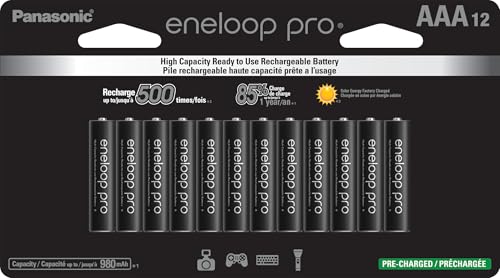
Eneloop Panasonic BK-4HCCA12FA pro AAA 12-Pack

Eneloop Panasonic BK-4MCCA10FA AAA 10-Pack (2100 Cycles)

Nraonrn 4-Pack NiMH AAA for Panasonic Cordless Phones

WENJOOP AAA NiMH 16-Pack (1100 mAh, 1200 Cycles)

WENJOOP AAA NiMH 8-Pack (1100 mAh)
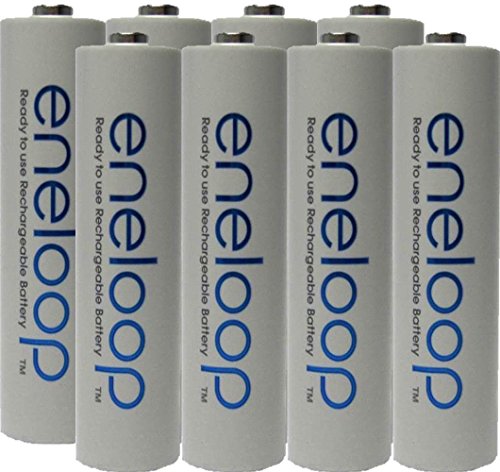
Eneloop 4th Gen AAA 8-Pack with Holder (2100 Cycles)

Nraonrn 4-Pack NiMH AAA for Cordless Phones
The Details Behind The Selections
Sixteen cells in one box sounds like a lot until you start populating a household: TV remote, soundbar remote, a couple of game controllers, wireless mouse, thermostat sensor, bathroom scale, and you still have spares for the drawer. That’s the case for the BK-4MCCA16FA, the standard eneloop AAA cell rated for roughly 2,100 recharge cycles and shipped pre-charged so it works straight out of the package.
Compared with the higher-output Pro cells covered later in this list, these standard eneloops trade a bit of peak current for much longer cycle life, which is the right tradeoff for most low-drain remotes and clocks. The chemistry is NiMH (nickel-metal hydride), the common rechargeable format that drops into any device designed for alkaline AAA without special chargers. Owners commonly report the cells holding usable charge in storage for extended stretches, which matters when a flashlight sits in a drawer for months between outages.
What It Does Well
- Rated for up to 2,100 charge cycles, so a single cell can outlast dozens of alkaline packs in a busy household.
- Pre-charged at the factory and ready to drop into a remote or controller the moment the box opens.
- Standard NiMH 1.2V chemistry means any decent NiMH-compatible charger handles these without a special mode.
- Sixteen-cell count covers a multi-room setup in one purchase and leaves dedicated spares.
- Low self-discharge behavior keeps cells usable after long idle stretches on a shelf.
Points To Note
- Voltage is 1.2V rather than the 1.5V of alkaline, so a few very low-battery indicators may read “low” earlier than alkalines did.
- You still need a charger, and the cells benefit from a smart or timer-equipped unit rather than a cheap overnight plug.
- For very high-drain gear like camera flashes, the higher-capacity Pro sibling later in this list is a closer fit.
Feature Snapshot
Who It Suits Best
Households running a dozen AAA-powered remotes, controllers, and sensors who want a single purchase to cover the lot with spares to spare.
Look Elsewhere When
Camera-flash owners and anyone running high-drain wireless gear should pick the Eneloop Panasonic BK-4HCCA12FA pro AAA 12-Pack instead.
Where the standard eneloop favors longevity, the Pro version favors output. The BK-4HCCA12FA ships as a 12-pack of pre-charged NiMH AAA cells tuned for higher drain devices: camera flashes that need fast recycle times, handheld game controllers that chew through alkalines in a weekend, and high-lumen flashlights that dim early on weaker cells.
The tradeoff shows up in cycle life: Pro cells are typically rated around 500 recharge cycles, roughly a quarter of the standard eneloop above. For a flash user firing weekly, that still means years of service. The cells ship factory-charged, so a freshly opened pack can drop into a flash or controller and deliver meaningful run time without a top-up. Owners who already own a smart NiMH charger can use the same charger they use for standard eneloops.
The Helpful Details
- Higher capacity and output than the standard eneloop for demanding gear like camera flashes and game controllers.
- Pre-charged at the factory, so a fresh pack works on first use without a pre-charge cycle.
- Twelve-cell pack covers four triple-cell flashguns or six pairs of controller batteries with a couple of spares.
- NiMH 1.2V chemistry keeps it compatible with any standard NiMH charger you already own.
Trade-Offs To Consider
- Rated for roughly 500 recharge cycles, much fewer than the 2,100-cycle standard eneloop in pick one.
- Capacity advantage matters most in high-drain gear, so low-drain remotes get little benefit from the extra cost.
- Some owners report self-discharge rates that creep higher than the standard eneloop when cells sit unused for months.
Right Fit For
Hobbyist photographers, flash users, and anyone powering wireless game controllers or other demanding AAA devices.
Swap It Out When
Remotes, clocks, and other low-drain devices are better served by the standard Eneloop Panasonic BK-4MCCA10FA AAA 10-Pack covered next.
If the 16-pack in pick one feels like overkill and the Pro output in pick two feels like too much, the 10-pack sits in the practical middle. The BK-4MCCA10FA uses the same standard eneloop chemistry, the same roughly 2,100 recharge cycle rating, and the same factory pre-charge as the larger bundle, just with six fewer cells in the box.
Ten cells line up neatly with the most common AAA use patterns: three devices needing three cells each, or five pairs. It is a sensible size for a single-floor apartment, a dorm room, or a small office where the device count is real but not sprawling. Like the rest of the eneloop family, these cells drop into anything that takes an alkaline AAA and benefit from any NiMH-compatible charger.
A Strong Showing
- Same long-life standard eneloop chemistry as pick one, just in a smaller 10-cell count.
- Pre-charged at the factory for immediate use out of the box.
- Count suits a single-room setup or a starter kit for someone moving away from disposables.
Honest Caveats
- No spare headroom compared with the 16-pack once you start filling multiple rooms.
- Still limited to roughly 1.2V output per cell, so don’t expect alkaline-like voltage in devices that flag low voltage early.
Built With In Mind
First-time rechargeable buyers and small households who want proven eneloop reliability without committing to a 16-pack up front.
Consider Something Else When
Camera-flash shooters and high-drain wireless users should reach for the Eneloop Panasonic BK-4HCCA12FA pro AAA 12-Pack instead.
Cordless handsets are an AAA use case most lists ignore. The Nraonrn 4-pack targets it directly, marketing compatibility with several older Panasonic battery models including HHR-55AAABU, HHR-65AAABU, HHR-70AAAB, HHR-4DPA, HHR-75AAABU, BK-40AAABU, and BK-30AAABU, along with select Motorola cordless phones.
The cells ship at 1.2V NiMH chemistry with a low self-discharge spec, which matters because a handset sits in its cradle for hours at a time and still needs to deliver talk time after a week of mostly idle days. Four cells cover two handsets that take a pair each, which is the most common home configuration. Match the listed battery model against the label inside your handset battery compartment before ordering, since handset compartments vary by model number.
Bright Spots
- Specifically listed as compatible with multiple common Panasonic and Motorola cordless phone battery part numbers.
- Pre-charged NiMH cells in standard AAA size for direct drop-in replacement.
- Low self-discharge rating suits handsets that spend most of the day off-hook in their cradle.
Some Limits To Know
- Niche fit: this pack targets cordless phones, so general-purpose remotes get the same performance as any other NiMH AAA.
- Capacity sits lower than mainstream eneloop cells, so talk-time expectations should stay modest.
- Compatibility is model-specific, so the wrong handset model means these cells won’t help.
Best Suited To
Anyone replacing aging battery packs in a Panasonic or Motorola cordless handset and wanting a direct-spec drop-in.
Another Choice May Suit
Households with mostly remotes and toys should choose the Panasonic BK-4MCCA16FA eneloop AAA 16-Pack instead.
The WENJOOP 16-pack is the budget play for anyone who needs lots of cells but does not need the brand recognition of an eneloop. Sixteen NiMH AAA cells at 1.2V, rated at 1,100 mAh and good for roughly 1,200 recharge cycles, marketed at the same low-drain household devices that eneloops handle: remotes, wireless mice, keyboards, clocks, flashlights, and small toys.
Compared with the standard eneloop 16-pack in pick one, this bundle costs less per cell and runs fewer recharge cycles. For a casual household where cells get cycled occasionally rather than weekly, the gap closes considerably. Capacity at 1,100 mAh runs lower than the eneloop, so a power-hungry game controller will drain faster than on the Pro cells, though it still outperforms a typical alkaline in most cases.
What Works In Its Favor
- Sixteen cells in a single box keeps the cost per AAA cell low for whole-house refills.
- 1,200-cycle rating still translates to years of casual use before capacity noticeably drops.
- NiMH chemistry means standard NiMH chargers work with no special mode required.
Practical Considerations
- Capacity at 1,100 mAh runs below mainstream eneloop cells, so high-drain devices run shorter on a charge.
- Brand-new brand with less long-term track record in households than the long-running eneloop line.
- A smart charger helps these cells reach their cycle rating instead of being cooked by an old overnight plug.
Whose Shelf It Belongs On
Budget-conscious households powering low-drain remotes, clocks, and small toys where max cycle life is less critical than cell count.
Where Another Pick Suits Better
Anyone who cycles cells weekly and wants maximum long-term value should pick the Panasonic BK-4MCCA16FA eneloop AAA 16-Pack instead.
Eight cells is the comfortable middle for many households: enough for two quad-cell devices or four pairs, without the surplus feel of a 16-pack. WENJOOP’s 8-pack uses the same 1,100 mAh NiMH chemistry as the 16-pack above, just at half the count, which keeps the per-pack price down for shoppers who want to test rechargeables without committing to a large bundle.
Same chemistry means same compatibility story: any NiMH charger handles these, and any device that takes an alkaline AAA accepts them. The 1,100 mAh capacity lands lower than eneloop cells, which matters most for power-hungry game controllers and high-lumen flashlights. For most remotes and clocks, the run-time gap versus a premium cell is barely noticeable.
What Earns Its Place
- Smaller count than the 16-pack keeps the up-front cost manageable for first-time rechargeable buyers.
- Standard NiMH 1.2V chemistry works with the chargers you probably already own.
- Targets the same everyday-device use cases as the larger WENJOOP bundle.
Less Ideal Details
- 1,100 mAh capacity trails mainstream eneloop cells in demanding wireless controllers.
- Less brand history than the long-established eneloop line, so long-term aging behavior is less documented.
Perfect Match For
Smaller households and starter kits that want budget rechargeables without buying a 16-pack they may not cycle through quickly.
Reach For A Different Pick When
Anyone running high-drain camera flashes and game controllers should pick the Eneloop Panasonic BK-4HCCA12FA pro AAA 12-Pack instead.
Eneloop’s fourth-generation cells are the lineup’s cold-weather upgrade, with manufacturer-marked tolerance for temperatures reaching down to roughly minus twenty degrees Celsius, beyond what earlier eneloop generations supported. The 8-pack ships with a plastic storage holder, a small but practical touch for keeping spare cells organized in a drawer rather than loose and rolling around.
Outside of cold garages and outdoor sensor boxes, the 4th gen behaves much like the standard eneloops covered earlier: NiMH 1.2V, factory pre-charged, rated for around 2,100 recharge cycles. If you have an unheated shed, a freezer alarm, or outdoor temperature sensors that fade by midwinter, this is the AAA cell worth reaching for. In a climate-controlled house, the standard eneloop 10-pack in pick three will do the same job for likely less money.
Real Benefits
- Cold-weather tolerance reaches roughly minus twenty degrees Celsius, useful for unheated spaces and outdoor sensors.
- Long cycle rating similar to the standard eneloop cells covered earlier in this list.
- Factory pre-charged for immediate use out of the package.
- Plastic storage case included, which helps keep spares organized in a drawer.
A Few Limitations
- Cold-weather premium pricing makes it a pricier choice for indoor-only devices.
- Eight-cell count is smaller than the 16-pack, so multi-room households may need multiple purchases.
Feature Card
Made For
Households with unheated garages, outdoor temperature sensors, or winter camping gear that exposes cells to deep cold.
Not Your Match When
Indoor-only households looking for maximum cell count should pick the Panasonic BK-4MCCA16FA eneloop AAA 16-Pack instead.
The second Nraonrn 4-pack targets the same cordless-phone use case as pick four, this time with broader compatibility marketing for any electronic product using AAA batteries in addition to Panasonic and Motorola handsets. Like the previous pack, it lists compatibility with HHR-55AAABU, HHR-65AAABU, HHR-70AAAB, HHR-4DPA, HHR-75AAAB, BK-40AAABU, and BK-30AAABU.
The chemistry is the same NiMH 1.2V with low self-discharge characteristics, and the pre-charge behavior is the same out of the box. If you have one handset to revive rather than a fleet, a 4-pack is the sensible size. For larger homes with multiple handsets, scaling up to a 16-pack from a mainstream brand may be the cleaner long-term play.
Key Advantages
- Compatible with a wide range of common Panasonic and Motorola cordless phone battery models.
- Pre-charged NiMH AAA cells ready for direct drop-in replacement.
- Low self-discharge suits the cradle-heavy duty cycle of home handsets.
What To Weigh
- Same modest capacity as the other Nraonrn pack, so talk-time expectations should stay realistic.
- Four-cell count fits two handsets but leaves nothing in the spares drawer for the next failure.
- Compatibility is model-specific, so confirming the battery part number inside your handset is essential.
Who Should Grab It
Homeowners with a single cordless handset showing the low-battery icon, looking for a direct-spec NiMH replacement.
A Better Fit Elsewhere
Anyone replacing batteries across multiple devices should choose the Panasonic BK-4MCCA16FA eneloop AAA 16-Pack instead.
Choosing The Right Aaa Rechargeable Battery For Your Gear
Capacity, Cycle Life, And Self-Discharge
Capacity (measured in mAh, or milliamp-hours) tells you how long a cell can power a given device before it needs a recharge. Higher numbers mean longer runtime between charges. Cycle life is the number of full charge-discharge rounds a cell can take before its capacity noticeably drops; mainstream NiMH cells range from a few hundred to over two thousand cycles. Self-discharge describes how quickly a cell loses charge while sitting unused on a shelf. Low self-discharge NiMH (often branded LSD or “ready to use”) holds a usable charge for months, which matters for emergency flashlights and rarely-used remotes.
Matching The Cell To The Device
Low-drain devices such as TV remotes, wall clocks, and simple toys can run on almost any NiMH AAA. Mid-drain devices such as wireless mice, keyboards, and bathroom scales benefit from low self-discharge cells so they don’t need constant top-ups. High-drain devices such as camera flashes, game controllers, and high-lumen flashlights benefit from higher-capacity cells rated for stronger output, like the Pro eneloop variant covered earlier.
Chargers And Long-Term Care
Rechargeable cells are only as good as the charger that tops them up. A smart charger with individual cell monitoring prevents overcharging and detects cells that have reached end of life, which extends the usable life of an AAA set. Avoid “dumb” overnight plugs that pump power continuously: they cook cells slowly and shorten cycle life. Store spare cells at room temperature in their holder, and avoid mixing brands and capacities in the same device, since mismatched cells discharge unevenly and shorten runtime.
What The Specs Really Tell You
Mistakes Worth Dodging
The most common error is grabbing the cheapest AAA NiMH pack and expecting eneloop-class longevity. Budget cells often use lower-grade cells with shorter cycle life, so the per-cycle cost ends up closer to mainstream brands than the sticker suggests. The second mistake is mixing old and new cells in the same device: a worn cell pulls voltage down faster, dragging the whole device’s runtime with it. The third is buying a high-capacity Pro cell for low-drain remotes, paying extra for output the device will never use.
Where The Extra Money Goes
Premium cells like the eneloop line command higher prices because of factory pre-charging, tighter quality control, and longer cycle ratings. The chemistry itself is similar across brands, but consistency from cell to cell matters: a pack where every cell actually delivers close to rated capacity will outperform a cheaper pack where some cells are weaker than others. Higher-tier cells also tend to ship with storage cases and clearer documentation, which makes ownership easier in a busy household.
Frequently Asked Questions
How long do rechargeable AAA batteries last on a single charge?
A typical NiMH AAA cell runs a TV remote for months of normal use, a wireless mouse for weeks, and a game controller for a handful of long sessions before needing a recharge.
Can I use rechargeable AAA batteries in any device that takes alkaline?
Yes, in nearly all cases. NiMH cells output 1.2V instead of 1.5V, so a few devices with very strict low-battery cutoffs may read “low” earlier than with alkalines, but most gear accepts the difference without trouble.
How many times can I recharge a typical NiMH AAA cell?
Standard low self-discharge cells are commonly rated for roughly 2,100 cycles, while higher-output variants trade some longevity for stronger output and may sit closer to 500 cycles.
Do I need a special charger for rechargeable AAA batteries?
Any NiMH-compatible charger works, but a smart charger with individual cell monitoring extends cell life and detects weak cells much better than an inexpensive overnight plug.
Should I remove rechargeable batteries from devices I’m not using?
For long-term storage, yes. For everyday devices that get regular use, leaving them in place is fine. Avoid storing cells fully discharged for months, since deeply discharged NiMH cells can lose capacity permanently.
Bottom Line
For most households, the standard eneloop 16-pack covers remotes, controllers, and toys with a single purchase and spares to spare. Camera-flash owners and game-controller power users get more from the Pro eneloop. Anyone reviving a tired cordless handset should match the battery part number on the existing cells before ordering, and a smart charger turns any of these packs into a long-term household investment rather than a recurring disposable-battery replacement.