Anyone who has watched a stack of remote controls, game controllers, or kids’ toys chew through disposable batteries in a single month knows the value of switching to rechargeables. The trick is finding a setup that actually holds a charge, fits the devices you care about, and doesn’t punish you with a charger that takes all night. The lineup below covers everything from high-capacity NiMH (nickel-metal hydride, the common rechargeable chemistry used in AA/AAA cells) workhorses to newer lithium-ion options that deliver a steady 1.5V output for power-hungry gear.
A Quick View Of The Lineup

Eneloop Panasonic AA Ni-MH Rechargeable Batteries 24-Pack
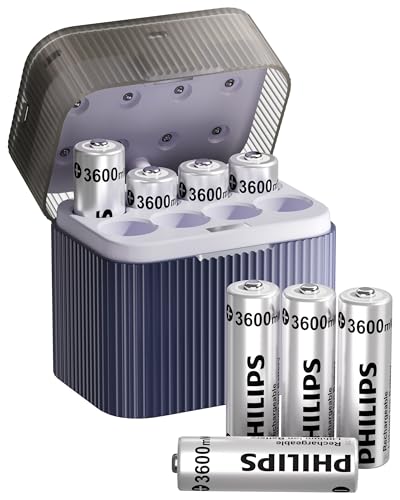
PHILIPS Rechargeable AA Lithium Batteries 8 Pack

BEVIGOR AA Rechargeable Batteries with Charger 10-Pack
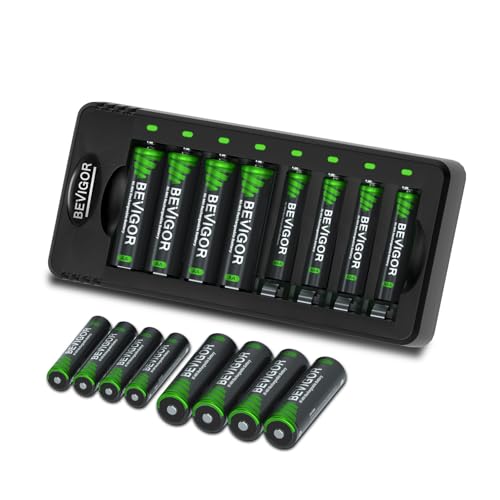
BEVIGOR Rechargeable NiMH AA/AAA Battery Kit with Charger
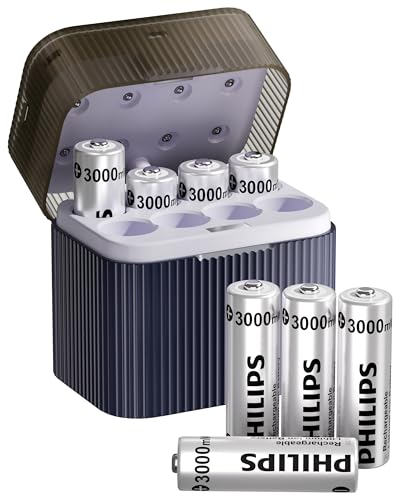
PHILIPS Rechargeable 3000mWh AA Lithium Batteries 8 Pack

BEVIGOR Rechargeable AA Batteries 24-Pack 2800mAh

Eneloop Panasonic CC55 Charger with AA and AAA Rechargeables

Eneloop Panasonic CC55 Charger with Pro AA and AAA Rechargeables

PHILIPS Rechargeable AAA Lithium Battery 8 Pack

PHILIPS Rechargeable AA Lithium Battery 4 Pack
Taking A Closer Look At The Options
A 24-pack of Eneloop AAs is the kind of purchase you make once and then quietly forget about for the next decade. The cells arrive pre-charged, which means a new controller or wall clock can be powered up the moment the package lands on your kitchen counter. For anyone running a household full of remotes, flashlights, and small electronics, that ready-to-use convenience is the real headline.
The brand’s reputation rests on slow self-discharge chemistry that holds usable charge across years of drawer storage. You can toss a spare set in a junk drawer today and still pull working batteries out during next year’s gift-wrapping session. Owners commonly rotate the same set across game controllers, wireless mice, and digital scales without seeing a sudden drop in performance.
Positive Points
- Pre-charged at the factory and ready to drop into devices straight from the box.
- Low self-discharge keeps stored cells usable for years, which is a real advantage for emergency gear.
- Steady NiMH output handles remote controls, clocks, and wireless accessories without voltage sag.
- The 24-cell count covers an entire household in a single purchase and lets you rotate matched sets.
- Wide device compatibility across low-drain and moderate-drain electronics.
Things To Consider
- This is a batteries-only pack, so a charger must be purchased separately if you don’t already own one.
- Voltage drops gradually during use, which can shorten runtime in very high-drain devices compared with lithium options covered later.
Key Specs
Who It Suits Best
Households with a steady rotation of AA-powered remotes, clocks, and small gadgets who want a set-and-forget stockpile.
Where Another Pick Suits Better
Gamers running power-hungry Xbox controllers will see longer sessions from the PHILIPS Rechargeable AA Lithium Batteries 8 Pack further down this list.
Where the Eneloop pack above settles for steady-but-modest NiMH output, this PHILIPS set moves into lithium-ion territory, which matters when your devices actually drain batteries quickly. Game controllers, camera flashes, and handheld fans all benefit from the stable 1.5V output that holds its voltage from full to nearly empty. You stop guessing how much runtime is left on the meter.
The cells use a Li-ion (lithium-ion) chemistry that maintains full voltage rather than tapering, which is why high-drain gear keeps behaving normally until the battery actually dies. This is the difference between a controller that warns you mid-match and one that just suddenly stops. It also means fewer recharge cycles in heavy-use environments.
A Strong Showing
- Steady 1.5V output keeps high-drain devices running at full strength throughout the discharge cycle.
- Higher per-cell energy capacity than typical NiMH AAs, which translates to longer session times in demanding gear.
- Rechargeable lithium chemistry handles deep cycles without the memory effect (where batteries “remember” a shorter runtime if repeatedly recharged before empty) common to older chemistries.
Trade Offs
- Requires a compatible lithium-ion charger rather than a standard NiMH unit, which adds to your setup cost.
- Higher per-cell cost may feel steep for shoppers stocking up on low-drain remote controls.
Best Suited To
Gamers and content creators who burn through disposable AAs in controllers and on-camera accessories and want stable voltage.
Skip It When
You mainly power TV remotes and clocks, where the BEVIGOR AA Rechargeable Batteries with Charger 10-Pack offers a friendlier entry point.
The pitch here is straightforward: ten high-capacity NiMH cells plus a charger in one box. For someone crossing over from disposables for the first time, that bundled approach removes the question of whether the cells will play nicely with whatever charger is already in a junk drawer. Plug in, charge, and you’re moving.
Each AA sits at a 2800mAh rating, which is on the higher end for the NiMH format. Remote controls, kid’s toys, and wireless keyboards will run longer between top-ups than with older low-capacity rechargeables. The charger also uses independent slots, so a single worn-out cell doesn’t hold up the whole batch waiting for its turn.
Advantages To Know
- Ten-cell bundle with a charger included removes the guesswork from getting started.
- Higher mAh (milliamp-hour) rating than typical NiMH AAs, so devices run longer between charges.
- Independent charging slots let you top up a single cell without waiting for the rest.
Worth Noting
- The charger is NiMH-focused, so it will not work with the lithium-ion picks covered later in this list.
- Cells ship pre-charged but owners commonly report a partial initial top-up is wise before first use.
Made For
First-time rechargeable shoppers who want a complete starter set without piecing together a charger and cells separately.
Look Elsewhere When
You need both AA and AAA support in one kit, in which case the BEVIGOR Rechargeable NiMH AA AAA Battery Kit with Charger 8AA and 8AAA covers both sizes.
Most kits force you to choose between AA-heavy or AAA-heavy counts, which never matches a real household. This BEVIGOR set ships eight of each, plus a charger that handles both sizes in the same slots. That balance matters the first time you realize the wireless doorbell takes AAA and the camera flash takes AA on the same afternoon.
The cells are designed for low self-discharge, so spares stay useful in storage rather than going flat by spring. Independent charging channels mean you can top up a pair of AAs without pulling the AAA batch that’s already at full. It’s the quiet kind of convenience that makes a difference in a busy household.
Reasons It Performs
- Equal AA and AAA counts match the mixed battery draw of most homes.
- Independent slot charging supports mixed-size top-ups without pairing requirements.
- Low self-discharge design keeps stored cells ready for months at a time.
- Recharge cycle count sits well above entry-level cells.
Honest Caveats
- The included charger is basic, so owners wanting fast-charge or per-cell readouts may want a dedicated unit.
- Capacity is lower per cell than the AA-only 2800mAh BEVIGOR set covered earlier.
Right Fit For
Households balancing both battery sizes across TV remotes, game controllers, small electronics, and flameless candles.
Reach For A Different Pick When
You mostly need AA capacity for camera flashes and pro gear, where the Eneloop Panasonic CC55 Charger with Pro AA and AAA Rechargeables delivers a noticeable upgrade.
The interesting twist here is the charging case. Instead of a wall charger and a tangle of cables, PHILIPS bundles an all-in-one storage and charging box that tops up the cells through a Type-C connection. For anyone carrying a controller, camera, or portable light on the road, that case earns its space in a backpack.
The lithium chemistry keeps voltage steady across the discharge cycle, similar to the larger-capacity PHILIPS AA set covered earlier. The tradeoff is a smaller per-cell capacity, which means more frequent swaps in extreme-drain devices. For travel cameras and handheld gaming, however, the convenience factor carries the day.
Real-World Strengths
- Integrated charging case simplifies travel kits and cuts cable clutter on the road.
- Stable 1.5V output suits cameras and controllers that punish sagging NiMH voltage.
- Type-C input matches the cables already in most modern travel bags.
- Lighter per-cell weight than NiMH equivalents, which helps in handheld gear.
Points To Note
- Per-cell capacity is lower than the larger PHILIPS lithium set, so heavy users will swap more often.
- Charging case capacity is shared across all eight cells, so topping the full set takes longer.
Feature Snapshot
Whose Shelf It Belongs On
Frequent travelers and on-location creators who need a compact charging setup that fits inside a camera bag.
A Better Fit Elsewhere
Home users who want maximum per-cell runtime should look at the PHILIPS Rechargeable AA Lithium Batteries 8 Pack with 3600mWh cells covered earlier.
Twenty-four AAs at 2800mAh is the kind of bulk pick that makes sense for households where toys and remotes drain cells faster than anyone remembers to replace them. The Eneloop 24-pack earlier in this list targets the same count, but at a premium tier. This BEVIGOR set aims for the same coverage at a more accessible per-cell cost.
Standard NiMH voltage (1.2V rather than the 1.5V of disposables and lithium rechargeables) means a small handful of sensitive devices may show low-battery warnings earlier than expected. For most home electronics, this is invisible. For digital scales or specialty meters, you may notice it.
Strong Points
- Generous 24-cell count covers a household with extras to spare for visitors and travel.
- Each cell carries a solid 2800mAh capacity, which is competitive for the NiMH format.
- Low self-discharge supports longer storage between rotations.
- Cells ship pre-charged and ready to deploy out of the box.
Points To Keep In Mind
- Charger not included, so you’ll need a separate NiMH unit to keep the cells topped up.
- 1.2V output may trigger early low-battery warnings in devices calibrated for 1.5V cells.
Quick Facts
Perfect Match For
Busy homes with toys, remotes, and flashlights eating through batteries faster than a smaller pack can keep up.
Swap It Out When
You want a single-charger-and-cells bundle instead of buying the charger separately, in which case the BEVIGOR AA Rechargeable Batteries with Charger 10-Pack fits better.
The CC55 is one of those chargers that turns recharging from a chore into a small pleasure. Each of the four slots monitors its cell independently, and color-coded LEDs (green for 80%+, orange for mid-range, red for 20% or less) tell you exactly where each battery sits. No more guessing whether a cell is fully topped up before heading out the door.
The kit includes both AA and AAA Eneloop cells in matching eight-packs, so this is a complete foundation rather than a partial starter. Owners commonly report using the same kit for years because the cells keep cycling through and the charger just keeps working. It’s a quieter form of long-term value.
Well-Handled Touches
- Four independent charging channels with individual LED indicators per slot.
- Compatible with both AA and AAA cells, including the higher-capacity pro line.
- Eight AA and eight AAA Eneloop cells included in the box.
- Long advertised cycle life across both cell sizes.
Some Limits To Know
- Higher price point than basic bundled chargers, so casual shoppers may not need the per-slot readouts.
- Only four cells charge at once, so larger families may want a backup charger for big rotation days.
Who Should Grab It
Enthusiasts who want a premium charger that doubles as an at-a-glance battery tester without third-party apps.
Another Choice May Suit
Shoppers seeking higher-capacity pro cells should consider the Eneloop Panasonic CC55 Charger with Pro AA and AAA Rechargeables instead.
This is the high-capacity sibling to the kit above. The CC55 charger stays the same, but the included AA and AAA cells move into the Pro line with a noticeably higher per-cell capacity. Flash users, mirrorless shooters, and anyone running power-hungry handheld gear will feel the difference in cycle length per charge.
The trade is shorter advertised recharge cycle counts compared with standard Eneloop cells, which is the expected cost of higher mAh in any NiMH chemistry. For daily-driver electronics, that tradeoff barely matters. For studio strobes and field monitors drawing current hard, it absolutely does.
Features That Help
- Pro-line AA cells push capacity well above the standard Eneloop set covered earlier.
- Same reliable CC55 charger with per-slot LED readouts for charge progress.
- AA and AAA Pro cells included for full-size and small-format coverage.
A Few Limitations
- Pro cells support fewer total recharge cycles than standard Eneloop NiMH cells.
- Price sits at the top of the kit options in this list.
Built With In Mind
Photographers and content creators running flash units, LED panels, and field audio gear on AA power.
Where A Sibling Pick Shines
Casual households who don’t push cells to their limits will find better everyday value in the Eneloop Panasonic CC55 Charger with AA and AAA Rechargeables covered above.
AAA lithium rechargeables are still uncommon enough that a solid pack stands out. This PHILIPS set brings the same stable 1.5V output philosophy to the smaller format, so TV remotes and small electronics stop giving up early in the discharge curve. For anyone replacing AAA alkalines in a busy household, the runtime difference is noticeable right away.
The 1300mWh rating is the realistic cap for AAA lithium cells at this point, and the included Type-C charger handles all eight slots independently. Slim devices that used to feel underpowered with older NiMH AAA rechargeables will appreciate the voltage stability more than the raw capacity number.
The Upside
- Lithium-ion stable voltage in the AAA format, which has historically lagged AA offerings.
- Eight independent charging slots via Type-C input.
- Compatible with common electronics that traditionally run through disposable AAA batteries.
Where It May Fall Short
- Per-cell capacity is the smaller format’s natural limit, so high-drain devices will need more frequent swaps.
- AAA lithium cells cost more per cell than NiMH AAA alternatives.
Who Will Love This
Anyone tired of replacing AAA batteries in slim remotes, wireless mice, and small smart-home sensors every few weeks.
Consider Something Else When
You mostly use AA cells across your household, where the PHILIPS Rechargeable AA Lithium Batteries 8 Pack covered earlier in this list is a stronger starting point.
A four-pack is the smallest practical swap for a single console controller, and that’s exactly the use case PHILIPS built this around. The 3600mWh per-cell capacity is the top of the AA lithium range covered in this list, which means longer sessions between swaps during marathon play. The integrated charging case also stores the cells when they’re not in use, so loose batteries stop rolling under the couch.
The smaller count is a deliberate choice. You may find the four-cell limit restrictive if you rotate multiple controllers or photo gear at the same time. For a single-player setup, however, the four-cell footprint is tight, tidy, and easy to keep charged.
Useful Highlights
- Top-tier 3600mWh per-cell capacity among the AA lithium options in this roundup.
- Compact 4-pack footprint suits a single controller or camera kit.
- Integrated charging and storage case cuts cable clutter on a desk.
Practical Considerations
- Four-cell pack runs out fast for multi-controller households or busy photo shoots.
- Higher per-cell cost means a larger family rotation requires a bigger initial buy.
The Right Fit
Single-controller setups and photographers who want the highest-capacity AA lithium cells in a tidy charging case.
Not Your Match When
You want a larger stockpile for multiple devices, in which case the PHILIPS Rechargeable AA Lithium Batteries 8 Pack covers that need at a slightly lower per-cell capacity.
What Matters Most Before Choosing Aa Rechargeable Batteries With Charger
Chemistry And Voltage Behavior
The biggest decision is whether to go with NiMH or lithium-ion cells. NiMH, like the Eneloop packs and BEVIGOR sets in this list, runs at a steady 1.2V (volts) and tolerates partial charges well, making it ideal for remotes, clocks, and casual electronics. Lithium-ion chemistry, found in the PHILIPS offerings, holds a stable 1.5V throughout the discharge cycle, which keeps power-hungry gear like game controllers and camera flashes running at full strength until the cells actually drain. The trade-off is that lithium cells require their own compatible chargers rather than a standard NiMH unit.
Capacity And Cycle Life
Milliamp-hour ratings matter most when devices drain cells quickly. A 2800mAh AA NiMH cell outlasts a 1500mAh cell in a toy or handheld fan, but high mAh counts sometimes come with fewer recharge cycles, so consider how often you’ll actually refill the set. For mostly idle electronics, a lower-capacity cell with longer cycle life often wins on long-term value.
Charger Design And Slot Independence
A charger with independent slot monitoring, like the Panasonic CC55 kits in this list, lets you top up single cells without pairing them or waiting for the rest of the batch. Bundled starter kits with simpler chargers work fine for small rotations, but heavy households benefit from per-slot LEDs (light-emitting diode indicators that show charging status for each individual slot) or LCD readouts (small digital screens that display charge level, voltage, or other data) that show exact charge progress.
Format Coverage: AA, AAA, Or Both
Homes rarely run on a single battery size, so mixed kits like the BEVIGOR AA/AAA set pay off quickly. If your household is mostly AA, dedicated AA packs offer higher capacity per cell. AAA-only households, or anyone running slim smart-home sensors, will want a dedicated lithium AAA option for voltage stability.
Key Considerations Across These Picks
Mistakes Worth Dodging
The most common slip-up is mixing NiMH and lithium-ion cells in the same charger, which can damage cells or simply fail to charge them at all. Keep a dedicated charger for each chemistry. Another frequent mistake is buying high-capacity NiMH cells expecting 1.5V output: the nominal (rated average) voltage stays at 1.2V regardless of mAh, so devices calibrated for 1.5V may show early low-battery warnings even on a fully charged cell.
When Paying More Pays Off
Premium kits, like the Panasonic CC55 sets and the higher-capacity PHILIPS lithium packs, justify their cost through smarter chargers, longer cycle life, or stable 1.5V output. The upgrade is worth it for daily gamers, photographers, and households with many high-drain devices. For casual use with mostly remotes and clocks, a value bundle covers the bases without the premium tier.
Frequently Asked Questions
How long do rechargeable AA batteries typically last per charge?
NiMH AAs typically run from several days to a few weeks in remotes, while lithium-ion AAs can extend that range in high-drain devices like controllers. Real-world runtime varies widely based on the device’s power draw and how often it’s actually pulling current.
Can I use any charger with rechargeable AA cells?
No, you should match the charger to the chemistry. NiMH cells need NiMH chargers, and lithium-ion cells need compatible lithium-ion chargers. Mixing the two can damage cells or simply not charge them properly.
Are rechargeable batteries worth it for low-drain devices like remotes?
Yes, especially low self-discharge NiMH cells that hold usable charge across years in storage. You may not notice a runtime difference compared with disposables, but the convenience of not constantly buying replacements adds up fast.
What’s the difference between NiMH and lithium-ion AA rechargeables?
NiMH cells run at a nominal 1.2V and tolerate partial top-ups well, which suits remotes and clocks. Lithium-ion AA cells maintain a steady 1.5V throughout use, which keeps power-hungry gear like game controllers and flash units running at full performance longer.
How many recharge cycles can I expect before replacing cells?
Most quality NiMH cells advertise between 1500 and 2100 cycles, while lithium-ion options typically land around 1200 cycles. Real-world cycle counts depend on depth of discharge, charging habits, and storage conditions across the years.
Closing Remarks
The right rechargeable setup depends entirely on what you’re powering. Lithium-ion picks shine for high-drain gear and travel, while NiMH kits remain the most flexible option for whole-house coverage. Start by listing the devices you actually use, then match chemistry and capacity to that real demand.