Dead batteries never warn you before they quit, and that’s exactly the problem these tools solve. Whether you commute daily, run a small fleet of work vans, or keep a motorcycle and a boat ready for the weekend, a solid handheld tester tells you the state of your battery, the strength of your alternator, and whether that slow crank means anything serious. This roundup walks through ten distinct options, from no-frills load testers for the home garage to diagnostic units with built-in printers and Bluetooth reporting. Most people only need one device that matches their vehicles, and a few minutes of context will keep you from overbuying or underbuying.
The Shortlist At A Glance

TOPDON BT300P 12V/24V Car Battery Tester

TOPDON BT600 Plus 6V/12V/24V Car Battery Tester

NEIKO 40510A 100 AMP Load Tester

TOPDON BT100 12V Battery Load Tester

ANCEL BA101 Plus 6V/12V Load Tester

ANCEL BA101PRO 12V/24V Battery Tester

KAIHENG 6V/12V Load Tester with Voltmeter
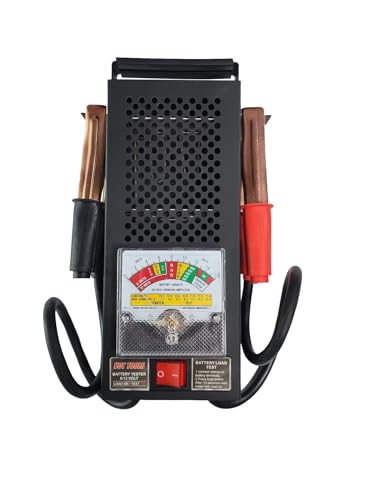
VCT 12V/6V Battery Load Tester

ANCEL BA101 12V Digital Battery Tester
Launch BST360 Bluetooth 12V Battery Tester
A Breakdown Of The Leading Choices
The TOPDON BT300P handles both 12V and 24V systems, which puts it ahead of most home-focused testers that only speak 12V. In a small shop or for someone juggling a daily car plus a diesel truck, that dual-voltage coverage eliminates the need to keep two tools on the bench. The built-in thermal printer is the standout feature: it spits out a receipt-style diagnostic report you can hand to a customer or file away for your own records.
Pair this with a vehicle-side cranking test and a charging system check, and the BT300P becomes a one-stop diagnostic tool rather than just a battery checker. It reads State of Health (SOH, a percentage showing how much life the battery has left compared to a new one) and State of Charge (SOC, the current fuel-gauge level of the battery) across common chemistries, so flooded, AGM, and gel batteries all get a fair reading. Compared to the simpler NEIKO 40510A covered later, this unit trades analog simplicity for a screen and a paper trail.
Real Benefits
- Dual 12V/24V support covers both cars and heavy-duty trucks without a second tester
- Built-in thermal printer creates a physical record you can hand to a customer or file for warranty claims
- Reads SOH, SOC, voltage, and CCA (Cold Cranking Amps, the battery’s starting power) for flooded, AGM flat plate, AGM spiral, and gel batteries
- Charging system test catches weak alternators before they strand you
Points To Note
- Thermal printer paper rolls are a consumable you will need to restock eventually
- More menu layers than a fixed-load tester, so first-time users may need to keep the manual nearby
Best Suited To
Small repair shops, mobile mechanics, and serious DIYers who service a mix of cars and trucks and want a paper record.
Skip It When
You only own a single 12V passenger car and prefer a one-button experience, in which case the NEIKO 40510A is a friendlier fit.
The BT600 Plus stretches beyond the BT300P by also reading 6V batteries, which matters if you own a classic car, a golf cart, or older farm equipment. Where it really earns its premium label is the addition of resistance and sequence tests, two metrics most consumer-grade testers skip entirely. Those extra readings help pinpoint parasitic drains and weak cells inside a battery pack.
You also get the same built-in thermal printer as the BT300P, which keeps a paper trail for service records. Charging and cranking tests remain standard, so you still get the full system view most people actually want. The trade-off for that depth is a steeper learning curve and a higher cost.
A Few Strong Suits
- Adds 6V coverage alongside 12V and 24V for classic cars and equipment batteries
- Resistance and sequence testing flags parasitic drains most testers ignore
- Built-in printer produces a customer-ready diagnostic receipt
- Reads SOH, SOC, voltage, and CCA across flooded, AGM flat plate, AGM spiral, gel, and EFB (Enhanced Flooded Battery, common in start-stop vehicles) batteries
Trade-Offs
- Premium price tag that hard to justify for occasional weekend use
- Extra test modes add menu depth that casual users may not touch
Feature Snapshot
Who It Suits Best
Professional technicians and serious enthusiasts who service a wide range of vehicles and want paper-trail diagnostics.
A Better Fit Elsewhere
Budget-focused owners who only test the family car should look at the ANCEL BA101 Plus for a simpler 6V/12V experience.
The NEIKO 40510A goes old-school on purpose, and for many home mechanics that is exactly the appeal. There is no screen to navigate, no firmware updates, and no app to pair: you clamp the leads to the battery, hit the load button, and read the voltmeter needle. For a homeowner who tests one or two vehicles a season, that simplicity wins on confidence and longevity.
It draws a fixed 100 AMP load on 12V batteries (up to 1,000 CCA) and 50 AMP on 6V batteries, simulating the strain of a real starter motor. The tradeoff is heat: you have to wait a minute between tests, with three tests in five minutes as the practical ceiling. That cooling window keeps the internal resistor from cooking itself, so you follow the rhythm and it lasts for years.
The Good Stuff
- Analog voltmeter shows at a glance whether the battery holds under load
- 100 AMP fixed load accurately mirrors a starter motor’s draw
- Works on both 6V and 12V batteries, including flooded and AGM types
- Heavy-duty copper clamps bite through corrosion on neglected terminals
Some Limits To Know
- Fixed-load design cannot test 24V systems or 6V batteries over 1,000 CCA
- Requires a 10-second test plus a one-minute cool-down between runs
- No SOH or SOC readout, just voltage under load
Perfect Match For
Home garage mechanics with a passenger car or two who want a tool that works without menus or pairing.
Consider Something Else When
You run a fleet of diesel trucks at 24V, where the TOPDON BT300P’s dual-voltage coverage makes more sense.
The BT100 covers a remarkable spread of vehicles for a 12V-only tester: cars, trucks, motorcycles, ATVs, boats, even yachts. That broad fit comes from its 100-2000 CCA range, which handles everything from a tiny lawn-tractor battery to a heavy-duty truck pack. Inside a household with mixed vehicles, that single coverage means one drawer, not three.
You also get full system diagnostics: SOH, SOC, voltage, current rating, plus cranking and charging tests. Compared to the NEIKO 40510A’s analog needle, the BT100 reads more like a modern scan tool, but stays simple enough for beginners. The catch is no 6V or 24V support, so older or commercial rigs need a different tool.
The Helpful Details
- 100-2000 CCA range covers motorcycles through heavy-duty truck batteries
- Supports flooded, AGM flat plate, AGM spiral, EFB, and gel batteries
- Cranking and charging tests catch both bad batteries and failing alternators
- Compact body fits in a glove box for roadside checks
Things To Consider
- 12V only, so 6V classics and 24V trucks need a different tester
- Screen readability can wash out in direct sunlight at the roadside
Right Fit For
Owners with a mix of cars, motorcycles, and boats who want one tester for the entire fleet.
Look Elsewhere When
You regularly work on 24V systems, where the TOPDON BT300P handles the higher voltage cleanly.
The BA101 Plus opens the door to 6V testing without the price tag of a professional unit. Its 20-2000 CCA range is unusually wide for the price, so it reads small motorcycle batteries and large truck batteries with equal confidence. You also get SOH, SOC, voltage, internal resistance, and cranking and charging system checks, which used to be reserved for pricier tools.
The trade-off comes from the price cut. There is no built-in printer, and the screen is smaller than what you’d find on the BT600 Plus. For most weekend mechanics, those omissions are easy to live with.
Benefits That Matter
- 20-2000 CCA range reads tiny powersports batteries and large truck packs alike
- Covers 6V and 12V lead-acid batteries across flooded, AGM flat plate, AGM spiral, gel, and EFB types
- Internal resistance measurement spots weak cells before they leave you stranded
- Cranking and charging system tests round out a full diagnostic picture
Honest Caveats
- No built-in printer for customer-ready reports
- Smaller screen can crowd the readings on dense test results
Who Will Love This
Budget-conscious home users who want modern digital diagnostics without paying for shop-grade features.
Another Choice May Suit
Mobile mechanics who need paper receipts should look at the TOPDON BT300P for its printer.
The BA101PRO is the heavy-hitter of the ANCEL family, built for 12V and 24V systems on cars, trucks, SUVs, RVs, boats, and heavy-duty equipment. The 2.8-inch color display is the visible upgrade over the BA101 Plus, making dense test results easier to read at a glance. That bigger screen matters when you are testing under a hood in poor lighting.
You also get cranking and charging health tests plus broad lead-acid chemistry support. Where it differs from the BT600 Plus is the absence of a built-in printer, so reports stay on the screen or get noted by hand. For a truck owner or RV enthusiast, that is usually a fair trade.
Positive Points
- 2.8-inch color display improves readability in low light and direct sun
- 12V and 24V coverage handles passenger vehicles and heavy-duty trucks
- 100-2000 CCA range works on powersports batteries and large diesel packs alike
- Cranking and charging tests deliver a complete system picture
Possible Compromises
- Larger body than handheld units, so it lives in a toolbox rather than a glove box
- No printer, so records stay on-screen rather than on paper
Key Product Details
Made For
Truck, RV, and heavy equipment owners who want a color-screen diagnostic that reads both 12V and 24V systems.
Reach For A Different Pick When
You need customer-ready paper reports, in which case the TOPDON BT300P fits the bill better.
The KAIHENG tester keeps things stripped down to the essentials, which is exactly why it earns a spot on a budget list. You get an analog-style voltmeter, copper alligator clips, and the same fixed-load testing method used in professional shops for decades. For a tinkerer with a classic car or a small motorcycle, that minimalism is a feature, not a flaw.
The 100 AMP load on 12V (50 AMP on 6V) plus a stated voltage accuracy of ±0.2V means the readings are reliable enough for go/no-go decisions. You also get charging-system diagnostics in the same package. The honest read is that it lacks the SOH and SOC percentages a digital unit provides, but the price difference often makes that worthwhile.
A Favorable Mix
- Copper alligator clips maintain a solid grip on corroded terminals
- Voltmeter accuracy within ±0.2V gives trustworthy readings
- Charging system diagnostics add alternator checks at no extra cost
- Compact build stores easily in a crowded toolbox or trunk
A Few Limitations
- Analog display lacks the SOH and SOC percentages of digital models
- No 24V support for heavy trucks or commercial rigs
Built With In Mind
Classic-car owners, hobbyists, and budget shoppers who want reliable analog readings without digital extras.
Where A Sibling Pick Shines
You want a digital readout with SOH and SOC data, in which case the ANCEL BA101 is a better fit.
The VCT tester stands out for a small but meaningful detail: color-coded rubber-grip clamps. Red for positive, black for negative, clearly labeled, which is a real help on a dark garage floor or in the rain at the curb. That kind of practical design choice tends to come from people who actually use the tool.
Behind the clamps, the same fixed-load formula applies: 100 AMP for 12V, 50 AMP for 6V, batteries up to 1,000 CCA. Cars, light trucks, RVs, motorcycles, ATVs, boats, and lawn tractors all fit within range. Charging-system output tests are bundled in, so a weak alternator gets caught during the same session.
Why It Works Well
- Color-coded rubber-grip clamps make polarity mistakes harder to commit
- Works on cars, light trucks, RVs, motorcycles, ATVs, boats, and lawn tractors
- Tests 6V and 12V batteries up to 1,000 CCA
- Charging system output check identifies failing alternators in one session
Smaller Limitations
- No 24V coverage for diesel trucks or commercial equipment
- Analog voltmeter lacks the percentage readouts of digital units
Feature Card
Whose Shelf It Belongs On
Homeowners who test the family car, lawn tractor, and occasional motorcycle without needing digital extras.
Swap It Out When
You prefer digital SOH and SOC readouts, in which case the ANCEL BA101 Plus offers more detail at a similar price tier.
The original ANCEL BA101 remains a top recommendation for anyone buying their first battery tester. The menu structure is straightforward, the display uses plain-language prompts, and the readings come back in seconds. For someone who has never used a tester before, that low entry barrier matters more than any single spec.
The 100-2000 CCA range covers the vast majority of passenger vehicles, trucks, boats, and RVs you would encounter. SOH, SOC, voltage, current, and CCA readouts all appear on screen, alongside cranking and charging system tests. The trade-off is the lack of 6V or 24V support, so it stays a personal-vehicle tool.
Real-World Strengths
- Plain-language menus walk first-time users through each test
- Reads SOH, SOC, voltage, current, and CCA for a complete snapshot
- 100-2000 CCA range handles most passenger vehicles and light trucks
- Cranking and charging tests catch both battery and alternator faults
Worth Bearing In Mind
- 12V only, so 6V classics and 24V trucks fall outside its coverage
- Screen is smaller than the BA101PRO’s color display
Right Fit For
First-time tester owners and casual drivers who want a clear, no-jargon reading of their 12V battery health.
Not Your Match When
You need 6V or 24V coverage for older vehicles or commercial trucks, where the ANCEL BA101PRO fits better.
The Launch BST360 takes a different approach: no screen on the device itself, just a Bluetooth link to your phone or tablet. The companion app shows the readings, stores history, and works on Android, iOS, and the X431 ecosystem of professional scan tools. For someone who already tracks maintenance in a phone app, this fits naturally into that workflow.
The compact dongle form factor is genuinely pocketable, so it lives in a glove box without complaint. You get 12V battery health testing with app-based reporting rather than the printed receipts of the BT300P. The honest trade-off is dependency on a paired device, so if your phone is dead or in another room, the tester is briefly useless.
What Works In Its Favor
- Bluetooth connection streams results to Android, iOS, and X431 apps
- Pocket-sized dongle fits in a glove box or center console
- App-based history lets you track battery health over months and seasons
- Compatible with the wider X431 diagnostic ecosystem for shop use
Small Caveats
- Requires a paired phone or tablet to view any readings
- No standalone screen for quick at-glance checks
Who Should Grab It
Tech-forward owners and X431 users who like app-based logging and already carry a phone into the garage.
Not Your Match When
You prefer a self-contained tester with its own screen, in which case the ANCEL BA101PRO delivers similar detail without a paired device.
Matching The Right Tester To Your Vehicles
The first thing to nail down is voltage coverage. A 12V-only tester covers nearly every gasoline car, motorcycle, and boat on the road, but it skips diesel trucks, classic six-volt batteries, and many golf carts. If your garage has anything beyond a daily driver, dual-voltage coverage pays for itself in saved trips to the parts store.
CCA range matters next, especially for diesel and heavy-duty applications. CCA, or Cold Cranking Amps, is the industry’s standard measure of how much starting power a battery delivers at 0°F. A tester rated from 100 to 2000 CCA handles everything from a lawn tractor to a heavy truck. Narrower ranges save money but leave you guessing on outliers.
Battery chemistry is the third pillar. Flooded lead-acid remains common, but AGM (Absorbent Glass Mat, a sealed, vibration-resistant battery) and gel batteries show up in modern cars, motorcycles, and marine applications. A tester that lists your chemistry explicitly will read those packs more accurately than a generic voltage check.
Finally, decide whether you want analog simplicity or digital depth. Analog fixed-load testers like the NEIKO 40510A and VCT deliver reliable go/no-go answers without menus. Digital testers add SOH, SOC, internal resistance, and sometimes a printer or Bluetooth link. Both work; the right pick depends on how much data you actually want to read.
Key Considerations Across These Picks
Pitfalls Shoppers Hit
The most common error is buying a 12V-only tester for a 6V classic or a 24V diesel. That mismatch usually means a return trip, not a useful tool. Another slip is ignoring CCA range: a tester rated only to 600 CCA will give incomplete readings on a heavy-duty truck battery. Finally, owners sometimes buy a digital tester expecting it to “charge” the battery. It won’t. These tools measure, they do not charge, so a separate charger or maintainer still belongs in the garage.
What Separates Premium From Basic
The jump from budget to premium usually shows up in three places: voltage coverage, printout capability, and chemistry support. A premium tester handles 6V, 12V, and 24V systems, prints a diagnostic receipt, and reads every common battery chemistry from flooded to EFB. For a homeowner with one car, those extras are overkill. For a shop or multi-vehicle household, they save time and paper trails on every visit. The right call depends on how often you reach for the tool and what kinds of batteries cross your bench.
Frequently Asked Questions
What does a 12 Volt Battery Tester actually measure?
A 12 Volt Battery Tester measures voltage, cranking performance under load, and the charging system’s output. Many digital testers also report State of Health (SOH) and State of Charge (SOC) as percentages.
Can I test a battery that is still connected to the car?
Most testers work fine with the battery connected, though you should make sure the ignition is off and all accessories are unplugged. Disconnecting the terminals first removes any small parasitic draw and gives the cleanest reading.
How often should I test my car battery?
Twice a year is a common rhythm, with one check before winter and one before summer. Batteries degrade faster in temperature extremes, so seasonal testing catches weak cells before they fail on a cold morning.
What is the difference between CCA and CA ratings?
CCA, or Cold Cranking Amps, is measured at 0°F and reflects cold-weather starting power. CA, or Cranking Amps, uses a warmer 32°F baseline and reads higher. For most climates, CCA is the rating that matters.
Do I need a tester with a built-in printer?
A printer is genuinely useful for shops and anyone documenting service for customers. For a personal garage, screen readouts usually suffice, though keeping a written log of test dates still helps track long-term battery health.
The Takeaway
A reliable 12 Volt Battery Tester turns a guessing game into a quick check, whether you are chasing a slow crank or just doing seasonal maintenance. Match the voltage range and CCA limits to your vehicles, then decide whether you want the simplicity of an analog needle or the depth of a digital readout. Either way, owning one keeps a dead battery from catching you off guard.