A reliable lantern earns its place the moment the grid goes down or the trail goes dark, and the right battery setup keeps that light coming back trip after trip. If your old lantern is dying mid-evening or your emergency kit needs a refresh, this roundup covers both the replacement sealed lead-acid batteries that revive classic 6V lanterns and the modern battery-powered LED units that skip the hassle entirely. You’ll find options suited for camping trips, power-outage prep, workshop use, and everything in between.
The Lineup, Simplified

Battery Hawk 6V 5AH Spring Terminal Battery (10 Pack)

Fulpower 6V 4.5Ah Rechargeable SLA AGM Battery (6 Pack)

Mighty Max 6V 4.5AH SLA Battery for Coleman 5348

Lepro 1000LM LED Camping Lantern (Green)
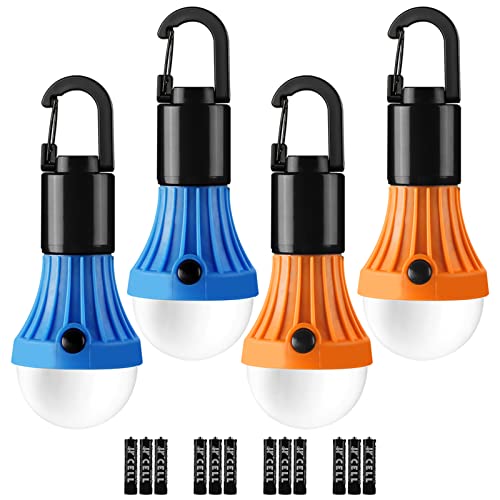
Lepro LED Camping Lantern 4-Pack with Batteries
Mighty Max 6V 4.5AH SLA Battery for FirstPower FP Series

Battery Hawk 6V 5AH UB650 Spring Terminal Battery

Battery Hawk Hunter 6V 5AH Battery (2 Pack)

Battery Hawk 6V 5000mAh SLA Battery (4 Pack)

Lepro 1100LM Waterproof LED Camping Lantern
Inside Each Recommended Option
Restocking a fleet of old-school 6V lanterns gets expensive quickly when you buy cells one at a time, and that’s exactly the gap this ten-pack from Battery Hawk fills. Each unit is a 6V 5Ah sealed lead-acid (SLA) cell with spring terminals, sized at roughly 2.58″ x 2.58″ x 4.50″ and weighing about 1.81 lb. Outfitters, scout leaders, and homeowners with multiple vintage lanterns will appreciate buying replacements in bulk.
The compatibility list is broad, covering common lantern battery codes like SLA-6V5-SPRING, APG-645S, DE650-S, WKA65SP, and UB650. Because the chemistry is sealed lead-acid, you get a rechargeable cell that handles moderate deep cycling without much fuss. The spring terminals make installation tool-free in most lantern compartments.
Useful Highlights
- Ten-pack format cuts per-cell cost compared to single replacements.
- Spring terminals fit common vintage lantern battery compartments.
- 5Ah capacity keeps standard camping lanterns running through long evenings.
- Sealed lead-acid chemistry tolerates occasional deep discharge.
- Covers a wide cross-section of legacy battery model codes.
Things To Consider
- Lead-acid cells weigh noticeably more than lithium alternatives.
- A ten-pack is overkill for a single-lantern household.
- Spring terminals require a clean contact to deliver full runtime.
Who Should Grab It
Camp directors, outfitters, and preppers who keep several vintage 6V lanterns in rotation get the best return from this bulk pack.
Where Another Pick Suits Better
Homeowners replacing a single aging lantern cell will find the Mighty Max 6V 4.5AH SLA Battery for Coleman 5348 a more appropriately sized swap.
Where the Battery Hawk ten-pack is purpose-built for lantern swaps, this Fulpower six-pack stretches into broader home and shop use. Each cell is a 6V 4.5Ah AGM (absorbent glass mat, a design that suspends the electrolyte in fiberglass mats to make the battery spill-proof and vibration-resistant) SLA battery measuring about 2.76″ x 1.78″ x 3.94″.
It’s listed as compatible with security alarms, emergency lighting, kids’ ride-on toys, scooters, and UPS backup units, so one bulk purchase can cover several low-drain devices around the house. The AGM construction means you can mount these in any orientation without worrying about leaks.
Everyday Perks
- AGM construction makes the cells spill-proof and mountable in any position.
- Works across alarms, toys, scooters, and UPS systems.
- Stable 6V output suits low-drain backup applications.
- Maintenance-free design with no electrolyte top-ups.
Worth Noting
- 4.5Ah capacity runs lower than the 5Ah lantern-specific cells.
- Compact footprint may not drop into every legacy lantern bay.
- Best paired with a smart SLA charger for longest service life.
Feature Snapshot
Made For
Shoppers who run a mix of security panels, emergency fixtures, and child-sized electric vehicles around the house get a tidy single-source pack.
Consider Something Else When
You mainly need replacement cells for vintage flashlights; the Battery Hawk 6V 5AH UB650 Spring Terminal Battery is tuned more specifically for that use.
Coleman’s 5348 lantern is a fixture on family campgrounds and back porches across the country, so a dedicated replacement battery earns its spot here. This Mighty Max unit is an ML4-6 SLA cell rated at 6V 4.5Ah, with F1 terminals (small spade-style connectors common on compact SLA batteries) and dimensions around 2.76″ x 1.89″ x 4.21″.
The selling point is the precise fit: it’s marketed as a direct Coleman 5348 replacement, so you skip the measuring-and-guessing step. AGM construction gives it a wide operating temperature range, which matters for campers who store lanterns in cold garages or hot car trunks.
Strengths Worth Knowing
- Direct-fit spec for the Coleman 5348 lantern model.
- AGM chemistry tolerates high and low operating temperatures.
- Spill-proof design lets you mount the cell in any orientation.
- F1 spade terminals match the original Coleman wiring harness.
Trade Offs
- Listing is battery only, with no wire harness included.
- Smaller capacity than the 5Ah lantern cells elsewhere in this list.
- Single-cell package is less cost-efficient than multi-packs.
Quick Facts
Best Suited To
Existing Coleman 5348 owners who want a drop-in replacement without measuring terminals or hunting for cross-reference codes.
Look Elsewhere When
You need a higher-capacity cell for marathon outages; the Battery Hawk 6V 5AH Spring Terminal Battery (10 Pack) delivers more amp-hours per cell.
Shifting from replacement cells to modern battery-powered units, the Lepro 1000LM lantern is the kind of gear that lives in the back of the car year-round. It runs on three D alkaline batteries (sold separately) and reaches up to 1000 lumens (a unit measuring total visible light output) at the top end, with stepless dimming via a long-press button.
Four lighting modes (daylight white, warm white, full brightness, and flashing) cover everything from reading a map to signaling at the trailhead. The green ABS (a tough, impact-resistant plastic) housing is a nice visual cue when you’re digging through a packed bin.
Noteworthy Benefits
- 1000-lumen ceiling with smooth stepless dimming for mood control.
- Four modes cover reading, task lighting, and emergency signaling.
- Runs on widely available D-cell batteries, so spares are easy to source.
- Up to 12 hours of runtime even at the brightest setting.
Honest Caveats
- D-cell batteries are not included in the box.
- Alkaline cells add noticeable weight compared with lithium-powered lanterns.
- Long-press dimming takes a moment to learn on first use.
Feature Rundown
Perfect Match For
Car campers, RV owners, and homeowners stocking a blackout kit who want one lantern that flexes from dim ambient to full work-light mode.
Skip It When
You’re trying to shave ounces from a backpack; the Lepro LED Camping Lantern 4-Pack weighs far less and runs on smaller cells.
For backpackers and emergency-prep minimalists, bulk is the enemy, and this Lepro four-pack flips the script with a footprint smaller than a standard A19 bulb. Each unit weighs around 55 grams with batteries installed, so tossing one in a pack barely registers.
Three lighting modes offer low-beam daylight at 80 lumens (6000K color temperature, the cooler blue-white end of the spectrum), low-beam warm white at 80 lumens (3000K, a softer yellower glow), and high-beam cool white at 140 lumens (5000K). The batteries ship in the box, which removes one of the usual last-minute chores before a trip.
The Helpful Details
- Batteries ship in the box, so the lights work out of the package.
- Four-pack spreads lights across tents, rooms, or go-bags.
- Compact shell fits into tight survival-kit slots and glove boxes.
- Two color temperatures cover both task work and relaxed ambient light.
A Few Limitations
- 140-lumen high beam is modest compared with the 1000LM Lepro above.
- Small form factor is easier to misplace around the campsite.
- Cooler color temperatures may feel harsh in a tent at close range.
Whose Shelf It Belongs On
Backpackers, bug-out bag builders, and anyone who wants a couple of stashed lights for the car or guest room without dedicating shelf space to a heavy lantern.
Reach For A Different Pick When
You need to flood a large campsite with light; the Lepro 1000LM LED Camping Lantern puts out roughly seven times the peak lumens.
FirstPower’s FP640, FP645, and FP660 lantern batteries show up in a lot of emergency lighting setups, so a dedicated replacement earns its place in the rotation. This Mighty Max ML4-6 cell matches the original footprint at 2.76″ x 1.89″ x 4.21″ and uses the same F1 spade terminals, so it drops in without rewiring.
AGM chemistry gives you the usual SLA advantages: spill-proof construction, wide operating temperature range, and resistance to shock and vibration. Mounting orientation is flexible, which matters when you retrofit into odd-sized emergency housings.
Real Benefits
- Direct replacement for FirstPower FP640, FP645, and FP660 units.
- F1 terminals match the original FirstPower wiring connectors.
- AGM design handles a wide temperature range and resists vibration.
- Mountable in any position for tight retrofit spaces.
Points To Note
- Single-cell listing, so multi-lantern setups need multiple orders.
- 4.5Ah runs lighter than the 5Ah lantern-specific cells in this roundup.
- Listing ships the battery only with no harness or hardware.
At A Glance
Built With In Mind
Shops and homes running FirstPower FP-series emergency lanterns that need a no-fuss replacement without rewiring the bay.
A Better Fit Elsewhere
Coleman 5348 owners will want the dedicated Mighty Max 6V 4.5AH SLA Battery for Coleman 5348 instead, since it’s tuned to that specific model.
Sometimes a single replacement is all you need, and that’s where this single Battery Hawk unit lands. It’s a 6V 5Ah SLA cell in the standard UB650 footprint, sized at about 2.58″ x 2.58″ x 4.50″ and weighing 1.81 lb.
The spring terminals make it compatible with lanterns coded UB650, PS-650L, PC640L, DG6-4, and others, so you don’t need to track down the exact OEM part number. For a one-off lantern refresh, buying a single cell avoids paying for spares you won’t use.
Features That Help
- Single-cell purchase avoids overbuying for one-lantern households.
- 5Ah capacity keeps standard lanterns lit through long evenings.
- Spring terminals fit UB650 and compatible lantern bays without tools.
- Sealed lead-acid chemistry supports regular recharging.
Some Limits To Know
- Single-cell price per amp-hour is higher than multi-pack options.
- Spring contacts need occasional cleaning for peak performance.
- Lead-acid weight is heavier than lithium replacements.
The Right Fit
Anyone refreshing a single tired lantern who doesn’t want to commit to a multi-pack or hunt for obscure OEM part numbers.
Swap It Out When
You maintain a fleet of lanterns; the Battery Hawk 6V 5AH Spring Terminal Battery (10 Pack) drops the per-cell cost meaningfully.
Two-lantern households tend to end up replacing cells one at a time and paying shipping twice, so a matched two-pack is a smarter shopping move. This Battery Hawk pair ships two 6V 5Ah SLA cells coded for Hunter 28314, DE650-S, and WKA65SP flashlights.
Spring terminals and the same 2.58″ x 2.58″ x 4.50″ footprint mean both batteries arrive with matched age and chemistry, which helps keep runtime consistent between lanterns. If your garage runs a pair of matching camping lanterns, this format lands in the sweet spot.
Everyday Wins
- Two-pack format suits households with a matched lantern pair.
- Cells arrive with identical age for consistent runtime.
- Spring terminals fit Hunter 28314, DE650-S, and WKA65SP flashlights.
- 5Ah capacity is the high mark for lantern-class SLA cells.
Softer Spots
- Two-pack leaves no spare if a third lantern joins the rotation.
- Per-cell cost falls between singles and the ten-pack option.
- Lead-acid weight adds up across two cells at roughly 3.6 lb total.
Who It Suits Best
Couples or small families with two matching vintage lanterns who want both cells replaced in one shipment at matched age.
Not Your Match When
You only run one lantern; the single Battery Hawk 6V 5AH UB650 Spring Terminal Battery keeps things simpler.
Sitting between the two-pack and the ten-pack, this four-cell Battery Hawk bundle hits a middle ground that works for group campers and family-sized emergency kits. Each 6V 5000mAh SLA cell weighs 1.81 lb and uses the same spring-terminal layout you’ve seen across the rest of the Battery Hawk lineup.
Compatibility spans SLA-6V5-SPRING, APG-645S, BW 650S, D5697, LP6-4-5S, GS012P1, and similar codes, which means most vintage 6V lanterns in a household fleet will accept these cells. The four-pack format leaves you with spares after a refresh, which is useful for the next rotation.
What Pays Off
- Four-pack balances spares against upfront cost.
- Spring terminals cover a long list of legacy lantern codes.
- 5000mAh capacity lands at the top of the lantern SLA range.
- Cells arrive at matched age for consistent fleet performance.
Points To Keep In Mind
- Lead-acid cells demand proper recycling at end of life.
- Heavier than lithium alternatives by a wide margin.
- Spring contacts need a quick clean if lanterns sit unused for months.
Built With In Mind
Group campers, scout troops, and families who keep a rotation of vintage lanterns and want spare cells on the shelf for the next swap.
Another Choice May Suit
Anyone running a larger fleet of eight or more lanterns will save more per cell stepping up to the Battery Hawk 6V 5AH Spring Terminal Battery (10 Pack).
Rounding out the list, this Lepro 1100LM lantern earns its slot by adding waterproofing and a red light mode to the LED category. Five lighting modes (daylight white, warm white, full brightness, red, and flashing red) plus stepless dimming give you precise control from a soft glow to full work-light output.
Red mode is the quiet star: it preserves night vision and stays polite around wildlife at the campsite. The waterproof housing makes this a strong pick for wet-weather tent use or storm-prep emergency kits.
A Few Strong Suits
- 1100-lumen ceiling tops the LED category in this roundup.
- Waterproof housing handles rain and tent-condensation environments.
- Red and flashing-red modes preserve night vision and signal for help.
- Stepless dimming lets you dial in exactly the brightness you need.
Less Ideal Details
- Larger housing than the compact Lepro 4-Pack option.
- Higher peak output uses batteries faster at full brightness.
- Five modes require a quick read of the button logic on first use.
Feature Snapshot
Who Will Love This
Campers in wet climates, paddlers, and emergency planners who want a rugged, bright, red-mode-capable lantern for unpredictable conditions.
Where A Sibling Pick Shines
Backpackers counting every gram will prefer the Lepro LED Camping Lantern 4-Pack, which is a fraction of the size and weight.
What To Weigh Before Choosing 6v Battery Lanterns
Voltage, Capacity, and Runtime
Start by confirming the voltage. The “6V” in 6V battery lanterns refers to the cell’s nominal voltage, which is the standard operating voltage the battery delivers under typical load. Most vintage camping lanterns run on 6V SLA cells, while modern LED lanterns use alkaline D cells in a configuration that also delivers 6V (typically three D cells stacked in series, meaning linked end-to-end so voltages add together). Capacity, measured in amp-hours (Ah) or milliamp-hours (mAh), tells you how long the lantern will run before the cell needs recharging or replacement. A 5Ah cell will generally outlast a 4.5Ah cell in identical lanterns, but actual runtime depends on the bulb or LED draw inside your specific model.
Chemistry and Terminal Style
Sealed lead-acid (SLA) cells dominate the vintage lantern world because they recharge in place and tolerate deep cycling. AGM (absorbent glass mat) is a refinement of SLA that suspends the electrolyte in fiberglass mats, making the battery spill-proof and resistant to vibration. Terminals matter just as much as capacity: spring terminals accept bare wire contacts common in older flashlights, while F1 spade terminals match the wiring harnesses in many newer emergency lanterns. Always match terminal style before buying, since mismatched terminals usually require a wiring rework.
Modern LED Alternatives
Battery-powered LED lanterns sidestep the SLA question entirely by running on D-cell alkalines or AA cells, which makes them lighter and easier to stash. Trade-offs include ongoing battery costs and the absence of a built-in recharge cycle. For many households, the right answer is keeping both: a classic SLA lantern as a rechargeable workhorse and a compact LED lantern as a grab-and-go backup.
Key Considerations Across These Picks
Common Shopping Slip Ups
The most frequent mistake is buying a 6V cell without checking the terminal layout, since spring and spade terminals are not interchangeable without a wiring change. Another trap is overbuying capacity for a lantern that only needs light weekend use; a 4.5Ah AGM cell is plenty for occasional outages, while a 5Ah cell earns its keep on extended trips. Skip the temptation to swap a higher-voltage battery into a fixture rated for 6V, which can fry bulbs and overheat wiring.
What The Higher Tier Buys
Stepping up to a larger battery pack or a brighter LED lantern usually buys you either more amp-hours per cell, a waterproof shell, or extra modes like red light and stepless dimming. The upgrade pays off when your usage pattern actually stresses those features: multi-day camping, wet-weather exposure, or blackout kits that sit idle for months. For occasional porch-light duty, a basic 4.5Ah AGM cell or a compact LED lantern covers the job without overspending.
Frequently Asked Questions
What does 6V mean on a battery lantern?
The 6V label refers to the battery’s nominal voltage, which is the standard operating voltage the cell delivers under typical load. It tells you the battery is designed to match lanterns built around a 6V electrical system, whether that’s a vintage SLA cell or three D-cell batteries wired in series.
Can a 6V lantern battery be recharged?
Sealed lead-acid (SLA) and AGM cells are rechargeable, and most vintage 6V lanterns include a built-in charging circuit or accept an external SLA charger. Battery-powered LED lanterns running on disposable alkaline cells are not rechargeable, though some models use NiMH (nickel-metal hydride) rechargeable cells that can be swapped in.
How long does a 6V lantern battery typically last?
Runtime depends on the lantern’s draw and the cell’s capacity. A 5Ah SLA cell can power a moderate-draw incandescent lantern for roughly 8 to 12 hours per charge, while a high-output LED lantern on the same battery can stretch that further. Alkaline-powered LED lanterns typically last 10 to 12 hours at full brightness.
Are spring and spade terminals interchangeable?
They serve the same function (delivering power to the lantern) but use different physical connectors. Spring terminals accept bare wire contacts, while F1 spade terminals slide onto small flat connectors. Adapting between them usually requires a wiring change, so matching the original terminal style keeps installation simple.
Is AGM better than standard SLA for lanterns?
AGM is a refined version of SLA that suspends the electrolyte in fiberglass mats, making the cell spill-proof, vibration-resistant, and mountable in any position. For most lantern use, AGM is the more convenient choice, though standard SLA cells still work fine in stationary applications where orientation is fixed.
Closing Remarks
The right 6V battery lantern comes down to matching your gear to your habits: vintage SLA cells for the classics you already own, modern LED lanterns for grab-and-go flexibility. Pick the chemistry and capacity that match how often you’ll use it, verify the terminal style before you buy, and keep a spare cell on hand for the next outage. A little preparation now means the lights come on the moment you need them.