Upgrading a golf cart from lead-acid to lithium changes how the vehicle feels on every hole. Range anxiety fades, acceleration sharpens, and the daily maintenance ritual of watering batteries disappears. But the voltage question matters: a true 72V system delivers serious torque for hilly courses and heavier loads, while many “compatible” packs listed alongside it are actually 36V or 48V units. The list below rounds up the strongest options available right now, covering true 72V-ready gear, common conversion voltages, and the supporting hardware that makes a swap painless.
A Side-By-Side Look
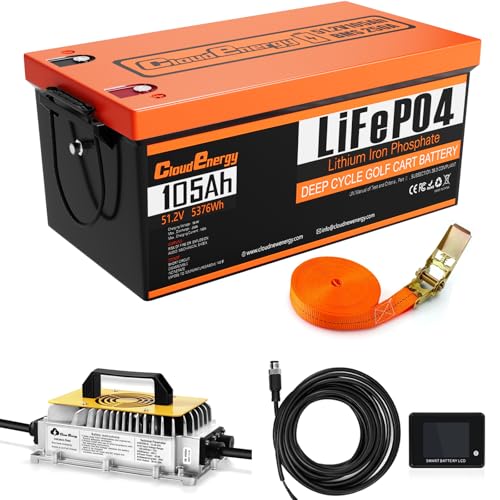
Cloudenergy 48V 105Ah LiFePO4 Lithium Golf Cart Battery with Charger

EZGO TXT48 RXV Charger Adapter Plate Generation 2 PLA Composite
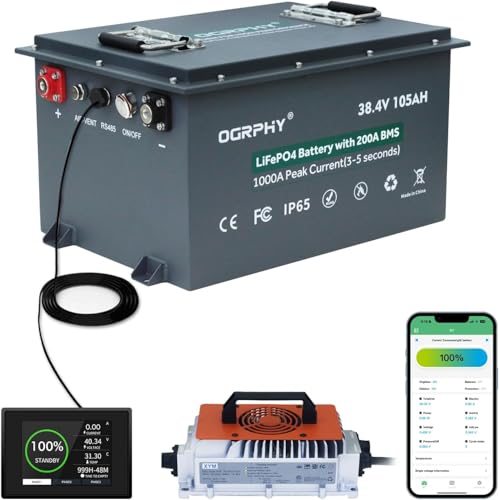
OGRPHY 36V 105Ah Lithium Golf Cart Battery with 25A Charger

XIONGRUIHENG 36V 105Ah LiFePO4 Lithium Battery with 20A Charger

TEMGO 48V 100Ah LiFePO4 Lithium Golf Cart Battery with 18A Charger

KEZIMO 48V 105Ah Lithium Battery with Touch Monitor and APP
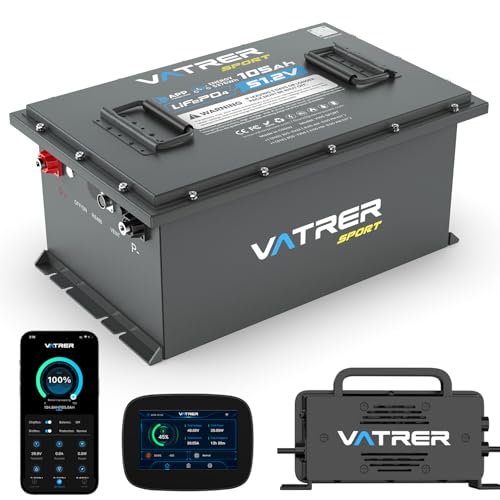
VATRER POWER 48V Lithium Battery with Upgraded 300A BMS

OGRPHY 36V 102Ah Lithium Conversion Kit with 12V DC Output

OGRPHY 36V 100Ah 3.84kWh Lithium Battery with 25A Charger

DC HOUSE Metal Case 48V 100Ah Lithium Golf Cart Battery Kit
A Breakdown Of The Leading Choices
The Cloudenergy 48V 105Ah LiFePO4 pack lands at the top of this list because it threads the needle between usable capacity, smart monitoring, and a stress-free installation kit. The 250A BMS (the Battery Management System that protects cells from overcharge, deep discharge, and thermal runaway) handles the current demands of typical 48V golf carts without breaking a sweat. Owners get a touch monitor, a mobile app for state-of-charge checks, and a retention strap in the box.
For a community cart that racks up 18 holes of use most weekends, this pack feels well-matched. Compared to the heavier lead-acid banks it replaces, the weight reduction alone transforms how the cart handles hill starts.
A Few Highlights
- 250A BMS supports aggressive acceleration and hill climbs without tripping
- Touch monitor plus mobile app give you real-time voltage and state-of-charge visibility
- Retention strap and charger included, so the swap is essentially plug-and-play
- LiFePO4 chemistry is far less prone to thermal runaway than older lithium chemistries
Trade Offs
- 48V only, so true 72V builds would need to combine multiple packs in series
- App connectivity depends on staying within Bluetooth range during diagnostics
Key Product Details
Who Should Grab It
Owners of a 48V cart who want a complete, monitored swap without sourcing accessories separately.
A Better Fit Elsewhere
The OGRPHY 36V 105Ah is a smarter choice if your cart runs on a 36V system rather than 48V.
This isn’t a battery, and that distinction matters. The EZGO TXT48 RXV Charger Adapter Plate is the small but essential hardware piece that lets a lithium conversion install an onboard charger without fabricating a custom mount. The Generation 2 plate is twice the thickness of older generic copies, and the PLA composite material (a tough, plant-derived thermoplastic commonly used in 3D printing) refuses to rust the way painted metal eventually does.
If you’re midway through a 72V lithium swap on an EZGO TXT48 or RXV and need a clean charger receptacle, this is the part that finishes the job. Owners in coastal or humid climates will appreciate the no-rust construction most.
Why It Works Well
- PLA composite construction eliminates rust concerns common with metal alternatives
- Model-specific fit means no drilling or shimming on the TXT48 or RXV
- Thicker profile creates a sturdier mounting surface than flimsier copies
- Made in the USA by the originator of this plate design
Points To Keep In Mind
- Only fits EZGO TXT48 and RXV carts, not Club Car or Yamaha models
- Plate alone is incomplete without a charger receptacle plug to pair it with
Best Suited To
EZGO TXT48 or RXV owners running a lithium conversion who need a clean onboard charger mount.
Skip It When
The DC HOUSE Metal Case battery kit is the better starting point if you still need the battery itself.
Where the Cloudenergy pack handles 48V carts, the OGRPHY 36V 105Ah targets the 36V crowd with serious peak current headroom. The 200A BMS paired with a 1000A peak rating means this pack can absorb sudden throttle demands without the voltage sag you’d see on smaller units. For trolling motors and lighter carts that see real-world load spikes, that headroom matters more than nominal capacity alone.
The included 25A charger and touch monitor keep things feeling modern. If your cart uses a 36V architecture, this is one of the more confidence-inspiring lithium options on the market today.
Reasons It Performs
- 1000A peak current handles aggressive starts and steep inclines
- Touch monitor and mobile app deliver real-time state-of-charge data
- 25A charger shortens turnaround between rounds compared to smaller units
- Grade-A LiFePO4 prismatic cells are built for longevity
Honest Caveats
- 36V only, so 48V or 72V systems need a different pick
- Heavier than smaller-capacity lithium packs, though still far lighter than lead-acid equivalents
Quick Facts
Right Fit For
36V cart owners and trolling motor users who prioritize peak current over nominal capacity.
Reach For A Different Pick When
The TEMGO 48V 100Ah is a stronger match for anyone running a 48V platform.
The XIONGRUIHENG 36V 105Ah ships as a complete 4-in-1 bundle: battery, 20A charger, touch monitor, and port plug. For someone converting a 36V cart without wanting to chase down accessories separately, that all-in-one packaging removes the usual friction. The 250A BMS and Grade-A cells give this pack enough current headroom for most cart use cases.
It does the same job as the OGRPHY unit above at a potentially friendlier entry point, with similar monitoring features. The trade-off shows up in peak current, which is lower than the OGRPHY’s 1000A spec.
What Earns Its Place
- Complete kit removes the need to source charger and monitor separately
- 250A BMS handles normal 36V cart demands without issue
- Mobile app adds Bluetooth diagnostics on top of the touch display
- 6000+ cycle rating suggests years of regular use before capacity fades
Some Limits To Know
- 36V platform only, so 48V and 72V systems will need a different pick
- Plastic case construction is lighter but less impact-resistant than metal alternatives
Made For
Shoppers converting a 36V cart on a tighter budget who want everything included in one box.
Look Elsewhere When
The VATRER POWER 48V pack is a stronger fit for 48V platforms that demand heavier current.
The TEMGO 48V 100Ah sits in premium territory thanks to its 10.24kW maximum output ceiling, the kind of headroom that makes hilly courses feel flat. The Bluetooth-enabled 200A Smart BMS (a Battery Management System with built-in adaptive protections and connectivity) adjusts behavior based on load conditions, and the LCD screen keeps you informed without pulling out a phone.
For someone who runs the same 48V cart six days a week across mixed terrain, this pack is built for that workload. Compared to the Cloudenergy unit above, you trade a bit of capacity for slightly smarter BMS behavior.
What Pays Off
- 10.24kW maximum output gives real headroom for steep grades and heavy loads
- Bluetooth integration lets you monitor pack status from the cart or the clubhouse
- Adaptive BMS logic adjusts to load and temperature conditions
- LCD touch display provides at-a-glance state-of-charge readings
Points To Note
- Premium positioning places it higher in the lineup than entry-level picks
- 100Ah capacity is slightly lower than some 105Ah alternatives
Perfect Match For
Daily drivers on hilly courses who want adaptive BMS protection and strong output headroom.
Swap It Out When
The KEZIMO 48V 105Ah is worth comparing if you want a bit more capacity at a friendlier entry point.
The KEZIMO 48V 105Ah pairs a healthy 105Ah capacity with the modern monitoring trinity of touch display, mobile app, and 200A BMS. Sixteen A-grade LiFePO4 cells push maximum output to 10.24kW, which puts this pack in the same conversation as the TEMGO unit on raw power potential. The display and app combination means you’re never guessing about remaining runtime.
It’s a sensible middle-ground pick for someone who wants feature parity with premium offerings without necessarily paying for the brand premium. Owners commonly report the touch monitor is responsive even in bright sunlight.
Features That Help
- 105Ah capacity gives extended runtime for full-day course play
- 10.24kW output handles hill climbs and rough terrain confidently
- Dual monitoring options (touch display plus app) suit different user preferences
- 200A BMS provides consistent protection without throttling under normal loads
Practical Considerations
- Feature set overlaps with similarly priced competitors, so brand familiarity may tip the decision
- App pairing occasionally requires a fresh Bluetooth connection according to widely reported owner experiences
Spec Overview
Built With In Mind
48V cart owners who want modern monitoring features and high output in one self-contained package.
Another Choice May Suit
The Cloudenergy 48V 105Ah is the better pick if 250A BMS headroom is the deciding factor for you.
The VATRER POWER 48V stands out because of its 300A BMS, a step above most competitors running 200A or 250A protection. The AI-tuned management system monitors cell temperature, voltage, and current in real time, adapting charge and discharge curves based on actual usage patterns. For carts that see heavy daily use, that adaptive behavior can extend pack life beyond what a fixed-curve BMS offers.
One note on logistics: the listing is flagged as non-returnable due to hazardous materials shipping regulations, so double-check compatibility before ordering.
Good Reasons To Consider
- 300A BMS handles higher continuous draw than most competitors
- Adaptive charging curves optimize for temperature and load conditions
- AI-style state-of-health monitoring flags potential issues early
- Strong choice for carts used in extreme weather or heavy terrain
Things That May Matter
- Non-returnable shipping means verifying fitment matters more than usual
- Higher BMS rating commands a price premium over basic 200A options
Whose Shelf It Belongs On
Demanding daily drivers who want the smartest BMS available and don’t mind the non-returnable shipping terms.
Where Another Pick Suits Better
The TEMGO 48V 100Ah is worth a look if you want Bluetooth and LCD features bundled together.
Most lithium packs ignore the small 12V accessories that lights, horns, and turn signals need. The OGRPHY 36V 102Ah Conversion Kit solves that with an integrated 12V DC output port, eliminating the need to buy and wire a separate 36V-to-12V converter. For cart owners running accessory-heavy builds (light bars, stereo setups, signal kits), that built-in port simplifies the entire wiring job.
Beyond the 12V trick, the same 200A BMS and 1000A peak current from the earlier OGRPHY unit carry over. The trade-off is a manual discharge switch you need to remember after accessory use, or the 12V draw will pull the main pack down.
The Value In It
- Integrated 12V DC port removes an extra component from the conversion
- 1000A peak current handles demanding throttle transitions
- Touch monitor for direct readings without the app
- 4000+ cycle rating for multi-year service life
Factors To Consider
- Discharge switch must be manually turned off to prevent parasitic 12V drain
- 36V only, so 48V and 72V builds will need different hardware
Who Will Love This
Cart owners adding lights, horns, or other 12V accessories who want to skip the converter purchase.
Consider Something Else When
The OGRPHY 36V 105Ah (pick 3) is the simpler choice if you don’t need 12V accessory support.
The OGRPHY 36V 100Ah earns its multi-use tag because it pulls double duty between golf cart, solar storage, and trolling motor applications. The 3.84kWh capacity and 200A BMS with 1000A peak current make it equally comfortable powering a boat motor for a long day on the water or running a cart across 36 holes.
Grade-A LiFePO4 cells and a 25A charger round out a versatile package. Compared to the OGRPHY 105Ah pick above, this one trades capacity for a slightly friendlier price and broader use-case flexibility.
Practical Advantages
- 3.84kWh capacity supports golf cart, trolling motor, and solar storage uses
- 200A BMS with 1000A peak handles sudden load transitions
- 25A charger reduces turnaround time between uses
- Grade-A LiFePO4 cells built for long cycle life under varied demands
Where It May Fall Short
- 36V platform limits it to lower-voltage cart systems
- 100Ah is slightly less than the 105Ah OGRPHY alternative earlier in this list
Feature Snapshot
The Right Fit
Anyone splitting use between a 36V cart, trolling motor, and small solar setup who wants one battery for all.
Not Your Match When
The KEZIMO 48V 105Ah is a better starting point for 48V-only cart applications.
The DC HOUSE Metal Case 48V 100Ah kit closes out the list by addressing a real durability concern: most lithium packs ship in plastic enclosures that can crack under hard use. This one uses a metal case, which adds weight but shrugs off the impacts that would worry a plastic-cased competitor. For carts that see rough terrain, farm use, or frequent loading and unloading, that rugged housing pays off.
The 200A BMS, Bluetooth app, LCD monitor, and 18A charger round out a complete package. The peak current rating of 670A is lower than some alternatives, so heavy throttle demands may feel less aggressive than the OGRPHY units.
Useful Strengths
- Metal case construction resists impacts that could damage plastic enclosures
- Complete kit with Bluetooth app and LCD monitor included
- 200A BMS provides standard protection for typical cart loads
- Drop-in design replaces 6-8V lead-acid banks in one straightforward swap
Worth Bearing In Mind
- Metal case adds weight compared to plastic-enclosed lithium packs
- 670A peak current is lower than some competitors’ 1000A ratings
Who It Suits Best
Owners running carts over rough terrain or in farm and ranch settings where the case takes real abuse.
Where A Sibling Pick Shines
The VATRER POWER 48V is the smarter choice for carts prioritizing the highest BMS rating over case durability.
Matching Voltage To Your Cart Before You Buy
A true 72V lithium golf cart battery setup runs multiple packs in series to hit that voltage, and most off-the-shelf options on the market right now are 36V or 48V units meant for the most common cart platforms. Before choosing a battery, confirm your cart’s existing voltage: open the battery compartment, count the existing lead-acid cells (six 6V cells in series equal 36V, eight equal 48V), and check your charger’s output rating. Mismatched voltage is the fastest way to damage a lithium pack and your motor controller.
Why Capacity And BMS Rating Matter Together
Capacity, measured in amp-hours (Ah), tells you how long the pack runs before draining. BMS rating, measured in amps, tells you how much current the pack can deliver safely without tripping protection. A 100Ah pack with only a 100A BMS will throttle hard acceleration because the management system cuts output to protect the cells. For carts with heavy passengers or steep terrain, prioritize BMS rating alongside capacity rather than chasing the highest Ah number alone.
The Real Cost Of Cheap BMS Protection
The BMS is the single component that decides whether your lithium pack lasts years or fails prematurely. Cheaper BMS units use basic over-voltage and under-voltage cutoffs without thermal monitoring or cell balancing. Mid-tier BMS boards add Bluetooth reporting and adaptive curves. Premium options like the VATRER POWER 300A unit add AI-tuned state-of-health prediction. The honest read is that the BMS is worth paying more for, because replacing a failed pack costs far more than the upfront BMS premium.
Form Factor And Mounting Considerations
Lithium packs save significant weight compared to lead-acid banks, but they also change how weight distributes in the battery tray. Before ordering, measure your existing battery compartment dimensions and verify the lithium pack will sit securely with the included retention strap. Some carts require adapter brackets to hold the smaller lithium footprint in place, and skipping that step risks pack movement under hard braking.
Key Considerations Across These Picks
Pitfalls Shoppers Hit
The most common mistake is treating voltage as an interchangeable spec. A 36V pack in a 48V cart will underperform dramatically, and a 48V pack in a 36V cart risks damaging the controller. Another frequent miss is ignoring peak current ratings: cart motors draw well above their continuous rating during starts and hill climbs, and a BMS that can’t handle those spikes will trip mid-round. Finally, some shoppers skip verifying the charger’s output voltage and end up with a pack and charger that don’t speak the same language.
Where The Extra Money Goes
Higher-tier packs invest in three places: better cell grading, smarter BMS firmware, and tougher enclosures. Grade-A cells last longer under deep discharge cycles, while Grade-B cells may show capacity loss earlier. Adaptive BMS firmware adjusts to real-world usage patterns rather than applying fixed protection curves. Metal cases and thicker BMS heat sinks handle thermal stress better during fast charging. For carts used daily across demanding terrain, those upgrades translate directly into longer pack life and fewer mid-round surprises.
Frequently Asked Questions
Can a 72V lithium pack replace my existing lead-acid setup directly?
A true 72V lithium pack replaces six 12V lead-acid batteries in series. The swap typically works without controller changes on most modern carts, but you should verify your motor controller’s voltage tolerance before ordering.
How long do lithium golf cart batteries actually last?
Most LiFePO4 packs in this category rate for 4000 to 6000 cycles, which translates to roughly 8 to 12 years of regular cart use before meaningful capacity loss begins.
Do lithium batteries work in cold weather?
LiFePO4 chemistry loses some capacity below freezing, and most BMS units will reduce charge acceptance in cold conditions to protect the cells. Owners in northern climates should store carts in a heated space during winter months.
Can I mix lithium and lead-acid batteries in the same cart?
Mixing chemistries in the same series string is not recommended. Different voltage curves and charge requirements cause the weaker cells to discharge faster, which leads to premature failure across the whole bank.
Is Bluetooth monitoring worth the extra cost?
For carts used frequently, Bluetooth apps make state-of-charge checks far easier than climbing into the battery compartment. For occasional weekend use, the touch monitor alone provides enough visibility for most owners.
Bottom Line
The right pick depends on your cart’s existing voltage and how you use it. 48V owners running standard courses will find the Cloudenergy or KEZIMO packs hit a sweet spot, while 36V platforms benefit most from the OGRPHY lineup’s higher peak current. Heavier users on demanding terrain should look to the VATRER POWER’s 300A BMS or the DC HOUSE metal case for durability. Whatever you choose, match the voltage first, then prioritize BMS rating alongside capacity to avoid the most common conversion regret.