A dead battery is the most common reason a riding mower refuses to wake up on a Saturday morning. CCA ratings, terminal orientation, and group size all affect whether your tractor spins cleanly on the first try or just clicks at you. This list sorts eight options by use case, from budget AGM replacements to a lithium upgrade and a starter solenoid, so you can match the part to the machine without guesswork.
Your Options, Compared

WEIZE Lawn Garden AGM Battery, 12V 300CCA BCI Group U1

WEIZE Lawn Garden AGM Battery, 12V 200CCA BCI Group U1
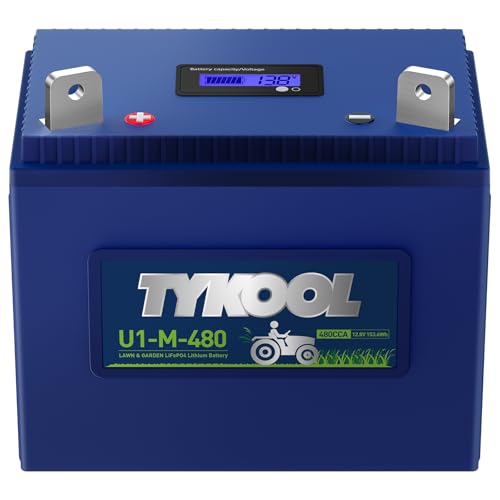
TYKOOL 480CCA Group U1 Lithium LiFePO4 Lawn Mower Battery

WEIZE Lawn Garden AGM Battery, 12V 350CCA BCI Group U1

ExpertPower EXP12120 12V 12Ah AGM Battery

Cole Hersee 24047 Intermittent Duty Solenoid

Mighty Max Battery ML12-12 12V 12AH SLA Battery (Pack of 2)

Mighty Max Battery ML18-12 12V 18AH SLA AGM Battery
Inside Each Recommended Option
The WEIZE 300CCA unit sits in the BCI Group U1 footprint that most residential riding tractors accept without adapter brackets. AGM construction (Absorbent Glass Mat, where the electrolyte is held in fiberglass sheets rather than pooling as liquid) keeps the cell sealed, so you can mount it at a slight angle in cramped battery trays without worrying about acid spills.
Cold-cranking amps, the current a battery can deliver for 30 seconds at 0°F without dropping below a usable voltage, hit 300 on this model, which is plenty for single-cylinder and small V-twin mower engines. The square-hole nut-and-bolt terminals accept standard wrenches, and the positive post sits on the left side when the label faces you.
Well-Handled Touches
- 300CCA gives confident cold starts for most homeowner-grade riding tractors.
- Sealed AGM design means no topping off with distilled water during the mowing season.
- Standard U1 case dimensions drop into John Deere, Cub Cadet, Craftsman, and Toro trays.
- Nut-and-bolt terminals grip firmly, reducing the chance of a voltage drop from a loose cable.
Things To Consider
- This battery is non-returnable under hazardous-materials rules, so double-check the group size and CCA requirement before ordering.
- Ships from a specialty fulfillment partner, so delivery times may run longer than a standard Prime route.
Key Product Details
Right Fit For
Suburban homeowners with a Cub Cadet, John Deere, Toro, or Craftsman riding mower who want a clean drop-in replacement ahead of spring.
A Better Fit Elsewhere
Drivers running larger V-twin engines or working in deep cold should look at the WEIZE 350CCA unit instead, which carries more cranking headroom.
The 200CCA version of the WEIZE U1 keeps the same physical footprint as the 300CCA model but trades raw cranking power for a smaller upfront hit. For owners of small-displacement single-cylinder mowers in mild climates, that tradeoff makes sense: 200CCA is enough to spin a Briggs or Kohler single without complaint on a 50°F morning.
The case still measures 7.68 inches long by 5.12 wide, and the positive terminal still sits on the left, which matters when swapping cables from an old battery. You may find the lower CCA rating leaves less margin for cranking after a long winter of storage, especially if the battery sat partially discharged.
A Few Highlights
- Sealed AGM format requires no watering and resists vibration on rough lawns.
- Standard U1 dimensions fit the same trays as the higher-CCA WEIZE models.
- Nut-and-bolt terminals accept the cables already on most mower harnesses.
- Lighter cranking headroom keeps the cost lower than the 300CCA sibling.
Points To Note
- Owners in northern climates may find 200 amps insufficient for a stiff cold engine.
- Return shipping is restricted under hazardous-materials rules, so confirm the fit before checkout.
Quick Technical Notes
Made For
Homeowners with smaller riding mowers in regions where winter temperatures rarely dip well below freezing.
Look Elsewhere When
Shoppers running larger V-twin engines, particularly in cold climates, will want the TYKOOL 480CCA lithium or the WEIZE 350CCA AGM for extra cranking headroom.
The TYKOOL steps away from the AGM field entirely with lithium iron phosphate chemistry (LiFePO4), the same family of cells used in premium electric vehicles and solar storage. It is rated at 480 CCA, the highest cranking figure in this roundup, while shedding much of the weight that makes lead-acid batteries awkward to lift out of a deep mower tray.
Compared with the WEIZE 350CCA AGM earlier on this list, the lithium cell delivers more cranking per pound and a much longer cycle life. For ride-on tractors built around a heavy Briggs or Kawasaki V-twin, that extra surge at startup can be the difference between a fast spin and a labored click on a cold morning.
Positive Takeaways
- 480 CCA exceeds every lead-acid option in this lineup for sheer cranking punch.
- LiFePO4 chemistry supports thousands of charge cycles, far beyond AGM lifespan.
- Low weight simplifies installation in deep or awkwardly placed battery trays.
- Compatible with John Deere, Cub Cadet, Craftsman, and Troy-Bilt mower platforms.
Trade Offs
- Lithium cells cost more than AGM equivalents, so the upfront investment is heavier.
- Some older charging systems may need a voltage check, since lithium cells have different absorption profiles than flooded lead-acid.
Feature Snapshot
Perfect Match For
Owners with larger ride-on tractors, frequent mowing schedules, or anyone tired of replacing AGM batteries every few seasons.
Skip It When
Budget-focused shoppers with a single-cylinder mower may prefer the WEIZE 200CCA AGM and put the savings toward accessories instead.
The 350CCA WEIZE is the strongest AGM in this family, designed for riders with high-compression V-twin engines that demand extra cranking torque. It shares the same U1 case dimensions as the 200 and 300CCA siblings, so installation stays a simple swap rather than a bracket-fitting project.
Where the 200CCA unit might leave you reaching for jumper cables on a frosty morning, the 350 leaves more headroom. For northern homeowners or anyone running a sub-zero startup routine, that reserve matters more than the small price premium over the lower-rated siblings.
A Favorable Mix
- Highest CCA in the WEIZE AGM lineup, giving extra margin for cold starts.
- Same sealed case format as the other WEIZE models, so no acid venting concerns.
- Fits John Deere, Toro, Cub Cadet, and Craftsman riding mower trays.
- Nut-and-bolt terminals resist loosening from vibration over rough yard terrain.
Minor Gripes
- Hazardous-materials shipping rules may extend delivery times or restrict returns.
- The 350CCA rating is overkill for smaller single-cylinder engines, so lighter mowers gain little from the upgrade.
Best Suited To
Owners with large-displacement riding tractors in cold climates who want a no-fuss AGM drop-in.
Reach For A Different Pick When
Shoppers chasing the lightest possible battery or longest cycle life should consider the TYKOOL 480CCA lithium option instead.
The ExpertPower EXP12120 is a compact 12V 12Ah SLA cell (sealed lead-acid, where the electrolyte is suspended in a glass-mat or gelled rather than left as free liquid), the kind that lives in alarm panels, UPS units, and small mobility scooters. In a lawn context, it fits walk-behind electric starters, light utility carts, and auxiliary accessory circuits rather than cranking a full riding mower.
Its F2 terminals are spade-style connectors, so swapping into a mower with nut-and-bolt posts requires adapter lugs. For owners running small electric lift cylinders or sprayer pumps off the tractor battery, the 12Ah capacity offers plenty of runtime without dragging around a heavy Group U1 case.
Points In Its Favor
- Sealed AGM construction resists leaks in tilted or partially enclosed installations.
- 12Ah capacity suits light accessory loads rather than engine cranking duty.
- Compact footprint fits smaller battery boxes where a U1 case is too tall.
- Multi-purpose design works in UPS systems, security panels, and mobility devices too.
Worth Noting
- F2 spade terminals do not match stock mower cables without adapter lugs.
- 12Ah capacity is far below what a riding mower starter needs, so it suits accessories only.
Who Should Grab It
Owners wiring accessory loads, sprayer pumps, or small electric carts where cranking amps are not the priority.
Consider Something Else When
Anyone needing actual engine cranking for a riding mower should choose the WEIZE 300CCA or TYKOOL 480CCA batteries for that role.
The Cole Hersee 24047 is not a battery at all, but the solenoid that delivers cranking current from a healthy battery to the starter motor. When the key turns and the engine only gives a click, the solenoid is one of the first things experienced mechanics suspect, since it sits in the high-current path between battery and starter.
It is rated for intermittent duty, meaning it is built to handle short starter bursts rather than continuous loads. That fits a lawn tractor perfectly, where the solenoid fires for a few seconds each time the key turns, then rests until the next mow.
Useful Strengths
- Heavy-duty contacts handle the surge current needed to spin a starter motor.
- Compact body fits inside most mower engine bays alongside a U1 battery.
- Intermittent-duty rating matches typical lawn tractor cranking patterns.
- Long-standing part number used across many riding mower platforms.
Honest Caveats
- Not a battery, so it cannot solve cranking issues on its own if the battery itself is weak.
- Wiring the replacement correctly requires basic electrical know-how or a service manual.
Whose Shelf It Belongs On
Garage mechanics and DIYers who want a proven solenoid on hand for diagnosing no-crank complaints before buying a full replacement battery.
Swap It Out When
Shoppers looking for actual stored energy rather than a switching component should pick the WEIZE 300CCA instead.
The Mighty Max ML12-12 ships as a two-pack of compact 12Ah SLA cells with F2 spade terminals. Like the ExpertPower EXP12120 earlier, these are accessory-grade batteries rather than starter batteries, but the pair format is handy for anyone running a 24V accessory circuit or stocking spares for multiple small devices.
Each cell uses an absorbent glass mat design, sealed for indoor or enclosed installations without leaking. For homeowners powering a backup lighting kit, a small sprayer pump, or a pair of mobility-device batteries, the two-pack delivers more flexibility per dollar than buying singles.
Real Benefits
- Two-cell format suits 24V accessory setups or simple spare stocking.
- Sealed AGM chemistry tolerates enclosed storage sheds without venting concerns.
- Calcium-alloy grid construction supports both float and cyclic use.
- Compact 12Ah capacity handles light accessory loads without taking up much space.
Practical Considerations
- F2 terminals require adapter lugs for any installation expecting nut-and-bolt posts.
- 12Ah per cell is well below what a riding mower starter demands.
Feature Card
Built With In Mind
DIYers maintaining multiple small battery-powered devices, or anyone building a 24V accessory circuit on a utility cart.
Another Choice May Suit
Anyone needing actual cranking power for a riding mower should step up to the WEIZE 300CCA or TYKOOL 480CCA for the right job.
The Mighty Max ML18-12 raises the amp-hour count to 18Ah in the same sealed AGM format as its 12Ah sibling, while shifting to nut-and-bolt terminals that match typical mower cable ends. The extra capacity translates into longer runtime for accessory loads, which matters if you run work lights, sprayer pumps, or a USB charger off the tractor.
Where the 12Ah cell runs out of headroom after a long afternoon of work lights, the 18Ah version keeps the voltage up under extended accessory use. It is still not a cranking battery in the riding-mower sense, so most owners pair it with a proper U1 starter.
Positive Points
- 18Ah capacity extends runtime over the 12Ah Mighty Max model.
- Nut-and-bolt terminals accept stock mower cable lugs without adapters.
- Sealed AGM design tolerates enclosed installations in shed storage.
- Calcium-alloy grid supports both float and cyclic charging patterns.
Less Ideal Details
- Still an accessory-grade battery, so it does not replace a true cranking battery.
- Slightly larger case requires checking the available tray space before ordering.
Who It Suits Best
Owners running extended accessory loads on a utility cart, sprayer rig, or work-light setup who want extra runtime over a 12Ah cell.
Where A Sibling Pick Shines
Homeowners who only need to crank a single mower should consider the WEIZE 300CCA for the right cranking profile.
Factors To Consider When Choosing a 12 Volt Battery For Lawn Mower
CCA is the headline number, but matching the right battery means checking the group size, terminal layout, and amp-hour reserve against your tractor’s demands. A U1 case is the standard for most residential riding mowers, while terminals vary between nut-and-bolt posts and F2 spade connectors, so an adapter may be necessary when swapping between styles. For cold climates, lean toward higher CCA, since engines get harder to crank as temperatures drop.
Cold cranking amps measure how much current the battery delivers at 0°F for 30 seconds while staying above 7.2 volts. Amp-hours measure how long the battery can run accessories before needing a recharge. For riding mowers, both matter: CCA for that first spin, amp-hours for any extended accessory load between charges.
For homeowners in mild climates with small engines, a 200 to 300CCA AGM battery is generally sufficient. Riders with V-twin engines, frequent mowing schedules, or extra electrical accessories benefit from the extra cranking headroom of 350 to 480CCA lithium or premium AGM cells. Storage style matters too, since sealed AGM cells tolerate a cold garage better than older flooded designs.
Key Considerations Across These Picks
Pitfalls Shoppers Hit
The most common mistake is buying a battery with the wrong terminal layout, where the cables either do not reach or have to be cross-routed across the posts. Always check whether your tractor uses nut-and-bolt posts or spade-style terminals before ordering. Another slip-up is overpaying for cranking amps you will never use, since a 480CCA lithium cell in a small single-cylinder mower delivers no real benefit beyond extra weight in the wallet.
What The Higher Tier Buys
Stepping up to a premium AGM or lithium cell mostly buys extra cranking headroom, longer cycle life, and lower weight. For heavy riders or commercial mowing routes, that extra reserve translates into fewer stalled mornings. For occasional weekend mowing in mild weather, the lower-tier AGM options do the job at a more comfortable upfront cost.
Frequently Asked Questions
What does CCA mean on a lawn mower battery?
CCA stands for Cold Cranking Amps, a measure of how much current a 12V battery can deliver at 0°F for 30 seconds without dropping below a usable voltage. Higher numbers mean stronger cold-weather starts for the same engine.
Can I use a lithium battery in place of an AGM?
Yes, lithium LiFePO4 batteries like the TYKOOL fit the same U1 footprint as many AGM options. Check that your mower’s charging system produces compatible voltage, and confirm the terminals line up before swapping.
How long does a lawn mower battery typically last?
Most AGM batteries in residential riding mowers last around three to five seasons, depending on storage temperature and how often the mower sits unused. Lithium cells often outlast AGMs by a wide margin, but they cost more upfront.
Do I need to add water to a sealed AGM battery?
No. AGM cells are sealed at the factory and never need topping off. The absorbent glass mat holds the electrolyte in suspension, so there is no liquid to add or refill over the life of the battery.
Why does my mower click but not crank?
A rapid clicking sound usually points to a weak battery, a corroded cable connection, or a failing solenoid like the Cole Hersee unit. Test the battery voltage first, clean the terminals, and only replace the solenoid if cranking power still does not reach the starter.
The Takeaway
Match the battery to the engine and the climate rather than chasing the biggest CCA number on the shelf. The right U1 case, terminal layout, and cranking reserve will save you a stalled Saturday and a tow to the repair shop. Use this list as a starting point, then verify group size, terminal position, and cable reach before you click through to the product page.