A long morning on the water dies fast when your trolling motor sputters out halfway across the lake. Anglers and weekend boaters keep running into the same wall: a starter battery that looks right on paper, then drops voltage the moment the prop meets a stiff current. This list rounds up nine lithium options built around deep cycle stamina, real amp-hour ratings, and Group 24 or 31 footprints that slot into existing trays. Each pick is sized to the kind of fishing you actually do, from quiet kayak afternoons to multi-day bass runs on bigger boats.
How The Shortlist Stacks Up

GOKWH 12V 100Ah Group24 LiFePO4 Lithium Battery with Bluetooth 5.0

GOKWH 12V 320Ah LiFePO4 Lithium Battery with Bluetooth 5.0

GOKWH 12V 320Ah LiFePO4 Lithium Battery for Trolling Motor

Power Queen 12V 100Ah LiFePO4 Lithium Battery with Self-Heating
LiTime 12V 230Ah Deep Cycle LiFePO4 Battery for RV
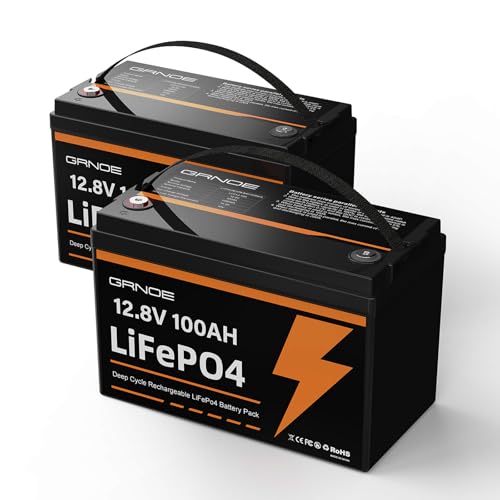
GRNOE 12V 100Ah LiFePO4 Group 31 Battery 2 Pack
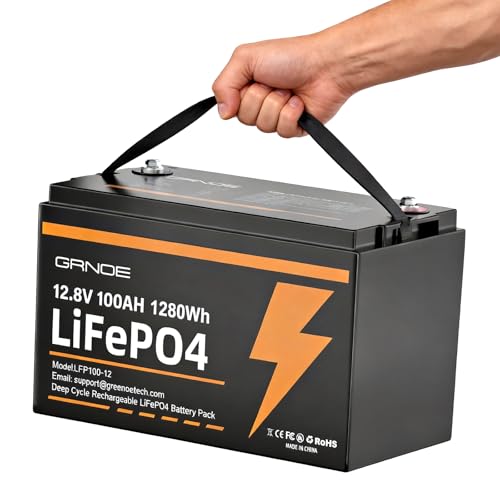
GRNOE 12V 100Ah LiFePO4 Group 31 Battery for RV and Trolling Motors

GOKWH 12V 100Ah LiFePO4 Lithium Battery for Trolling Motor (2 Pack)

GRNOE 12V 300Ah LiFePO4 Battery Built-in 200A BMS 3840Wh
A Breakdown Of The Leading Choices
The GOKWH 12V 100Ah Group24 sits in the sweet spot for most recreational anglers, dropping into a standard Group 24 tray without forcing a rewire. Bluetooth 5.0 pairs with a phone app that surfaces state of charge, voltage, and temperature in real time, so you stop guessing how much runtime is left when the prop starts dragging in weeds. Built around lithium iron phosphate chemistry (LiFePO4), it delivers 1280Wh of usable energy in a package roughly a third the weight of a comparable lead-acid battery.
A 100A battery management system, often shortened to BMS, monitors cell balance and shields against overcharge, deep discharge, and short circuits. Anglers chasing muskie on northern lakes will appreciate the 4000-cycle rating, which translates to many seasons of weekend trips before capacity meaningfully drops. This is the kind of battery you forget about once installed, in a good way.
What Earns Its Place
- Bluetooth app delivers live state-of-charge readings without crawling into the bilge
- Group 24 form factor slides into common trays, no bracket modification required
- 1280Wh of usable energy in a lightweight shell reduces overall boat weight
- 100A BMS adds a safety net against accidental deep discharge during long drifts
- 4000-cycle lifespan covers roughly a decade of regular weekend use
Things To Consider
- App-based monitoring means your phone needs to stay within Bluetooth range
- Single 100Ah capacity may run short for multi-day outings without a recharge option
- Cold-weather charging below freezing typically requires a self-heating model or warm storage
Feature Snapshot
Made For
Recreational anglers running mid-thrust trolling motors on bass boats or jon boats with a standard Group 24 tray who want app-based monitoring without overthinking the install.
Consider Something Else When
The Power Queen 12V 100Ah LiFePO4 Lithium Battery with Self-Heating suits you better when you launch before sunrise in sub-freezing temps and need cold-tolerant charging.
The GOKWH 12V 320Ah is the heavyweight of the roundup, packing 4096Wh into a single chassis for anglers who refuse to cut a trip short. Compared to the GOKWH 100Ah Group24 above, this is the option for serious multi-day excursions where solar recharging between sessions is part of the plan. The same Bluetooth app ecosystem carries over, giving you a familiar interface even though the underlying cell count has tripled.
A 200A BMS handles high-thrust motors without flinching, and the 8000-cycle rating means you could realistically run this battery through a decade of heavy use before noticing meaningful capacity loss. For full-time RVers who also fish, this doubles as a house battery for off-grid camping without compromise.
The Upside
- 320Ah capacity covers extended trolling sessions without midday recharging
- 200A BMS handles aggressive thrust settings on larger outboard-style trolling motors
- Bluetooth integration mirrors the smaller GOKWH for consistent app experience
- 4096Wh total storage supports RV, solar, and marine use from a single unit
- 8000-cycle lifespan suits full-time travelers and frequent anglers
Worth Noting
- Larger physical footprint requires verifying tray dimensions before ordering
- Heavier than 100Ah options, complicating single-person installs
Perfect Match For
Full-time anglers, off-grid RVers, and solar users who need a single battery to handle trolling motor runtime plus household electronics for multi-day stretches.
Reach For A Different Pick When
The GOKWH 12V 100Ah Group24 is a smarter fit when your boat has a smaller tray and you only need one day of runtime per outing.
The GOKWH 12V 320Ah Smart APP variant targets the trolling motor use case directly, with app features tuned to monitor voltage sag under sustained thrust. Where the previous 320Ah model leans toward RV and solar versatility, this one doubles down on marine telemetry, surfacing the readings that matter when you’re holding position in current. The same high-output 200A BMS stays in place to feed 36V and 24V trolling motors through step-down configurations.
Anglers pushing 80-plus pound thrust motors on big water will find the headroom comforting, since voltage drop under load is the silent killer of lesser batteries. The Bluetooth layer also logs fault history, so diagnosing a tripped motor becomes a phone glance instead of a guessing game at the launch ramp.
Strengths Worth Knowing
- Trolling-specific app interface highlights the metrics that matter on the water
- 320Ah headroom prevents voltage sag during long runs at high thrust
- Fault logging through the app simplifies troubleshooting after a rough day
- 200A continuous output supports the largest trolling motors on the market
- Compatible with series builds for 24V and 36V marine systems
Points To Note
- Form factor is larger than Group 24, so measure your tray before committing
- Single-unit pricing scales up significantly for anglers who only need moderate capacity
Best Suited To
Serious bass and walleye anglers running 24V or 36V trolling motor systems on larger boats who need sustained high-thrust output across long sessions.
Skip It When
The LiTime 12V 230Ah Deep Cycle LiFePO4 Battery fits better when your boat runs a single 12V trolling motor and you want a Group 4D-style form factor for RV house duties.
The Power Queen 12V 100Ah solves the cold-weather problem that sidelines most lithium batteries. Dual 100W heating pads warm the cells from 14°F up to 41°F in roughly 30 minutes, so charging in a frozen boat becomes possible without dragging the battery inside. A built-in cutoff pauses charging below 32°F and resumes above 41°F, protecting cell health when you forget to plan ahead.
For northern anglers chasing late-season walleye through ice-fishing transitions, this feature alone justifies the premium. Outside of cold weather, the battery behaves like any quality 100Ah LiFePO4 unit, dropping into standard Group 24 trays and pairing with common trolling motor chargers.
Key Advantages
- Built-in self-heating lets you charge in freezing boat sheds without pre-warming indoors
- Low-temperature cutoff protects cells when you forget to flip the heater on
- 100Ah capacity matches the runtime of non-heated competitors in the same class
- Standard Group 24 footprint fits common marine trays
- Useful for ice-fishing anglers who run sonar and augers from the same pack
Honest Caveats
- Heating function draws extra energy, so cold-weather charging needs shore power or a healthy alternator
- Costs more than a standard 100Ah LiFePO4 without the self-heating feature
Right Fit For
Cold-climate anglers, ice fishermen, and winter RVers who store their gear in unheated spaces and need reliable cold-weather charging.
A Better Fit Elsewhere
The GOKWH 12V 100Ah Group24 is a stronger match when you fish only in mild seasons and don’t need self-heating overhead.
The LiTime 12V 230Ah drops into Group 4D battery boxes at roughly 45.98 lbs, a third of what an equivalent lead-acid bank weighs. That weight savings matters in travel trailers, where every pound chips away at payload capacity. A 200A BMS with 20-plus built-in safeguards protects against the usual failure modes, and low-temperature charging protection pauses current below 32°F to preserve cell longevity.
The 4000-plus cycle rating translates to about a 10-year service life under typical RV and travel trailer duty cycles. For families running a camper that doubles as a fishing base, this battery bridges house loads and trolling motor runtime without compromise.
What Stands Out
- Group 4D compatibility fits large RV battery bays without modification
- At 45.98 lbs, it preserves trailer payload for gear and passengers
- 200A BMS handles simultaneous house loads and trolling motor draw
- Low-temperature cutoff protects cells during shoulder-season camping
- 10-year rated service life covers most recreational ownership timelines
Minor Gripes
- Single 12V configuration means 24V or 36V trolling setups require multiple units
Whose Shelf It Belongs On
RV owners and travel trailer families who want a single deep cycle battery to cover house electronics plus a 12V trolling motor on weekend fishing trips.
Look Elsewhere When
The GOKWH 12V 320Ah LiFePO4 Lithium Battery with Bluetooth 5.0 fits better when you want app monitoring and significantly more capacity for extended off-grid stays.
The GRNOE 12V 100Ah 2 Pack is built for anglers wiring 24V trolling motor systems from the start. Each battery carries a 100A BMS, and combined stacks can reach up to 48V or 20.48kWh depending on configuration. The Group 31 footprint is slightly larger than Group 24, but the extra capacity often justifies the tray check before ordering.
Where a single 100Ah battery might run short on a long day, two of them in series or parallel add real headroom. The 2-pack also ships one battery per box, so plan for separate deliveries if you’re ordering during a busy restock window.
Notable Upsides
- Two-pack format suits 24V trolling motor systems out of the box
- Expandable up to 4P4S for serious capacity builds
- Group 31 dimensions offer more capacity than Group 24 in similar tray space
- 100A BMS per unit keeps protections active in series configurations
- Useful for anglers upgrading from single-bank to multi-bank layouts
Points To Keep In Mind
- Ships one battery per box, so deliveries may arrive on different days
- Group 31 footprint is larger than the GOKWH Group 24 models above
Built With In Mind
Boat owners upgrading to a 24V trolling motor setup who want matched batteries from the same production run.
Swap It Out When
The GOKWH 12V100Ah LiFePO4 Lithium Battery for Trolling Motor (2 Pack) is a closer match when you want Bluetooth app monitoring included in the dual-pack configuration.
The single-unit GRNOE 12V 100Ah LiFePO4 shares the Group 31 dimensions and 100A BMS of the 2-pack version but ships as a standalone battery. Grade A+ cells power a claimed 15000-cycle lifespan, which is a serious number if you fish or travel heavily. At 22.48 lbs, roughly a third of a comparable lead-acid battery, it lightens any boat or RV it joins.
The 12.9 by 6.7 by 8.6-inch form factor fits common Group 31 boxes, and the included 36-month warranty covers manufacturing defects. A practical note: a 14.6V adapter is required to fully charge this battery, since standard 12V chargers won’t push the cells to their full state of charge.
Everyday Advantages
- 15000-cycle lifespan targets heavy daily users over many seasons
- 22.48 lbs total weight keeps transport manageable for one person
- Grade A+ cells suggest tighter capacity matching and longer consistency
- Group 31 form factor bridges RV, marine, and van applications
- 100A BMS handles standard trolling motor draw with headroom
Softer Spots
- Standard 12V chargers won’t reach a full state of charge; a 14.6V adapter is required
- Idle batteries should be topped up every two to three months to preserve health
Spec Overview
Who Should Grab It
Daily anglers and full-time RVers who want maximum cycle life from a single Group 31 unit and don’t mind buying a compatible charger.
Not Your Match When
The GOKWH 12V 100Ah Group24 LiFePO4 fits better when Bluetooth app monitoring matters more than maximum cycle count and you want standard charger compatibility.
The GOKWH 12V 100Ah 2 Pack mirrors the single GOKWH Bluetooth battery from the top of the list, but doubles the count for boats with twin trays. Anglers running 24V trolling motors can wire the pair in series, while those with two 12V accessory banks can run them in parallel for doubled runtime. Bluetooth monitoring carries over to both units, so each battery’s state of charge stays visible from your phone.
The Group 24 form factor means each battery fits standard marine trays without bracket work. For anglers stepping up from a single lead-acid setup, this 2-pack is the cleanest path to a matched lithium system.
A Favorable Mix
- Two matched batteries simplify series or parallel wiring from day one
- Bluetooth monitoring works on both units for balanced visibility
- Group 24 form factor avoids tray modifications
- Useful for boats with two pre-wired battery compartments
- Cost per battery often drops when bought as a matched pair
Worth Bearing In Mind
- Buying two at once increases upfront cost compared to a single-unit starter
- Spare capacity may sit unused if your trolling motor runs on a single 12V bank
Right Fit For
Boat owners with two battery trays who want matched GOKWH units with app monitoring on each.
A Better Fit Elsewhere
The single GOKWH 12V 100Ah Group24 from pick 1 is the right call when your boat has one battery compartment and you don’t need 24V output.
The GRNOE 12V 300Ah delivers 3840Wh at roughly 56 lbs, a third of what an equivalent lead-acid bank would weigh. That weight math is the headline: removing 100-plus lbs from a bass boat’s bow shifts balance noticeably, especially for solo anglers who feel every pound at the pedal. A 200A BMS handles aggressive trolling motor draw without sagging voltage under load.
Solar compatibility expands this battery beyond pure marine use, supporting charge controllers and LiFePO4-specific AC-to-DC chargers. A 60A optimal charging current (100A max) keeps generator and shore-power charging reasonable. Avoid pairing with general SLA chargers, since the voltage profile will undercharge the cells and shorten service life over time.
The Case For It
- 300Ah capacity supports multi-day trolling without recharging
- 56 lb weight lightens boats compared to equivalent lead-acid banks
- 200A BMS handles large thrust motors with headroom
- Solar compatibility broadens use cases beyond the boat
- 5-year warranty covers manufacturing defects
Trade-Offs To Consider
- General SLA chargers will undercharge the cells, requiring a LiFePO4-specific charger
- Larger size than 100Ah units; verify tray clearance before ordering
Key Specs
Who Will Love This
Bass boat owners, offshore anglers, and off-grid RV users who want a single high-capacity battery that replaces a lead-acid bank and adds solar flexibility.
Where Another Pick Suits Better
The GOKWH 12V 100Ah Group24 makes more sense when boat space is limited and you only run modest trolling motor thrust for short outings.
Choosing The Right Capacity And Chemistry For Your Boat
Group 24 versus Group 31 sizing is the first fork in the road. Group 24 batteries fit the majority of marine trays and pair with smaller to mid-thrust trolling motors, while Group 31 footprints give you roughly 10 to 15 percent more capacity in similar physical space. Measure the tray before ordering, especially for replacement builds where a slightly taller battery can mean sawing ahold bracket modifications.
Capacity needs scale with thrust rating and runtime expectations. A 55-pound thrust motor on a kayak or jon boat at moderate speeds typically pulls around 30 to 40 amps at full power, meaning a 100Ah battery delivers roughly two hours of wide-open runtime. Crank the thrust setting down to low, and that same battery can run all day. Anglers chasing current or wind should size up to 200Ah or 300Ah to avoid cutting the day short.
Chemistry matters more than most shoppers expect. LiFePO4 batteries weigh roughly a third of equivalent lead-acid units and deliver thousands more cycles, but they require LiFePO4-specific chargers to reach full capacity. Lead-acid remains cheaper up front but loses capacity faster under deep discharge and adds substantial weight.
Build quality rounds out the picture. Look for a robust BMS rating (100A or higher for serious thrust), low-temperature charging protection for cold climates, and Bluetooth or app monitoring if you want visibility into state of charge without a multimeter.
Smart Shopping Notes For Lithium Trolling Batteries
Where Shoppers Go Wrong
The most common mistake is pairing a lithium battery with a charger designed for lead-acid. A standard 12V SLA charger will not push LiFePO4 cells to their full state of charge, and over time this undercharging shortens usable capacity. Confirm charger compatibility before plugging in. The second pitfall is ignoring tray dimensions. Group 24 and Group 31 batteries look similar in photos but differ in height and terminal placement, and the wrong fit can mean rewiring brackets or returning the unit.
When Paying More Pays Off
Premium picks in this roundup earn their higher cost through longer cycle life, Bluetooth monitoring, or self-heating capability. Anglers running daily trips recover the cycle-life premium quickly, since a 10000-cycle battery outlasts several cheaper replacements. Cold-weather anglers recoup the self-heating premium the first time they avoid dragging a dead battery inside overnight. The honest read is that the upgrade pays off when your usage matches what the premium feature solves.
Frequently Asked Questions
How long will a 12V lithium battery power a trolling motor?
A 100Ah lithium battery running a 55-pound thrust motor at moderate speed typically lasts 5 to 8 hours, depending on current, wind, and speed setting. Cranking to full power shortens runtime significantly, while low-speed drift fishing can stretch a charge across two full days.
Can I use a regular 12V charger with a LiFePO4 trolling battery?
Standard SLA chargers undercharge LiFePO4 cells and can shorten battery life over time. Use a charger specifically rated for lithium iron phosphate chemistry, with an absorption voltage around 14.4 to 14.6V, to reach full capacity safely.
What size battery do I need for a 24V trolling motor?
For a 24V trolling motor, you need two 12V batteries wired in series, each rated at 100Ah or higher depending on your runtime needs. Match the batteries from the same brand and production run when possible to keep capacity balanced.
Is LiFePO4 safe for marine use?
LiFePO4 chemistry is among the safest lithium options, with stable thermal performance and built-in BMS protection against overcharge, short circuits, and deep discharge. Quality marine units also include low-temperature charging cutoffs to protect cells in cold conditions.
How should I store my trolling battery in the off-season?
Store lithium trolling batteries at roughly 50 percent state of charge in a dry, temperature-stable space. Check voltage every two to three months and top up if it drops, since long-term storage below the cutoff voltage can permanently damage cells.
Closing Remarks
The right 12 Volt Battery For Trolling Motor comes down to matching capacity, footprint, and features to how you actually fish. Solo kayak anglers and weekend bass trips get plenty of runtime from a 100Ah Group 24, while serious offshore runs and full-time RV use justify the jump to 200Ah or 300Ah. Cold-weather anglers should weigh the self-heating premium against frozen-morning frustration. Match the battery to your boat, your charger, and your climate, and the rest of the season sorts itself out.