Six-volt cells tend to live in the background of a household, powering the door lock at the front of a hotel, the bark collar on a rambunctious beagle, or the lantern in a basement pantry. They are also the kind of battery people forget about until a device stops working. The ten 6 volt alkaline battery options below cover the most common specialty niches: hotel door hardware, pet training collars, lanterns, remote-control electronics, and a single rechargeable path for heavy lantern users. The shortlist is built around chemistry, fit, and shelf life, so a multi-pack for a training collar does not get judged by the same yardstick as a single lantern cell.
The Leading Options At A Glance

24PCS 6V Doorlock Battery for Saflok S7400-12

HQRP 2-Pack 6-Volt Battery for Innotek ADV-300

Exell A28PX Alkaline 6V Battery (2 Pack)

Duracell MN908 6V Alkaline Lantern Battery

Duracell 28A 6 Volt Specialty Battery

EBL 4LR44 6V Dog Collar Batteries (10 Pack)
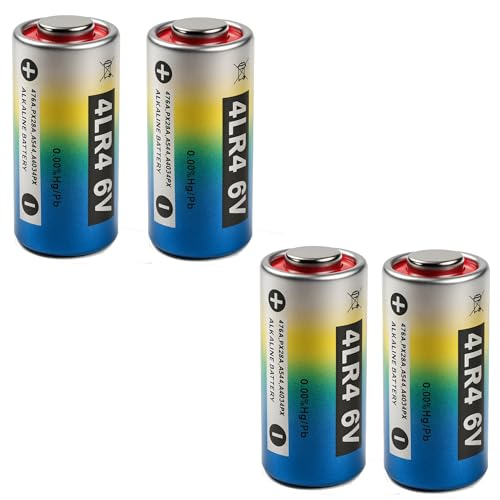
HQRP 4-Pack 6V Battery for PetSafe RFA-18

TOPUSSE 6V 6AH LiFePO4 Lantern Battery + Charger

SUNKING 4LR44 6V Batteries (10 Pack)

Procter & Gamble 6V Alkaline Battery
A Deeper Look At The Lineup
Hotels, inns, and short-term rental operators tend to ignore door-lock batteries until a guest is stuck in the hall. This 24-pack from Top Battery Solutions is built specifically for the Saflok S7400-12 lock, which is one of the most common electronic deadbolts in North American hospitality. A bulk pack like this means a property manager can roll through a wing of rooms and not worry about replacements for a long stretch.
The chemistry here is alkaline, so you get a stable shelf profile that suits devices that draw in short bursts throughout the day. For a boutique property with a handful of rooms, this pack is overkill, but for a 20-plus-room inn running on a quarterly maintenance cycle, it is a sensible stockpile. Anyone with a single residential lock should look at smaller specialty cells instead.
Notable Upsides
- 24-cell count suits a multi-room property on a maintenance rotation
- Alkaline chemistry supports the brief, intermittent current draw of electronic deadbolts
- Tailored fit for the widely deployed Saflok S7400-12 hardware
- Pack form helps reduce reorder frequency and downtime between service visits
Trade Offs
- Single-application focus, so cells have limited usefulness outside compatible Saflok units
- Larger pack size means more inventory space and tighter tracking of install dates
Who It Suits Best
Hospitality maintenance staff and rental property owners running Saflok S7400-12 locks across multiple rooms.
Where Another Pick Suits Better
For lantern or general specialty 6V use, the Duracell MN908 6V Alkaline Lantern Battery is a better fit.
Pet owners running an Innotek ADV-300 series collar know the frustration of a static correction going silent mid-walk. HQRP’s 2-pack is built around the ADV-300, ADV-300E, ADV-300P, and ADV-300P-22 receivers, covering most of the older Innotek wireless and bark-control lineup. A two-cell count lines up nicely with a single collar that goes through batteries at different rates than the rest of the household stock.
For dog owners with only one Innotek collar, a 2-pack is more sensible than the larger dog-collar multipacks further down this list. The alkaline chemistry handles the pulsed draw of a receiver well, and the cells are described as direct replacements for the original. Anyone running a newer PetSafe system should look at the HQRP 4-Pack for the RFA-18 instead, which fits a different collar family.
Real Benefits
- Cross-compatible with four common Innotek receiver models
- Small pack count matches a single-collar household without leftover waste
- Listed as a direct-fit replacement for the original cell
- Backed by a 100-day warranty from HQRP
Worth Noting
- Limited to Innotek receivers, so no flexibility for other devices around the home
- Only two cells means a heavy-use dog may need a reorder within a season
Quick Facts
Made For
Single-dog households running the Innotek ADV-300 receiver line who want a tidy two-cell replacement.
Look Elsewhere When
Multi-dog owners using PetSafe bark collars should reach for the HQRP 4-Pack for the RFA-18 instead.
Anyone restoring an older film camera, fixing a vintage dog bark collar, or repairing a specialty remote eventually runs into the PX28 battery footprint. The Exell A28PX is the modern alkaline replacement for the discontinued PX28 mercury cell, which was phased out for toxicity reasons. That lineage matters, because the A28PX is built to slot into the same tight form factor as PX28, A544, 4LR44, K28A, and a long list of cross-references.
The cells run at 6V with a 165mAh rating, and the chemistry pairs zinc with manganese dioxide for a steady drain profile. For most hobbyists, the value comes from having one battery type cover a pile of devices with different printed labels. Heavy users will want to look at the larger 4LR44 multi-packs on this list for better unit value.
Where It Excels
- Cross-references a long list of legacy cell codes including PX28A, 4LR44, and K28A
- Alkaline chemistry replaces the older mercury PX28 in a similar footprint
- 165mAh rating supports cameras, remotes, and bark collars without voltage sag
- Two-pack count suits a household with a few specialty devices rather than a stockpile
Honest Caveats
- Two cells may run out quickly across a multi-device hobby bench
- Small form factor is easy to misplace during replacement
Feature Snapshot
Best Suited To
Hobbyists and restoration enthusiasts with a small bench of older cameras, bark collars, or specialty remotes.
A Better Fit Elsewhere
Multi-collar households or anyone replacing 4LR44 cells frequently will do better with the EBL 4LR44 6V Dog Collar Batteries 10 Pack.
Camping lanterns and emergency lights pull a steady, heavier current than most 6V specialty cells, and the Duracell MN908 is engineered for exactly that kind of drain. The CopperTop upgrade focuses on advanced performance in demanding battery-powered devices, which puts it firmly in lantern and high-output territory. The single-cell pack is the right size for one backup unit, not a stockpile.
Duracell date-codes the cell for freshness and rates it to last significantly longer than super heavy duty or carbon zinc alternatives in power-hungry applications. For a weekend camper, that means a lantern that is still bright on the second night without worrying about a half-dead battery. Anyone running lanterns weekly should consider the rechargeable TOPUSSE LiFePO4 unit later in this list as a money-saving alternative.
Useful Strengths
- CopperTop upgrade targets high-drain lanterns and emergency lights
- Outlasts super heavy duty and carbon zinc cells in demanding runs
- Date-coded production supports confidence in shelf freshness
- Single-cell pack suits a one-lantern household without waste
Points To Note
- Single-cell format is inefficient for households running multiple lanterns
- Disposable chemistry means recurring replacement for very heavy users
Who Will Love This
Weekend campers and emergency-prep households running a single 6V lantern a few times a year.
Skip It When
Anyone burning through lantern cells weekly should look at the TOPUSSE 6V 6AH LiFePO4 Rechargeable Lantern Battery instead.
Garage door remotes, certain medical devices, and some specialty security sensors run on the compact 28A cell, and the Duracell 28A is the most familiar 6V option in that footprint. The small single-cell pack keeps storage simple and is easy to slip into a junk drawer. For a household that replaces one of these cells every year or two, a single pack is plenty.
Where this battery really earns its keep is in the device-specific niche that other multi-packs on this list do not cover. The Duracell name also brings the usual confidence in freshness dating and supply continuity. The trade-off is the per-cell cost is higher than a 4LR44 multi-pack, so anyone replacing these cells often should look at a cross-reference alternative instead.
Benefits That Matter
- Compact 28A footprint fits garage remotes, security sensors, and select medical devices
- Single-cell pack matches a low-frequency replacement routine
- Duracell supply chain supports easier sourcing than off-brand alternatives
- Reliable voltage for low-drain specialty electronics
Small Caveats
- Per-cell cost runs higher than bulk 4LR44 alternatives for similar chemistry
- Specialty fit limits flexibility across other household devices
Right Fit For
Homeowners and small offices replacing a single 28A cell in a garage remote or specialty sensor every year or two.
Consider Something Else When
Anyone with several 4LR44-powered devices gets better unit value from the EBL 4LR44 6V Dog Collar Batteries 10 Pack.
Multi-dog households and small grooming operations chew through 4LR44 cells at a rate that makes single-packs feel silly. EBL’s 10-pack lands in that sweet spot: enough inventory to cover a year of collar swaps without overcommitting shelf space. The cells also cross-reference 476A, PX28A, A544, K28A, and L1325, which keeps them useful beyond just one collar brand.
The 4LR44 footprint is also common in certain cameras, glucometers, and small electronics, so a 10-cell pack tends to drain across more than just dog collars. For anyone keeping a battery drawer stocked for a variety of specialty devices, this is a sensible bulk buy. Anyone with only one collar and infrequent use will find a smaller pack less wasteful.
Real-World Strengths
- 10-cell count covers a full year of collar swaps for most multi-dog households
- Cross-references 476A, PX28A, A544, and K28A for broader device use
- Alkaline chemistry supports steady pulsed draw in training collars
- Bulk form reduces the per-cell cost compared to single-pack options
Points To Keep In Mind
- Ten cells may sit for a while if you only own one collar
- Storage conditions matter for cells kept on the shelf past a year
Key Product Details
Perfect Match For
Multi-dog households and small grooming operations replacing 4LR44 collar cells several times a year.
Reach For A Different Pick When
Owners of Innotek ADV-300 collars should consider the HQRP 2-Pack for that specific receiver family instead.
PetSafe bark and training collars using the RFA-18 module are widespread, and HQRP’s 4-pack is built specifically for that receiver family. A four-cell count strikes a middle ground between the 2-cell Innotek pack and the 10-cell bulk option from EBL. For a household running two collars or replacing cells seasonally, four cells tends to land just right.
The 4-pack covers the RFA-18, RFA-18-11, PBC19-11043, PBC00-12724, and PBC19-13095 models, so most PetSafe owners in this generation will find a fit. HQRP’s 100-day warranty adds a small comfort layer. Anyone on a tighter budget who doesn’t mind a third-party brand can save by going with the EBL 10-pack and accepting the cross-reference check.
Practical Advantages
- Direct-fit for the RFA-18 and several PetSafe PBC model numbers
- Four-cell count covers a two-collar household across most seasons
- 100-day warranty from HQRP offers a short safety net
- Alkaline chemistry supports steady receiver performance
Things To Consider
- Limited use outside compatible PetSafe receivers
- Third-party brand means cell consistency varies a bit more than name-brand options
Whose Shelf It Belongs On
PetSafe owners running RFA-18 bark collars who want a balanced four-cell replacement plan.
Another Choice May Suit
Bulk buyers on a tighter budget will get more cells per dollar from the EBL 4LR44 6V Dog Collar Batteries 10 Pack.
For households that burn through lantern cells weekly, a rechargeable LiFePO4 unit is a different category entirely. The TOPUSSE 6V 6Ah battery ships with its own charger and is rated for 1,500+ cycles, which is the kind of longevity that pays for itself quickly when lanterns run during power outages or on nightly camping trips. The spring terminals also make it easy to swap into a standard 6V lantern compartment.
LiFePO4 chemistry (lithium iron phosphate) brings a more stable thermal profile than older lithium-ion cells, and the built-in BMS (battery management system) handles charge balancing and protection. The catch is the upfront cost, which is significantly higher than a single disposable lantern battery like the Duracell MN908. Over many cycles, though, the per-use cost drops well below disposables.
What Pays Off
- 1,500+ cycle rating reduces long-term cost for heavy lantern users
- LiFePO4 chemistry is more thermally stable than older lithium-ion cells
- Built-in BMS handles charge balancing and basic protection
- Spring terminals fit common 6V lantern battery compartments
- Charger included so no separate accessory purchase is required
Trade-Offs To Consider
- Higher upfront cost than a single disposable lantern cell
- Heavier than alkaline, which matters for portable lantern setups
- Recharge routine requires remembering to top off the cell between uses
Technical Highlights
Built With In Mind
Households running a 6V lantern weekly or more, especially for emergency-prep or off-grid use.
Swap It Out When
Occasional campers who pull a lantern out twice a year are better served by the Duracell MN908 6V Alkaline Lantern Battery.
SUNKING’s 10-pack sits in the same bulk niche as the EBL option earlier in the list, with a focus squarely on shock and training collars. A 10-cell count means a multi-dog household can rotate collars without scrambling for a fresh cell. The 4LR44 footprint is the standard for most mainstream training systems, so the pack drains across collars as batteries deplete.
For trainers who run client dogs through a routine, having a steady supply of fresh cells keeps sessions on schedule. The alkaline chemistry handles the pulsed receiver draw reliably. Owners of single collars with infrequent use will find the 10-cell count excessive and may prefer the smaller HQRP 2-pack or 4-pack to avoid cells sitting in a drawer for years.
Standout Benefits
- 10-cell count covers a multi-dog or training-client rotation comfortably
- Built for the 4LR44 footprint common in mainstream training collars
- Alkaline chemistry supports steady receiver performance through a session
- Bulk format lowers the per-cell cost for frequent replacements
Honest Caveats
- Ten cells is too many for a single-collar household with light use
- Off-brand sourcing means cell-to-cell consistency can vary slightly
Who Should Grab It
Multi-dog households and trainers running several 4LR44 collar replacements across a busy season.
Where A Sibling Pick Shines
For a tighter budget and a similar bulk count, the EBL 4LR44 6V Dog Collar Batteries 10 Pack is a comparable alternative.
Sometimes the goal is a no-fuss 6V alkaline cell with a familiar brand on the side, and the Procter & Gamble 6V Alkaline Battery fits that brief. It sits in the broader specialty battery category without locking into one niche like a door lock or bark collar. That makes it a reasonable fallback for a household that has odd specialty devices without a clear part number.
The honest read is that this option exists for people who want a name they recognize in a generic 6V form factor, rather than a specific collar or lock match. Anyone with a clearly identified device should look at the brand-tuned packs earlier in this list. For an unknown legacy device, this entry covers the gap while you research the exact cell spec.
Everyday Wins
- Generic 6V alkaline format fits a range of specialty devices
- Familiar brand name for households that prefer mainstream sources
- Single-cell purchase suits a one-off replacement need
- Reasonable fallback while researching the exact cell spec for an unknown device
Points To Note
- Less specialized than the collar- or lock-specific packs on this list
- Single-cell format is inefficient for repeat replacement households
The Right Fit
Households with a single unknown specialty device that needs a 6V alkaline cell without a specific brand match.
Not Your Match When
Anyone running PetSafe collars or Saflok locks should reach for the HQRP RFA-18 pack or the Saflok 24-pack instead.
Picking The Right Cell For Your Device
A 6V alkaline battery is not interchangeable across every specialty use, and matching the cell to the device is where most of the value lives. Start with the form factor: 4LR44 cells power most pet training collars, MN908-style cells fit lanterns, and 28A cells handle compact garage remotes and sensors. Cross-reference codes like PX28A, A544, and K28A usually point back to the same 4LR44 footprint, which is why a single multi-pack can drain across several device types in the same drawer.
Chemistry matters next. Alkaline cells handle intermittent draw well, which covers most door locks, bark collars, and remotes. Lanterns pull a steadier, heavier current, so a lantern-tuned alkaline like the Duracell MN908 or a rechargeable LiFePO4 unit makes more sense than a small 4LR44 cell. Rechargeable LiFePO4 only pays off when you actually cycle the cell often enough to recover the upfront cost.
Pack size is the easiest place to overspend. A 10-pack of 4LR44 cells is a great deal per cell, but a single-collar household will let half the pack age out before using it. Match the count to your realistic replacement cadence, and store spares in a cool, dry spot to keep the freshness date meaningful. Date-coded cells from familiar brands tend to hold their charge longer in storage than off-brand alternatives.
For hospitality and property use, bulk packs tailored to a specific lock model cut downtime between service visits. For pet households, brand-specific packs (Innotek vs. PetSafe) reduce the risk of a cell that almost fits but does not quite seat. And for emergency prep, pairing a long-shelf-life alkaline lantern battery with a rechargeable backup covers both the short outage and the extended one.
Key Considerations Across These Picks
Common Shopping Slip Ups
The most common mistake in this category is grabbing a 4LR44 multi-pack for a device that actually takes a 28A or MN908 cell. The 4LR44 family is so visible in search results that it pulls attention away from less common footprints, and a 4LR44 will not seat correctly in a 28A compartment. Always check the device manual or the printed code on the old cell before ordering.
Another slip-up is buying a name-brand single cell when a third-party multi-pack would actually save money. For frequent replacements, a 10-pack of 4LR44 cells lands at a much lower per-cell cost than a single Duracell 28A, but only if you actually use 4LR44 cells. The cost-per-use calculation only works when the cell matches the device and the replacement cadence matches the pack size.
When Paying More Pays Off
Higher-tier picks earn their premium in three places: cycle life, brand consistency, and warranty support. The TOPUSSE LiFePO4 lantern battery costs more upfront, but the 1,500+ cycle rating means the per-use cost drops well below disposables for anyone running a lantern weekly. For occasional use, that premium is wasted, so the upgrade only makes sense when the device sees real action.
Brand-name cells like the Duracell MN908 and 28A carry a small premium for tighter date-coding and more consistent cell-to-cell performance, which matters in emergency-prep situations where a cell that has quietly lost capacity is worse than useless. Warranties on third-party options like the HQRP packs are shorter and more conditional, so the brand premium is essentially insurance against early failure in a high-stakes device.
Frequently Asked Questions
What devices use a 6V alkaline battery?
6V alkaline cells power electronic door locks, pet training and bark collars, camping lanterns, certain garage remotes, specialty medical devices, and some cameras and remote controls. The exact form factor depends on the device.
How long does a 6V alkaline battery last in storage?
Most alkaline 6V cells hold usable charge for up to five years in cool, dry storage, and brand-name options like Duracell are date-coded for freshness. Heat and humidity shorten that window significantly.
Can you replace a PX28 battery with an A28PX?
Yes, the A28PX alkaline cell is a direct modern replacement for the discontinued PX28 mercury battery, which was phased out due to toxicity. The voltage and footprint match for most compatible devices.
Are rechargeable 6V lantern batteries worth it?
Rechargeable LiFePO4 lantern batteries pay off for households that run a lantern weekly or more, since the cycle life spreads the cost across many uses. For occasional use, a disposable alkaline cell is more economical.
Is a 4LR44 the same as an A544 or K28A?
Yes, 4LR44, A544, and K28A are cross-reference codes for the same 6V alkaline cell footprint, and most packs in this category list several cross-references to confirm device compatibility.
Bottom Line
The right 6V alkaline battery comes down to matching the form factor to the device, picking a pack size that matches your replacement cadence, and choosing chemistry that suits the current draw. Door-lock and pet-collar owners usually do best with brand-specific multi-packs, lantern owners benefit from a high-drain alkaline or a rechargeable LiFePO4 unit, and hobbyists with legacy electronics get the most value from a cross-reference-friendly A28PX or 4LR44 stock. Start with the cell your device actually takes, and the rest of the decision lines up quickly.