Whether you’re rewiring a pontoon, building a solar shed, or replacing a frayed jumper lead, the cable you choose quietly decides how reliable the whole system feels. 6 gauge wire (AWG 6, roughly 13 mm² of copper) sits in the sweet spot for mid-current DC jobs: thick enough to carry serious amperage without voltage drop, slim enough to bend around a battery tray. Below are ten focused picks spanning raw cable, finished leads, terminals, and emergency jumpers, each matched to a specific kind of project.
The Essentials At A Glance

CONEPY 6 Gauge Duplex Marine Grade Cable 50FT

End Game 6 Gauge Marine Battery Cables 3ft 3/8 Lugs

SELTERM 25pcs 6 AWG 5/16″ Bare Copper Lugs

Sanuke 10pcs 6 Gauge 3/8 Wire Connectors

SELTERM 10pcs 6 AWG 5/16″ Tinned Copper Lugs
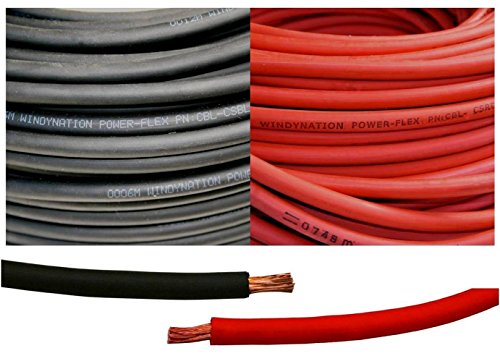
WindyNation 6 AWG Welding Cable 20ft Black + Red

TUELETFU 6 AWG Battery Cables 1FT 2-Pack

TUELETFU 6 AWG Battery Cables 3FT 2-Pack

TUELETFU 6 AWG Battery Cables 4FT 2-Pack
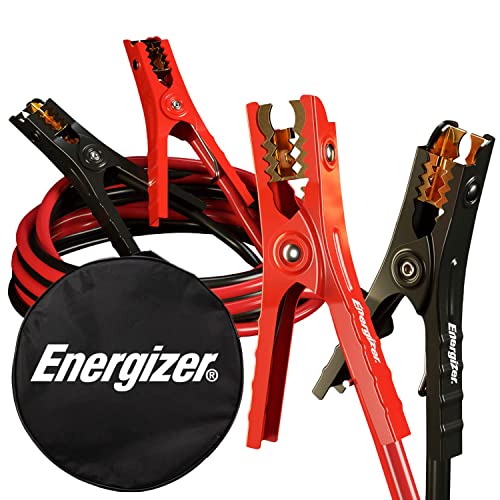
Energizer 6-Gauge 16ft Jumper Cables
Boat owners chasing a clean, salt-tolerant run from the cranking battery to the helm usually land on this duplex spool. CONEPY builds each conductor from 188 strands of oxygen-free tinned copper (tinned means plated with a thin layer of tin to slow corrosion), and the duplex format pairs red and black conductors in one jacket so routing stays tidy through a bilge or rigging channel.
Compared to the bare bulk cable in item 6, this one ships with marine-grade PVC already around it, so there’s no extra heat-shrink or loom stage. Owners rewiring a small sailboat or repowering a trolling-motor bay typically find the flexibility forgiving even when the bend radius gets tight.
Bright Spots
- Tinned copper strands resist the green corrosion that plagues raw copper in saltwater bays
- Duplex jacket keeps positive and negative runs bundled, cutting down on cable clutter
- Rated to 600V across 5V, 12V, and 24V systems, useful for solar banks and accessory circuits
- Stays pliable down to -40°F, helpful for cold-start mornings at the ramp
Things To Consider
- Arrives without ring terminals, so you’ll still need to source and crimp ends separately
- The thick PVC jacket adds diameter; routing through existing chases may require extra room
Key Specs
Made For
Boat owners and marine electricians running new positive and negative leads through damp, salt-exposed compartments where corrosion is the main threat.
Reach For A Different Pick When
End Game’s pre-terminated cable fits better for anyone wanting a finished 3-foot lead they can bolt on without a crimper.
End Game takes a different route than CONEPY: instead of bulk spools, you get a finished cable already terminated with sealed tinned lugs. The 3/8-inch ring ends cover most standard battery posts, switches, and starter studs, so the install shrinks to unbox, bolt down, and go.
This format lines up well with weekend projects where the goal is a clean replacement rather than a custom build. Owners rebuilding a vintage runabout or upgrading an outboard’s starting circuit tend to value the time saved over the premium versus bulk wire.
The Good Stuff
- Pre-crimped tinned lugs cut out the most error-prone step of a DIY cable build
- Oil- and fuel-resistant PVC jacket suits engine bays and outboard compartments
- Compatible with both 3/8-inch and 5/16-inch battery post hardware
Worth Noting
- Limited to short jump distances at this listing; longer runs mean stacking or ordering custom lengths
- Premium versus bulk wire, so multi-cable projects on a tight budget may prefer CONEPY
Who It Suits Best
Garage tinkerers and weekend marine electricians who want a USCG-aligned cable they can bolt on without owning a crimper.
Skip It When
WindyNation’s bulk spool makes more sense for someone laying 20-foot runs across a solar shed or RV.
SELTERM’s 25-pack is the bench-supply option for anyone who builds cables one at a time. Each lug is bare (unplated) annealed copper, annealed meaning softened through heat treatment so the metal crimps without cracking, with a wider pad for better contact under the clamp.
Bare copper costs less than tinned and works fine in dry, indoor settings like a server rack or workbench. Where SELTERM differs from Sanuke’s smaller kit in item 4 is pure volume: 25 terminals per pack instead of 10, which suits ongoing shop use.
Noteworthy Benefits
- Twenty-five lugs in a single pack keeps a busy shop supplied for many builds
- Wide pad geometry spreads clamp pressure for a steadier electrical contact
- Annealed bare copper crimps cleanly with standard hex or hammer crimpers
Trade Offs
- Bare copper will patina (develop a dull oxide layer) in humid or marine spaces without extra sealing
- 5/16-inch stud only; 3/8-inch hardware needs the matching Sanuke kit instead
Feature Snapshot
Best Suited To
Home workshop builders and small-shop electricians who churn through custom cables and want spare terminals on hand.
Look Elsewhere When
Boat owners should reach for SELTERM’s tinned version in item 5, since bare copper will pit in saltwater bays.
Sanuke’s bundle is the friendliest entry point on the list. You get ten 3/8-inch copper lugs plus five red and five black adhesive-lined heat-shrink tubes, enough for two or three finished cables right out of the box.
The included shrink tubing is the real value add: it seals the crimp against moisture and gives a tidy, color-coded finish. Compared to SELTERM’s bare pack in item 3, Sanuke ships a smaller count but with everything needed for a sealed, road-ready cable.
Everyday Wins
- Heat-shrink bundle means newbies don’t have to hunt down a separate sealing step
- 3/8-inch stud fits the larger battery posts common on trucks and SUVs
- Color-coded red and black shrink simplifies positive versus negative identification
Points To Note
- Bare copper still needs careful sealing in any damp environment
- Ten lugs vanish quickly on multi-battery bank projects
Quick Facts
The Right Fit
First-time cable builders and DIYers fixing a single corroded lead who want lugs and sealing in one package.
Consider Something Else When
Anyone running a busy shop will outgrow the 10-pack quickly; SELTERM’s 25-count in item 3 stretches further.
This is SELTERM’s marine-grade answer to their own bare copper pack. The tin plating (a thin tin coating over the copper) keeps corrosion at bay on outboards, dock-side battery banks, and any wiring that sees spray or condensation. The wider pad geometry stays consistent with item 3 for predictable crimps.
For boat owners, swapping bare copper lugs for tinned versions is one of the cheapest upgrades against the green crust that ends so many marine installs. The 10-count suits a single rig or a small trailer redo.
Real-World Strengths
- Tin plating extends service life in salt air and humid bilges
- Wide pad improves clamp bite and lowers resistance under load
- OEM-accepted build quality for warranty-sensitive installs
Honest Caveats
- Smaller pack size than item 3, so the per-piece price runs higher
- Still requires separate heat-shrink sealing for a fully weatherproof crimp
Perfect Match For
Boat owners and marine electricians terminating 6 gauge leads on saltwater craft where corrosion resistance matters most.
A Better Fit Elsewhere
Dry indoor cabinet wiring is well served by SELTERM’s bare copper pack in item 3, since corrosion is rarely a concern there.
WindyNation ships forty feet of pure copper cable split into red and black runs, a sensible starting point for any project that outgrows pre-cut jumpers. The high strand count gives it a welding-cable feel, meaning you can route it around corners and through gland fittings without it fighting back.
Compared to CONEPY’s marine-focused duplex in item 1, this cable is bare and unterminated, so you supply lugs and heat-shrink. Off-grid solar sheds, RV battery bays, and inverter projects around the garage are the natural homes for it.
What Works In Its Favor
- Forty feet of cable covers most single-battery-to-inverter runs without splicing
- High-strand pure copper stays flexible in cold weather
- Separate red and black rolls simplify positive versus negative routing
Points To Keep In Mind
- No terminals included, so plan on adding lugs and a sealing step from items 3, 4, or 5
- Bare copper benefits from extra loom or conduit in any outdoor section
Who Should Grab It
Solar and RV owners running a battery bank to a remote inverter where long, flexible runs outweigh the convenience of pre-terminated leads.
Reach For A Different Pick When
TUELETFU’s 1-foot pair in item 7 makes more sense for tight jumpers between adjacent batteries rather than long-distance runs.
The 1-foot pair from TUELETFU is purpose-built for the shortest possible connections: bridging two batteries sitting side by side, linking a battery to a nearby disconnect, or jumping from a fuse block to a starter post. Both ends arrive already terminated with 5/16-inch tinned lugs.
This is the kind of cable you grab when off-the-shelf jumpers are too long and excess wire becomes a routing headache. The trade-off shows up when the run gets longer, where the 3-foot and 4-foot siblings start to fit better.
What It Does Well
- Factory-terminated ends remove the crimper from the install
- Tinned copper lugs slow corrosion in engine bays and bilges
- Compact length prevents voltage drop and tight-loop inductance on short jumps
Where It May Fall Short
- Too short for any run beyond a single bay or nearby accessory
- 5/16-inch lugs only; larger posts need an adapter or a different cable
Whose Shelf It Belongs On
Truck, SUV, and boat owners linking side-by-side batteries where a 12-inch lead is exactly the right reach.
Swap It Out When
TUELETFU’s 3-foot pair in item 8 fits any application where the components sit further apart than a single bay.
The 3-foot version covers the most common mid-range distances: battery to a remote disconnect, an inverter mounted on the bulkhead, or a trolling motor feed. You get the same factory-sealed 5/16-inch tinned lugs as item 7, just with enough slack to span a small compartment.
Owners running modest solar setups or adding an accessory panel tend to land on this length as the sweet spot between slack and waste.
What Earns Its Place
- Pre-terminated tinned lugs ready to bolt straight onto the post
- 3-foot length matches most accessory and disconnect installations
- Solder-friendly tinned copper for any field repair work
Minor Gripes
- Still limited to 5/16-inch posts; some heavy-duty starters need 3/8-inch hardware
- Two-pack format assumes you need both positive and negative, which may not always be true
At A Glance
Right Fit For
DIY installers and small-shop mechanics wiring accessory panels or inverters within arm’s reach of the battery.
Where Another Pick Suits Better
Anyone needing longer cabling will find End Game’s marine pre-terminated lead in item 2 or WindyNation’s bulk spool in item 6 more flexible.
The 4-foot sibling rounds out TUELETFU’s ready-made trio. This length shines when the battery sits across a tray from the starter, or when an inverter lives a couple of feet from the bank. The extra foot of slack over item 8 buys you routing flexibility without resorting to a custom build.
For most automotive and light-marine jobs, 4 feet is the practical upper limit on a pre-made cable before splicing or stepping up to bulk wire starts to make more sense.
What Makes Sense
- 4-foot lead handles cross-tray or cross-compartment runs without splicing
- Tinned copper lugs at both ends simplify corrosion-prone installs
- Same temperature tolerance as the shorter siblings for year-round use
A Few Limitations
- Excess cable length can clutter tight engine bays if not routed carefully
- 5/16-inch lugs limit fit on heavier 3/8-inch marine posts
Who Will Love This
Vehicle owners and small-craft electricians who need a slightly longer factory-made lead and want to skip the crimper entirely.
Not Your Match When
True long-distance solar runs call for WindyNation’s bulk cable in item 6 plus your own terminations.
Energizer rounds out the list with a different job entirely: emergency jump starting. At 16 feet and 6 gauge, the cable reaches between parked cars in a crowded lot and carries enough current to wake most dead or weak automotive batteries.
Where this differs from the rest of the list is intent. Items 1 through 9 are permanent or semi-permanent installations. Energizer’s set is a roadside tool you toss in the trunk and forget until the morning you need it, which is exactly when its thick vinyl coating and stay-flex jacket start to earn their keep.
The Case For It
- 16-foot reach spans between most parked vehicles without repositioning
- Thick vinyl coating shields against rust, kinks, and garage-floor grime
- Comes with a carrying case for tidy trunk storage
Potential Sticking Points
- Not suited as permanent battery cable for installed equipment
- Clamps can lose spring tension over many seasons of roadside use
Built With In Mind
Daily drivers and small-fleet owners who want a stowed, ready-to-use jump set for dead-battery mornings.
Wrong Turns To Avoid
Anyone wiring a fixed battery bank should skip the jumper set and use one of items 1 through 9 instead.
What Matters Most Before Choosing 6 Gauge Battery Cables
Conductor Material and Plating
The first fork in any 6 gauge decision is bare versus tinned copper. Bare copper conducts slightly better and costs less, which is why items 3 and 6 are the value plays. Tinned copper adds a thin corrosion-resistant layer (the tin plating mentioned throughout item 5 and CONEPY in item 1), which matters anywhere water, salt, or humidity reaches the lug. If your install lives in a marine bilge, an outdoor battery box, or a humid garage, tinned is the safer call.
Insulation and Jacket Quality
PVC jackets do more than cover the copper. The thick marine-grade jacket on CONEPY’s duplex (item 1) and the oil-resistant jacket on End Game’s marine cable (item 2) hold up against abrasion, chemical splash, and temperature swings. Welding-style jackets, like WindyNation’s in item 6, prioritize flexibility for routing over heavy chemical resistance, which suits indoor solar bays more than engine compartments.
Termination Style
Pre-terminated cables cost more per foot but skip the crimper stage entirely. TUELETFU’s three length options (items 7, 8, and 9) and End Game’s USCG-aligned cable (item 2) are the obvious picks for installers without the right tools. Bulk lugs like SELTERM’s bare pack (item 3) or the Sanuke starter kit (item 4) keep cost down and let you build exactly the length you need, at the cost of needing a hex crimper and a heat source for sealing.
Length, Post Size, and Use Case
Before ordering, measure the actual run with a tape and add a foot of slack for service loops. Match the stud size (5/16″ versus 3/8″) to your battery posts, switches, or disconnect hardware. For emergency or temporary use, the Energizer set in item 10 occupies its own category entirely.
Key Considerations Across These Picks
Common Shopping Slip Ups
Buyers often grab the cheapest cable and end up undersizing for the actual amperage, or they overspec with welding cable in tight marine runs where tinned marine wire would last longer. Another frequent miss is mismatched stud sizes; a 3/8″ post needs 3/8″ lugs, and a 5/16″ post won’t accept a larger ring without modification. Skipping the heat-shrink seal on a hand-crimped cable is the third classic, since moisture creeps into bare copper crimps within a season.
What The Higher Tier Buys
Stepping up from bulk wire to a pre-terminated, sealed cable means you’re paying for factory-crimped lugs, marine-grade jackets, and in some cases USCG or ABYC alignment (ABYC stands for the American Boat and Yacht Council, the body that writes voluntary safety standards for marine electrical work). The premium is real, but the savings in install time and the drop in failure rate are where the extra money goes. For a one-off home project, the premium tier rarely pays back; for a saltwater boat or a vehicle you depend on, it’s usually worth it.
Frequently Asked Questions
Is 6 gauge wire thick enough for a car battery?
Yes. AWG 6 handles the typical 12V automotive cranking loads comfortably, which is why you see it on jumper cables, starter leads, and battery-to-inverter runs. For very high-amperage welders or large inverters, you’d step up to 4 gauge or thicker.
What’s the difference between tinned and bare copper battery cable?
Bare copper offers slightly higher conductivity at lower cost. Tinned copper has a thin tin layer that resists corrosion in humid or saltwater environments, so it’s the better pick for marine or outdoor installs where green oxidation would otherwise shorten cable life.
Can I use welding cable for battery cables?
Welding cable uses fine, high-strand copper and stays flexible, which makes it popular for battery and inverter wiring. It’s fine for dry, indoor use, though marine-rated cable with a tougher jacket is a better choice in wet or exposed locations.
Do I need heat shrink on battery cable lugs?
Heat shrink is strongly recommended on any hand-crimped lug. The adhesive-lined 3:1 tubing in Sanuke’s starter kit (item 4) seals the crimp against moisture, slows corrosion, and adds mechanical strain relief, all of which extend the cable’s service life.
How long should my battery cables be?
Measure the planned route, then add roughly 8 to 12 inches of slack for service loops and movement. Excess cable adds clutter and weight, while too-short a run puts mechanical strain on the lugs and posts.
The Takeaway
The right 6 gauge pick depends less on the cable itself and more on the environment it lives in. Tinned marine cable or pre-terminated lugs earn their premium in saltwater and high-vibration installs, while bare copper and bulk spools reward dry, indoor projects where flexibility matters more than corrosion resistance. Match the cable to the room it will live in, measure the run, and the rest of the choice tends to take care of itself.