A flaky golf-cart morning or a dead trolling motor halfway through a fishing trip can sour a whole day. Lithium iron phosphate packs need a steady, smart charger that knows the chemistry, and the wrong pick quietly kills cells over months of use. This roundup sorts through ten solid options spanning carts, RVs, marine setups, solar banks, and smaller 12V systems so the right current lands in the right battery without guesswork.
A Fast Comparison Of The Options
RALBIL 48V Lithium Battery Charger 1250W 18A IP67
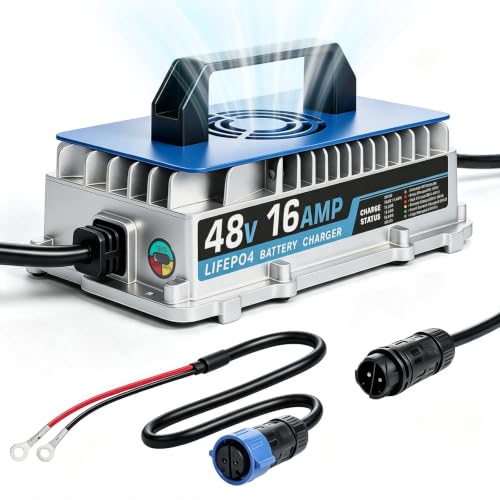
RALBIL 48V Lithium Battery Charger 900W 16A

RALBIL 48V 18A Lithium Charger with 2 Mounting Ways
FORM 48V Lithium LiFePO4 Battery Charger 15A Onboard

ESTSVN 25A 36V Golf Cart Charger for EZGO TXT
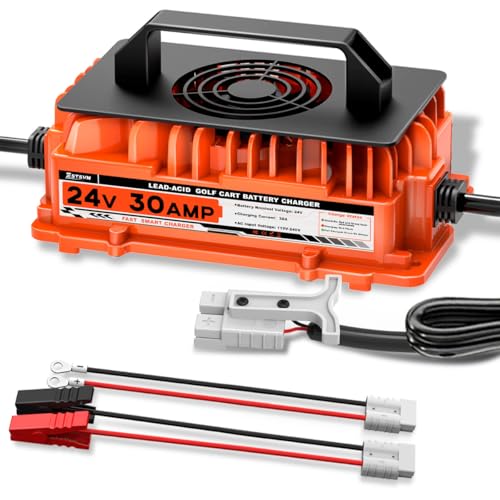
ESTSVN 30A 24V Forklift Battery Charger

ESTSVN 48V LiFePO4 Lithium Battery Charger 18A

ESTSVN 50A 12V LiFePO4 Lithium Battery Charger

electrosmart 58.4V 12A LiFePO4 Battery Charger

ESTSVN 14.6V 30A LiFePO4 Battery Charger 12V
Why These Options Stand Out
Where the RALBIL 1250W unit earns its slot is raw charging speed: an 18A output, paired with a 58.4V LiFePO4 charge profile (the absorption voltage matched to a fully topped 16S pack), pushes a 100Ah pack from empty in roughly five hours. The IP67 rating means a sealed aluminum housing stands up to splashes, road spray, and the occasional wash-down at the boat ramp, which matters for carts that live outdoors and gear stored in open trailers.
Seven onboard protection circuits guard against reverse polarity, short circuits, and over-temperature conditions, giving daily drivers a worry-free routine. Compared to the RALBIL 900W unit below, this model halves the time between plug-in and full charge for most users.
The Value In It
- 1250W output with 18A current refills a 100Ah LiFePO4 pack noticeably faster than the 16A model.
- IP67 sealed housing tolerates wet bays, open trailers, and outdoor storage.
- 0V wake-up function revives deeply discharged packs that other chargers refuse to recognize.
- Seven protection modes cover the common failure scenarios in mobile installs.
- 94% charging efficiency keeps waste heat and electricity costs down across long sessions.
Things To Consider
- At full output the cooling fan runs audibly, so mounting in a quiet cab may require sound-damping placement.
- The aluminum case adds weight, making permanent mounting the better long-term choice over portable use.
Who Will Love This
Golf cart owners and serious RV users who run packs hard and want the fastest turnaround between sessions.
Where Another Pick Suits Better
The FORM 48V Lithium LiFePO4 Battery Charger 15A Onboard suits shoppers needing a hardwired, low-profile mount over raw amperage.
Stepping down from the 18A flagship, the 900W RALBIL model trims about 200W and 2A while keeping the same 58.4V LiFePO4 charge profile and a long list of safety modes. A 100Ah pack tops off in roughly six hours, which is fast enough for weekend warriors who plug in overnight and roll out the next morning. The 0V wake-up helps recover packs left sitting all winter in a shed.
Eight protection circuits cover most electrical fault scenarios a mobile setup can throw at the unit. For shoppers who don’t need every minute of charging speed, this strikes a clean middle ground.
Strong Points
- 16A output delivers full charges overnight without the thermal load of higher-amp units.
- Eight safety modes, one more than many competitors at this wattage.
- 94% efficiency keeps energy waste minimal during longer sessions.
- 0V wake-up recovers deeply discharged packs that have dropped below the BMS cutoff threshold.
Honest Caveats
- Slower than the 18A siblings, so heavy daily users may feel the wait on back-to-back cart days.
- Connector style is fixed to the included ring terminals, requiring adapters for non-standard setups.
Best Suited To
Weekend RV and boat owners who plug in between trips and don’t need turnaround in under four hours.
Consider Something Else When
The RALBIL 48V Lithium Battery Charger 1250W 18A IP67 fits shoppers who charge daily and want the absolute fastest turnaround time.
The standout trick on this 1250W RALBIL model is the dual mounting system: ten holes drilled across the chassis let it install horizontally on a shelf or vertically against a bulkhead. That flexibility matters in a battery compartment where every inch is contested, or on a trailer frame where flat surfaces are scarce. Charging speed matches the flagship at 18A with the same IP67 sealed enclosure.
Seven protection circuits handle the routine fault scenarios, and the aluminum housing shrugs off splashes during ramp-side washes.
Practical Pluses
- Two mounting orientations fit cramped engine bays and trailer frames where one-direction units won’t sit.
- 18A output matches the larger flagship for the fastest turnaround in the lineup.
- IP67 housing survives outdoor storage, road spray, and the occasional hose-down.
- 0V wake-up handles deeply discharged packs that have tripped their internal BMS.
Points To Note
- Owners commonly report that the included mounting screws are short, so plan on picking up slightly longer hardware.
- Heavier than portable alternatives, which is fine for fixed installs but a chore to haul around.
The Right Fit
Garage tinkerers and boat owners with awkward battery compartments who need mounting options over raw portability.
Skip It When
The electrosmart 58.4V 12A LiFePO4 Battery Charger suits shoppers wanting a quieter, lower-amperage charger over mounting versatility.
The FORM charger targets the crowd who never want to wrestle with a portable brick again. Ring terminals connect directly to the battery posts, and the slim onboard form factor tucks under the cart seat or against a bulkhead where it stays out of the way. A 15A output covers routine overnight charging without taxing smaller campground circuits, and the maintenance mode holds the pack at full without overcharging.
This is a purpose-built golf cart unit, so the feature list stays tight rather than sprawling.
Advantages To Know
- Hardwired ring terminal install means no loose plugs to forget at the campsite.
- Maintenance mode tops up and holds full charge for long winter storage periods.
- Lower amperage (15A) plays nicely with 15A campground breakers that trip under heavier loads.
- Purpose-built for 48V LiFePO4 packs, reducing the risk of profile mismatches.
Practical Considerations
- Slower than the 18A RALBIL models, so turnaround on large packs stretches past seven hours.
- Hardwired design means the charger goes where the cart goes, which limits sharing across vehicles.
Made For
Golf cart owners who want a set-and-forget onboard charger that lives permanently on the vehicle.
Look Elsewhere When
The ESTSVN 48V LiFePO4 Lithium Battery Charger 18A suits shoppers who prefer a portable unit that moves between vehicles.
This 36V pick exists for the significant number of legacy cart owners still running lead-acid packs. The 25A output on a 36V system delivers roughly 900W, refilling a typical deep-cycle bank in five to six hours, and the D-style two-pin plug matches the EZGO TXT connector pattern found on older carts. The aluminum housing and large cooling fan with a cover plate keep temperatures in check during extended sessions.
It is not a LiFePO4 unit, so shopping for it means knowing that your pack is still on flooded or AGM chemistry.
The Upside
- 25A high current refills 36V lead-acid banks faster than stock 10A OEM chargers.
- Aluminum body with covered cooling fan dissipates heat across long summer charges.
- D-style two-pin plug fits standard EZGO TXT ports without adapter fuss.
- Wide lead-acid compatibility covers flooded, AGM, and gel cell banks.
Some Limits To Know
- Not compatible with LiFePO4 chemistry, so upgrading packs later requires a different charger.
- Cooling fan noise is noticeable in quiet neighborhoods at full output.
Whose Shelf It Belongs On
EZGO TXT owners running traditional lead-acid batteries who need a replacement for a failed OEM unit.
A Better Fit Elsewhere
The RALBIL 48V Lithium Battery Charger 1250W 18A IP67 fits anyone running lithium chemistry rather than lead-acid.
Warehouse and workshop equipment lives in a different world from golf carts. The 24V ESTSVN charger pushes 30A into a forklift or pallet jack bank, and three charging modes let it adapt to lead-acid profiles used in scissor lifts, floor scrubbers, and similar gear. An Anderson plug (a high-current locking connector widely used in industrial mobility) keeps the connection secure under vibration.
The aluminum body and covered cooling fan match the demands of shop environments where dust and heat are constant companions.
A Few Highlights
- 1250W output refills large industrial banks quickly between shifts.
- Three charging modes adapt to varied lead-acid pack profiles.
- Anderson plug locks in place during operation, preventing accidental disconnection.
- Wide equipment compatibility covers forklifts, pallet jacks, scrubbers, and lawn mowers.
Where It Is Less Suited
- Lead-acid only, so lithium-converted shops will need a separate unit.
- Larger footprint than portable chargers, requiring dedicated shelf or floor space.
Who Should Grab It
Small warehouse operators and landscapers running 24V lead-acid equipment who want fast turnaround between shifts.
Reach For A Different Pick When
The RALBIL 48V Lithium Battery Charger 900W 16A fits shops standardizing on lithium rather than legacy lead-acid gear.
The ESTSVN 48V LiFePO4 charger ships with a useful adapter bundle: M8 ring terminals, alligator clips, and an Anderson plug. That trio covers most home setups without buying extras. The 18A output refills a typical 100Ah LiFePO4 pack in roughly five hours, and the wide AC input range (100V to 240V) handles both North American and European outlets for anyone charging abroad.
The cooling fan and aluminum housing keep temps manageable across long summer charges.
What Earns Its Place
- Three connector types out of the box cover most home charging scenarios.
- 18A current refills 100Ah packs in roughly five hours for routine weekend use.
- Wide 100V to 240V input range travels well between regions.
- Compatible with golf carts, RVs, boats, motorcycles, and solar banks from a single unit.
Less Ideal Details
- No IP-rated weather sealing, so outdoor placement needs a covered spot or a weatherproof enclosure.
- Cooling fan runs at full tilt during heavy charges, which may bother noise-sensitive users.
Perfect Match For
Multi-vehicle households with one cart, one boat, and one RV who want a single charger that moves between them.
Swap It Out When
The RALBIL 48V 18A Lithium Charger with 2 Mounting Ways fits shoppers needing sealed IP67 protection over connector variety.
Stepping down in voltage, this 14.6V 50A unit tackles 12V (12.8V nominal) LiFePO4 banks used in trolling motors, marine setups, and RVs. The 50A output is genuinely fast for the category, refilling large trolling banks in a few hours rather than overnight. A metal casing holds up to garage abuse, and the cooling fan manages the heat load at high current.
For anyone running serious 12V lithium capacity, this trims the charge wait noticeably.
Everyday Perks
- 50A output is among the fastest available for 12V LiFePO4 banks.
- Metal casing tolerates workshop wear better than plastic alternatives.
- 0V activate function revives packs left flat through long off-season storage.
- Wide 12V application range covers trolling motors, RVs, marine, and solar banks.
Worth Bearing In Mind
- Requires a 100V to 120V outlet, so it will not run natively on European 230V supplies without a transformer.
- Cooling fan is loud at sustained 50A output, which may not suit quiet indoor charging spaces.
Right Fit For
Anglers and RV owners running large 12V lithium banks who need fast refills between trips.
Not Your Match When
The ESTSVN 14.6V 30A LiFePO4 Battery Charger 12V fits shoppers who prefer quieter operation and lower amperage.
At 12A, the electrosmart charger leans toward gentle, longer charges rather than fast turnaround. The lower amperage suits users who plug in at the end of the day and don’t care about waking up to a partial pack. The Anderson connector (a polarized locking plug standard in RV and marine wiring) plus LED status indicator makes day-to-day use straightforward, and the smart charging profile handles 48V (51.2V nominal) LiFePO4 banks correctly.
The 0V charging function helps recover deeply discharged packs that other chargers reject.
Real Benefits
- 12A output reduces thermal stress on packs during long overnight sessions.
- Anderson connector plugs straight into many RV and marine wiring setups.
- LED indicator gives at-a-glance charge status without checking the battery display.
- 0V charging reactivates deeply discharged 48V LiFePO4 packs other units refuse to start.
Factors To Consider
- Charging takes significantly longer than the 18A picks, stretching past eight hours for a 100Ah pack.
- Smart profile works only on LiFePO4 chemistry, so swapping to lead-acid requires a different charger.
Built With In Mind
Long-term battery caretakers who prioritize gentle charging cycles over speed and want a quiet routine plug-in.
Another Choice May Suit
The RALBIL 48V Lithium Battery Charger 900W 16A fits anyone wanting faster overnight turnaround at a similar feature tier.
Slotting between the 50A and the lower-amperage trickle units, the 14.6V 30A ESTSVN charger handles mid-size 12V lithium banks without overpaying for capacity you don’t use. The Anderson connector pairs cleanly with most RV and marine wiring, and the aluminum body with cooling fan handles sustained charging without thermal throttling.
For typical RV house banks or small trolling motor setups, this hits the practical middle.
Bright Spots
- 30A output strikes a useful middle ground for typical 12V lithium banks.
- Aluminum body with cooling fan manages heat across multi-hour sessions.
- Anderson connector matches RV and marine wiring standards without adapters.
- AC-DC design accepts 100V to 120V household current at standard 15A outlets.
Trade-Offs To Consider
- Slower than the 50A sibling, so very large trolling banks may stretch into the next day.
- LiFePO4 only, requiring a different charger if a household also runs lead-acid batteries.
The Right Fit
RV owners and small marine setups with mid-capacity 12V lithium banks who want balanced speed and price.
Look Elsewhere When
The ESTSVN 50A 12V LiFePO4 Lithium Battery Charger fits shoppers running larger banks who need the absolute fastest 12V turnaround.
Picking The Right Match For Your Setup
Choosing between these options starts with battery voltage and chemistry. A 48V LiFePO4 pack, meaning a 16-cell series configuration that sits at 51.2V nominal and tops out at 58.4V during absorption, is a different beast from a 12V (12.8V nominal) lithium bank used in trolling motors or RV house systems. Match the charger’s output voltage to the battery’s nominal voltage before anything else; mismatched voltage is the most common failure mode in this category.
Current rating drives charging speed. An 18A charger halves the time of a basic 10A unit on a 100Ah pack, but higher current generates more heat and demands heavier gauge wiring. Daily drivers who plug in overnight gain little from 18A versus 16A, while multi-shift commercial users benefit from every extra amp.
Connector type matters more than specs suggest. Ring terminals suit permanent installs, Anderson plugs (locking high-current connectors popular in mobile applications) work across many RVs and boats, and D-style plugs match specific OEM carts. IP-rated sealed enclosures help outdoor carts and marine gear, while indoor shop chargers need less weatherproofing.
Finally, check protection features. Reverse polarity, short circuit, over-temperature, and over-voltage protections are standard on most modern units. The 0V wake-up function is worth its weight for packs that sit unused for months, since lithium BMS systems (the internal battery management circuit that protects cells) sometimes cut output at very low states of charge and refuse normal chargers a handshake.
Key Considerations Across These Picks
Pitfalls Shoppers Hit
The most common slip is grabbing a lead-acid charger for a lithium pack, or vice versa. The voltage profiles differ enough that cross-chemistry use either undercharges the pack or slowly damages cells. Confirm your battery’s nominal voltage and chemistry before clicking through to the retailer.
Another trap is underestimating connector needs. Ring terminals require a wrench to install, Anderson plugs need a matching receptacle already wired up, and D-style plugs only fit specific OEM carts. Checking your existing wiring saves an extra adapter order.
What The Higher Tier Buys
Stepping up to a higher-amperage or IP-rated model buys speed and durability rather than better chemistry handling. A 1250W 18A unit cuts charge time roughly in half compared to a 900W 16A model, and IP67 sealing survives weather exposure that would eventually kill an unsealed unit.
Premium pricing also tends to add deeper protection circuits and better cooling systems. For anyone charging outdoors daily, that extra build quality pays back in longer service life.
Frequently Asked Questions
Can I use a 48V LiFePO4 charger on a 12V battery?
No. The output voltage is fixed to 58.4V for 48V packs, which will destroy a 12V battery. Match nominal voltages exactly when shopping for a charger.
What does 0V wake-up actually do?
It allows the charger to handshake with a battery whose BMS has dropped the output below the normal cutoff. Without it, deeply discharged packs may refuse to accept any charge at all.
How fast will an 18A charger fill a 100Ah battery?
Roughly five to six hours from empty to full, accounting for the absorption and float stages at the end of the cycle. Real-world times run slightly longer due to efficiency losses.
Do I need an IP-rated charger for outdoor use?
For permanent outdoor mounting or marine environments, yes. A covered porch or garage is generally fine without IP67 sealing, but road spray and rain will eventually corrode unsealed aluminum housings.
Can one charger work across multiple vehicles?
Yes, if the voltage and connector match. Many RV and boat owners move a single 48V charger between setups, and Anderson plug adapters simplify the swap.
Wrap Up
The right charger comes down to matching voltage, chemistry, and connector to the battery you actually own, then choosing amperage based on how often you charge. Heavy daily users benefit from the 18A RALBIL flagship, while weekend warriors do fine on a 16A unit. Lead-acid holdouts have dedicated options, and 12V lithium owners can pick between fast 50A banks and gentler 30A models. Match the spec to the setup, and the rest is routine maintenance.