Whether you’re swapping lead-acid banks in a golf cart, building a solar backup wall, or upgrading an off-grid RV, a 48V lithium pack changes how your gear feels to live with. The category has matured quickly: LiFePO4 chemistry (lithium iron phosphate, a safer and longer-lasting lithium variant) now dominates, and built-in Battery Management Systems (BMS, the protection circuit that guards cells against overcharge, over-discharge, and shorts) have become standard. Below are nine options worth a serious look, with a mix of golf-cart conversions, server-rack home storage, and RV-ready units.
How The Shortlist Stacks Up

SOK 2-P 12V 280Ah LiFePO4 Metal Battery with Smart Heater, Bluetooth for RV
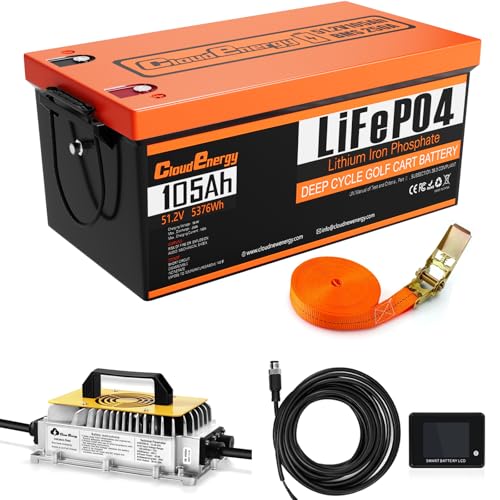
Cloudenergy 48V(51.2V) 105Ah LiFePO4 Lithium Golf Cart Battery with 250A BMS

48V 100Ah LiFePO4 Golf Cart Battery with 200A BMS and 10.24kW Peak Power
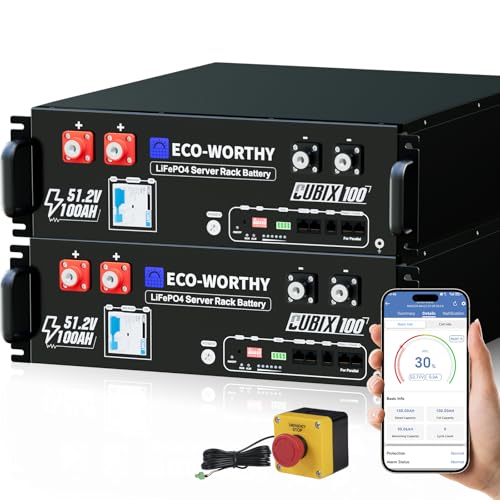
ECO-WORTHY Cubix100 48V 200Ah LiFePO4 Lithium Battery, 10.24kWh Server Rack Battery

LOSSIGY 48V Lithium Battery Golf Cart Conversion Kit with Charger and Monitor

48V Lithium Battery Golf Cart Batteries Kit (100Ah Complete Upgrade)

48V 105Ah Lithium Battery for Golf Cart with 200A BMS, Touch Monitor, APP

DC HOUSE Metal Case 48V 100Ah Lithium Golf Cart Battery Kit with 18A Charger

LOSSIGY 48V 100AH Deep Cycle LiFePO4 Battery, 5.12kWh, Bluetooth BMS, Peak 1000A
What Each Pick Brings To The Table
SOK ships a pair of 12V 280Ah LiFePO4 modules inside a steel enclosure, and the bundled heater pad is the headline feature for anyone camping past the shoulder season. The heater wakes up below 32°F and pulls power straight from the charger rather than the cells, warming the bank to roughly 41°F before allowing full current in.
RVers who run their rigs in mountain cold snaps, or full-timers who don’t migrate south for winter, will appreciate that the cells stay protected without manual intervention. Bluetooth monitoring rounds it out for owners who want a quick state-of-charge glance from a phone.
What Works In Its Favor
- Self-heating system enables safe charging in sub-freezing weather
- 280Ah capacity at 12V per unit gives flexible series and parallel wiring options
- Steel case adds impact resistance on rougher roads
- Bluetooth app monitoring for state-of-charge without climbing inside compartments
Trade Offs
- Two-module design means more cabling than a single 48V brick
- Heating draws from the charger, so a small solar-only setup may feel the load
Best Suited To
Full-time or cold-climate RVers who need four-season charging reliability without babysitting the battery bank.
Consider Something Else When
The Cloudenergy 48V 105Ah pack is a cleaner single-unit swap for golf-cart owners who don’t deal with freezing nights.
The Cloudenergy pack targets golf-cart owners who want a single 48V brick rather than a string of 6V batteries wired in series. The built-in 250A BMS is rated for serious hill-climbing current, and a touch monitor plus mobile app gives you two ways to keep an eye on the bank.
Compared to the SOK pair reviewed earlier, this one trades cold-weather self-heating for a tidy drop-in form factor. A retention strap is included for safer mounting inside the cart’s battery tray.
Advantages To Know
- 250A BMS handles steeper grades and heavier loads without tripping
- Single-unit 48V architecture simplifies wiring compared to series-stacked modules
- Both touchscreen and app monitoring for redundant data access
- Included retention strap reduces rattle on rough cart paths
Honest Caveats
- 105Ah capacity is modest for owners running lights and accessories between rounds
- Touch monitor placement needs a flat dash surface for clean installation
Feature Snapshot
Who Should Grab It
Cart owners who want a tidy single-pack conversion and like having both a touchscreen and a phone app for state-of-charge checks.
Look Elsewhere When
The Mehrpow kit suits shoppers wanting a higher cycle count over a touch-monitor interface.
Mosasaur leans into retrofit friendliness with a classic lead-acid footprint that drops into standard golf-cart trays. At 77 lb, the pack trims a meaningful amount of weight compared to old flooded banks, and the included 18A charger means you don’t need to source a compatible unit separately.
The 10.24kW peak figure handles the launch surges that older carts demand, and an LCD plus app pairing gives shop owners and casual users both a glance-on-dash and remote view.
Everyday Advantages
- Drop-in lead-acid case dimensions simplify retrofit installs
- Substantial weight reduction versus six 8V flooded batteries
- 200A BMS with cell balancing extends service life across cycles
- Bundled 18A charger removes a separate purchase step
A Few Limitations
- Lead-acid case size leaves unused volume versus smaller purpose-built packs
- 100Ah may feel limiting on hilly terrain with accessories running
Whose Shelf It Belongs On
Cart owners running a straightforward retrofit who want one box to slot in, plus a charger that’s already matched.
Swap It Out When
The Cloudenergy 48V 105Ah makes more sense if your priority is a stronger BMS over a tighter cycle rating.
ECO-WORTHY steps outside the cart world with a server-rack-formatted 48V pack aimed at solar and home backup use. The 10.24kWh total, split across two 100Ah units, suits a small off-grid cabin or a partial-house backup circuit during outages. Bluetooth monitoring covers the basics, and the closed-loop communication feature supports compatible inverters.
Where most picks in this roundup lean golf-cart, this one is genuinely a stationary storage option, and the difference shows in the form factor and the use case it suits.
Where It Delivers
- 10.24kWh capacity covers fridge, lights, and communications during grid outages
- Server-rack profile fits standard battery cabinets for tidy installations
- Closed-loop communication pairs with select inverters for smarter charge control
- Bluetooth monitoring for voltage and state-of-charge at a glance
Points To Keep In Mind
- Two-pack design adds cabling work versus single-unit stationary batteries
- Stationary form factor isn’t suited to mobile cart use
At A Glance
Perfect Match For
Homeowners building a partial-house solar backup or cabin dwellers wanting a wall-mount-ready lithium bank.
Where A Sibling Pick Shines
The DC HOUSE 48V 100Ah kit is the better match for golf-cart owners, since the ECO-WORTHY is purely stationary.
LOSSIGY offers a cart-focused kit with both 100Ah and 150Ah capacity options, which is unusual in a category where most sellers pick one capacity and stick with it. A matched charger and monitor come in the box, so you don’t have to hunt down a compatible pair separately.
For shoppers torn between modest runtime and longer-range ambitions, having both capacities on the same product page removes a layer of comparison shopping.
Notable Upsides
- Two capacity choices on one product page simplify decision-making
- Bundled charger and monitor reduce extra accessory shopping
- Auto-grade LiFePO4 cells aimed at stable long-term cycling
- BMS protection against common fault conditions
Things To Consider
- 150Ah option pushes weight and dimension up versus the 100Ah version
- Generic accessory branding means warranty support varies by region
The Right Fit
Cart shoppers who haven’t yet decided on their ideal capacity and want both options on one listing.
Another Choice May Suit
The KEZIMO 48V 105Ah is a cleaner single-capacity pick for owners who’ve already sized their needs.
The Mehrpow kit is engineered around deep-cycle endurance, with a cycle rating that aims well past the 4000-cycle mark at 80% depth of discharge (the percentage of total capacity you pull from the battery per use, which affects how many full cycles you get before noticeable wear). Sixteen EVE-grade cells give the pack a uniform cell quality, and a single plug-and-play install path keeps wiring changes minimal.
For rental fleets or daily-driven carts, that cycle margin can be the difference between a battery that needs replacing mid-season and one that outpaces the chassis it’s bolted to.
A Favorable Mix
- Cycle rating targets heavy daily use without early degradation
- EVE-grade LiFePO4 cells with balanced voltage per cell
- Plug-and-play harness keeps the swap simple for first-timers
- One-time install means no recurring maintenance beyond monitoring
Points To Note
- Hazardous-materials shipping regulation applies to returns
- Higher cycle rating comes with a stiffer price tag than entry-level packs
Who It Suits Best
Rental-cart operators and high-use households who rack up cycles faster than casual weekend riders.
Not Your Match When
The Mosasaur 48V 100Ah is the lighter, simpler choice for owners with a more relaxed driving schedule.
KEZIMO stacks monitoring depth into a single pack: a built-in touch monitor for at-a-glance state-of-charge and a companion app for remote data. The 105Ah capacity sits in the sweet spot for most 18-hole rounds, and a continuous 200A discharge rating keeps start-up surges from tripping the BMS.
Data-driven owners who want both a dashboard view and a phone view get the same numbers in two places, which can save you from pulling out tools for a quick voltage check.
Standout Benefits
- Dual monitoring interface for redundant data access
- Continuous 200A discharge for hill climbs and heavy accessories
- 16 A-grade LiFePO4 cells for low self-discharge
- Stable performance across long storage periods
Smaller Caveats
- Touch monitor requires a flat dash area for mounting
- App pairing setup may need patience on first install
Feature Card
Who Should Grab It
Tech-curious cart owners who appreciate having battery data on both a dashboard screen and their phone.
Reach For A Different Pick When
The LOSSIGY 100Ah kit is the better match for owners who’d rather skip the touch-monitor install step entirely.
DC HOUSE wraps a 48V 100Ah LiFePO4 pack in a metal case built to take rough-cart-path abuse. The peak current figure sits high enough to launch loaded carts up steep grades, and a Bluetooth app plus LCD monitor give you redundant visibility into the bank.
Where some packs feel at home on manicured fairways, this one leans toward owners who push their carts through tree-lined or off-pavement routes where the case takes more of a beating.
The Good Stuff
- Metal enclosure handles vibration and impact on rough terrain
- High peak current supports loaded climbs without sag
- Bundled 18A charger matches the pack out of the box
- Bluetooth plus LCD for layered monitoring options
Where It May Fall Short
- Metal case adds weight over plastic-housed packs
- Bluetooth pairing can drop if the cart is parked far from the phone
Who It Suits Best
Cart owners running hunting lease routes, farm properties, or any cart that lives off smooth pavement.
Skip It When
The Mosasaur 48V 100Ah is a lighter drop-in option for owners who mostly drive on groomed cart paths.
This LOSSIGY variant shifts focus toward a deep-cycle profile with a 5.12kWh capacity and a peak current figure aimed at aggressive launches. The 200A Bluetooth BMS lets you monitor state-of-charge from your phone, and the chemistry leans into the slow, steady discharge patterns that solar and RV use cases demand.
Compared to the earlier LOSSIGY cart-conversion kit, this one shares the brand but stretches toward off-grid and hybrid setups rather than pure cart duty.
Well-Handled Touches
- Peak current surge supports steep climb starts
- Bluetooth BMS for convenient phone monitoring
- Auto-grade LiFePO4 cells designed for stable cycling
- Suits both cart and stationary solar configurations
Some Limits To Know
- Single 5.12kWh capacity may be undersized for whole-home backup
- Peak figure is short-duration, not continuous output
Quick Facts
Perfect Match For
Owners splitting use between a cart and a small solar system who want one battery to handle both.
A Better Fit Elsewhere
The ECO-WORTHY Cubix100 is the better choice for purely stationary home backup with deeper kWh reserves.
Choosing The Right Pack For Your Setup
Capacity and voltage get most of the attention, but the BMS rating matters just as much in real-world use. A 48V 100Ah pack with a 150A BMS may feel sluggish under load, while the same capacity with a 200A or 250A BMS delivers stronger hill-climbing behavior. Match the BMS continuous rating to the heaviest surge your motor or inverter demands, and leave some headroom.
Cold-weather operation is another decision point. Standard LiFePO4 cells don’t take kindly to charging below freezing, so owners in northern climates should look for self-heating options or plan for an indoor winter storage spot. The SOK pair covered earlier is the only heating-equipped pick in this roundup.
Form factor rounds out the choice. Cart trays expect a flat, lead-acid-footprint block, while home backup favors a server-rack profile that mounts cleanly in a cabinet. The ECO-WORTHY Cubix100 and the cart-style packs serve very different physical installations, so measure first before clicking through.
Monitoring is the last practical tiebreaker. Touchscreens and Bluetooth apps cost little extra at the pack level but save real time when something feels off mid-ride. Dual interfaces mean you can glance at the dash while keeping the phone in your pocket.
Practical Wisdom Before You Commit
Where Shoppers Go Wrong
Underestimating depth of discharge is the most common slip-up. A 100Ah pack rated for 4000 cycles at 80% DoD doesn’t deliver 4000 cycles at 100% DoD, so sizing the bank slightly larger than your daily need pays back in years of extra service life. Forgetting cable gauge is another easy miss: lithium packs can deliver serious current, and undersized wiring wastes energy as heat.
Where The Extra Money Goes
Premium pricing in this category typically funds stronger BMS components, higher-grade cells, and tighter cell-matching tolerances. Auto-grade cells cost more than commodity cells, but they hold balance longer, which directly extends cycle life. Metal enclosures, touchscreens, and app ecosystems add real cost too, and they earn their keep for owners who actually use the data or push the pack hard.