Swapping out tired lead-acid batteries or chasing extra range across 18 holes can reshape how your cart performs on a long weekend at the course. The right 48V setup, whether that’s a full lithium conversion or a fresh set of replacement cables, decides how much usable power you get, how often you charge, and how confident you feel on rough paths. Course owners, weekend riders, and off-property users all land on different needs, so this list covers both cable replacement kits for older carts and modern lithium drop-ins for current models.
The Leading Options At A Glance

10L0L Golf Cart Battery Cables 4 Gauge for Yamaha G2 G8 G9 36V, Golf Cart Club Car DS 95+ 48V, Club Car DS 1981+ 36V

10L0L Golf Cart Battery Cables for EZGO TXT 1994-Up

Golf Cart Battery Cables 4 Gauge for EZGO TXT 1994-Up

OGRPHY 48V Lithium Golf Cart Battery with 18A Charger & Touch LCD (51.2V 105Ah)

Mehrpow 48V Lithium Battery Golf Cart Batteries Kit
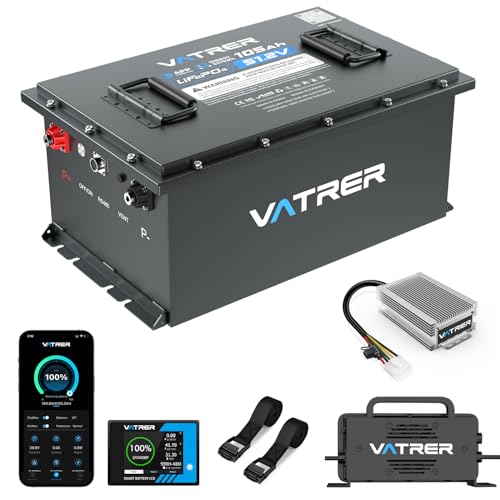
VATRER POWER 48V 105Ah Lithium Golf Cart Battery (UL2271 Certified)

DC HOUSE Metal Case 48V 100Ah Lithium Golf Cart Battery Kit with Bluetooth & LCD

OGRPHY 48V Lithium Golf Cart Battery with Touch Monitor & Mobile App (105Ah)

OGRPHY 48V Lithium Golf Cart Battery Conversion Kit with 12V DC Interface (102Ah)

OGRPHY 48V Lithium Battery with Onboard 18A Charger & 5.12kWh Output
What Each Pick Brings To The Table
Older carts with tired wiring lose range slowly, and most owners don’t notice until the cart feels sluggish halfway up a hill. This 10L0L cable set covers three popular model families in one box, which makes it appealing for anyone working on a mixed fleet or a single garage project. The 14-inch reach suits most stock battery trays, and the pure copper conductors aim to restore the kind of current flow a worn harness gradually chokes off.
For Yamaha G2/G8/G9 and Club Car DS owners running either 36V or 48V packs, the fitment question is mostly answered before you open the package. Replacing aging cables can improve usable range and reduce parasitic draw, which matters when the cart sits for weeks between rounds.
A Favorable Mix
- Compatible with three common model families in a single five-piece kit
- Pure copper core supports stronger current delivery for stock motors
- Fresh wiring reduces voltage drop, helping an older pack feel closer to new
- Flexible cable jacket helps routing around factory brackets without forcing bends
Things To Consider
- 14-inch length can run short on carts with relocated or oversized battery trays
- Terminal hardware may need anti-corrosion spray for carts stored outdoors year-round
- No included wiring diagram, so owners unfamiliar with stock layouts should photograph connections before removal
Feature Snapshot
Whose Garage It Belongs On
Owners of older Yamaha or Club Car carts refreshing a tired wiring harness during a battery swap.
Reach For A Different Pick When
EZGO TXT owners should look at the 10L0L set for EZGO TXT 1994-Up instead, since terminal layouts differ.
EZGO TXT carts from 1994 onward use a different terminal pattern than Club Car or Yamaha, which is why a model-specific harness matters. This 10L0L kit uses tinned copper strands (fine copper wires bundled together, then coated with a thin tin layer) wrapped in PVC insulation, paired with tin-plated copper terminals that resist corrosion in humid or coastal garages. The red-and-black polarity coding simplifies installation for anyone tackling a battery refresh for the first time.
Compared to the multi-brand kit above, this set narrows its focus to EZGO TXT fitment, which usually means tighter tolerances on stud spacing. You trade cross-brand versatility for a more predictable install on the most common post-1994 EZGO platform.
Practical Advantages
- Tin plating on terminals reduces oxidation during long storage periods
- Dual 36V and 48V compatibility covers stock and upgraded TXT carts
- Stranded copper core keeps the cables pliable when routing under the battery tray
- Color-coded polarity reduces the risk of reversed connections during DIY installs
Points To Keep In Mind
- Not a fit for EZGO Medalist or pre-1994 models with different stud layouts
- PVC jacket can stiffen in extreme cold, so winter garage work may need extra patience
Right Fit For
EZGO TXT owners running either voltage who want a clean, corrosion-resistant wiring refresh.
Skip It When
A cart running an EZGO Medalist or a pre-1994 TXT should use a different harness matched to its stud pattern.
Tight battery compartments punish stiff cabling, which is where this 9.99WORLD MALL set leans on its “Power-Flex” jacket for easier routing. The pure copper core delivers strong conductivity (the ability to pass electrical current with minimal loss) for high-amperage setups, and the four 10-inch plus one 13-inch cable layout matches the typical post-1994 EZGO TXT battery arrangement. For owners who hate wrestling cables into cramped trays, the flexibility alone can justify the swap.
This kit shares the EZGO TXT 1994-Up focus with the previous 10L0L set, but differentiates itself through length variety and a more flexible jacket. It’s a sensible pick when the install path turns out to be tighter than expected.
The Practical Payoff
- Mixed 10-inch and 13-inch lengths fit asymmetric battery layouts out of the box
- Flexible jacket reduces install time in cramped battery bays
- Pure copper core maintains low resistance under heavy acceleration loads
- Suits both 36V and 48V EZGO TXT systems
A Few Limitations
- Terminal finish isn’t tin-plated, so owners in humid climates may want to add a corrosion inhibitor
- Only five cables per kit, which can fall short if you’re also replacing accessory leads
Made For
EZGO TXT owners who need pliable cables for tight routing and want a clean conductivity upgrade.
Consider Something Else When
Carts stored outdoors near the coast benefit more from the tin-plated terminals on the 10L0L EZGO TXT kit.
Lithium conversions used to feel like a wiring gamble, but modern drop-ins like this OGRPHY 105Ah pack aim to replace a bank of lead-acid batteries without rewiring the cart. A built-in BMS (Battery Management System, an internal board that protects cells from overcharge, over-discharge, and excessive current) handles 200A continuous output, and the touch LCD gives you state-of-charge and diagnostics without pulling out a multimeter. The 18A charger is included, so the first install really can be a one-package job.
Compared to the cable-only picks above, this is a full power-system upgrade. Owners who routinely run hilly courses or carry four passengers will notice the higher peak current most, since lead-acid voltage sags (drops temporarily under load) noticeably under the same conditions.
Useful Strengths
- 200A BMS supports 1000A peak bursts for steep climbs and quick take-offs
- Touch LCD removes the guesswork from monitoring state of charge and cell health
- 51.2V 105Ah capacity delivers meaningful range gains over older 6x8V lead-acid packs
- Included 18A charger simplifies the first install and subsequent top-ups
Honest Caveats
- Heavier upfront investment than a basic cable replacement, so the math works only if you actually use the cart regularly
- Trolling motor compatibility assumes standard 48V controllers, so older resistor-style carts may need an adapter
Spec Overview
Best Suited To
Daily course players and property owners who want modern lithium performance with an all-in-one package.
Where Another Pick Suits Better
Buyers focused on third-party safety certification should compare the VATRER POWER 48V 105Ah pack, which carries UL2271 (a lithium battery safety standard tested by an accredited lab such as Intertek).
Cycle life, or how many full charge-and-discharge cycles a battery can complete before its capacity drops significantly, is the number that matters most for a cart in daily use, and this Mehrpow 100Ah kit leans hard on that spec. The 16-cell LiFePO4 (lithium iron phosphate, a chemistry prized for thermal stability and long cycle life) layout supports deep cycles at 80% depth of discharge without the rapid aging you get from lead-acid, which most owners tend to run past 50% regularly. Plug-and-play wiring means the conversion can happen in an afternoon.
This pick shares the lithium conversion category with the OGRPHY 105Ah above, but trims the monitoring extras in favor of raw capacity claims. It’s well-matched to high-mileage carts that see more than a round or two per day.
Strengths Worth Knowing
- 16-cell design supports deep cycling without the typical LiFePO4 capacity loss over time
- Plug-and-play layout avoids splicing into the original harness
- LiFePO4 chemistry is inherently more thermally stable than older lithium variants
Trade Offs
- No built-in display or app, so monitoring depends on the cart’s existing gauge
- Heavy item shipping restricts return options, which makes fitment confirmation extra important before ordering
Feature Snapshot
Perfect Match For
High-use carts at rental fleets, large properties, or family homes where the cart runs daily.
Not Your Match When
Owners who want on-battery state-of-charge readouts should step up to the OGRPHY pack with the touch LCD.
Safety certifications rarely make a battery exciting, but UL2271 testing (a North American lithium battery safety standard covering overcharge, short circuit, vibration, and thermal runaway) from an accredited lab is what separates a hobby-grade pack from one that meets commercial insurance requirements. This VATRER POWER 105Ah pack carries that certification, with a claimed battery cycle life intended for daily course use and the thermal stability that comes from LiFePO4 chemistry.
Where the OGRPHY 105Ah focuses on touchscreen convenience, this VATRER leans on third-party safety credentials. For commercial operators, that distinction can matter more than peak output numbers.
Useful Highlights
- UL2271 certification supports compliance with stricter commercial insurance requirements
- 105Ah capacity in a single 48V pack fits standard cart battery trays
- LiFePO4 cells reduce thermal runaway risk in hot, enclosed battery bays
- Suitable for UTV (Utility Task Vehicle) applications alongside golf cart use
Less Ideal Details
- No built-in display included, so a separate monitor or shunt may be needed for accurate state-of-charge tracking
- Non-returnable hazardous-materials shipping policy means verifying measurements before ordering matters more than usual
Who It Suits Best
Commercial cart operators and safety-conscious owners who want third-party certification behind the spec sheet.
Look Elsewhere When
Buyers who want a visible battery gauge without adding accessories should pick the OGRPHY 105Ah with the touch LCD instead.
Curious how much range you have left on a 27-hole day? The DC HOUSE kit pairs a metal-case 100Ah LiFePO4 pack with Bluetooth and an LCD monitor, so you can check state of charge from a phone or glance at the on-board screen. The metal shell helps with heat dissipation and physical durability compared to plastic-cased packs, which matters on carts that see brushy trails.
This pick competes most directly with the Mehrpow kit above on capacity, then layers on connected monitoring that the Mehrpow lacks. If you treat your cart like part of a smart garage, the Bluetooth app integration changes how you plan charging.
Everyday Advantages
- Bluetooth app shows real-time voltage, current, and cell balance without opening the seat
- Metal enclosure adds impact resistance and helps shed heat during heavy climbs
- 200A BMS with 670A peak supports typical stock and mildly upgraded controllers
- Includes 18A charger for a true out-of-box conversion
Where It Is Less Suited
- Heavier than plastic-cased packs, which can matter on lightweight carts with strict payload limits
- App functionality depends on phone compatibility, so older Android handsets may miss some features
Who Should Grab It
Tech-comfortable owners who like monitoring battery health from a phone and want a tougher enclosure for rough terrain.
A Better Fit Elsewhere
Pure solar or off-grid users may prefer the OGRPHY onboard-charger kit for its plug-and-charge convenience.
This OGRPHY 105Ah pack stacks the touch monitor and mobile app together, so you can check battery state from the driver’s seat or from the house. The 200A BMS with 1000A peak current matches what you’d expect for hilly courses, and the claimed cycle count is high enough that daily use won’t age it out quickly.
Where the earlier OGRPHY model with the touch LCD (Pick 4) leans on the on-cart display alone, this version adds the phone interface for owners who’d rather not lean over to read a screen. It’s a small but practical upgrade for tech-comfortable households.
What Makes Sense
- Dual display options (touch LCD plus mobile app) suit different monitoring styles
- 105Ah capacity keeps range comfortable for 18 holes with passengers or hilly terrain
- 18A charger included so the first top-up doesn’t require extra purchases
Possible Compromises
- App features may need a firmware update out of the box, which can slow the first install
- Two connected interfaces can feel redundant for owners who only check the gauge occasionally
Built With In Mind
Connected-home owners who already manage other devices from a phone and want battery data in the same place.
Another Choice May Suit
Minimalist owners who’d rather skip the app can save cost with the earlier OGRPHY LCD-only pack (Pick 4).
Lights, horns, and USB chargers on a 48V cart usually require a separate 48V-to-12V converter (a small device that steps the pack voltage down to run standard 12V accessories), which is another box to mount and wire. This OGRPHY 102Ah kit integrates a 12V DC output directly into the battery, so accessory leads plug in without the extra hardware. For carts running turn signals or work lights, that single integration simplifies the wiring diagram noticeably.
Compared to the other OGRPHY packs in this list, this one trades a small amount of capacity for accessory convenience. Owners who don’t run 12V accessories won’t notice the difference, but fleet and neighborhood-cart owners will.
Features That Help
- Built-in 12V DC port powers accessories without a separate step-down converter
- 200A BMS with 1000A peak covers typical stock and upgraded controller setups
- Touch monitor keeps state-of-charge and diagnostics at a glance
- 102Ah capacity stays close to the larger 105Ah packs in real-world range
Details To Watch
- Leaving 12V accessories powered will drain the main pack, so a discharge switch on the monitor or app matters more than usual
- Accessory port voltage is fixed at 12V DC, so 24V accessories still need their own supply
Feature Card
Who Will Love This
Owners adding lights, horns, or USB ports to a 48V cart and want a clean, converter-free install.
Swap It Out When
Carts without 12V accessories benefit more from the slightly higher-capacity OGRPHY 105Ah pack (Pick 4).
An onboard charger changes how you think about parking the cart: pull into the garage, plug into a wall outlet, and the cart handles the rest. This OGRPHY 48V 100Ah pack integrates an 18A LiFePO4 charger directly, which suits owners without a dedicated cart charger space. The 5.12kWh capacity and 200A BMS are in line with the rest of the lithium field, while the solar compatibility opens the door to off-grid top-ups.
For most garage-kept carts, the onboard charger is a convenience, not a necessity. For properties with solar arrays or remote storage sheds, it’s the difference between running an extension cord and not.
Good Reasons To Consider
- Built-in 18A charger removes the need for a separate charger unit in the garage
- 5.12kWh capacity supports multi-round use between charges
- 200A BMS with 1000A peak handles stock and moderately upgraded controllers
- Solar compatibility opens off-grid charging paths
Practical Considerations
- Onboard charger adds internal heat during charging, so enclosed battery bays should still have some ventilation
- Solar charging requires a compatible charge controller setup that’s purchased separately
The Right Fit
Owners with solar setups or limited garage charger space who want the simplest plug-in routine possible.
Where A Sibling Pick Shines
Owners who already own a compatible external 18A charger can save cost with the earlier OGRPHY 105Ah pack (Pick 4).
Matching The Right 48V Setup To Your Cart
A 48V system is one of two common golf cart architectures (the other being 36V), and it usually means four 12V, six 8V, or one large lithium pack delivering the same nominal voltage. Start by confirming your cart’s existing configuration, because lithium drop-ins need physical tray space that older lead-acid banks occupied, and cable kits only work if the stud spacing matches your model family.
Capacity matters more than peak output for most course users. A 100Ah pack (Ah, short for amp-hours, a measure of how much energy a battery can deliver over time) handles 18 holes comfortably on flat ground, while hilly courses or four-passenger loads justify stepping toward 102Ah or 105Ah. BMS ratings above that are mostly about headroom: a 200A continuous rating covers stock controllers, and anything beyond that matters only for high-amperage upgrades.
Charging habits shape which extras earn their cost. An onboard charger simplifies garage routines, while Bluetooth or app monitoring helps if you like to track state of charge between rounds. UL2271 certification (a North American lithium battery safety standard verified by an accredited testing lab) matters most for commercial operators and insurance-sensitive installations. For weekend riders on a budget, a clean cable replacement and a healthy lead-acid pack can still cover most seasons.
Things Worth Weighing Before You Buy
Pitfalls Shoppers Hit
The most common mistake is buying a lithium pack sized for the wrong battery tray, which forces ugly bracket work or a return. Measure your existing battery compartment, including lid clearance, before ordering, and cross-check the listed dimensions against your model.
Another trap is assuming any 48V lithium will drop in cleanly. Some older resistor-style controllers (the older style of motor speed control that uses large resistor coils to limit current, common in pre-2000s carts) need an adapter or a full controller upgrade to communicate properly with a modern BMS. Worth checking before you commit.
When Paying More Pays Off
Higher-tier packs earn their premium through cycle life, certification, and integrated monitoring. A 4000+ cycle rating can outlast three or four lead-acid replacements, which is where the long-term math shifts. Built-in touchscreens, Bluetooth apps, and onboard chargers are real conveniences, but only if those features match how you actually use the cart. Spending up makes the most sense for daily riders and commercial carts, where those extras get used enough to justify the price gap.
Frequently Asked Questions
How long does a 48V lithium golf cart battery typically last?
Most quality 48V LiFePO4 packs are rated for several thousand charge cycles, which often translates to many years of regular course use before noticeable capacity loss.
Can I replace lead-acid batteries with lithium without changing the charger?
In most cases the original lead-acid charger should be swapped for a LiFePO4-compatible charger to avoid overcharging and to keep the BMS operating within its safe range.
Do all 48V lithium batteries fit every golf cart model?
No, dimensions and terminal layouts vary by cart brand and year, so confirming tray dimensions and stud placement before ordering prevents install headaches.
What does the BMS actually protect against?
A BMS guards against overcharge, over-discharge, excessive current draw, and cell imbalance, which is the main reason lithium packs last longer than lead-acid in similar service.
Is UL2271 certification important for a personal-use cart?
UL2271 testing from an accredited lab is most critical for commercial and rental carts where insurance or local rules require third-party safety verification, though it adds confidence for any owner.
Closing Remarks
The right pick depends less on spec-sheet peaks and more on how your cart actually gets used, the model family it belongs to, and whether a cable refresh or a full lithium conversion makes more sense right now. Match the kit to the platform, confirm the dimensions, and the rest of the install tends to go smoothly. With a clear picture of range needs and charging habits, the choice becomes much easier to live with.