A reliable CR123A keeps your trail camera rolling through a weekend trip, your tactical flashlight bright on a power outage, and your smart-home sensor quietly doing its job. These small 3V lithium cells punch above their weight, but the wrong pick can leave you with devices that die mid-mission or batteries that leak inside expensive gear. This roundup breaks down six solid options across price tiers and pack sizes so you can stock the right spares without second-guessing.
The Leading Options At A Glance

Duracell CR123A 3V Lithium Battery, 12 Count

Energizer 123 Lithium Batteries, 3V (6 Pack)

Blinkspower CR123A 3V Lithium Battery 6 Pack, 1700mAh

anegine CR123A 3V Lithium Battery 1650mAh, 12-Pack
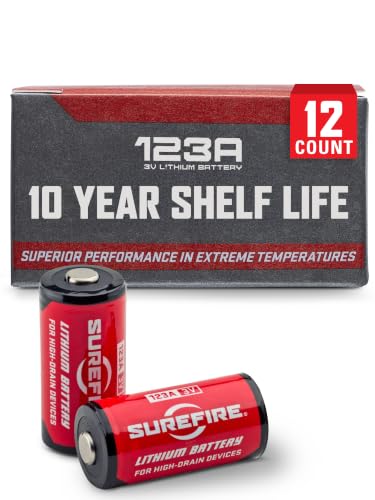
SureFire CR123A 3V Lithium Battery, 12 Pack

anegine CR123A 3V Lithium Battery 1650mAh, 40-Pack
Taking A Closer Look At The Options
Duracell is the name most people reach for first, and this 12-pack of CR123A lithium cells leans into that familiarity. The cells use high-energy lithium chemistry designed for high-drain devices, which is the technical way of saying they hold voltage better than alkaline alternatives in things like tactical flashlights and motion-sensing cameras.
For homeowners running a Ring doorbell, a Nest Cam, or a few Arlo units, this pack is a sensible starting point. The cells carry a stated 10-year storage claim, so tossing a few spares in a kitchen drawer or emergency kit feels low-risk.
Points In Its Favor
- Broad compatibility across popular home security ecosystems and alarm sensors
- 10-year shelf claim makes emergency stocking worthwhile
- Lithium chemistry holds voltage under heavy flashlight draw
- 12-count pack covers multiple devices at once
- Recognizable brand with widespread retail availability
Things To Consider
- Capacity in mAh is not specified by the manufacturer, so runtime comparisons require some guesswork
- Larger pack sizes cost more up front than budget alternatives below
Who It Suits Best
Homeowners running several smart-home cameras or alarm sensors who want a familiar, widely available lithium cell to keep on hand.
Look Elsewhere When
You run a flashlight that chews through cells fast, in which case the Blinkspower 6-pack with its higher listed capacity is a smarter restock.
Energizer’s 123 lithium line sits in the same mainstream tier as Duracell, and this 6-pack hits a sweet spot for people who need a moderate backup stash. These cells are commonly described as photo-grade lithium, which simply means they target the consistent output that cameras and flash units demand.
Compared with the Duracell 12-pack above, this option trades bulk for a smaller upfront commitment. Six cells covers a single home security setup plus a flashlight or two without crowding your junk drawer.
What Earns Its Place
- Mainstream brand recognition with strong retail availability
- Six-cell count balances cost and useful backup quantity
- Cross-compatible naming covers CR123, CR123A, CR17345, EL123, and 5018LC replacements
- Long storage life claim makes them safe to stockpile
Worth Noting
- Capacity in mAh is not stated in the listing, so direct runtime comparisons are tricky
- Six-pack runs out fast in households with multiple smart-home sensors
Made For
Anyone with a modest device count who wants a small, dependable backup stash without committing to a bulk pack.
Consider Something Else When
You maintain a dozen or more sensors across a larger property, where the anegine 12-pack stretches further per swap cycle.
Blinkspower markets a 1700mAh rated capacity, which is the headline number that sets it apart from the two mainstream brands above. Higher rated capacity generally translates to longer runtime per cell, especially in high-drain flashlights that pull strong current on turbo modes.
The listing also mentions a triple-layer leak-prevention design, a useful detail if you leave cells installed in outdoor trail cameras through temperature swings. For security-conscious households, the longer runtime means fewer climbs up the ladder to swap batteries on hard-to-reach cameras.
Useful Highlights
- 1700mAh rated capacity is the highest listed on this roundup
- Triple-layer leak protection helps safeguard expensive electronics
- Six-cell pack is enough for a couple of trail cameras plus a flashlight
Trade Offs
- Less established brand than Duracell or Energizer, so long-term storage behavior is less documented
- Specific shelf life in years is not stated by the manufacturer
Quick Facts
Best Suited To
Outdoor enthusiasts and flashlight users who run high-drain gear and want maximum runtime per cell.
A Better Fit Elsewhere
If brand familiarity matters more than rated capacity, the Duracell 12-pack above is the safer mainstream choice.
anegine offers a 12-pack of 1650mAh-rated CR123A cells aimed at households with several battery-hungry devices. The 10-year shelf claim matches the mainstream brands, and the cross-reference list covers CR123, CR123A, CR17345, and CR17335 replacements, which covers nearly every camera and sensor on the market.
Where this pick differs from the Blinkspower above is the broader pack count at a friendlier price per cell. If your sensor count has crept past five or six devices, twelve cells in one box reduces the number of reorder trips.
Notable Gains
- Twelve-cell count covers larger device ecosystems in a single order
- 1650mAh rating is competitive with mainstream alternatives
- 10-year shelf claim suits long-term emergency kit stocking
Room For Improvement
- Less brand recognition than Duracell or Energizer
- 1650mAh is slightly below the Blinkspower 1700mAh rating for high-drain use
Right Fit For
Households juggling a half-dozen or more sensors, smoke detectors, or cameras that all share the same CR123A footprint.
Swap It Out When
You primarily run one or two flashlights, where the SureFire 12-pack below is engineered for that workload.
SureFire builds its reputation around high-output tactical flashlights, and the SF123A cells are designed for that specific workload. Where the anegine pack above targets broad compatibility, these cells emphasize high-drain delivery and a wide operating-temperature range, which matters for outdoor and law-enforcement use.
The 12-pack format matches the capacity of the anegine option, but the cells are positioned as a premium-grade choice. If your flashlight is a SureFire, Streamlight, or similar high-lumen unit, the brand argues its own batteries maximize that hardware.
The Helpful Details
- Optimized for high-drain flashlight use
- Wide operating-temperature tolerance suits outdoor environments
- 10-year shelf claim for long-term storage in range bags
Honest Caveats
- Sells at a premium price per cell compared with mainstream brands
- Overkill for low-drain alarm sensors that don’t need high-current output
- The listing notes the item is non-returnable, so ordering accuracy matters
Whose Shelf It Belongs On
Owners of high-performance tactical flashlights who push their gear hard and want cells built for that workload.
Reach For A Different Pick When
You’re stocking low-drain sensors around the house, where the Duracell 12-pack delivers comparable shelf life at a lower cost per cell.
The 40-pack version of the anegine cell targets a different buyer entirely. Property managers, vacation-rental hosts, and small-business operators often cycle through dozens of CR123A cells per year across multiple units, and buying in bulk keeps the per-cell cost manageable.
Specifications echo the smaller anegine pack above: 3V output, 1650mAh rated capacity, and a 10-year shelf claim. The cells are disposable rather than rechargeable, so the trade-off is convenience over long-term recharge cost savings.
Everyday Advantages
- Largest cell count on this list, suited for high-turnover users
- Self-discharge rate stated at under 1% per year for long shelf reliability
- Same 1650mAh rating as the smaller anegine pack for consistent performance
Points To Keep In Mind
- 40 cells is overkill for households with just two or three devices
- Disposable chemistry means ongoing replacement cost versus rechargeable alternatives
Who Should Grab It
Property managers, small-business owners, or anyone maintaining multiple battery-powered units across a building.
Where Another Pick Suits Better
For a single-camera setup, the Energizer 6-pack above is a more proportionate starting order without excess inventory.
What To Weigh Before Picking Your CR123A Cells
Voltage matters first. Every CR123A on this list runs at the standard 3V lithium output, so they slot into the same devices. What separates them is rated capacity, measured in milliamp-hours (mAh), which tells you how long a cell can sustain a given current draw before voltage drops below the device’s cutoff.
Higher mAh ratings generally mean longer runtime, but only if your device actually draws that current. A low-drain alarm sensor will barely notice the difference between 1500mAh and 1700mAh cells, while a 1000-lumen flashlight on turbo mode will reward every extra mAh you can buy. Shelf life is the other number that matters for stockpilers: a 10-year claim means cells bought today should still hold a usable charge in 2036 if you store them at room temperature.
Pack size should match your device count. A 2-pack lasts a single user about one swap cycle, while a 40-pack only makes sense if you’re feeding a dozen or more devices. Buying in bulk lowers the per-cell cost, but it ties up money in cells you may not rotate through before the shelf-life claim expires.
Brand familiarity versus value is the final trade-off. Duracell and Energizer carry mainstream recognition, which matters when you want predictable behavior across years of storage. Newer brands like Blinkspower and anegine push the rated capacity higher and the pack count larger, which suits high-turnover users who prioritize runtime and cost per cell over brand loyalty.
Key Considerations Across These Picks
Pitfalls Shoppers Hit
Mixing rechargeable and non-rechargeable CR123A cells is the most common slip-up, and CR123A cells in this roundup are explicitly non-rechargeable. Forcing them into a charger risks leakage or rupture. The other trap is underestimating device count, which leads to running out of cells halfway through a swap cycle, especially during winter when cold weather shortens effective capacity.
What Separates Premium From Basic
Premium-tier CR123A cells like the SureFire SF123A focus on high-drain consistency and temperature tolerance, which justifies their higher cost in tactical flashlight and outdoor use. Budget-tier cells from newer brands lean on higher stated mAh ratings and larger pack counts. The upgrade is worth it when your devices push high current or sit exposed to weather, but for indoor alarm sensors on the wall, mainstream-brand cells typically deliver enough headroom at lower cost.
Frequently Asked Questions
Can I mix CR123A brands in the same device?
Mixing brands in a multi-cell device is generally fine as long as all cells are fresh and the same chemistry. For consistency, replace all cells at once rather than mixing a new cell with a half-used one.
How long do CR123A batteries actually last in storage?
Most lithium CR123A cells lose roughly 1% of their charge per year when stored at room temperature, so a 10-year shelf claim typically delivers around 90% remaining capacity after a decade. Heat and humidity accelerate that loss.
Are these CR123A cells safe to use in cold weather?
Lithium chemistry handles cold better than alkaline, and the SureFire option explicitly lists wide temperature tolerance. Standard CR123A cells generally work down to roughly -20°C, though runtime shortens in extreme cold.
What’s the difference between CR123A and CR123?
CR123A is the more common designation with slightly different dimensional standards, but in practice most devices accept either label interchangeably. The cross-reference lists on Energizer and anegine listings cover both.
Can CR123A cells be used in place of rechargeable RCR123A?
No. RCR123A rechargeable cells run at a different voltage (typically 3.7V) and require a dedicated charger. Substituting one for the other can damage sensitive electronics, especially in flashlights with regulated drivers.
Bottom Line
Match the pack size to your device count and the rated capacity to your drain level. Mainstream-brand packs like Duracell and Energizer cover typical home setups, while Blinkspower, anegine, and SureFire step in when runtime, bulk savings, or tactical-grade delivery matter most. Stock a few extras, rotate them into use, and your gear stays powered when it counts.