Picking the right 3s lithium polymer battery comes down to matching capacity, discharge rate, and connector type to your specific RC vehicle, drone, or airplane. A mismatch in C-rating or plug style can leave you with sluggish performance or a pack that simply won’t seat in the tray. This roundup breaks down ten solid options across sizes from micro quads to 1/8-scale monster trucks, so you spend less time decoding spec sheets and more time at the throttle.
A Closer Look At The Lineup

Zeee 3S Lipo 2200mAh 50C Shorty Pack XT60

OVONIC 11.1V 80C 450mAh 3S Lipo JST

HOOVO 2S 7.4V 80C 5200mAh Hard Case T Plug

HOOVO 3S 11.1V 2200mAh 120C T Connector
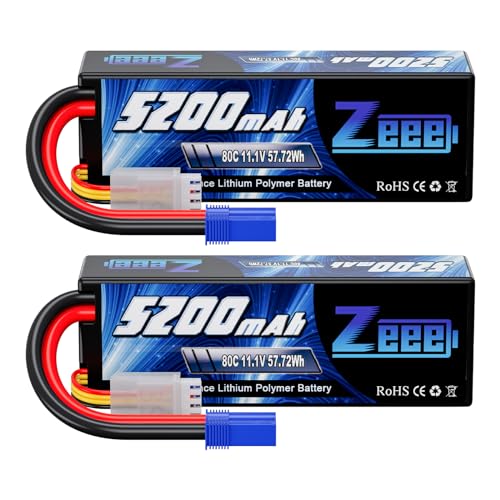
Zeee 11.1V 80C 5200mAh 3S EC5

Zeee 11.1V 80C 3S 6000mAh EC5

Zeee 3S 100C 8000mAh Hard Case EC5

Zeee 3S 120C 10000mAh Soft Case EC5
Zeee 3S 5200mAh 80C T Connector

OVONIC 3S Short 2200mAh 120C XT60
The Picks, Examined More Closely
The Zeee shorty pack lands first because it threads a useful needle between size and capacity, fitting in chassis trays that reject longer sticks while still delivering real throttle time. At roughly 75 by 34 by 26.5 mm and around 137 g, it slips into compact RC cars, smaller boats, and many trainer-class quadcopters without forcing a battery tray swap.
You get an XT60 plug, which is the de facto standard across mid-range hobby gear. That means swapping packs between a basher and a flight-ready airplane rarely requires adapter leads. For most hobbyists running 1/10-scale buggies or midweight FPV setups, this shorty strikes a comfortable middle ground that bigger 5200mAh bricks simply can’t match.
Advantages To Know
- Shorty dimensions free up tray space for weight bias tuning.
- XT60 connector pairs with the widest range of speed controls.
- 50C discharge suits moderate amp draws on stock and mild-tunes.
- Two-pack format keeps a spare charged and ready between sessions.
Things To Consider
- 50C rating lags behind the 100C and 120C packs later in this list, so heavily modded racing builds may feel voltage sag.
- Always store at storage voltage when not in use, as soft-case LiPos tolerate neglect poorly.
Made For
Hobbyists running mid-scale RC cars, helicopters, and lightweight drones who want a manageable shorty pack without sacrificing connector compatibility.
Skip It When
Step up to the HOOVO 3S 11.1V 2200mAh 120C if your build pulls hard amps and you need extra discharge headroom.
OVONIC’s 450mAh pack is a different beast entirely, sized for micro drones where every gram matters. Roughly 54 by 29 by 14 mm and barely 39 g, this thing disappears inside a tiny whoop or toothpick frame without wrecking your center of gravity.
The JST connector fits the small-form-factor flight controllers and AIO boards that dominate the micro class. Eighty C discharge also means it can feed the brief, punchy current bursts aggressive freestyle micro pilots pull from their setups. Compared to the Zeee shorty above, this trades runtime for a footprint that simply won’t fit in a 1/10-scale chassis.
Everyday Perks
- Sub-40 g mass barely registers on lightweight flight builds.
- JST plug matches stock micro-quad connectors out of the box.
- 80C rating handles short bursts of aggressive throttle.
- Dual-pack configuration keeps you flying instead of waiting on a charge.
Worth Noting
- 450mAh means flight times stay short, often only a few minutes depending on your throttle habits.
- Small cells heat up faster under aggressive flying, so brief cool-downs between packs are wise.
Key Attributes
Best Suited To
Micro-quad pilots and toothpick-build hobbyists who prize weight savings over flight duration and need a clean JST plug match.
Look Elsewhere When
Pick the Zeee 3S Lipo 2200mAh shorty instead if you fly larger quads or drive 1/10-scale vehicles that need more capacity in the same footprint class.
The HOOVO 5200mAh steps outside the 3S lineup to bring a hard-case workhorse into the conversation. At 7.4V nominal (a 2S configuration), it suits builds that don’t need the extra punch of 11.1V, and the hard plastic shell shrugs off the curb hits and rollovers bashers regularly dish out.
You get a T-plug connector, which is common on entry-level to mid-range speed controls in the Traxxas and ECX families. Around 137 by 46 by 24 mm, it drops into most standard 1/10-scale battery trays without modification. The 80C discharge is honest for stock and mild upgrades, and HOOVO rates cycle life at 150-plus charges for consistent long-term use.
What It Does Well
- Hard case protects cells from crash impact and tray pinch points.
- 5200mAh capacity delivers long runtimes on stock brush systems.
- T-plug is a reliable, low-resistance connector for moderate amp loads.
- Cycle rating suggests solid longevity for casual weekly runners.
Trade Offs
- 7.4V (2S) lacks the headroom 11.1V packs deliver for aggressive setups.
- Hard case adds weight over soft packs, which matters in lighter builds.
The Right Fit
Bashers and trail-truck owners running 1/10-scale rigs on moderate power who value case durability over voltage headroom.
A Better Fit Elsewhere
Move to the Zeee 3S 5200mAh 80C T Connector if you want the extra voltage for hill climbs and faster top speeds.
HOOVO returns with a 3S pack aimed at drivers who actually push their setups. The 120C rating is the headline here, double the C-rate of the Zeee shorty in slot one, which translates directly into less voltage sag when you nail the throttle from a standing start.
The 2200mAh capacity sits in a familiar shorty envelope around 105 by 34 by 25 mm. T-plug output matches a lot of legacy electronics in the hobby world, though adapters are cheap if your ESC speaks XT60. For aggressive 1/10-scale racing on tight tracks, that extra C-rating headroom shows up as crisper launches and more consistent lap times.
The Upside
- 120C discharge holds voltage stronger under heavy amp draws.
- Compact shorty footprint fits tight chassis layouts.
- T-plug compatibility covers a wide range of mid-tier ESCs.
- Two-pack format supports back-to-back race sessions.
Minor Gripes
- Higher C-rating packs generally demand stricter storage discipline to last.
- 2200mAh is modest for all-day bash sessions, so plan a charging rotation.
Who It Suits Best
Competitive 1/10-scale racers and aggressive drivers running mild to moderate power upgrades who care about voltage consistency.
Not Your Match When
Choose the Zeee 3S 5200mAh 80C EC5 instead for long bashing days where runtime matters more than burst headroom.
This Zeee 5200mAh hardcase shifts the conversation from micro quads and shorty racers into serious 1/10 and 1/8-scale territory. At 138 by 47 by 37 mm and around 380 g, it carries the heft needed for long sessions behind the wheel or at the flying field.
The EC5 connector is the modern standard for high-current RC setups, handling the kind of amp draws that would melt a T-plug. Zeee targets professional 1/10 and 1/8-scale builds with this pack, and the dual-pack format is genuinely useful when your charger can only handle one pack at a time. Compared to the HOOVO 2S earlier in the list, this delivers a meaningful voltage bump for noticeably stronger motor response.
Why It Works Well
- 5200mAh capacity supports extended bashing sessions without mid-day swaps.
- EC5 connector is rated for the high current demands of 1/8-scale rigs.
- Hard case resists impact damage during aggressive driving.
- 11.1V output unlocks stronger RPM from brushless motor systems.
Room For Improvement
- Heavier mass can push smaller builds past their optimal weight window.
- EC3-to-EC5 adapters needed if your current ESC speaks the older EC3 standard.
Quick Facts
Perfect Match For
Large-scale RC bashers and 1/8-scale drivers who want long runtime paired with the EC5 connector standard.
Reach For A Different Pick When
Grab the OVONIC 3S Short 2200mAh 120C XT60 if you’re chasing a lighter, higher-discharge pack for tighter racing chassis.
The 6000mAh variant from Zeee carries the same chassis-friendly footprint as the 5200mAh but pushes capacity meaningfully higher. At roughly 410 g, it’s a heavier brick, but that mass translates directly into longer wheel time per charge.
EC5 output again anchors it to modern high-current brushless systems, and Zeee tunes the 6000mAh for 1/8 and 1/10 platforms like Losi, Slash, and HPI Strada XB builds. The honest read here is that the extra 800mAh over the 5200mAh pack makes the most sense when your sessions regularly outlast a single battery cycle.
Strengths Worth Knowing
- 6000mAh capacity stretches runtime for full-day event coverage.
- Hard shell holds up against bashing impacts and rough terrain.
- EC5 connector matches the high-current demand of modern ESCs.
- Footprint stays within standard 1/8-scale battery tray dimensions.
Points To Keep In Mind
- Heavier than 5200mAh alternatives, so smaller chassis may need weight balance adjustments.
- Cell voltage range of 3.2 to 4.2V requires a balance charger for safe charging.
Built With In Mind
RC bashers and racers who run extended sessions and want maximum runtime from a single charge cycle.
Swap It Out When
Pick the Zeee 3S 10000mAh soft case if you need even more runtime for tank builds or long-range crawlers.
Here the spec sheet gets serious. Zeee’s 8000mAh pack pushes a 100C discharge rating into a hard-case format aimed squarely at competitive 1/8 and 1/10 rigs. At 138 by 47 by 36 mm and around 493 g, it’s a substantial brick that drops into truggies, buggies, and Team Associated-style race platforms.
The 100C rating earns its keep on launch-heavy tracks where sustained high-current delivery decides whether you clear the jump or fall short. Slash 4×4, Bandit, Rustler, Stampede, and similar Traxxas-family vehicles all benefit from the combination of capacity and C-rate headroom. For racers chasing consistency across long mains, this is the kind of pack that earns its place in the pit bag.
Good Reasons To Consider
- 100C discharge holds voltage through aggressive race-length sprints.
- 8000mAh capacity supports extended main events.
- Hard case protects against the inevitable race-day impacts.
- EC5 connector handles sustained high-current loads cleanly.
Softer Spots
- Near-500g mass demands careful weight placement in smaller chassis.
- Premium positioning means this is overkill for casual backyard runners.
Whose Shelf It Belongs On
Competitive racers running 1/8-scale truggies and high-end 1/10 buggies who need proven 100C headroom.
Where A Sibling Pick Shines
Choose the HOOVO 3S 2200mAh 120C for tighter tracks where shorty weight and higher C-rating matter more than raw capacity.
The 10000mAh soft case is the marathon runner of the group, trading hard-case protection for the largest capacity in this roundup. At roughly 169 by 48 by 31.5 mm and around 543 g, it’s the heaviest pack here, but it pairs that mass with a notable 120C discharge rating.
You get an EC5 connector again, keeping it in the modern high-current family. Zeee markets this toward RC cars, trucks, and tank platforms where long runtimes outweigh the need for hard-case impact protection. For scale tank builders crawling through multi-hour scenarios, this kind of capacity changes how you plan a session entirely.
The Case For It
- 10000mAh capacity is the largest in this lineup.
- 120C discharge rate keeps voltage solid under heavy throttle.
- Soft case allows more flexible mounting in custom chassis layouts.
- EC5 plug handles the high current tank crawlers often demand.
A Few Limitations
- Soft case is more vulnerable to puncture than hard-shell packs.
- Significant mass may require chassis adjustments in smaller rigs.
Who Should Grab It
Scale tank builders and long-haul RC hobbyists who value extended runtime above compact dimensions.
Consider Something Else When
Pick the Zeee 3S 100C 8000mAh hard case for similar capacity in a tougher shell if your driving involves frequent impacts.
The single-pack 5200mAh T-connector version of Zeee’s workhorse lands in slot nine as the value-conscious cousin to the dual-pack EC5 variant earlier. Same 138 by 47 by 37 mm hard case, same 80C rating, just a different connector and a single-pack offering for hobbyists who already own a charger that handles one battery at a time.
T-plug compatibility opens it up to a wider range of legacy speed controls, particularly in the Slash and 1/10-scale stock-class world. For hobbyists who already have a T-plug adapter setup or run older electronics, this avoids the cost and complexity of EC5 conversion. The 5200mAh capacity is the proven sweet spot for the vast majority of 1/10-scale basher and trail-truck builds.
Useful Strengths
- Single-pack format fits hobbyists who only need one battery at a time.
- T-plug works with a broad range of mid-tier ESCs out of the box.
- 5200mAh capacity covers typical bashing session lengths.
- Hard case construction handles routine impacts gracefully.
Possible Compromises
- Single-pack purchase means no immediate spare for back-to-back sessions.
- 80C rating sits behind the 100C and 120C packs in the harder race classes.
Right Fit For
Slash, Rustler, and similar 1/10-scale owners running stock to mild power setups with T-plug compatible electronics.
Another Choice May Suit
Step up to the Zeee 3S 6000mAh EC5 if you want extra runtime and modern connector standard in the same form factor.
OVONIC closes out the roundup with a shorty pack that doubles down on the strengths of the Zeee shorty in slot one. The dimensions sit roughly at 77 by 34 by 25 mm and around 140 g, putting it right in the conversation with the most compact 3S options reviewed.
The 120C discharge rating marks the key upgrade, delivering sharper throttle response than the 50C Zeee shorty at the same capacity. OVONIC bundles a LiPo voltage checker, a small accessory that genuinely helps hobbyists monitor cell health before and after flights or drives. The XT60 connector is the universal standard for modern hobby electronics, so cross-platform swapping between RC cars, airplanes, and helicopters works without adapter fuss.
Everyday Wins
- 120C discharge rate beats the 50C Zeee shorty for aggressive throttle demands.
- XT60 plug is the most widely compatible modern connector standard.
- Included voltage checker helps monitor cell balance over time.
- Shorty footprint fits tight chassis and smaller airplane bays.
A Few Limitations
- 2200mAh capacity requires disciplined charging between sessions.
- 140g mass is a touch heavier than the comparable Zeee 50C shorty, a minor trade-off for the higher C-rate.
Spec Overview
Who Will Love This
Cross-platform RC hobbyists who fly, drive, and bash with multiple vehicle types and want one shorty pack that works across all of them.
Where Another Pick Suits Better
Reach for the Zeee 3S 100C 8000mAh hard case if you need substantial capacity in 1/8-scale race formats instead of shorty versatility.
What To Weigh Before Choosing A 3s Lithium Polymer Battery
Capacity And Runtime Trade-Offs
Capacity, measured in milliamp-hours (mAh), tells you how long a pack can sustain a given current draw before needing a recharge. A 2200mAh pack might deliver five to seven minutes of aggressive flight on a micro quad, while a 10000mAh brick can power a scale tank for hours of slow crawling. The honest trade-off is weight: more capacity means more grams on the chassis or in the airframe, which can hurt handling and flight performance. Runners logging long race sessions benefit from higher-capacity packs, while short-track racers often prefer smaller, lighter options that stay nimble through tight corners.
C-Rating And Discharge Headroom
The C-rating describes how fast a battery can safely deliver current relative to its capacity, so a 100C pack rated at 5000mAh can theoretically push 500 amps in bursts. Higher numbers mean less voltage sag when you floor the throttle from a standstill, which translates directly into more consistent lap times and punchier launches. The trade-off shows up in pack longevity and price: high-C packs generally demand stricter storage discipline and cost more per cell. Aggressive racers chasing that edge will feel the difference; casual backyard runners likely won’t notice.
Connector Compatibility
The connector type determines whether a pack physically and electrically mates with your existing speed control or flight controller. XT60 has become the modern default across mid to high-current RC gear, while T-plugs (also called Deans) remain common in legacy and entry-level setups. EC5 connectors handle the highest current draws typical of 1/8-scale racing, and JST plugs fit micro-class electronics only. Always confirm connector match before ordering, since adapters work but add resistance and another failure point.
Form Factor And Case Type
Hard-case packs add impact protection and structural rigidity, which matters for bashing and off-road driving where crashes are routine. Soft-case packs allow more flexible mounting in custom chassis and tend to weigh slightly less, but puncture risk rises if a crash drives debris into the cells. Shorty packs trade capacity for a shorter length that opens up weight-tuning options in race chassis. For most 1/10-scale basher applications, hard-case shorty or standard packs hit the right balance between protection and versatility.
Key Considerations Across These Picks
Mistakes Worth Dodging
The most common error in this category is chasing the highest C-rating without matching it to your build’s actual amp draw. Stock 1/10-scale setups rarely pull enough current to justify a 120C pack, and the extra cost buys you nothing measurable. Ignoring connector compatibility is another trap: ordering an EC5 pack for a T-plug ESC means buying adapters and adding resistance. Finally, skipping storage discipline shortens LiPo lifespan dramatically, so always store packs at 3.8V per cell if you plan to sit on them longer than a few days.
What The Higher Tier Buys
The jump from budget-friendly 50C and 80C packs to the 100C and 120C options in this roundup delivers more consistent voltage under heavy load, which matters most during launch and hard acceleration phases. Premium positioning also tends to mean tighter cell matching, which translates into longer cycle life and more predictable discharge curves over time. The upgrade payoff shows up clearly in competitive racing where tenths of a second matter, but for casual hobbyists, mid-tier packs deliver most of the practical benefit without the price premium.
Frequently Asked Questions
What Does “3S” Mean In A Lithium Polymer Battery?
The “3S” label refers to three cells wired in series, which produces a nominal voltage of 11.1V (3.7V per cell). Higher S-counts mean more voltage and more power potential for demanding RC builds.
How Do I Choose The Right Capacity For My RC Vehicle?
Match capacity to your typical session length and the available space in your chassis or battery tray. Smaller micro drones do well with 450mAh packs, while 1/10-scale cars and tanks often run 5000mAh or larger for extended runtimes.
Is A Higher C-Rating Always Better?
Higher C-ratings deliver more current headroom and less voltage sag, but only matter if your motor and ESC actually draw that much current. Stock systems rarely need more than 50C to 80C for smooth performance.
Can I Use A 3s Lithium Polymer Battery In Any RC Vehicle?
Only if the voltage, connector type, and physical dimensions match your specific vehicle’s electronics and battery tray. Always check the manufacturer’s recommended cell count and connector before swapping packs.
How Should I Store LiPo Batteries When Not In Use?
Store them at roughly 3.8V per cell (storage voltage) in a fireproof container at room temperature. Avoid fully charged or fully depleted storage, as both conditions accelerate cell degradation over time.
Closing Remarks
The right 3s lithium polymer battery comes down to honest matching: connector to your ESC, capacity to your session length, and C-rating to your power draw. Pick a pack that fits your build today rather than chasing a spec sheet that overshoots your actual needs, and you’ll spend less money and more time enjoying the drive or flight.