A 3.7V Li-ion battery shows up in more places than you’d think: the small scanner at a warehouse counter, the RC stunt car your kid races down the driveway, the household radio you keep for weather alerts. Finding the right cell or charger isn’t just about matching voltage, since capacity, connector type, and protection circuitry decide whether your gear runs for an hour or all afternoon. This roundup covers ten solid options across consumer, hobby, and industrial use, so you can pick the one that fits your situation without overpaying for features you won’t use.
How The Shortlist Stacks Up

Tenergy TLP-4000 Universal 1A Smart Charger
FJP 4-Pack 6000mAh Battery & 4-Slot Type-C Charger Kit for Zebra TC7X

VICMILE 3.7V 800mAh Li-ion Battery 2-Pack with USB Chargers

XHDATA BL-5C 3.7V 1000mAh Rechargeable Battery (2 Pack)
Blomiky 2 Pack 3.7V 800mAh Li-ion Rechargeable Battery with USB

FJP 4-Pack 6000mAh Battery Replacement for Zebra TC7X Series

EEMB 3.6V/3.7V Lithium Coin Cell Rechargeable Battery 40mAh 4-Pack

EEMB 1254 CP1254 Rechargeable Battery 3.7V 65mAh 4-Pack

EEMB LIR2450 3.7V Rechargeable Coin Cell 120mAh 4-Pack

FJP 4-Slot Battery Charger for Zebra TC7X Scanner Series
A Breakdown Of The Leading Choices
The Tenergy TLP-4000 is built for someone juggling several Li-ion or Li-polymer packs rather than a single device. It handles 1- to 4-cell configurations across a 3.7V to 14.8V range, so you can charge a small household replacement and a higher-voltage power pack from the same brick. Smart charging logic senses when cells are full and cuts off current automatically, which matters if you tend to walk away mid-charge.
Unlike the dedicated RC battery packs later in this list, this charger is meant for protected consumer cells, so hobby RC packs without a built-in PCB should stay on a different charger. You get a 1A output rate, which is modest but steady for typical 1000mAh-plus packs.
Positive Takeaways
- Auto-shutoff when cells reach full charge, which reduces wear on sensitive Li-ion chemistry.
- Wide voltage window covers single-cell replacements up through 14.8V packs.
- Works with both Li-ion and Li-polymer, so a mixed household stays covered.
Things To Consider
- Not designed for unprotected hobby packs like RC or airsoft cells, which need balance-charging instead.
- Requires battery packs with their own protection circuitry, so bare cells won’t work.
Key Specs
Who It Suits Best
Anyone with several protected Li-ion packs around the house who wants one charger instead of three.
Consider Something Else When
RC hobbyists running unprotected cells should look at the VICMILE or Blomiky packs reviewed further down instead.
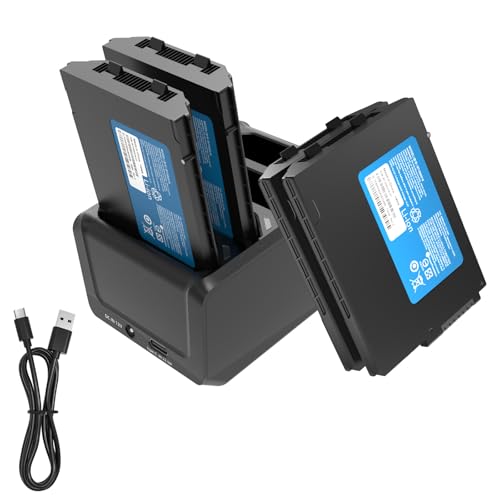
Warehouse and logistics teams running Zebra TC7X scanners know the pain of a dead mid-shift. The FJP kit ships four 6000mAh replacement cells alongside a four-slot charging cradle with both Type-C and DC inputs, so you can rotate batteries through the day without anyone hunting for an outlet.
The cells are rated at 3.7V with 22.2Wh of total energy storage, and they slot into TC77, TC72, TC75, and TC70 series handhelds. It replaces OEM part numbers like BTRY-TC7X-46MPP-10 and BTRY-TC7X-46MAH-01, so you don’t need to hunt down a specific SKU for each model.
Advantages To Know
- Four-slot cradle with Type-C and DC dual input, which fits both modern and legacy power setups.
- Cells built specifically as replacements for OEM TC7X batteries, simplifying inventory management.
- 6000mAh capacity supports long shifts between swaps.
Worth Noting
- Bulk size and price point make it overkill for small-business or single-user scenarios.
- Compatibility is limited to the TC7X family, so non-Zebra devices sit out.
Feature Snapshot
Made For
Operations managers running fleets of Zebra TC7X scanners who need reliable, swappable power across shifts.
Look Elsewhere When
A single scanner owner would do better with the FJP 4-pack battery-only bundle (item 6) and skip the cradle.
If your kid’s RC car has been sitting dead for a week, the VICMILE 2-pack offers an easy reset. These 3.7V 800mAh Li-ion cells use the common SM-2P plug, which shows up in a wide spread of small hobby toys. The pack ships with USB charging cables, so you can top them up from a power bank or laptop without hunting for a dedicated hobby charger.
Compatibility covers a long list of common toy models, including E35, DE38, DE40, DE50, DE55, TB202, and TM141 chassis. The cells measure 51 x 14mm and weigh 22g each, so they’re a direct swap for most 800mAh-class packs from the factory.
A Favorable Mix
- USB charging removes the need for a specialty RC charger.
- Wide compatibility across popular toy car models reduces guesswork.
- Two-pack format means one cell charges while the other plays.
Honest Caveats
- Plug, voltage, and dimensions must all match your existing pack, so double-check before swapping.
Right Fit For
Parents whose kids blow through small RC toy batteries and want a simple USB-chargeable replacement.
A Better Fit Elsewhere
Stunt-car drivers looking for a more rugged setup should consider the Blomiky 2-pack further down.
The BL-5C form factor has been around for years, and the XHDATA 2-pack keeps that legacy alive for radios, Bluetooth speakers, and small cameras. Each cell runs at 3.7V with 1000mAh of capacity, and the manufacturer specs current protection to guard against overcharge, overdischarge, and short-circuit events, which matters for unattended household gear.
Compared with the RC-focused VICMILE cells reviewed earlier, these are aimed squarely at consumer electronics. The dimensions (53 x 34 x 5mm) match the standard BL-5C footprint, so most devices designed around that shape should swallow them without complaint.
Reasons It Performs
- Integrated current protection limits the risk of overcharge damage.
- Two-pack format keeps a spare charged while the other is in use.
- Standard BL-5C dimensions fit radios, speakers, and cameras without modification.
Some Limits To Know
- Capacity at 1000mAh is modest, so heavy-use radios may need mid-week top-ups.
- Charging requires a separate BL-5C-compatible charger, which isn’t included.
Feature Snapshot
Best Suited To
Owners of weather radios and portable speakers who want a safer, drop-in replacement for aging BL-5C cells.
Swap It Out When
Anyone running high-drain RC gear should pick up the VICMILE 2-pack from item 3 instead.
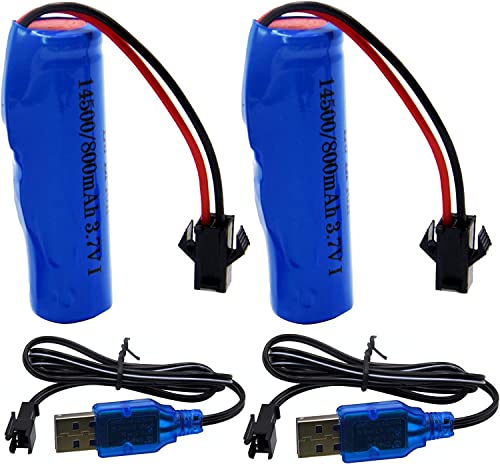
Stunt RC vehicles take a beating, and Blomiky builds their 2-pack around that reality. Each cell runs at 3.7V with real capacity between 500mAh and 800mAh, paired with a USB charging cable and the standard SM-2P connector. They fit double-sided stunt cars, small RC boats, and 1/18 scale amphibians where dimensional fit matters as much as voltage.
Where the VICMILE pack targets a broad RC toy catalog, this Blomiky bundle leans toward stunt and amphibious platforms. The plug end cross-section is 5.5 x 5.2mm, so it’s worth measuring your existing connector before pulling the trigger on a swap.
The Helpful Details
- USB charging simplifies top-ups between stunt runs.
- SM-2P plug is the standard for many small RC chassis.
- 2-pack format lets one cell rest while the other takes abuse.
Points To Keep In Mind
- Capacity tops out near 800mAh, so heavy stunt sessions may drain cells fast.
- Connector size must match exactly, since slight variations can prevent proper contact.
Whose Shelf It Belongs On
RC hobbyists running stunt and amphibious vehicles who want USB convenience over a dedicated hobby charger.
Another Choice May Suit
If your RC needs span beyond stunt and amphibious platforms, the VICMILE pack in item 3 covers a wider toy catalog.
The FJP 4-pack skips the charger and focuses entirely on cells. You get four 6000mAh replacements covering TC77, TC77HL, TC72, TC720L, TC75, TC75x, TC70, and TC70x handhelds, with drop-in compatibility for OEM part numbers BTRY-TC7X-46MPP-01, BTRY-TC7X-46MAH-01, and BTRY-TC7X-46MAH-02.
Compared to the kit in item 2, this is a batteries-only bundle for teams that already have a charging station and just need fresh cells. Each pack runs at 3.7V with 22.2Wh of total capacity, and the broad TC7X support means you can mix and match across scanner generations without juggling SKUs.
What Helps Most
- Cells-only format suits teams that already own a compatible cradle.
- Broad TC7X coverage spans multiple scanner generations.
- 6000mAh capacity supports heavy scanning shifts.
Trade Offs
- No charging hardware included, which adds cost for first-time fleet setups.
- Compatibility stops at the Zebra TC7X family, so other rugged devices won’t fit.
Technical Highlights
Perfect Match For
Warehouse teams already equipped with a TC7X charging cradle and just need fresh cells to rotate through.
Reach For A Different Pick When
First-time Zebra scanner owners should grab the full kit in item 2 to get both batteries and cradle in one purchase.
Coin-cell projects tend to need tiny power sources, and EEMB’s 4-pack delivers 40mAh cells at 3.6V/3.7V in a rechargeable format. These are designed for low-drain electronics like remote sensors, wearable prototypes, and small DIY projects where a coin footprint matters.
Unlike the larger 120mAh LIR2450 cells from the same brand reviewed further down, this 40mAh variant leans toward size-constrained builds. EEMB specifies using their dedicated charger only, which matters for safety on these small Li-ion cells.
A Few Strong Suits
- Compact coin form factor fits wearables and small sensor housings.
- Rechargeable chemistry reduces waste compared to disposable coin cells.
- 4-pack provides spares for projects at different stages.
Smaller Limitations
- 40mAh capacity is light, so high-drain devices will drain them quickly.
- Requires an EEMB-dedicated charger for safe operation.
Built With In Mind
Makers and hobbyists building small sensor projects or wearable prototypes that need a rechargeable coin cell.
Skip It When
Projects needing longer runtime should jump to the EEMB LIR2450 120mAh cells in item 9 instead.
The EEMB 1254 (also labeled CP1254) slots between the smaller 40mAh coin cell and the chunkier LIR2450. At 65mAh and 3.7V, it gives you a slimmer form factor than the 2450, which helps in wearables, Bluetooth beacons, and sensor arrays where height clearance is tight.
Like the other EEMB coin cells, charging requires the brand’s dedicated charger to avoid safety risks, so factor that into your build. The 4-pack format means you can populate multiple devices or keep spares ready for development cycles.
Useful Touches
- Slim profile suits height-constrained devices.
- Higher capacity than the 40mAh cell for longer runtime between swaps.
- Rechargeable format cuts down on coin-cell waste over time.
Where It May Fall Short
- Lower capacity than the LIR2450, so power-hungry builds still need that larger cell.
- Requires an EEMB-specific charger to charge safely.
Who Should Grab It
Hobbyists and engineers building slim wearables or sensor nodes where battery height is the limiting factor.
Where A Sibling Pick Shines
Projects with looser size constraints and a need for higher capacity fit the EEMB LIR2450 in item 9 better.
The LIR2450 is the heavyweight in the coin-cell lineup, with 120mAh of capacity packed into a 24.5mm diameter, 5.0mm tall housing. At roughly 5.3g per cell, it adds meaningful runtime without breaking the coin-cell form factor. These are popular for medical devices, IoT sensors, and projects that need longer intervals between charges.
Where the smaller EEMB coin cells trade capacity for footprint, the LIR2450 sits at the bigger end of that compromise. The manufacturer warns that only an EEMB dedicated charger should be used, which limits charger flexibility but improves safety on these higher-capacity Li-ion coin cells.
The Practical Payoff
- 120mAh capacity triples the runtime of smaller coin cells.
- Rechargeable chemistry reduces long-term replacement costs.
- 4-pack covers multi-device deployments.
Practical Considerations
- 5mm height won’t fit every coin-cell slot, so check device clearance.
- Requires the brand’s dedicated charger to charge safely.
Feature Rundown
The Right Fit
Makers building IoT sensors and medical-style gadgets that need extended runtime in a coin-cell form factor.
Not Your Match When
Height-constrained wearables are better served by the slimmer 65mAh EEMB 1254 cell reviewed earlier.
The FJP 4-slot charger closes out the list by handling cells separately from the scanner fleet. You get a four-bay cradle with 22.5W Type-C input plus a 12V DC port, so the same cradle works at a desk, in a service van, or anywhere with a standard DC adapter. It covers the full TC7X scanner family, including TC70, TC70x, TC75, TC75x, TC72, TC77, and TC77HL models.
Compared to the full kit in item 2, this is the cradle alone for teams that already have spare cells or want to expand capacity. Charging four batteries at once keeps the swap-and-go workflow running smoothly through busy shifts.
Everyday Wins
- Four bays let you rotate cells continuously without bottlenecks.
- Dual input options (Type-C and DC) suit both modern and legacy power setups.
- 22.5W output handles four cells without slowing down.
Possible Compromises
- Cradle only, no batteries included, so you need to source cells separately.
- Limited to Zebra TC7X batteries, so other device families won’t work.
Who Will Love This
Operations leads who already use Zebra TC7X scanners and want a dedicated charging hub for spare cells.
Where Another Pick Suits Better
First-time fleet owners should consider the batteries-and-cradle bundle in item 2 for a one-stop setup.
Factors To Consider When Choosing A 3 7V Li-Ion Battery
Voltage tells you whether a cell will power on, but capacity and connector type decide how long and how reliably it runs. A 3.7V Li-ion cell is technically a single-cell Li-ion configuration, since one cell delivers a nominal 3.7V (charging up to 4.2V). For consumer devices, look for cells with built-in protection circuitry (a small PCB that prevents overcharge and overdischarge). For RC hobby gear, unprotected cells often fit, but they need a balance charger to manage cell health across a pack.
Capacity (measured in mAh or Wh) decides runtime. A 6000mAh scanner battery will outlast an 800mAh RC cell, but form factor matters too. Coin cells trade capacity for size, which is why the EEMB 2450 leads that segment. Connector type is the silent killer: an SM-2P plug won’t substitute for a BL-5C footprint, and a Zebra TC7X battery won’t fit anything else.
If you commute daily and rely on a Bluetooth speaker or scanner, prioritize protected cells with higher capacity. For workshop or hobby use, unprotected cells plus a balance charger offer more flexibility. Sensor projects should focus on form factor first, then capacity within that constraint.
Key Considerations Across These Picks
Mistakes Worth Dodging
Most shoppers pick a battery by voltage alone and ignore connector or chemistry protection. A 3.7V cell without a protection circuit can overdischarge in a household radio, and the wrong connector simply won’t seat. Measure your existing battery and check the plug type before ordering. Another common slip is assuming higher mAh means a longer-lasting cell in the same device, since some electronics have current draw limits that make capacity gains marginal.
Where The Extra Money Goes
Paying more for a kit like the FJP 4-pack bundle buys you a matching cradle, verified compatibility, and a single vendor to deal with. Higher-tier RC batteries often include better cell balancing or USB-C convenience, which adds safety margins in fast-charging scenarios. For coin cells, premium pricing typically reflects tighter capacity tolerances and safer internal construction, which matters for medical or sensor builds.
Final Thoughts
A 3.7V Li-ion battery comes in many shapes, from tiny coin cells to rugged scanner packs, and the right pick depends entirely on the device you’re powering. Match the connector first, then prioritize capacity within your form factor and budget. The ten options above cover the most common scenarios you’re likely to encounter, so start with the category that fits your gear and work from there.