Battery shopping gets weird fast. One device wants a coin cell, another needs a beefy LiPo pack, and a third runs on something exotic like lithium thionyl chloride. The lineup below pulls together ten options that actually cover the practical range of 3 to 3.7V work, from home security cameras to maker boards to long-life industrial sensors. Each pick is judged on chemistry fit, connector compatibility, temperature tolerance, and how often you’ll realistically swap or recharge it.
A Closer Look At The Lineup

Duracell 1/3N 3V Lithium Battery, 1 Count

Duracell CR123A 3V Lithium Battery, 12 Count
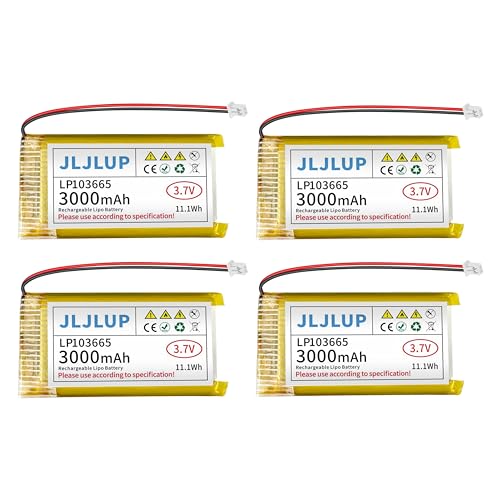
JLJLUP 3.7V 3000mAh LiPo 4-Pack with JST1.25

JLJLUP 3.7V 2000mAh LiPo 4-Pack with PH2.0

JLJLUP 3.7V 1000mAh LiPo 4-Pack with PH2.0

EEMB ER18505 3.6V A Size 4100mAh Li-SOCL₂

EEMB ER18505 3.6V Li-SOCL₂ 4100mAh 4-Pack

EEMB ER18505 3.6V Li-SOCL₂ 4100mAh 10-Pack

EEMB ER18505 3.6V Li-SOCL₂ 6-Pack 4100mAh

JLJLUP 10000mAh 3.7V LiPo Single Cell PH2.0
More Details On Our Top Picks
Single-cell buys rarely make the shortlist, but the Duracell 1/3N earns its slot by solving a specific problem: keeping a backup ready for the one device on the shelf you almost never touch. Think of an entry sensor, a garage remote, or a small dedicated camera that uses this exact 3V lithium form factor. Because it’s sold as a single piece, you don’t pay for cells you’ll never rotate through.
Compared to the CR123A bulk pack in slot two, this one trades capacity for footprint. The trade-off works when the device draws microamps rather than steady current, and you’d rather replace on a long timeline than stockpile spares. For most households, that’s exactly the profile of a watch-style backup slot or a seldom-replaced sensor.
Practical Advantages
- Long 10-year storage shelf life keeps emergency kits viable.
- Wide temperature tolerance covers outdoor security camera housings.
- Lithium chemistry holds voltage better than alkaline in cold conditions.
- Single-pack format suits one-off replacement without overspending.
Things To Consider
- A single unit means no spare on hand for high-drain devices.
- Form factor only fits watches, some sensors, and specialty cameras.
Key Product Details
Whose Shelf It Belongs On
Homeowners with one or two 3V sensor-style devices that they want covered without buying a bulk pack.
Swap It Out When
Anyone running several CR123A devices should pick the Duracell CR123A 12-Count instead, since the per-cell cost drops fast at scale.
The CR123A 12-Count is the practical answer when your household already runs on this form factor. Many home security cameras, tactical flashlights, and motion sensors swallow CR123A cells, and they often run in pairs. Buying in twelves keeps a steady rotation in the drawer without forcing a monthly reorder.
Where the single 1/3N from slot one targets the niche device, this pack targets the multi-device household. The trade-off shows up front: a bigger initial outlay, which only makes sense once you’ve confirmed your gear actually accepts CR123A rather than AA lithium. Once that’s settled, the per-cell value is hard to beat from a familiar brand.
The Helpful Details
- High-energy lithium chemistry handles demanding flashlights and security cameras.
- 10-year storage claim keeps unused spares ready through long gaps.
- Wide operating temperature range suits outdoor camera enclosures.
- Twelve-pack reduces the per-cell cost for multi-device households.
Worth Noting
- Larger upfront cost compared to a single 1/3N purchase.
- Not rechargeable, so heavy-use setups cycle through them fast.
Built With In Mind
Households running multiple CR123A devices, especially outdoor security cameras and tactical flashlights.
Where A Sibling Pick Shines
Makers building ESP32 sensor nodes should skip this and grab the JLJLUP 3.7V 3000mAh LiPo pack instead, since it’s rechargeable and matches common JST connectors.
Step out of the battery aisle and into the workbench. The JLJLUP 3.7V 3000mAh LiPo four-pack is the kind of cell that anchors a maker shelf. Each unit ships at 36×10×65 mm with a JST1.25 connector (a tiny two-pin plug used widely on dev boards) and an integrated protection circuit that guards against over-discharge and short circuits. That protection board matters more than beginners expect, since a drained LiPo left connected to a project can dip below safe voltage overnight.
The lineup has narrower cousins. Item 4 drops to 2000mAh in a slimmer 34×10×52 mm shell, while item 5 trades capacity for a much smaller footprint. In context, this 3000mAh pack hits the sweet spot where Arduino and ESP32 projects can run for days on a single charge without bulging the enclosure. The honest caveat is that 1C discharge (a rating that equals the battery’s full capacity per hour, suitable for steady low-power draws rather than sudden heavy loads) limits high-current gadgets.
Real-World Strengths
- 3000mAh capacity supports multi-day runtime on sensor nodes.
- JST1.25 connector is plug-compatible with many ESP32 boards.
- Integrated protection circuit prevents deep-discharge damage.
- Four-pack format covers prototype plus bench spares in one buy.
Points To Note
- 1C discharge rating rules out high-current motor or LED projects.
- Polarity must be checked against the device before connection.
Right Fit For
Makers building Wi-Fi or Bluetooth sensor nodes that need reliable multi-day runtime on a single cell.
Look Elsewhere When
Compact wearables that can’t fit 65mm should reach for the JLJLUP 2000mAh pack in slot four instead.
Size dictates a lot of enclosure choices in hobby electronics, and that’s where the 2000mAh four-pack earns attention. The 34×10×52 mm dimensions are noticeably tighter than the 3000mAh cousin in slot three, while keeping the same PH2.0 connector type (a 2 mm pitch two-pin plug common in small electronics and RC components). You lose 1000mAh of runtime, but you gain flexibility for slimmer builds like portable sensors and small speakers.
The 1C discharge still rules out anything that demands sudden current surges, which is fine for most low-power microcontroller projects. If your enclosure is tight but you still need multi-day runtime, this hits a more practical middle than either the larger 3000mAh option or the much smaller 1000mAh cell coming next.
Strengths Worth Knowing
- Compact 34×10×52 mm footprint fits slim enclosures.
- PH2.0 connector pairs with common dev board accessory cables.
- Integrated protection circuit reduces deep-discharge risk.
- Four cells cover a build plus a charged spare for the bench.
Trade Offs
- 2000mAh means shorter runtime than the 3000mAh sibling.
- 1C discharge limits high-current applications.
Best Suited To
Hobbyists working on slim portable builds where enclosure depth matters more than maximum runtime.
Reach For A Different Pick When
Projects that need maximum runtime in a slightly larger case should pick the JLJLUP 3000mAh 4-Pack instead.
The smallest LiPo in the JLJLUP family earns its place for projects where every gram matters. At 20×10×50 mm and roughly 19 g per cell, this four-pack slips into wearables, badge-style devices, and miniature wireless nodes without distorting the housing. The dual protection board (a small circuit that guards against overcharge, over-discharge, and short circuits) is a step beyond single-protection designs in some cheap imports.
The catch is obvious: 1000mAh won’t carry a deep-sleep ESP32 project through a long weekend without a recharge. For short-cycle builds and prototypes that need a handful of cells on hand, though, the size advantage outweighs the capacity hit. Compare that to the 2000mAh option in slot four: similar connector family, twice the runtime, but noticeably more bulk.
Everyday Perks
- Compact 20×10×50 mm size fits miniature enclosures.
- Dual protection board adds redundancy against fault conditions.
- PH2.0 plug keeps the cell accessible to common accessories.
- Light 19 g per cell suits wearables and badges.
A Few Limitations
- 1000mAh capacity limits continuous-use runtime.
- 1C discharge rules out high-current driving applications.
Made For
Builders working on compact wireless gadgets and wearables that prioritize size over multi-day runtime.
A Better Fit Elsewhere
Anyone needing longer runtime in a slightly larger case will find the JLJLUP 2000mAh pack a better match.
Slide into a different battery category entirely. The EEMB ER18505 is a lithium thionyl chloride (Li-SOCl₂) primary cell, which means it’s non-rechargeable but engineered for multi-year deployments in metering, alarm, and remote sensor installations. Operating from roughly -55°C to +85°C, it covers outdoor cabinets and unheated enclosures that would drain a LiPo or alkalize through an alkaline cell. Capacity runs to 4100mAh at 3.6V.
Buyers should know what they’re getting: this is a primary chemistry cell (designed to be used once and discarded), so it must never be placed on a charger. The same 18505 form factor repeats across slots seven, eight, and nine in different pack counts. For a single replacement or a one-off install, this single-cell buy keeps the upfront cost low while still delivering the same industrial pedigree as the larger packs.
Notable Upsides
- 4100mAh capacity supports multi-year low-drain deployments.
- Wide temperature range suits outdoor and unheated enclosures.
- A-size 18505 form factor fits common metering sockets.
- RoHS and UN 38.3 compliance supports regulated installations.
Honest Caveats
- Non-rechargeable, so no recovery if accidentally drained.
- Passivation (a thin protective film that builds up on the cell during storage and can briefly reduce voltage on first use) can briefly drop voltage after long storage.
Key Product Details
Perfect Match For
Facility managers and integrators replacing a single A-size cell in metering or alarm equipment.
Not Your Match When
Multi-point installations should skip ahead to the EEMB ER18505 4-Pack or 10-Pack for better per-cell value.
For homes and small businesses running several low-drain sensors, the four-pack offers a sensible middle ground. Same 18505 form factor as slot six, same 4100mAh capacity, same wide temperature window. You simply get four cells in the box instead of one, which keeps a few spares on the shelf without committing to a larger industrial reserve.
The catch shows up in larger deployments. If you’re maintaining a fleet of metering nodes or alarm panels, the 10-Pack in slot eight will run cheaper per cell. For someone with two smart-home sensors and a utility meter, the four-pack is often the right size, especially since Li-SOCl₂ cells tend to be deployed together for synchronized replacement cycles.
Practical Pluses
- Four-cell pack covers typical small-site deployments.
- Same 4100mAh spec as the single-cell version.
- Wide temperature window suits outdoor cabinets.
- Compliance certifications ease regulated use cases.
Potential Drawbacks
- Per-cell price higher than the 10-Pack sibling.
- Passivation effect can briefly limit first-use voltage.
Who It Suits Best
Smart-home owners replacing cells in a handful of door sensors, water meters, or alarm panels at once.
Consider Something Else When
Anyone replacing cells in a larger facility should jump to the EEMB ER18505 10-Pack for better unit economics.
Once you cross into facility-scale work, the 10-Pack starts making sense. Each cell carries the same 4100mAh capacity and the same operating temperature window as the smaller packs, but the per-cell cost drops noticeably. For integrators maintaining metering networks, alarm grids, or remote telemetry installations, a 10-pack covers multiple replacement cycles without reordering.
The honest read is that this pack is overkill for casual users. Unless you actually rotate through multiple cells a year, the up-front cost is hard to justify. Where it earns its slot is in industrial and field-service scenarios where shipping and procurement overhead make consolidated buying worthwhile.
Well-Handled Touches
- Ten-cell reserve suits multi-site maintenance schedules.
- Lower per-cell cost compared to single and four-packs.
- Wide operating range covers outdoor enclosures.
- Manufacturer-direct supply suits facility procurement.
Where It May Fall Short
- Larger upfront spend than a casual user needs.
- Passivation still applies on long-stored cells.
Who Should Grab It
Industrial buyers and field-service technicians maintaining metering or alarm equipment at scale.
Skip It When
Single-site owners should pick the EEMB 6-Pack from slot nine, which balances bulk savings with realistic rotation needs.
The 6-Pack threads between the smaller four-pack and the larger industrial ten-pack. Same EEMB ER18505 spec, same 18.5×50.5 mm A-size cell, same 4100mAh capacity. The format makes sense for a homeowner managing three or four smart-home sensors plus a utility meter, since you can replace what’s needed today and still keep working spares on hand for the next cycle.
Note the manufacturer’s own caveat on passivation, the thin insulating layer that forms on Li-SOCl₂ cells during storage and can briefly reduce voltage on first load. The brand offers a free replacement if voltage delay persists after first use, which is worth knowing for anyone troubleshooting low-voltage readings on freshly installed cells.
Features That Help
- Six-cell pack covers a typical home sensor rotation.
- Same capacity and form factor as larger EEMB packs.
- Free replacement offer for persistent voltage delay cases.
- Wide operating temperature for outdoor installations.
What To Weigh
- Passivation may need a brief activation cycle on first use.
- Per-cell cost still higher than the 10-Pack option.
Feature Snapshot
Best Suited To
Smart-home owners with a handful of door, window, or utility sensors that need synchronized cell swaps.
Where Another Pick Suits Better
Anyone needing only one or two replacements should grab the single-cell EEMB ER18505 from slot six instead.
The 10000mAh single cell is the heavy hitter of the LiPo half of the lineup. At 60×12×113 mm and 171 g per cell, it’s not a cell you hide in a small enclosure, but it’s a strong fit for portable speakers, larger wireless builds, and project enclosures with room to spare. Capacity this size means multi-day runtime for sensor rigs or extended playtime on audio projects.
The 1C discharge still applies (the maximum safe current draw equals the battery’s rated capacity), so don’t plan on running high-draw motors straight off this cell. Storage guidance matters more here than with smaller packs: keep it at roughly 40 to 60 percent charge if you won’t touch it for months, and top it up every three months to maintain cell health. Compared to the 3000mAh pack in slot three, this trades size and weight for three times the runtime.
The Practical Payoff
- 10000mAh capacity extends runtime to days for sensor builds.
- Protective board with insulation coating adds handling safety.
- PH2.0 plug pairs with widely available accessory cables.
- Single-cell format simplifies enclosure wiring.
Trade-Offs To Consider
- Large 60×12×113 mm footprint rules out compact builds.
- 171 g weight adds noticeable heft to portable projects.
- 1C discharge caps peak current draw.
- Long-term storage requires periodic topping up.
Who Will Love This
Makers running portable speaker builds, larger wireless projects, or extended-runtime sensor enclosures.
A Better Fit Elsewhere
Compact wearable builds should reach for the JLJLUP 1000mAh 4-Pack in slot five for a much smaller footprint.
Picking The Right Cell For Your Project
Matching the right cell to the device starts with chemistry and form factor, not capacity. Coin and small cylindrical cells like the Duracell 1/3N and CR123A lines deliver years of shelf-stable power for low-drain security sensors, watches, and tactical flashlights that expect a 3V lithium feed. Rechargeable LiPo cells, the JLJLUP range, step in once your project needs a JST or PH connector and runs off a microcontroller. They trade shelf life for reusability, which matters in any build you plan to iterate on.
Industrial lithium thionyl chloride cells, the EEMB ER18505 family, target a different problem entirely. Long-life primary chemistry supports metering and remote sensor installations where replacement is rare and temperature swings are wide. Never attempt to recharge them; that’s a hard rule of the chemistry, and skipping it damages the cell.
Capacity tells you how long, but connector tells you whether it fits. Confirm the polarity, plug type, and dimensions before ordering, since LiPo polarity mismatches can short a board. For outdoor installations, prioritize cells with documented temperature tolerance, especially in regions with cold winters or direct-sun cabinets.
Navigating The 3 7v Battery Category
Common Shopping Slip Ups
The biggest trap is grabbing a LiPo cell for a device designed around a non-rechargeable lithium primary. The voltage reads fine at first, but charging a primary cell risks rupture. Double-check that the device actually accepts a rechargeable chemistry before connecting any LiPo. On the other side, mixing connector types (JST versus PH) without an adapter cable leads to a project that simply won’t power on, so verify both the plug and the polarity before ordering.
What The Higher Tier Buys
Bigger pack counts don’t add features, but they do drop the per-cell cost. A ten-pack of EEMB ER18505 cells costs less per cell than the single-cell listing, which matters if you’re maintaining multiple sensors over time. Higher-capacity LiPos like the 10000mAh cell add runtime and reduce charging cycles, but they also add size and weight. Spending up only pays off when you actually need the extra capacity, otherwise you’re paying for runtime you won’t use.
Frequently Asked Questions
What’s the difference between 3V and 3.7V batteries?
A 3V primary lithium runs at a fixed nominal voltage, while a 3.7V LiPo runs at its nominal mid-discharge point and varies between roughly 3.0V and 4.2V during a charge cycle. Devices designed for 3V primaries won’t always accept the wider voltage range of a LiPo.
Can I recharge a CR123A or 1/3N cell?
No. These are primary lithium cells meant for single use. Attempting to charge them can cause leakage or rupture. For rechargeable builds, look at LiPo packs with explicit protection circuits instead.
Why do LiPo batteries need a protection board?
A protection circuit prevents over-discharge, overcharge, and short circuits. Without one, a deeply drained LiPo can drop below safe voltage and lose capacity permanently, or worse, become unstable on the next charge.
What is passivation on lithium thionyl chloride cells?
Passivation is a thin protective film that forms on the cell surface during storage and can briefly reduce output voltage on first use. The cell typically recovers after a short activation draw. Persistent voltage delay is uncommon and usually covered by the manufacturer’s replacement policy.
The Takeaway
The right 3 7v battery depends entirely on what you’re powering. Single CR123A and 1/3N cells suit security and specialty devices, while LiPo packs with the right connector slot into maker builds. Long-life Li-SOCl₂ cells fit metering and remote sensors. Match the chemistry first, confirm the connector, and only then worry about capacity.