Lithium battery packs have quietly taken over boats, RVs, golf carts, and workshop equipment, and the right charger decides whether your investment lasts two seasons or ten. A mismatched charger can underfeed a pack or quietly cook it, while a well-matched one keeps cells balanced, topped up, and ready for the next outing. This roundup gathers the 24V and related chargers worth your attention right now, spanning marine-grade smart units, fast LiFePO4 power supplies, and rugged workhorses built for forklifts and floor scrubbers. You’ll find one for almost every real-world setup below.
The Leading Options At A Glance

Victron Energy Blue Smart IP67 Marine Charger 24V 8A
Guanlan 58.4V 18A 48V LiFePO4 Charger IP67

Guanlan 24V 30A LiFePO4 Charger IP67

ESTSVN 25A 36V Golf Cart Charger EZGO TXT
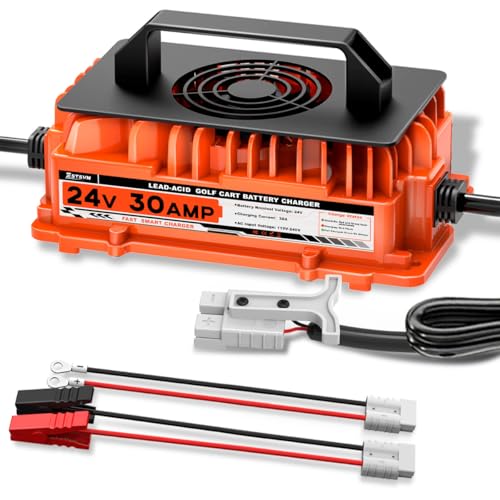
ESTSVN 30A 24V Forklift Charger Anderson Plug

FORM 24V 25A Charger for Scissor Lifts

ESTSVN 48V 18A LiFePO4 Charger 58.4V

ESTSVN 50A 12V LiFePO4 Charger 14.6V
REDARC 25A Dual Input DC Charger MPPT

Guanlan 36V 25A LiFePO4 Charger 43.8V
Taking A Closer Look At The Options
The Blue Smart IP67 sits at the top of the marine charger world for a reason: it talks to your phone. Built-in Bluetooth pairs with the VictronConnect app, so you can watch charge status, tweak absorption voltage, or check historical data from the dock without cracking open a cabinet.
At 24V and 8A, this unit is designed for smaller auxiliary banks on boats, not full house banks. The IP67 rating means dust can’t get in and a brief dunk won’t kill it, which matters when the lazarette floods after a hard rain. It uses a seven-step charging algorithm, a programmed sequence that bulk charges, absorbs, and float-balances the battery to maximize capacity and lifespan.
A Few Strong Suits
- Bluetooth monitoring through the VictronConnect app lets you check state of charge without opening the engine bay.
- IP67 sealing handles spray, splashes, and the occasional wet bilge.
- Seven-step charging profile is gentle on lithium cells and helps extend cycle life.
- Configurable absorption and float voltages suit different lithium chemistries.
Things To Consider
- An 8A output is modest; filling a large 200Ah bank takes many hours, so this is the wrong tool for big house systems.
- You may find the app useful but occasionally clunky when a phone loses Bluetooth in a metal boat.
Feature Snapshot
Right Fit For
Boat owners running a 24V lithium house bank who want app-based monitoring and proven marine-grade sealing.
Skip It When
You need faster turnaround on a larger bank, in which case the Guanlan 24V 30A LiFePO4 Charger IP67 is the stronger match.
This Guanlan unit targets 48V (51.2V nominal) LiFePO4 packs, the kind that show up in larger golf carts, electric outboards, and home energy storage walls. The 58.4V output sits at the proper absorption voltage for a fully topped 16-cell LiFePO4 pack, which keeps the BMS (battery management system) from constant high-voltage alarms.
The IP67 rating here isn’t marketing fluff. Owners commonly mount these near transom lockers, on trolling motor battery trays, and inside utility compartments that see spray. At 18A continuous, it fills a 100Ah pack in roughly six hours, fast enough for overnight charging between rounds.
Where It Delivers
- 58.4V output matches the proper absorption voltage for 16-cell LiFePO4 banks.
- IP67 housing tolerates marine spray and outdoor mounting.
- 18A current fills typical 100Ah golf cart banks overnight.
- Broad compatibility with RVs, forklifts, trolling motors, and home storage.
Honest Caveats
- The fan can ramp up under sustained load, so quiet mounting locations may not stay quiet.
- Cabling and connector type vary by use case, and you may need adapter ends for older carts.
Feature Card
Built With In Mind
Golf cart owners and off-grid homeowners with a 48V LiFePO4 bank who need a sealed charger that lives outside.
Look Elsewhere When
You run a 24V system instead, where the FORM 24V 25A Charger for Scissor Lifts is a tighter fit.
Speed is the headline here. This 24V 30A unit tops off a 150Ah LiFePO4 bank in roughly five hours, a real-world convenience when your RV fridge has been working overtime or the trolling motor ran all afternoon. The three-stage charging algorithm (pre-charge, constant current, constant voltage) eases deeply discharged packs back instead of slamming them.
The IP67 rating makes it just as comfortable on a trailer tongue as inside a cabin. Battery activation is built in for packs that have dropped to a low voltage cutoff, a useful rescue feature when a stored battery sits too long. Compared with the more leisurely Victron above, this one prioritizes throughput.
Features That Help
- 30A output turns overnight waits into afternoon top-offs for mid-sized banks.
- Battery activation helps recover packs that tripped a low-voltage cutoff.
- Three-stage profile protects LiFePO4 cells from thermal stress.
- IP67 sealing handles road splash and damp bilges.
Points To Keep In Mind
- 30A draw at 24V means about 720W of heat to dissipate, so mounting in a sealed box without airflow can shorten component life.
- It is optimized for LiFePO4, not lead-acid, which limits crossover use for older flooded banks.
Quick Facts
Made For
RVers, anglers, and overlanders with 24V LiFePO4 house banks who want fast turnaround between stops.
Swap It Out When
Your setup is lead-acid based, in which case the ESTSVN 30A 24V Forklift Charger Anderson Plug suits that chemistry better.
EZGO TXT carts run on a 36V lead-acid pack wired from six 6V golf batteries, and finding a charger that speaks the right plug and voltage can be a chore. This ESTSVN model comes with the 2-pin D-style plug that TXT models use, so installation usually means plugging it in and clipping on ring terminals.
At 25A continuous, it pushes up to about 900W, supported by an aluminum chassis and a covered cooling fan that helps move heat away from the power components. It targets lead-acid banks, so owners of older flooded TXT carts get the right absorption profile without manual tweaking.
Everyday Advantages
- Direct-fit D-style plug matches EZGO TXT carts without rewiring.
- Aluminum body and covered fan manage heat during long charge cycles.
- 25A current is balanced for typical 36V lead-acid packs.
Trade Offs
- It is calibrated for lead-acid, not LiFePO4, so retrofitting to lithium carts requires a different charger.
- The fan noise under heavy load can be noticeable in a quiet garage.
Who It Suits Best
EZGO TXT owners with stock lead-acid packs who want a plug-and-play replacement charger.
A Better Fit Elsewhere
You run lithium, in which case the Guanlan 36V 25A LiFePO4 Charger 43.8V is the closer match.
Forklifts, scissor lifts, and pallet jacks share a need: a 24V charger that can survive daily shop abuse and connect fast. This unit delivers both. The Anderson plug is a shop-standard connector that locks in place and handles hundreds of mating cycles, which matters when equipment moves in and out multiple times a day.
With up to 1250W output, it fills typical motive-power lead-acid packs in the four to six hour range, useful between shifts. The aluminum housing and covered fan handle dust and ambient heat better than sealed plastic cases, though you should still keep clearances for airflow.
What Works In Its Favor
- Anderson plug is the de facto standard for material handling equipment.
- High 30A output charges motive packs between work shifts.
- Multiple charging modes suit different lead-acid profiles.
Soft Spots
- This is a lead-acid-focused unit, not a lithium profile, so swapping a fleet to LiFePO4 requires different hardware.
- Its size and weight favor a fixed mounting spot rather than tossing in a van.
Whose Shelf It Belongs On
Small warehouse operators and contractors running 24V scissor lifts, pallet jacks, or floor scrubbers.
Reach For A Different Pick When
You have moved to lithium motive batteries, where the FORM 24V 25A Charger for Scissor Lifts handles both chemistries.
Where most workshop chargers lock you into one chemistry, the FORM 24V 25A accepts lead-acid, AGM (absorbent glass mat, a sealed lead-acid variant), LiFePO4, and lithium. That flexibility pays off in mixed fleets where older Genie lifts still run flooded cells and a newer pallet jack has gone lithium.
Ring terminal output simplifies permanent installation on equipment that doesn’t see frequent swaps. Maintenance mode holds the battery topped indefinitely without overcooking it, a small detail that adds up over years of shop use.
Reasons It Performs
- Multi-chemistry support suits fleets at different stages of lithium conversion.
- Ring terminals create a clean, semi-permanent install on lift packs.
- Maintenance mode keeps batteries topped without manual cycling.
A Few Limitations
- At 25A it is slower than the 30A ESTSVN above, so turnaround between shifts stretches a bit.
- Documentation can be sparse, so first-time installers may need to verify the chemistry switch position.
Best Suited To
Fleet managers with a mix of scissor lifts, pallet jacks, and floor scrubbers running different battery types.
Consider Something Else When
Speed matters more than chemistry flexibility, in which case the ESTSVN 30A 24V Forklift Charger Anderson Plug finishes the job faster.
Most chargers ship with one connector and leave the rest to you. This ESTSVN 48V model ships with M8 ring terminals, alligator clips, and an Anderson plug, so you can swap between golf cart posts, bench setups, and shop gear without buying adapters.
The 100V to 240V AC input handles everything from a North American garage outlet to European shore power, which makes this a useful travel charger for the mobile crowd. Output tops out at 58.4V and 18A, the right combination for a 16-cell LiFePO4 bank.
A Favorable Mix
- Three connector types cover most workshop and field setups.
- Wide AC input works on both 110V and 220V circuits.
- Designed for 16-cell LiFePO4 packs in carts, RVs, and boats.
Where It May Fall Short
- 18A is slower than the Guanlan 30A 24V unit, so large banks need more patience.
- Owners commonly report the included connectors are functional but not premium.
Who Should Grab It
Mixed-use households where the same charger travels between a golf cart, an RV, and a bench setup.
Another Choice May Suit
You only run 48V golf carts and want maximum speed, where the Guanlan 58.4V 18A 48V LiFePO4 Charger IP67 is the cleaner pick.
A 12V (12.8V nominal) LiFePO4 starter or house battery is everywhere now, from bass boats to overland rigs, and 50A charging fills typical 100Ah banks in roughly two hours. The metal casing and active cooling fan point to a design meant for repeated heavy cycles, not occasional garage use.
The 0V activation feature is the sleeper hit here. A LiFePO4 pack left sitting too long can drop to zero and refuse to take a charge from a normal charger. This unit can wake those packs, saving a pricey replacement on batteries that just needed a gentle nudge.
What It Does Well
- 50A output is fast for the 12V lithium format.
- 0V activation recovers deeply discharged LiFePO4 packs.
- Metal casing handles heat and shop abuse better than plastic shells.
Possible Compromises
- The fan runs audibly under heavy load, which matters in cabin or bedroom-adjacent installs.
- You will need heavy-gauge output cables at 50A; the included leads may not be long enough for some installs.
Perfect Match For
Anglers and overlanders running 12V LiFePO4 house banks who need quick turnaround and a recovery option for dead packs.
Not Your Match When
Your system runs 24V or higher, where the Guanlan 24V 30A LiFePO4 Charger IP67 is the correct match.
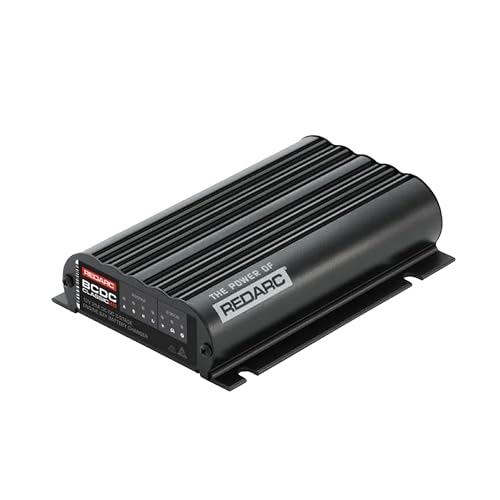
This is a different category of charger entirely. The REDARC Hummingbird pulls from two sources: the vehicle alternator while driving and solar panels when parked. It accepts both 12V and 24V systems, then charges a secondary lithium, AGM, gel, lead-acid, calcium, or LiFePO4 house bank.
MPPT, or Maximum Power Point Tracking, squeezes extra yield from solar panels by constantly adjusting the input to match the panel’s most efficient operating point, useful when shadows or partial cloud cover change the available power. The Green Power Priority function prefers solar over alternator when conditions allow, which keeps the engine from working harder than it needs to.
What Makes Sense
- Accepts solar and alternator input simultaneously for true off-grid setups.
- Built-in MPPT improves solar harvest compared with basic PWM regulators.
- Multi-chemistry profile library handles nearly any house battery.
- 12V and 24V system compatibility broadens vehicle fitment.
Details To Watch
- Installation requires wiring to the alternator, solar, and house battery, so it is not a plug-and-play swap.
- 25A output is conservative when you consider parallel solar arrays, so larger banks may want a higher-amperage sibling.
Spec Overview
Who Will Love This
Van lifers, expedition vehicle builders, and overlanders running solar plus a secondary lithium house bank.
Where A Sibling Pick Shines
You do not need solar input and want a simpler shore-power charger, where the Guanlan 24V 30A LiFePO4 Charger IP67 fits the bill.
Closing out the list is a smart 36V option for lithium conversions. Many older golf carts and mobility scooters run 36V, and converting the pack to LiFePO4 unlocks real weight savings and faster recharge. This Guanlan unit delivers 43.8V at 25A, the right absorption voltage for a 12-cell LiFePO4 pack.
Intelligent protection covers the basics owners actually want: short circuit, reverse polarity, and over-temperature shutdown. Compared with the lead-acid-focused ESTSVN 36V earlier, this one is built for the lithium crowd.
The Value In It
- 43.8V output matches 12-cell LiFePO4 packs for clean absorption.
- Smart 3-stage profile protects cells during long sessions.
- Built-in protection against shorts, reverse polarity, and heat.
Points To Note
- 25A is the floor for fast charging, so very large capacity packs need more time.
- Connector type may need an adapter depending on the cart or scooter you are converting.
Feature Rundown
Right Fit For
Golf cart and mobility scooter owners converting older 36V systems to lithium without swapping motor controllers.
Skip It When
Your cart still runs lead-acid, where the ESTSVN 25A 36V Golf Cart Charger EZGO TXT is the right tool.
What Actually Matters When Picking A 24v Lithium Battery Charger
Voltage and chemistry come first, before anything else. A 24V lithium bank runs at 29.2V during absorption, and using a charger calibrated for 12V or lead-acid simply will not fill it correctly. Confirm the nominal voltage of your bank, the exact chemistry (LiFePO4 is the most common, but lithium-ion variants exist), and the connector style before anything else.
Amperage sets the pace. A 30A charger on a 100Ah bank tops off in about four hours, while a 10A unit on the same bank takes twelve. Match the amperage to your duty cycle: weekend RVers can tolerate slower overnight charging, while daily fleet use benefits from faster turnaround.
Durability and sealing deserve attention. IP67-rated units cost a little more but survive the spray, dust, and vibration that come with marine and trailer use. Aluminum chassis with active cooling fans handle sustained loads better than sealed plastic housings, especially at 30A or higher.
Chemistry compatibility matters during transitions. If you are mid-fleet-conversion from lead-acid to lithium, a multi-chemistry charger like the FORM 24V 25A covers both worlds. Pure lithium-only shops save money with profile-specific units.
Key Considerations Across These Picks
Traps First Timers Fall Into
A common slip is matching voltage only, then expecting lithium behavior from a lead-acid profile. Lead-acid chargers often equalize at higher voltages that trip a lithium BMS, and the pack never finishes a full charge cycle. Verify the absorption voltage matches your chemistry before plugging in.
Another trap is ignoring connector compatibility. A gorgeous 30A charger is useless if its Anderson plug does not fit your forklift or its ring terminals do not match your battery posts. Double-check the connector type and lug size before ordering, not after delivery.
When Paying More Pays Off
The jump from a basic charger to a sealed, smart, app-connected model buys you three things that add up. You get a longer-lasting battery because the profile is correct, less time babysitting the charge because the unit handles the algorithm, and fewer weather-related failures because the housing actually seals. For batteries that cost four figures, that premium pays for itself across a few seasons.
Frequently Asked Questions
Can I use a lead-acid charger on a lithium battery?
Not reliably. Lead-acid chargers often push equalization voltages above what a lithium BMS allows, leaving the pack partially charged. Use a charger with a LiFePO4 or multi-chemistry profile for best results.
What amperage do I need for a 100Ah lithium bank?
A 20A to 30A charger fills a 100Ah pack in roughly three to five hours. Slower 10A units work fine for overnight charging but stretch the timeline if you cycle the bank daily.
Do I need an IP67 charger for indoor use?
Indoor installations in dry spaces do not need marine-grade sealing. Save the IP67 rating for outdoor, trailer, or bilge mounting where moisture is unavoidable.
Can one charger handle multiple battery chemistries?
Some can, like the FORM 24V 25A, which supports lead-acid, AGM, LiFePO4, and lithium. Most single-purpose chargers lock you into one chemistry profile, so choose based on whether your fleet is mixed or uniform.
Is solar input worth it on a charger?
A DC-to-DC charger with MPPT solar input, like the REDARC Hummingbird, makes sense for van life and off-grid setups where the vehicle alternator and panels both feed the house bank. For pure shore-power charging, solar input is unnecessary.
Bottom Line
The right 24v lithium battery charger comes down to matching voltage, chemistry, amperage, and sealing to your actual use case. Marine and trailer owners get the most from sealed IP67 units, fast-cycling RV and trolling motor setups benefit from 25A to 30A LiFePO4 profiles, and mixed-fleet shops need multi-chemistry flexibility. Pick the one that fits your bank and your routine, and your batteries will thank you for years.