Spending a long Saturday on the water only to find your trolling motor gasping for power halfway through the day is the kind of frustration that quietly ruins a season. Anglers moving from old lead-acid setups to lithium want a battery that holds voltage steady, charges fast, and doesn’t punish them with extra weight on the bow. The nine picks below cover a wide range of boat sizes, thrust levels, and runtime goals, so you can match a battery to your motor and your habits without overspending on capacity you’ll never use.
The Essentials At A Glance

VATRER POWER 24V 300Ah LiFePO4 Lithium Battery

LiTime 2 Pack 24V 230Ah Lithium Battery

BtrPower 24V 50Ah LiFePO4 Trolling Motor Battery

LiTime 24V 100Ah Bluetooth LiFePO4 Battery
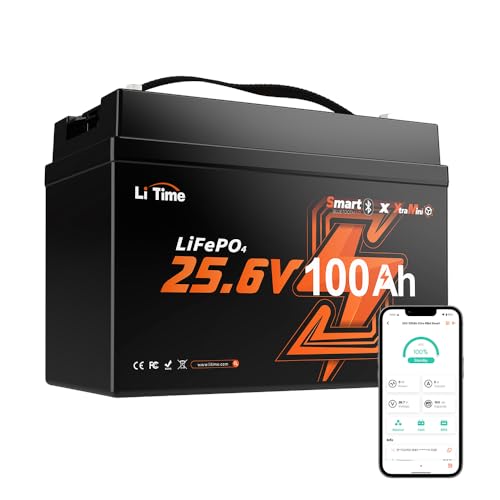
LiTime 24V 100Ah Mini LiFePO4 Trolling Motor Battery

LiTime 24V 50Ah Bluetooth Trolling Motor Battery

BtrPower 24V 140Ah Deep Cycle LiFePO4 Battery

BtrPower 24V 100Ah Deep Cycle LiFePO4 Battery

BtrPower 36V 50Ah LiFePO4 Trolling Motor Battery
Taking A Closer Look At The Options
The VATRER POWER 300Ah pack targets anglers running the biggest rigs on the water, the kind of setup where a smaller 50Ah or 100Ah option would leave you cutting the day short. Built around a 200A BMS (battery management system, the onboard circuit that guards against overcharge, deep discharge, and short circuits), this unit is engineered for sustained high loads rather than quick bursts.
For most backyards, the headline feature is app monitoring, letting you check voltage and state of charge from your phone without opening the compartment. Compared to the LiTime 24V 100Ah Bluetooth reviewed later, this one trades portability for raw capacity, and the trade-off shows up in weight and price.
Strengths Worth Knowing
- 300Ah capacity covers multi-day trips without recharging, ideal for remote launches with no shore power.
- 200A BMS handles higher-thrust motors without tripping protection mid-run.
- App monitoring gives real-time state-of-charge readings from the helm.
- Built-in temperature cutoffs reduce damage risk in hot engine bays or cold mornings.
Things To Consider
- Larger footprint and weight may not suit small jon boats or kayaks.
- Charging requires a lithium-compatible charger to reach full capacity safely.
Who It Suits Best
Anglers running a 24V trolling motor on a sizable bass or walleye boat who fish dawn-to-dusk sessions and rarely recharge between trips.
Consider Something Else When
If your boat is a kayak or ultralight jon, the LiTime 24V 50Ah Bluetooth is a better match for your scale.
This LiTime bundle ships two 24V 230Ah batteries, giving anglers who also run solar arrays or RV house banks a single convenient source. The 200A BMS inside each unit carries more than twenty protection modes, and the cycle life (the number of full charge-discharge cycles before capacity drops noticeably) is rated in the thousands.
Where the VATRER 300Ah is built around monitoring, this pairing is built around redundancy, so if one battery ever faults mid-trip, the second keeps you on plane. The trade-off is obvious: two batteries means double the weight and double the footprint, which isn’t practical on a small boat.
Strong Points
- Dual-pack design gives built-in redundancy for serious off-grid use.
- 230Ah per unit delivers long runtime for RVs, solar banks, and trolling motors.
- 200A BMS with twenty-plus protections guards against the usual lithium failure modes.
- LiFePO4 chemistry holds voltage steady even as state of charge drops.
Worth Noting
- Combined weight rules it out for kayaks and small jon boats.
- You may find the upfront cost steep if you only need one battery.
Built With In Mind
Off-grid cabin owners and RV travelers who want one order to cover both house and trolling loads.
Look Elsewhere When
If you’re strictly running a single 24V trolling motor on a bass boat, the VATRER POWER 300Ah gets you more capacity in a single unit.
The BtrPower 50Ah unit targets anglers with smaller 24V motors in the 70 to 100 pound thrust range who don’t need the bulk of a 100Ah or 300Ah pack. As a direct replacement for lead-acid or AGM (absorbent glass mat, a sealed lead-acid variant), it sheds roughly two-thirds of the weight from a typical Group 31 box.
You trade raw runtime for portability, and depending on how hard you run the throttle, this may limit you to shorter trips. It’s the entry point for boaters curious about lithium without committing to a high-capacity bank.
Good Reasons To Consider
- Lightweight enough for kayaks and small jon boats to carry comfortably.
- Grade A LiFePO4 cells rated for thousands of deep cycles.
- Drop-in replacement for older 24V lead-acid setups.
Trade Offs
- 50Ah is limiting on all-day, high-thrust sessions; you may need a backup.
- Smaller BMS rating caps performance with heavier motors.
- Low-temperature charging protection matters in cold-weather fishing.
Right Fit For
Kayak anglers and small-boat owners running a modest trolling motor for short to mid-length outings.
Skip It When
If you need Bluetooth monitoring and more runtime, the LiTime 24V 100Ah Bluetooth covers a similar boat size with extras.
This LiTime battery lands in the middle of the lineup: more capacity than the BtrPower 50Ah, less than the VATRER 300Ah, and it adds Bluetooth 5.0 monitoring on top. The dimensions sit around 8.2 by 21 by 8.5 inches, so you may find it tight in compact battery compartments.
For most bass boats in the 16 to 18 foot range, this is the realistic sweet spot. It supports parallel and series configurations (4P2S), meaning up to four units can run in parallel for more capacity or two in series for higher voltage, useful if you ever want to scale the bank.
What Makes Sense
- Bluetooth 5.0 streams voltage and state of charge without opening the hatch.
- 100Ah is a practical middle ground for full-day fishing trips.
- Supports 4P2S expansion if your power needs grow over time.
Minor Gripes
- Length may exceed some smaller battery trays; measure first.
- Heavier than the 50Ah options, so plan your bow weight.
Made For
Mid-size bass boat owners who want both solid runtime and modern monitoring features.
Not Your Match When
If your battery box is too tight for a 21-inch-long unit, the LiTime 24V 100Ah Mini fits a Group 31 footprint instead.
The Mini variant solves a problem the standard 100Ah version can’t: it fits a BCI Group 31 tray, the common automotive-size footprint, while keeping full 100Ah capacity. The catch is that the height runs taller than a standard Group 31 box, so traditional sealed enclosures won’t close over it.
Compared to the longer LiTime 100Ah Bluetooth above, this trades a few inches of length for an inch or two of extra height. For anglers with shallow but wide battery compartments, that’s usually a fair swap.
Points In Its Favor
- Group 31 footprint fits more boats than the longer 100Ah unit.
- Stable voltage output under sustained trolling motor loads.
- Engineered specifically for 70 to 100 pound thrust motors.
Honest Caveats
- Height exceeds standard Group 31 boxes; verify clearance above the terminals.
- No Bluetooth monitoring on this particular model.
Best Suited To
Anglers with shallow battery trays who still want a full 100Ah of usable capacity.
A Better Fit Elsewhere
If Bluetooth monitoring is a must-have, the LiTime 24V 100Ah Bluetooth sacrifices some footprint for that convenience.
The 50Ah Bluetooth sibling to the 100Ah Bluetooth above brings the same monitoring and marine-grade protections into a lighter, more portable package. TVS (transient voltage suppressor) surge protection and shock resistance target the kind of splashing and vibration a small boat puts a battery through.
For most jon boat and small aluminum boat setups, this hits a practical balance. The 50A BMS caps peak draw, so heavy-thrust motors may push its limits under load.
Key Advantages
- Bluetooth monitoring in a compact, portable format.
- TVS surge protection improves resilience on rough water.
- Cycle ratings extend well beyond typical lead-acid lifespan.
Points To Keep In Mind
- 50Ah is restrictive for full-day, high-thrust fishing.
- 50A BMS may be the bottleneck on larger 24V motors.
Whose Shelf It Belongs On
Lightweight jon boat and small aluminum boat owners who appreciate Bluetooth and need only modest runtime.
Reach For A Different Pick When
If you want more capacity without the Bluetooth tax, the BtrPower 24V 50Ah is a simpler, lighter option at lower cost.
This BtrPower unit hits a useful middle tier: 140Ah at roughly 3584 watt-hours, with Grade A LiFePO4 cells rated for more than 3000 deep cycles. The 100A BMS handles most trolling motor loads comfortably without tripping protection.
Where the VATRER 300Ah is built for off-grid scale, this one is purpose-built for the angler who runs hard all day and wants headroom. You may find the extra 40Ah over a 100Ah unit worthwhile if your trips stretch into the second day.
Advantages To Know
- 140Ah offers comfortable headroom for full-throttle sessions.
- 3000+ cycle rating extends the usable lifespan past typical lithium competitors.
- 100A BMS supports mid-size trolling motors cleanly.
Potential Drawbacks
- Heavier than smaller 100Ah packs, so plan mounting locations.
- No Bluetooth monitoring on this particular BtrPower unit.
Perfect Match For
Serious anglers who push their trolling motor hard for long stretches and want extra capacity without jumping to a 300Ah bank.
Swap It Out When
For Bluetooth convenience in a similar capacity range, the LiTime 24V 100Ah Bluetooth trades some amp-hours for app monitoring.
BtrPower’s 100Ah pack is the workhorse option in the lineup: no Bluetooth, no app, just solid LiFePO4 cells and a 100A BMS. For anglers who care more about dependable runtime than telemetry, the simpler design keeps things straightforward.
Compared to the LiTime 24V 100Ah Bluetooth above, the trade-off is the absence of wireless monitoring. In return you usually get a slightly lower price tag for the same usable capacity.
What Stands Out
- Grade A LiFePO4 cells deliver 3000+ deep cycles for years of service.
- 100A BMS handles typical trolling motor loads comfortably.
- Simple design keeps the price reasonable for the capacity class.
Soft Spots
- No Bluetooth means voltage checks require a physical meter.
- Lacks the size optimization of LiTime’s Mini variant.
Who Should Grab It
Casual weekend anglers who want dependable lithium capacity without paying for app connectivity.
Where A Sibling Pick Shines
For tighter compartments, the LiTime 24V 100Ah Mini drops into Group 31 trays where this standard pack won’t fit.
Most trolling motors run on 12V or 24V, but serious anglers pushing 100 to 120 pound thrust motors usually step up to 36V systems. This BtrPower pack fills that niche, replacing a chain of three 12V lead-acid batteries with one consolidated lithium unit.
Where most of the picks on this list target 24V motors, this one is for a different audience entirely. If your motor specs say 36V, this is the option worth looking at closely.
Positive Takeaways
- Direct drop-in for 36V trolling motor setups in the 100 to 120 lb thrust range.
- Eliminates the weight and wiring of three separate 12V lead-acid batteries.
- Grade A LiFePO4 cells rated for thousands of deep cycles.
A Few Limitations
- Not compatible with 24V systems; double-check your motor voltage before ordering.
- 50Ah is moderate; runtime depends heavily on how hard you run the throttle.
Made For
Anglers running larger 36V trolling motors on bigger bass or walleye boats who want a single-battery lithium upgrade.
Reach For A Different Pick When
If your motor is a 24V unit, the BtrPower 24V 50Ah is the matching option at the same capacity tier.
Picking The Right Match For Your Boat
Match Battery Voltage To Your Motor
The first check is simple but easy to get wrong: confirm your trolling motor is actually a 24V system before buying a 24V battery. Motors in the 70 to 100 pound thrust range typically run on 24V, while smaller units use 12V and the largest 100 to 120 pound thrust setups need 36V. The 36V BtrPower reviewed last only fits the biggest systems; everything else on this list targets 24V. Check the label on your motor or the owner’s manual before you commit to a battery, because mixing voltages will at best give you no power and at worst damage your electronics.
Capacity Depends On How You Fish
Amp-hour ratings translate directly into runtime, but how much you need depends on throttle habits and trip length. A 50Ah pack covers shorter trips on smaller motors and stays portable for kayaks or light jon boats. The 100Ah options are the everyday workhorses for full-day bass fishing, while the 140Ah and 300Ah packs give serious headroom for anglers who push their motors hard or spend multi-day stretches away from shore power. As a rough guide, doubling your amp-hours roughly doubles your runtime at a given throttle setting, but high-thrust running drains the battery much faster than slow trolling.
Look At The BMS Rating And Protections
Every lithium battery on this list uses a BMS to protect the cells from damage, and the BMS amperage rating matters. A 50A BMS is fine for smaller motors but will limit the largest thrust setups, while a 100A or 200A BMS handles heavier loads without tripping protection mid-run. Common BMS protections to look for include overcharge cutoff, over-discharge cutoff, short circuit protection, and temperature-based shutdown. Some models also add low-temperature charging protection, which matters for cold-weather fishing because charging lithium below freezing can permanently damage the cells.
Size, Weight, And Bluetooth Matter Too
Physical dimensions determine whether the battery actually fits your boat. Group 31 is a common tray size, but packs like the longer LiTime 100Ah Bluetooth won’t fit in every compartment, which is where the LiTime Mini earns its place. Weight affects bow balance, especially on smaller boats, and lithium’s main selling point over lead-acid is shedding roughly two-thirds of that weight. Bluetooth monitoring is a nice-to-have for tracking voltage and state of charge from your phone, though some anglers prefer the simplicity and lower cost of non-connected packs.
Common Shopping Slip Ups And Upgrade Payoffs
Pitfalls Shoppers Hit
The most common mistake is matching voltage incorrectly. Buying a 24V battery for a 36V motor, or vice versa, is a frustrating and costly error that’s completely avoidable with a quick check of the motor specs. Another trap is assuming any lithium charger works: lead-acid chargers can push voltages that damage LiFePO4 cells over time, so a lithium-compatible charger is worth budgeting for. Finally, ignoring physical dimensions catches shoppers off guard, because lithium batteries sometimes exceed the footprint of the lead-acid units they replace, especially in length and height.
Where The Extra Money Goes
Higher-capacity batteries cost more because they pack in more cells and a heavier-duty BMS, but the upgrade usually pays off in longer runtime and a longer service life measured in thousands of deep cycles. Premium options like the VATRER 300Ah add features such as app monitoring, which gives you real-time state-of-charge data without opening the battery compartment. For most weekend anglers, a solid 100Ah pack hits the sweet spot; for serious multi-day use, the step up to 140Ah or 300Ah is usually worth it.
Frequently Asked Questions
How long will a 24V lithium trolling motor battery last on the water?
Runtime depends on your battery’s amp-hour rating, your motor’s thrust, and how hard you run the throttle. A 100Ah pack running a mid-thrust motor at moderate speeds typically lasts a full day, while a 50Ah pack covers shorter trips. Doubling your amp-hours roughly doubles your runtime at the same throttle setting.
Can I replace my lead-acid trolling batteries with lithium directly?
In most cases, yes. Lithium batteries are designed as drop-in replacements for 24V lead-acid and AGM setups, and they typically weigh about one-third as much. The main change you’ll need is a lithium-compatible charger, because standard lead-acid chargers can push voltages that damage LiFePO4 cells over time.
What does the BMS actually do?
The BMS, or battery management system, is the onboard circuit that protects the lithium cells from damage. It guards against overcharging, over-discharging, short circuits, and excessive current draw, and many models also include temperature-based shutdown. The BMS amperage rating, like 50A versus 200A, sets the ceiling for how much current the battery can safely deliver to your motor.
Is Bluetooth monitoring worth paying extra for?
For many anglers, yes. Bluetooth lets you check voltage and state of charge from your phone without opening the battery compartment, which is handy on boats where the battery is tucked under a seat or in a console. For anglers who prefer simplicity or want to save a bit on cost, a non-connected pack with a manual voltage meter works fine.
How should I store a lithium trolling battery in the off-season?
Most manufacturers recommend storing lithium batteries at a partial state of charge, somewhere around 50 to 70 percent, in a cool dry place. Avoid leaving them fully charged or fully depleted for months at a time, and check the voltage periodically during long storage to make sure it hasn’t dropped too low. Cold temperatures are usually fine for storage as long as you don’t charge the battery below freezing.
Closing Remarks
The right 24V trolling motor battery comes down to matching voltage, capacity, and physical size to your boat and your fishing style. For most anglers, a 100Ah pack hits the practical sweet spot, while smaller boats and bigger rigs each have more specialized options above. Take a moment to confirm your motor’s voltage and measure your battery compartment before ordering, and the rest of the choice gets a lot easier.