Choosing a 24 volt marine battery comes down to more than the label on the box. You need stable voltage for a trolling motor, enough capacity for a full day on the water, and protection circuitry that won’t let you down when spray hits the terminals. This list breaks down ten current options for boats, RVs, off-grid cabins, and backup power, with notes on who each one actually fits. Whether you run a 70-lb thrust Minn Kota, a weekend pontoon, or a solar shed, you’ll find a sensible match here.
The Leading Options At A Glance

Cymoye 2 Pack 24V 50Ah LiFePO4 Lithium Battery

LiTime 24V 100Ah Bluetooth LiFePO4 Lithium Battery
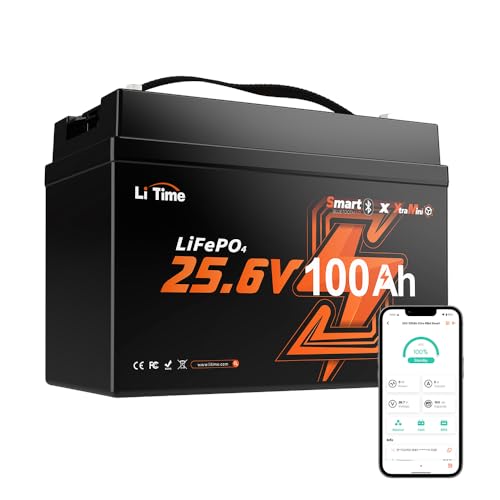
LiTime 24V 100Ah Mini LiFePO4 Lithium Battery

LiTime 24V 50Ah Bluetooth Lithium Trolling Motor Battery
LiTime 3 Pack 24V 100Ah Mini Lithium Battery

BtrPower 24V 100Ah LiFePO4 Battery 2560Wh
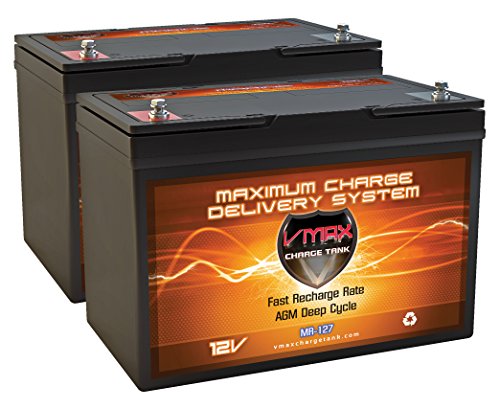
VMAX MR127-100 Two Group 27 AGM Marine Batteries

LiTime 24V 100Ah Smart ComFlex Lithium Battery

LiTime 24V 100Ah LiFePO4 Battery Off-Grid RV

LiTime 24V 100Ah Bluetooth LiFePO4 Solar Battery
A Closer Look At Each Pick
The Cymoye 2-pack lands as a winter-ready workhorse for anglers who launch in cold months. You get two Group 24 LiFePO4 cells (LiFePO4 means lithium iron phosphate, a chemistry prized for thermal stability and long cycle life) wired together for a true 24V setup, delivering roughly 1,280Wh of usable energy. The built-in 50A BMS (battery management system) handles overcharge, over-discharge, and short-circuit events, while a low-temp cutoff stops charging when cells drop below safe thresholds, a feature many lithium packs skip.
Compare that to single-battery options later in this list: this Cymoye setup drops straight into a pair of tray slots on pontoons and small skiffs. Each 50Ah cell is light enough for one-handed carry, and the chemistry holds voltage steady as state-of-charge drops. For most 70-lb thrust trolling motors and weekend cabin runs, the dual-pack math works out cleanly.
Notable Upsides
- Low-temperature charging cutoff protects cells on frosty mornings.
- Two-pack delivers full 24V without needing series wiring hardware.
- Group 24 form factor fits many factory battery trays.
- Stable voltage curve keeps trolling motor thrust consistent.
- Lightweight LiFePO4 chemistry simplifies portage between vehicles.
Worth Noting
- 50Ah per pack is modest for full-day, high-thrust fishing.
- Owners commonly report verifying tray dimensions before installation.
- Charging requires a LiFePO4-compatible charger for full benefit.
Who It Suits Best
Anglers and campers in cold climates running 70-lb trolling motors on short outings.
Look Elsewhere When
You want higher capacity in a single box, in which case the BtrPower 24V 100Ah LiFePO4 Battery is a better fit.
LiTime’s Bluetooth 100Ah sits at the center of this category, and the reason is simple: you can check voltage, state of charge, and discharge status from your phone without lifting a hatch. The pack delivers 2.56kWh of usable energy in a single 24V brick weighing about 45.85 lbs, roughly a third of an equivalent lead-acid bank. For boat owners juggling fish finders, livewell pumps, and a trolling motor, that single-box approach is hard to beat.
You can also expand this pack up to 4P2S (four in parallel, two in series) configurations, building toward roughly 10kWh of capacity for serious off-grid setups. Unlike the Cymoye dual pack above, this one arrives as a complete 24V unit, no series wiring required.
Real-World Strengths
- Bluetooth 5.0 monitoring shows real-time state of charge on a phone.
- Single 24V 100Ah design simplifies installation versus dual 12V banks.
- Lightweight for its capacity class.
- Expandable to larger banks for cabins and solar arrays.
Trade Offs
- Dimensions may be too tall for compact battery boxes.
- Some users may find the app pairing steps finicky on first use.
Feature Snapshot
Made For
Tech-forward boaters and RV owners who want phone-based monitoring without extra shunts.
Reach For A Different Pick When
You need a smaller Group 31 footprint, in which case the LiTime 24V 100Ah Mini LiFePO4 Lithium Battery fits tighter spaces.
Not every boat has a tall battery box, and that’s exactly where this LiTime Mini earns its keep. The 24V 100Ah pack drops into a Group 31 footprint while still delivering full trolling-motor-grade output, but owners should note that its height exceeds standard Group 31 battery boxes. It targets 70 to 100-lb thrust motors with stable voltage under load, so thrust delivery stays consistent as the cell drains.
Compared to the larger LiTime 100Ah Bluetooth pack above, this Mini trades app connectivity for a shorter casing. The trade-off makes sense for anglers counting every inch of hull space, kayak mods, and center-console setups with cramped under-seat storage.
What It Does Well
- Compact Group 31 form factor fits many under-seat compartments.
- Stable voltage output for 70 to 100-lb trolling motors.
- LiFePO4 chemistry resists thermal runaway on hot decks.
Honest Caveats
- Height exceeds some standard Group 31 battery box lids.
- No Bluetooth monitoring on this specific variant.
Who Should Grab It
Anglers with limited battery compartment space running modern 24V trolling motors.
A Better Fit Elsewhere
You want phone-based monitoring, in which case the LiTime 24V 100Ah Bluetooth LiFePO4 Lithium Battery is the more tech-friendly option.
The 50Ah Bluetooth trim from LiTime targets solo anglers and small-boat owners who don’t need a full 100Ah bank. The pack still includes the brand’s signature 50A BMS with over 20 protection modes plus TVS surge protection (a transient voltage suppressor that absorbs voltage spikes before they reach sensitive electronics), making it a sensible pick for rigs exposed to splash and salt. Cycle life lands in the 4,000+ range at full depth of discharge, which is generous for the capacity.
The Bluetooth module reads state of charge and discharge status through LiTime’s app, giving you runtime visibility without dedicated gauges. Versus the larger 100Ah sibling above, this pack sheds weight and cost while keeping the marine-grade protection stack intact.
Well-Handled Touches
- Bluetooth monitoring on a smaller-capacity pack.
- 20+ BMS protections cover real-world fault scenarios.
- High cycle count at full depth of discharge.
Things To Consider
- 50Ah runtime limits full-day heavy-thrust use.
- Owners commonly confirm the BMS cuts off cleanly below low-voltage thresholds.
Best Suited To
Weekend anglers and small-boat owners who want Bluetooth tracking without full-bank weight.
Skip It When
You fish long days at high thrust, in which case the LiTime 24V 100Ah Mini LiFePO4 Lithium Battery delivers more usable energy.
Buying three at once makes sense for fishing clubs, charter operators, and multi-boat households that want matched LiFePO4 banks. Each unit shares the Group 31 Mini footprint from the single Mini above, meaning you get identical form-factor across your fleet. The set delivers roughly 7.68kWh combined, enough for full-day trolling and house loads on bigger rigs.
The same height caveat applies: these cells exceed standard Group 31 battery box capacity, so verify clearance on each vessel. For outfitting several boats at once, a 3-pack usually trims per-unit cost versus buying singles.
What Makes Sense
- Three matched cells simplify fleet-wide replacement cycles.
- Combined capacity handles trolling and house circuits on larger boats.
- Group 31 Mini footprint repeats across all three units.
Softer Spots
- Three-pack adds carrying and freight considerations.
- Standard Group 31 boxes won’t close over these cells.
Perfect Match For
Charter captains, fishing clubs, and households running more than one boat on a single platform.
Swap It Out When
You only need one battery, in which case the LiTime 24V 100Ah Bluetooth LiFePO4 Lithium Battery is the single-unit answer.
The BtrPower 24V 100Ah lands as a tidy option for tight installs where every cubic inch counts. At roughly 13.4 × 7.5 × 9.8 inches and 42.42 lbs, it replaces two 12V 100Ah lead-acid batteries in one enclosure, freeing up mounting space on RVs and compact boats. The IP65-rated housing (a standard that protects against low-pressure water jets from any direction) shrugs off spray and rain, which matters on open vessels.
A 100A BMS handles overcharge, over-discharge, short-circuit, and overheat events, and the design meets UN38.3 transport guidelines for marine and outdoor shipping. For weekend warriors running lights, pumps, and a trolling motor from one box, the capacity-to-size ratio is genuinely useful.
Notable Gains
- Replaces two 12V lead-acid batteries with a single 24V unit.
- IP65 housing resists splash and salt spray.
- UN38.3 compliance supports safer marine transport.
Possible Compromises
- No Bluetooth monitoring on this configuration.
- Compact casing can run warm under sustained high discharge.
Feature Snapshot
Who Will Love This
RV owners and small-boat skippers who need 24V in a footprint smaller than a dual-12V lead-acid setup.
Where A Sibling Pick Shines
You want phone monitoring bundled in, in which case the LiTime 24V 100Ah Bluetooth LiFePO4 Lithium Battery is the closer match.
Not everyone wants lithium. The VMAX MR127-100 pair delivers a proven AGM (absorbed glass mat, a sealed lead-acid design where electrolyte is held in fiberglass mats) approach for boaters who prefer familiar chemistry and a heavier bank. Two Group 27 12V 100Ah units wired in series produce a 24V 100Ah bank with the kind of physical mass that resists bouncing in rough water and stays put in heavy current.
The electrolyte suspension system absorbs and contains the acid without silica gels or contaminants, and heavy-duty lead-tin grids extend plate life. Compared to the LiFePO4 packs above, this VMAX set weighs far more but costs less per cycle of usable energy, depending on usage patterns.
A Few Highlights
- AGM chemistry needs no maintenance or watering.
- Heavy-duty lead-tin grids support deep discharge cycles.
- Sealed construction resists vibration on choppy water.
Points To Note
- Significantly heavier than lithium equivalents.
- Lower usable depth-of-discharge than LiFePO4 chemistry.
- Owners commonly report slower charge acceptance than lithium.
The Right Fit
Boaters loyal to AGM who want proven chemistry and don’t mind the extra weight for stability.
Consider Something Else When
Weight matters and you want lithium cycle life, in which case the BtrPower 24V 100Ah LiFePO4 Battery cuts pounds dramatically.
For Victron-equipped rigs, the Smart ComFlex changes the integration game. The pack talks natively to Victron inverters and chargers over CAN bus (a vehicle-style communication protocol that lets components share telemetry without extra shunts), syncing 25-plus battery parameters straight to a GX monitor. No SmartShunt required, no third-party adapters to chase down.
Over-the-air firmware updates mean the battery gains new protocol support over time, including future compatibility with brands like SMA, Go Power, and Growatt. Versus the Bluetooth 100Ah above, this one trades a phone-only experience for full ecosystem integration, which matters on serious cruising setups.
What Works In Its Favor
- Natively compatible with Victron ecosystem over CAN bus.
- Over-the-air firmware updates extend protocol support.
- No SmartShunt required for full system visibility.
Factors To Consider
- Best value realized only within Victron-equipped systems.
- Initial setup assumes familiarity with Victron GX tooling.
Whose Shelf It Belongs On
Cruisers and liveaboards running Victron inverters, chargers, and GX monitors as their core power system.
Not Your Match When
You’re not on Victron, in which case the LiTime 24V 100Ah Bluetooth LiFePO4 Lithium Battery delivers monitoring without the Victron premium.
Off-grid households and RV travelers tend to grow their power systems over time, and this LiTime 100Ah pack is built for that pattern. Each unit delivers 2.56kWh, and the platform supports 4P2S configurations up to roughly 48V 400Ah or 20.48kWh, enough to run inverters, fridges, and lighting from a quiet weekend cabin setup.
The chemistry’s low self-discharge rate helps in seasonal storage, an important consideration for cabins that sit dark all winter. The same tray-clearance caveat from earlier LiTime models applies, so measuring before ordering is worth the five minutes it takes.
The Case For It
- Scales to 20.48kWh via 4P2S expansion.
- Low self-discharge suits seasonal storage.
- Stable voltage supports inverter loads cleanly.
Small Limitations
- Tray clearance needs verification on smaller boats.
- No Bluetooth on this configuration for quick phone checks.
Who It Suits Best
Off-grid cabin owners and RV travelers planning gradual system expansion.
A Better Fit Elsewhere
You want monitoring and expansion together, in which case the LiTime 24V 100Ah Bluetooth LiFePO4 Lithium Battery covers both.
For solar sheds, weather-resistant powerhouses, and off-grid arrays, this Bluetooth-enabled 100Ah rounds out the LiTime lineup with a low-temperature discharge cutoff. The 24V format pairs cleanly with common MPPT charge controllers (solar regulators that optimize panel output for battery state of charge), and the same 45.85-lb weight makes rooftop and shed-mount installs manageable. Bluetooth 5.0 monitoring tracks voltage and discharge status from a phone, helpful when the battery sits in a remote enclosure.
The low-temp protection automatically stops discharge when cells drop below safe thresholds, important for unheated solar sheds in northern winters. Compared to the larger Bluetooth pack earlier in this list, this version targets storage applications with extra cold-weather intelligence.
What Stands Out
- Low-temperature discharge cutoff for cold-climate sheds.
- Bluetooth 5.0 works through walls and enclosures.
- 24V format pairs with standard MPPT solar controllers.
Room For Improvement
- Tray clearance verification needed on smaller vessels.
- Solar-specific features matter less on pure trolling setups.
Who Should Grab It
Solar shed owners and off-grid array builders in cold climates who want phone-based monitoring.
Look Elsewhere When
You’re running a pure trolling-motor setup, in which case the LiTime 24V 100Ah Bluetooth LiFePO4 Lithium Battery is the better boat-focused option.
What Matters Most Before Choosing 24 Volt Marine Battery
Match The Pack To Your Thrust Class
Trolling motors between 70 and 100 lbs of thrust are the sweet spot for 24V lithium setups. Running a smaller motor on a 100Ah bank wastes capacity and adds weight, while pushing a 100-lb thrust motor from a 50Ah pack leaves you cutting days short. Measure your existing draw or check your motor’s amp draw at typical speeds before sizing up.
Check Physical Dimensions Before Anything Else
Tray clearance causes more returns than chemistry questions. Group 24, Group 27, and Group 31 cases all differ in height, width, and terminal layout, and the lithium versions sometimes run taller than their lead-acid counterparts because of integrated BMS boards. A five-minute measurement session saves an afternoon of returns.
Decide On Monitoring And Ecosystem Integration
Bluetooth apps, CAN bus integration with Victron, and simple LED gauges all serve different users. Casual weekend anglers often skip monitoring entirely, while liveaboards and solar array owners want full ecosystem data. Pick the level of telemetry that matches how often you’ll actually check the app.
Weight And Handling For Your Situation
Lithium packs at roughly 45 lbs are portable enough for one person, while AGM banks can top 130 lbs. If you launch solo, transport between vehicles, or shuffle batteries seasonally, the lighter chemistry earns its keep. For permanent installations aboard heavy boats, AGM weight can actually help stability in rough water.
Key Considerations Across These Picks
Pitfalls Shoppers Hit
The most common trap is buying a 24V pack for a 12V trolling system, or assuming any Group 31 case closes over every Group 31 lithium cell. Standard battery boxes often don’t accommodate the extra height of integrated BMS hardware. The next misstep is pairing lithium and a lead-acid charger, which either undercharges the bank or trips protection circuits. Cold-weather charging without a low-temp cutoff also quietly damages cells over a season or two.
Where The Extra Money Goes
Higher-tier LiTime and Cymoye packs spend the premium on built-in BMS sophistication, cold-weather protection, and ecosystem integration like Victron CAN bus. You also pay for capacity density, since a 100Ah pack from a refined brand typically weighs less and cycles longer than budget alternatives. For users running serious loads or off-grid arrays, the upgrade buys reliability across thousands of discharge cycles rather than a single season.
Frequently Asked Questions
How long does a 24V lithium marine battery typically last on the water?
A 100Ah lithium pack usually delivers a full day of moderate trolling on a 70-lb thrust motor, while 50Ah options suit shorter outings or lighter thrust. Actual runtime depends on speed setting, wind, and current.
Can I use a regular lead-acid charger with a LiFePO4 battery?
Most lead-acid chargers don’t reach the correct absorption voltage for lithium and can trigger BMS protection or undercharge the bank. A LiFePO4-compatible charger is the safer path.
What does a battery management system actually do?
A BMS monitors cell voltage, current, and temperature, then cuts off charging or discharging when limits are exceeded. It protects against overcharge, over-discharge, short circuits, and thermal stress.
Is a 24V battery better than running two 12V batteries in series?
A single 24V lithium pack simplifies wiring, reduces failure points, and often weighs less than a dual-12V lead-acid setup. Series wiring of two 12V lithiums works but adds complexity and connection points.
Do lithium marine batteries work in freezing temperatures?
Most LiFePO4 cells accept discharge in cold weather but should not be charged below freezing without a low-temperature cutoff. Packs like the Cymoye and the LiTime Bluetooth Solar unit include that protection.
Closing Remarks
The right 24 volt marine battery comes down to matching capacity, footprint, and monitoring features to the way you actually use your boat or off-grid setup. Start by measuring your tray, confirm your thrust class, then weigh whether Bluetooth or Victron integration matters for your install. With those three answers in hand, any of the ten options above will serve you well through many seasons on the water.