You’re not just hunting for cells. The workhorse 18650 format powers flashlights, vape mods, radio gear, and DIY projects, and most folks eventually need a smart charger or a safe holder to keep those cells organized and topped up. This roundup focuses on the accessories that actually make 18650 ownership easier, from smart multi-chemistry chargers to tidy holder packs. Pick by use case, not by spec sheet alone.
The Main Contenders
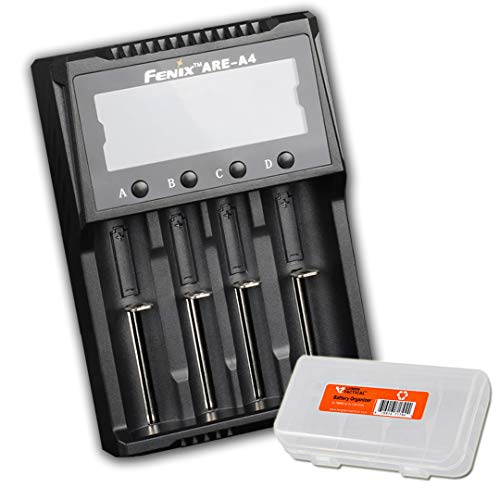
FENIX ARE-A4 Multifunctional Smart Battery Charger

EdisonBright Fenix ARE-A2 Home/Car Charger Bundle

IMREN Single-Slot 18650 Battery Charger USB-C

DAIERTEK AA Battery Holder Pack with Switch (8-Piece)

DAIERTEK 9V Battery Holder with ON/Off Switch (3-Pack)

IMREN 26650/18650 Two-Bay USB-C Charger

EdisonBright Fenix ARE-A2 Smart Charger with BBX5 Case

DAIERTEK 18650 Battery Holder Variety Pack (8-Piece)

IMREN 4-Bay 18650/21700 USB-C Smart Charger

MiBOXER C4 Universal 4-Bay Smart Charger
The Picks, Examined More Closely
The ARE-A4 is the charger most people picture when they think of a proper home base for 18650 cells. It runs four independent channels and accepts a long roster of lithium-ion sizes (18650, 21700, 16340) along with Ni-MH and Ni-Cd cells in AA, AAA, and C formats. The unit auto-detects each chemistry, then dials the current to a safe rate based on what you slid in. A high-definition LCD keeps you posted on voltage, current, and progress.
For most mixed-fleet owners, that combination takes the guesswork out of charging. Compared to the smaller two-bay EdisonBright bundle below, this one is built for a workshop shelf, not a backpack, so expect it to stay plugged in.
Everyday Perks
- Four independent bays mean you can top up four cells at once without pairing.
- Auto current selection protects 18650 cells from overcurrent during overnight charges.
- Broad chemistry support covers nearly every cell you already own.
- LCD readout removes the need to guess when a cell is full.
Things To Consider
- It’s a desk unit, so it needs AC power and a clear footprint.
- No included car cable, unlike the travel bundles further down.
Who It Suits Best
Anyone with a mixed drawer of 18650, AA, and AAA cells who wants one dock to handle it all.
Skip It When
Roadie charging matters more than bay count. The IMREN Single-Slot charger below is a leaner travel companion.
This bundle wraps the Fenix ARE-A2 charger with a 12V in-car cable and an EdisonBright BBX5 carry case. The ARE-A2 itself is a two-bay smart unit that supports 18650, 21700, 16340, 14500, 10440, 26650, plus Ni-MH and Ni-Cd A, AA, AAA, and C cells. You charge one or two cells at a time, and the LCD screen reports voltage, current, and charging mode. Short-circuit, over-current, over-voltage, and reverse-polarity protections are baked in.
For someone whose 18650 cells live in a vehicle or a go-bag, having that car cable in the box changes the math. Compared to the larger ARE-A4 above, this picks up fewer cells per session, but it follows you.
Where It Delivers
- Bundled 12V cable means it works in a car, RV, or boat without extras.
- Carry case keeps loose cells from shorting against keys or coins.
- Smart protections handle reversed and over-current situations.
- Auto-detects cell type, so beginners avoid manual mode mistakes.
Points To Note
- Only two bays, so a stack of cells means more sessions.
Made For
Frequent travelers, overlanders, and field-photography types who want AC plus 12V charging.
Look Elsewhere When
You mainly charge at a workbench and want throughput. The IMREN 4-Bay charger below handles bigger stacks.
The IMREN single-slot charger is the pocket-friendly end of this list. It feeds off any USB-C cable and tops up a single 3.7V lithium-ion cell or a Ni-MH/Ni-Cd cell at one of three currents: 0.5A, 1A, or 2A. Owners cycle through the modes with a button press, and the LCD shows the level as it climbs. Supported sizes include 18650, 18500, 18350, 20700, 21700, and 26650.
The 75mm bay means most protected 18650 cells slide right in without forcing. For minimal kits, this one earns its space by running off the same cable your phone uses.
Everyday Advantages
- Three current modes let you choose between gentle and fast top-ups.
- USB-C input means one cable covers your phone, earbuds, and 18650 cells.
- Small enough to clip into a camera bag.
Honest Caveats
- One cell at a time, so larger fleets need multiple sessions.
- Needs a USB-C power source, which isn’t always handy on a campsite.
Best Suited To
Minimalists and travelers running a single flashlight or vape mod.
A Better Fit Elsewhere
Workshop owners should reach for the DAIERTEK 18650 holder pack below for safe cell storage between uses.
Even on a 18650-focused list, an AA holder pack earns its keep because most projects mix chemistries. DAIERTEK’s set ships eight holders in 1, 2, 3, and 4-cell sizes (two of each), every one fitted with a built-in slide switch and a snap-on cover. The leads exit the box ready to solder or clip into a project, so you skip a separate inline switch.
Owners tend to grab this for breadboard-style projects, retro electronics, and robotics kits where 18650 cells aren’t ideal. Compared to the single 9V holders in the next pick, these run larger banks but in lower voltage steps.
Standout Benefits
- Mixed cell counts in one pack let you match a project’s voltage needs.
- Slide switch removes the need for an inline kill switch.
- Snap cover keeps cells from popping out when the project gets knocked around.
- Eight-piece count means spares after one burns out.
Less Ideal Details
- Wires are short, so you may need to extend them for chassis installs.
Right Fit For
Hobbyists juggling low-power microcontroller projects alongside 18650-based builds.
Reach For A Different Pick When
You need an enclosed 9V box for guitar pedals or stomp switches. The DAIERTEK 9V holder below covers that case.
Three compact 9V holders in a pack, each with its own ON/OFF switch, sliding cover, and tinned lead wires. The shell is ABS plastic with copper contacts, and red plus black wires mark polarity at a glance. The whole box measures roughly 2.68 by 1.3 by 0.87 inches, with leads extending about 5.9 inches for easy routing.
For pedal builders and prop makers, this is the kind of battery enclosure that drops into a chassis with minimal fuss. Owners commonly report that the snap cover holds tight during gigs and stage use.
Positive Takeaways
- Cover and switch in one unit simplifies pedal builds.
- Three-pack keeps you covered when one wears out.
- Color-coded leads speed up wiring in dim shop lighting.
A Few Limitations
- ABS plastic can deform under a heat gun, so plan your enclosure fit accordingly.
Who Should Grab It
DIY pedal builders, prop makers, and anyone wiring a 9V circuit into a portable enclosure.
Another Choice May Suit
Cell-pack work calls for the DAIERTEK 18650 holder variety below, which delivers higher voltages.
This two-bay IMREN charger earns attention for one detail: wider slots. The middle slots measure about 25mm across, so two 26650 cells fit side by side without forcing. You still get a USB-C input, switchable 1A or 2A output, and an LCD readout for charging status. Supported chemistries include Li-ion, Ni-MH, and Ni-Cd in sizes from 10440 up through 26650.
For owners who carry a mix of 18650 and 26650 cells, that wider geometry is the difference between frustration and a clean fit. Compared to the single-slot IMREN above, you trade portability for parallelism.
Key Advantages
- Wider slots accept the chunky 26650 format without modification.
- Two bays let you pair-charge matching cells.
- USB-C input works off any modern charger brick.
Room For Improvement
- Two-bay limit means a four-cell fleet still takes two rounds.
- Plastic shell feels lighter than the metal-clad ARE-A4 above.
Built With In Mind
Anyone splitting time between 18650 and 26650 gear who values a compact bench charger.
Where Another Pick Suits Better
Heavy daily charging at four cells per cycle means the IMREN 4-Bay below earns its keep.
This slimmer bundle pairs the same Fenix ARE-A2 two-bay smart charger with the EdisonBright BBX5 carry case, but drops the 12V cable. You still get full multi-chemistry support across 10440, 14500, 16340, 18650, 21700, 26650, plus Ni-MH and Ni-Cd A, AA, AAA, and C cells. The screen reports charging status and the unit handles short-circuit, over-current, over-voltage, and reverse-polarity events.
For first-time 18650 owners, the carry case alone solves the “loose cells in a junk drawer” problem. Compared to the travel bundle further up, you save space in the bag but lose car charging.
The Good Stuff
- Carry case included, so storage is solved from day one.
- Auto-detect chemistry keeps new owners out of trouble.
- Two-bay size fits a small desk without crowding.
Trade Offs
- No in-car cable means you’ll want the travel bundle if you camp or drive often.
Perfect Match For
New 18650 owners who want a starter dock plus safe cell storage without extras.
Swap It Out When
Road charging matters. The EdisonBright travel bundle above adds the 12V cable.
The 18650-specific holder pack from DAIERTEK delivers eight enclosures in 1, 2, 3, and 4-cell configurations (two of each), giving you outputs of 3.7V, 7.4V, 11.1V, and 14.8V. Each box ships with a pair of tinned 5.91-inch lead wires for soldering. The shell is the same ABS plastic used across the brand’s other holders.
For pack builders, that’s enough variety to mock up a battery bank without buying four separate SKUs. Owners commonly report using these for robotics frames, portable speaker builds, and emergency lighting rigs.
The Upside
- Four voltage tiers cover most low-voltage project needs.
- Tinned leads are ready to solder without extra prep.
- Eight units mean you can scrap one without losing the pack.
Softer Spots
- No built-in switch, so adding an inline switch adds wiring steps.
- Plastic bodies can crack if overtightened in a tight chassis.
Whose Shelf It Belongs On
Pack builders, robot enthusiasts, and emergency-prep tinkerers who need flexible voltage options.
Consider Something Else When
You just need a clean enclosed dock. The DAIERTEK AA holder above offers a cover and switch combo.
Where the IMREN two-bay model trims down, this four-bay version opens up. Each bay charges independently, so you can run a 18650, a 21700, and a pair of Ni-MH AAs without pairing logic. It accepts the full menu from 10440 up through 26650 plus Ni-MH and Ni-Cd AAAA through D cells. USB-C input handles the power side.
For households running flashlights, vape mods, and game controllers in rotation, four independent channels mean fewer sessions. Compared to the Fenix ARE-A4, this one leans on USB-C instead of a dedicated wall brick.
What Stands Out
- Four independent channels avoid forced pairing rules.
- USB-C input means any modern brick powers it.
- Broad size support covers nearly every cell you can buy.
Worth Bearing In Mind
- You’ll need a beefy USB-C PD brick to feed all four bays at speed.
- Plastic shell runs warmer than metal-clad units under heavy load.
Who Will Love This
Gear-heavy owners juggling four or more cells across flashlights, mods, and radio gear.
Not Your Match When
You want a chemistry-locked workflow. The MiBOXER C4 below auto-detects LiFePO4, which matters for some users.
The MiBOXER C4 closes the list with the deepest chemistry menu. It charges Li-ion, LiFePO4 (lithium iron phosphate, a safer, longer-lived lithium variant), Ni-MH, and Ni-Cd cells across sizes from 18350 through 26650 plus RCR123 and A through C. The shell is fire-retardant PC plastic, the LCD reports per-bay status, and an error symbol flags reversed cells or shorts. Charging stops automatically at full.
For owners who want LiFePO4 support or run a wider cell inventory than the average hobbyist, this is the chemistry-flexible pick. Owners commonly report that the auto-detect removes manual selection errors.
Where It Excels
- LiFePO4 auto-detect is rare in this category.
- Fire-retardant shell improves safety during unattended charging.
- Auto shutoff at full charge removes the babysitting step.
- Over-discharged cells can be revived without manual intervention.
Potential Drawbacks
- Higher tier cost, so it pays back only if you actually use the chemistry range.
- Larger footprint than the IMREN 4-Bay above.
The Right Fit
Advanced users mixing Li-ion and LiFePO4 cells in the same charging session.
Where Another Pick Suits Better
Single-chemistry users should stick with the Fenix ARE-A4 above, which costs less.
Choosing a Charger and Holder That Actually Suits Your 18650 Setup
Start with the chemistry question, not the price. Most 18650 cells are 3.7V Li-ion, but if you also run LiFePO4 or Ni-MH, your charger needs to recognize those chemistries without manual mode errors. A unit that auto-detects saves beginners from mischarging, which matters more than any spec sheet.
Bay count is the next trade-off. Two bays work for occasional flashlight use, while four bays handle a gear closet running flashlights, mods, and radio gear in rotation. Independent channels let you mix sizes without pairing rules. Travel adds another layer, so a 12V cable or USB-C input matters for road use.
Build quality changes how a charger ages. Fire-retardant PC shells stay cooler during unattended overnight charging. Spring-loaded contacts loosen with rough use, so metal sliders tend to outlast plastic bays. The LCD readout is non-negotiable for anyone tracking cell health.
Holders solve a different problem. Switch-equipped boxes cut a wiring step for pedal builds and project enclosures. Pre-tinned leads save a soldering session, and ABS plastic keeps weight down for portable projects. Multi-pack kits let you mock up battery banks before committing to a custom build.
Common Shopping Slip Ups
The most common mistake is grabbing a charger that only handles Li-ion when the household also runs Ni-MH AAs. Another trap is underestimating bay count and ending up with marathon overnight sessions for a four-cell fleet. Travelers forget to check for 12V input, then discover their charger is useless in a car. Finally, ignoring holder safety leads to loose cells shorting against keys in a drawer, which is why enclosed boxes with covers earn their cost.
When Paying More Pays Off
Higher-tier chargers earn their price through chemistry coverage, fire-retardant shells, and per-bay smart controls. The MiBOXER C4 in this list costs more because it recognizes LiFePO4, which a budget charger will not. For owners who run mixed fleets, that extra spend prevents damaged cells and shorted bays. The upgrade pays off the moment your charger stops babysitting itself.
Frequently Asked Questions
Do I need a smart charger for 18650 batteries? Yes. A smart charger auto-detects chemistry and shuts off at full voltage, which protects 18650 cells from overcharging damage during overnight sessions.
Can one charger handle both 18650 and 26650 cells? Most multi-size chargers in this list accept both, as long as the slot geometry clears the wider 26650 body. Check the slot width before buying.
Are battery holders safe for long-term storage? Enclosed holders with covers are safe for storage. Avoid loose cells in drawers where contact with metal objects can short and vent.
What’s the difference between Li-ion and LiFePO4 charging? LiFePO4 cells use a lower full-charge voltage (around 3.65V per cell) than standard Li-ion. Chargers without LiFePO4 detection will overcharge these cells.
How many bays do I really need? Two bays cover a casual flashlight or vape mod rotation. Four bays suit anyone running a fleet of devices that all draw 18650 power daily.
Wrap Up
The right pick depends on how your 18650 cells actually live, whether that means a four-bay home dock, a pocketable single slot, or a holder pack for project builds. Match the charger to your chemistry mix and bay count, then add a holder to keep loose cells safe. Any of the picks above will serve you well once it fits your routine.