The 18350 cell is one of those niche lithium formats that shows up in compact flashlights, single-cell vape mods, and small tactical gear, where a shorter, narrower battery saves space without sacrificing too much capacity. Picking the right one matters more than the format suggests, because the cells that work in an 18350 host also live in CR123A, CR2, and even remote-control pack territory. This roundup walks through ten products that interact with that world, from primary lithium cells and chargers that handle the 18350 form factor, to household batteries that share the same chemistry family.
The Lineup, Simplified

Duracell CR123A 3V Lithium Battery, 12 Count

POWEROWL CR2 3V Lithium Battery, 6 Pack

DULEX 3.7V Lithium-ion Rechargeable Batteries Charger

Duracell Coppertop C Batteries, 8 Count
Blomiky 3.7V 1000mAh 2 Pack Lithium-ion Rechargeable Battery

2016 Version NITECORE i4 Intellicharger Battery Charger

BONAI Rechargeable C Batteries 8 Pack, 5,000mAh Ni-MH
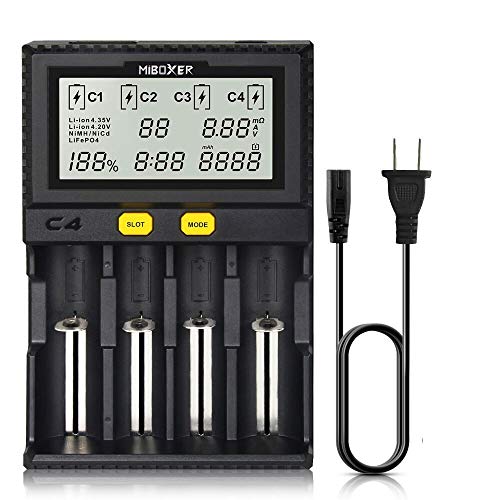
MiBOXER 4-Bay Universal Battery Charger with LCD Display

SEVENKA 1-Bay Battery Charger with Smart LCD Display

letoom Rechargeable D Batteries with USB-C Cable, 6 Pack
These Duracell CR123A cells deliver 3 volts of primary lithium power in the same compact footprint that defines the 18350 family. CR123A cells share the chemistry and dimensions that make 18350 batteries so popular in tactical flashlights, so users in that world know exactly what they’re getting with this 12-pack. The cells hold their charge through long stretches on a shelf, which matters for anyone who keeps a backup flashlight in a drawer or a battery in a rarely-used camera.
You won’t recharge these, and you won’t see a fuel gauge, but you will see consistent output in cold garages or summer road trips. Compared with the POWEROWL CR2 cells below, these run at a higher voltage and serve a different host of devices. Most people stocking a home with emergency gear will appreciate the simple “buy, store, and forget” workflow.
The Good Stuff
- Twelve-count pack keeps spares ready for tactical flashlights and home security devices
- Lithium chemistry holds charge for long stretches on a shelf, ideal for emergency kits
- Performs reliably in cold conditions where alkaline cells tend to fade
- Drop-in format for any device designed around the CR123A footprint
Things To Consider
- Single-use design means long-term cost adds up versus rechargeable cells
- Not a direct substitute for the smaller 18350 in single-cell hosts without checking voltage
Who It Suits Best
Anyone running CR123A flashlights, smoke detectors, or compact cameras who values a long shelf life and trusted alkaline-tier lithium chemistry over rechargeability.
Where Another Pick Suits Better
Frequent flashlight users who want rechargeables should look at the BONAI Rechargeable C Batteries 8 Pack for larger hosts or the MiBOXER 4-Bay Universal Battery Charger for 18350 charging flexibility.
POWEROWL’s CR2 cells are a different shape than 18350 cells, but they live in the same compact lithium family and often power the same kind of pocket-sized devices. The cells arrive with a 1000mAh rated capacity and a stated 10-year shelf life when stored properly, which puts them in the same conversation as the Duracell CR123A pack above. Users with rangefinders, laser sights, and small trail cameras will find the 3-volt output predictable.
For most households, the practical pitch is simple: buy them, store them, and trust they’ll fire when needed. In our view, the real difference between these and a name-brand CR123A pack is the form factor, not the chemistry. Pick based on the host device, not the marketing.
Notable Gains
- 1000mAh rating supports compact cameras and rangefinders through regular use
- Long shelf life reduces the “dead backup” risk in stored gear
- Six-pack quantity balances cost with a reasonable backup reserve
Worth Noting
- CR2 form factor does not physically fit 18350 hosts without an adapter
- Single-use cells, so owners cycling through a pack every month may want to reconsider rechargeables
Made For
Photographers, golfers, and homeowners running rangefinders or trail cameras on CR2 cells rather than 18350 hosts.
Consider Something Else When
Anyone actually charging 18350 cells should consider the SEVENKA 1-Bay Battery Charger with Smart LCD Display, which handles the 18350 form factor directly.
The DULEX charger is built for 18650 cells, but the slide contacts accept many cylindrical lithium-ion sizes, including the 18350 family when paired with the right cell length. The unit displays charging status on a high-definition LCD screen and stops feeding current once each bay reaches full, so beginners don’t need to babysit the process. It’s a sensible first charger for anyone building out a small flashlight collection.
Where this charger earns its place is the visible feedback. Users know which bay is charging and when the cycle is finished, which removes one of the most common beginner anxieties. Compared with the MiBOXER 4-Bay Charger further down, the DULEX keeps things compact and approachable, trading chemistry flexibility for simplicity.
Bright Spots
- LCD screen gives clear charging feedback for first-time users
- Independent per-bay status indicators mean four cells charge on their own terms
- Auto-stop charging protects cells from overcharge damage
- Compact footprint fits a kitchen drawer or small workshop shelf
Trade Offs
- Optimized for 18650 cells, so 18350 batteries may need careful alignment in the bay
- Limited chemistry support compared with multi-format chargers like MiBOXER
Feature Snapshot
Best Suited To
First-time charger shoppers who want visible feedback and don’t need to juggle a dozen different cell formats.
Not Your Match When
Hobbyists running several cell types will find the MiBOXER 4-Bay Universal Battery Charger handles more formats without swapping cradles.
Duracell’s Coppertop C cells aren’t 18350 batteries, but they sit in the same household battery aisle and serve many of the same mid-drain devices that lithium specialty cells power. Flashlights, baby swings, and portable stereos all run on this format, and an eight-pack keeps a typical household stocked for months. The 10-year shelf life is the practical headline for buyers who forget what’s in the junk drawer.
Alkaline chemistry behaves predictably in moderate-drain devices, which is most of what plugs into C cells in a home. Owners commonly report solid runtimes in kids’ toys and emergency lanterns. Compared with the rechargeable BONAI C cells later in this list, the Coppertop wins on convenience but loses on long-term cost.
Useful Highlights
- Eight-pack covers typical household C-cell needs without constant repurchase
- Long shelf life reduces waste from forgotten packs buried in closets
- Trusted brand recognition simplifies gift-giving and shared household buying
Minor Gripes
- Alkaline cells can leak in rarely-used devices, so users should check stored flashlights periodically
- Single-use design becomes expensive in high-drain devices like radio-controlled toys
Who Should Grab It
Families and homeowners who want a familiar alkaline C cell on hand for mid-drain household devices.
Skip It When
Anyone cycling C cells in a flashlight every week will save more over time with the BONAI Rechargeable C Batteries 8 Pack.
Blomiky ships a small-format 3.7V lithium-ion pack designed for remote-controlled trucks, with the SM-2P two-pin connector that matches many entry-level RC vehicles. The 1000mAh capacity sits right at the sweet spot for short backyard sessions and indoor play. A USB charging cable is in the box, so the pack works without buying a separate cradle.
The dimensions (roughly 52.5 × 28.5 × 14.6mm) mean these are a specialty cell, not a flashlight 18350, but they share the lithium-ion chemistry that defines this roundup. Users with compatible RC trucks get a plug-and-play replacement. In our view, the practical value is the included cable, which removes a common point of confusion for first-time RC owners.
The Value In It
- Includes a USB charging cable, so no extra accessory purchase is required
- SM-2P plug fits many popular RC truck models out of the box
- 3.7V chemistry matches standard hobby expectations
Points To Note
- Specialty RC plug means this is not a flashlight replacement
- Two-pin connector polarity should be checked against the host vehicle before first use
Right Fit For
RC hobbyists running compatible 3.7V hobby packs who want a turnkey replacement with cable in the box.
Look Elsewhere When
Flashlight owners seeking 18350 lithium-ion power should look at chargers like the SEVENKA 1-Bay Battery Charger and pair them with proper 18350 cells.
The Nitecore i4 Intellicharger is a four-bay universal unit that handles more chemistry types than most chargers in its price tier. Active Current Distribution technology splits the available current across installed cells so a small 18350 doesn’t sit waiting while a larger 18650 hogs the amperage. Automatic current selection picks a sensible rate per cell, which protects smaller formats from being overdriven.
This is a charger built for someone who has more than one type of cell on the bench. Users commonly run IMR, LiFePO4, Ni-MH, and Ni-Cd chemistries in the same session. Compared with the SEVENKA single-bay charger, this trades portability for breadth, and that’s the right call for a workshop shelf.
Strengths Worth Knowing
- Active Current Distribution balances power across mixed cell sizes
- Automatic current selection protects smaller cells like 18350 from excess charge
- Detects non-rechargeable batteries and refuses to charge them
- Four bays keep a mixed collection topped off in one cycle
Room For Improvement
- Bulkier than single-bay travel chargers like the SEVENKA unit
- Older design language, so firmware updates are not a thing on this hardware
Quick Facts
Perfect Match For
Workshop owners with a drawer full of mixed lithium and Ni-MH cells who want one charger that handles everything.
A Better Fit Elsewhere
Travelers packing light will prefer the SEVENKA 1-Bay Battery Charger, which trades capacity for portability.
The BONAI 8-pack of rechargeable C cells is the long-game answer to alkaline C batteries. Each cell is rated at 5,000mAh with low self-discharge chemistry, so they arrive ready to use and hold their charge on the shelf between sessions. For families running flashlights through power outages or kids burning through radio-controlled toys, the math shifts quickly.
Ni-MH cells, unlike alkaline, deliver a flatter voltage curve, so a flashlight runs closer to full brightness for longer before fading. You do need a charger, and that’s where a unit like the Nitecore i4 or MiBOXER C4 fits in. Compared with the Duracell Coppertop C cells above, the BONAI pack costs more upfront but pays back in cycle life.
What Pays Off
- 5,000mAh rating extends runtime in high-drain C cell devices
- Pre-charged and ready to use straight out of the pack
- Low self-discharge cells hold charge through months of storage
- Eight-pack covers full household needs in a single buy
Softer Spots
- Requires a separate Ni-MH compatible charger, which adds to the initial spend
- Heavier than alkaline C cells, which matters in small handheld devices
Who Will Love This
Homeowners running C cell flashlights or radios through frequent outages who want rechargeables that pay back over years.
Reach For A Different Pick When
Tiny device users will do better with the Duracell CR123A 12-count pack or specialty lithium-ion cells instead.
The MiBOXER 4-Bay Charger is one of the more flexible units in this roundup, with explicit support for 18350, 18500, 18650, 20700, 21700, 26650, and RCR123 cells across both Li-ion and LiFePO4 chemistries, plus Ni-MH and Ni-Cd. The fire-retardant PC shell and active error reporting make it feel more like a piece of lab gear than a consumer charger, which is exactly the point for anyone juggling multiple cell formats.
You’ll see charging progress on the LCD and an error symbol when a cell is reversed or shorted, so misfires are visible rather than silent. For most home workshops, this is the charger that ends the “wait, does this one take 21700?” problem. The trade-off is size; it’s a desktop unit, not a travel companion like the SEVENKA single-bay.
A Few Highlights
- Wide format support covers 18350 through 26650 cylindrical cells
- Li-ion, LiFePO4, Ni-MH, and Ni-Cd compatibility in one unit
- Error symbol reports reversed or shorted cells automatically
- Auto-stop charging protects cells from overcharge damage
Areas To Watch
- Larger footprint than single-bay travel chargers
- LCD can be hard to read from across a workbench in bright light
Built With In Mind
Mixed-cell workshop owners who run 18350, 18650, and 26650 formats across flashlights and power tools.
Swap It Out When
Travelers who only need a single bay will find the SEVENKA 1-Bay Battery Charger easier to pack.
The SEVENKA 1-Bay Charger is the travel-ready pick in this list, with explicit support for 18350 cells alongside 18650, 21700, 26650, and RCR123 formats. The fire-retardant PC shell keeps heat dissipation reasonable, and the smart circuit stops charging at full capacity to protect cell health. Users can pull power from any USB source, which means a laptop or car charger becomes a charging station.
Adjustable speed settings (0.5A, 1A, 2A) let you trade speed for cell longevity on lithium formats, with Ni-MH locked at the lower rate. Compared with the DULEX 4-bay unit above, this one trades capacity for portability, and most travelers will make that swap willingly. For most flashlights, the speed difference shows up more in wait time than in cell wear.
Key Advantages
- Adjustable charging speeds let you balance speed and cell care
- USB input works from laptops, car chargers, and power banks
- Explicit 18350 support alongside larger cylindrical formats
- Auto-stop charging prevents overcharge on full cells
Honest Caveats
- Single bay means no parallel charging across cells
- Speed adjustments apply to lithium cells only, not Ni-MH
Feature Rundown
The Right Fit
Travelers and outdoor users who want a single 18350 or 18650 cell topped off from a USB power source.
Where A Sibling Pick Shines
Workshop owners running several cells at once will do better with the MiBOXER 4-Bay Universal Battery Charger.
The letoom 6-pack brings USB-C charging straight to D-size cells, with a built-in charging port and a 4-in-1 cable included in the box. Each cell tops off in around two hours from a standard USB source, which removes the need for a separate charger cradle on the shelf. For homeowners running large flashlights or floodlights through frequent use, that workflow matters more than it sounds.
An integrated safety circuit protects against over-discharge and overcharge, so the cells don’t silently degrade from being left plugged in too long. Compared with traditional rechargeable D cells that need a dedicated charger, this format trades some technical flexibility for everyday convenience. Most users will value that trade.
What Makes Sense
- Built-in USB-C port removes the need for a separate charger cradle
- 4-in-1 cable included in the box, so the pack is ready to charge on arrival
- Safety circuit protects against over-discharge and overcharge damage
- Six-pack covers typical household D cell demand
Potential Drawbacks
- Built-in charging port adds bulk compared with standard D cells
- USB-C cable adds another item to keep track of in a drawer
Whose Shelf It Belongs On
Households running D cell flashlights and toys who want cable-ready rechargeables without a dedicated charging station.
Another Choice May Suit
Anyone running C cell formats should consider the BONAI Rechargeable C Batteries 8 Pack for a more standard rechargeable workflow.
## What To Weigh Before Picking an 18350 Battery or Charger### Match The Cell Format To The Host DeviceThe first decision is whether you need an 18350 cell at all, or whether your device actually takes a CR123A, CR2, or 18650. The number in the name refers to a cylindrical size: roughly 18mm diameter and 35mm length for the 18350, with the last two digits shifting for shorter or longer versions. Picking the wrong format means a cell that won’t physically fit, or worse, one that fits but delivers the wrong voltage.### Chemistry Matters More Than MarketingLithium-ion cells are rechargeable and deliver a flat voltage curve until they near empty, which makes runtimes predictable. Primary lithium cells like the Duracell CR123A pack store for years and fire when needed, but they cost more over time in heavy-use scenarios. Ni-MH cells like the BONAI C pack occupy a middle ground: rechargeable, cheaper than primary lithium over time, but with a self-discharge rate that requires topping off between uses.### Chargers Need To Match Cells And Use CaseA good charger does three things: accepts the format you actually own, picks a current that won’t damage the cell, and stops at full charge without babysitting. The Nitecore i4 and MiBOXER 4-Bay units cover broad workshops, while the SEVENKA single-bay trades capacity for travel. Speed settings matter less than fit and safety; a 2A charge on a small 18350 can shorten cell life if used repeatedly.## Key Considerations Across These Picks### Common Shopping Slip UpsThe easiest mistake is buying the right voltage in the wrong format. An 18350 cell at 3.7V won’t drop into a CR123A host expecting 3V primary lithium, even though both are about the same size. The reverse is also true: a CR123A primary cell pushed into an 18350 lithium-ion host will fit mechanically but won’t recharge properly. Always confirm the host device’s required format and chemistry before clicking buy.Another common slip is assuming any “universal” charger handles every cylindrical cell safely. Multi-bay units like the MiBOXER 4-Bay do cover most formats, but the contact geometry matters for shorter cells. Owners commonly report needing to center small 18350 cells carefully in wider bays. A snug-fitting bay or a cell spacer solves the issue, but it’s worth checking before relying on a charger for routine use.### What The Higher Tier BuysPremium chargers in this category earn their price through smarter current distribution and clearer error reporting. The Nitecore i4 and MiBOXER 4-Bay detect reversed cells, refuse to charge non-rechargeables, and split current across mixed cell sizes so a small 18350 doesn’t sit idle. Budget chargers usually skip those safety nets, which is fine for occasional use but becomes a real risk in a busy household. Paying more typically buys peace of mind rather than raw charging speed.## Frequently Asked Questions### What Does The 18350 Number Actually Mean?It refers to a cylindrical lithium-ion cell that is roughly 18mm in diameter and 35mm long. The first two digits give the width, the second two the length, and the trailing zero signals a round cell. It matters because hosts designed for 18350 cells expect that exact physical size.### Can A CR123A Cell Replace An 18350 In A Flashlight?In some hosts, yes, but only if the device accepts primary lithium at 3V and doesn’t require a rechargeable 3.7V lithium-ion cell. Check your flashlight’s documentation, since voltage mismatch can cause dim output or device error messages. When in doubt, the safer move is to match the original format exactly.### How Do I Know When An 18350 Cell Needs Replacing?Most rechargeable 18350 cells give a clear runtime drop before failing. A flashlight that used to run for two hours on a charge and now runs for forty minutes is telling you the cell is aging. A dedicated charger with capacity readouts, like the MiBOXER 4-Bay, gives a more precise answer when needed.### Are Universal Chargers Safe For Small Cells Like 18350?Generally yes, when the charger offers current selection and active distribution. The Nitecore i4 and SEVENKA single-bay both adjust for smaller cells, but a cheap fixed-current charger can shorten 18350 life. Match the charger’s per-bay current to the cell’s rated input, and avoid leaving cells in the charger after they reach full.### Should I Buy Primary Lithium Or Rechargeable Cells For A Flashlight?Primary lithium cells like the Duracell CR123A pack store longer on the shelf and fire reliably after years in a drawer. Rechargeable lithium-ion cells cost less over time in flashlights that get regular use. Most people keep a mix: rechargeables for daily carry and primaries for emergency kits.## Final VerdictThe 18350 cell is small, niche, and surprisingly easy to get wrong if you grab the first pack on a shelf. Match the format to the host, decide between primary and rechargeable based on how often you actually use the device, and pick a charger that fits both your cells and your routine. With those three decisions handled, the rest is just stocking up.